A practical luxury buyer guide to evaluating storm-day livability in Sunny Isles Beach, focusing on building systems, access, unit selection, staffing, parking, and written due diligence before contract.
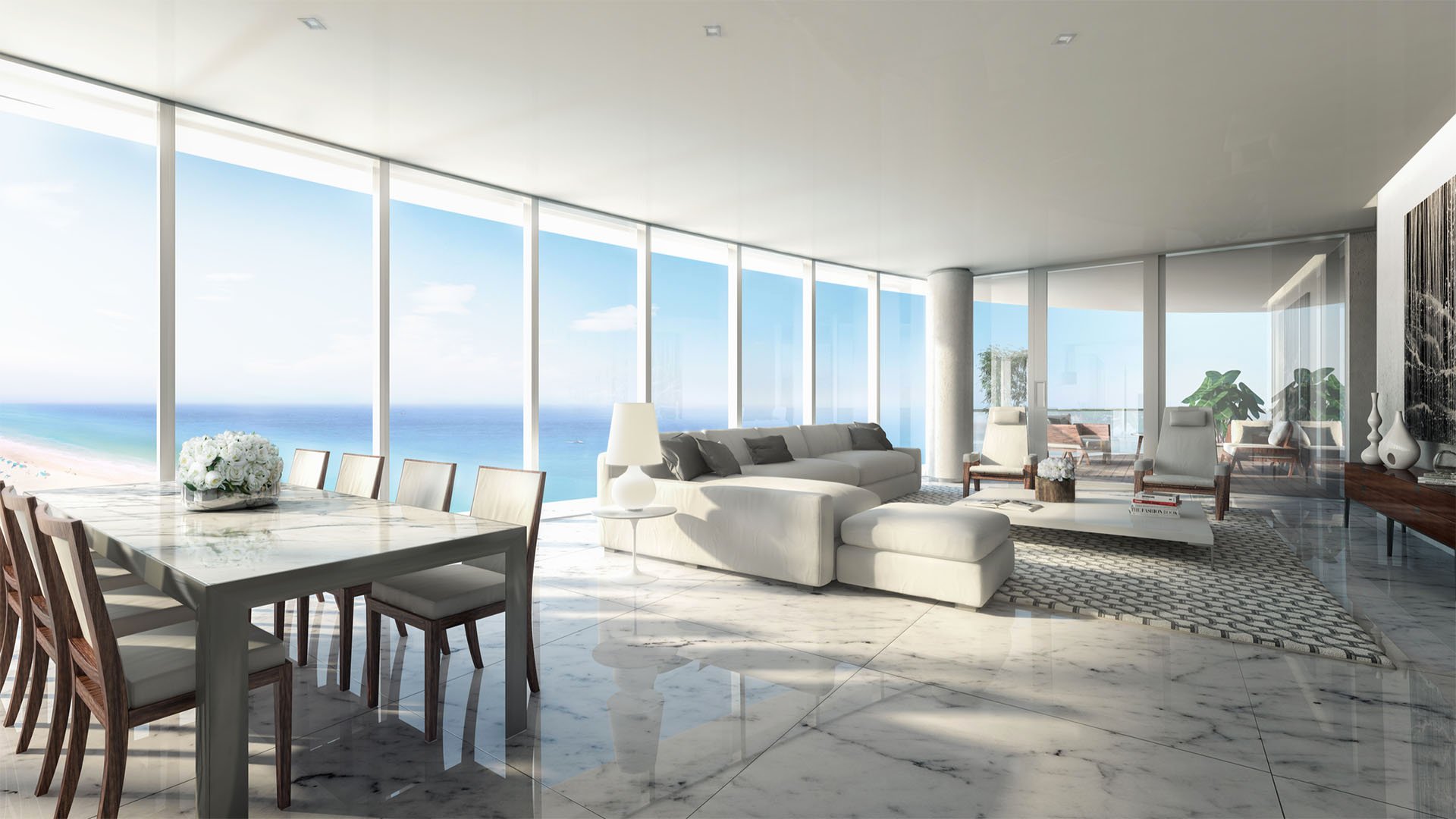
In Sunny Isles Beach, the most compelling residence is not simply the one with the most cinematic horizon line. It is the one that feels composed when weather disrupts the rhythm of the day. For a luxury buyer, storm-day livability is the quiet test behind the lobby arrival, terrace depth, private elevator, and ocean view.
The question is not whether a building impresses in perfect light. The question is how it functions when residents are indoors longer than expected, arrivals are delayed, service providers are limited, and common areas must support more of the household’s daily life. A sophisticated purchase process should treat storm-day comfort as a core measure of value, alongside architecture, finishes, amenities, privacy, and resale positioning.
For buyers, this means raising practical questions early. Before falling in love with a floor plan, a buyer should understand how the building handles power, water, elevators, garage access, communication, staffing, deliveries, pets, guests, and post-storm recovery.
The first layer of diligence is operational. Ask what systems are supported during an outage, how long essential services are intended to function, which elevators are prioritized, and whether residential corridors, garage gates, access-control systems, and life-safety systems have clearly defined support plans.
At any high-end Sunny Isles Beach presentation, whether considering Bentley Residences Sunny Isles or another residence along the coast, the conversation should move beyond amenity vocabulary. Ask how those amenities are protected, closed, reopened, staffed, and communicated during severe weather. A pool deck, spa, dining room, children’s area, or fitness suite matters only if its storm procedures are clear and its reopening standards are well managed.
Buyers should also examine the mechanical story. Where are critical systems located? How are garages drained? What happens to entry points during wind-driven rain? How are service elevators, loading areas, and package rooms handled if the building is under restricted operation? These questions are not pessimistic. They are the language of ownership.
In a vertical residence, elevators are central to livability. A buyer should ask how many elevators serve the residential stack, whether service and passenger elevators are separated, and what the building’s operating plan is when conditions require partial service. High-floors offer privacy, views, and distance from street activity, but they also make elevator continuity more important.
Water pressure and domestic water systems belong in the same conversation. Ask whether the building has protocols for reduced pressure, interruptions, or maintenance after a weather event. The same applies to air conditioning, ventilation, and humidity control, especially for owners with art, wine storage, couture, instruments, or sensitive finishes.
Communication is equally important. A luxury building should be able to tell residents what is happening, what is closed, what remains available, when staff will return, and what residents should do next. Storm-day livability often depends less on drama than on calm, timely information.
The garage is one of the most revealing parts of a storm-day review. Buyers should ask about garage elevation, drainage, access gates, backup access procedures, visitor parking controls, and whether residents receive instructions before severe weather. For collectors, multiple-car households, or residents who travel often, the management of vehicles can be as important as the management of the apartment itself.
Arrival choreography also matters. Can a resident enter securely if the main porte cochere is temporarily restricted? Is there a covered path from parking to elevator? How are household staff, caregivers, private chefs, pet walkers, and security personnel handled if the building limits access? A residence may be exquisite, but a household with children, pets, elders, or frequent travel needs a more detailed answer.
In Sunny Isles Beach, oceanfront and waterfront living can be wonderfully serene, but buyers should distinguish visual romance from operational readiness. The best storm-day residence is not necessarily the highest, newest, or most amenitized. It is the one whose daily systems remain legible under pressure.
Unit choice should be evaluated through a weather lens. A buyer should consider glass exposure, terrace configuration, door systems, orientation, and how outdoor furnishings or planters are secured. The goal is not to dilute the pleasure of indoor-outdoor living. It is to understand what that lifestyle requires when conditions shift.
Low-floors may offer a stronger connection to the landscape and quicker access to certain services, while high-floors may offer extraordinary privacy and long views. Neither is inherently better. The right answer depends on a buyer’s household, tolerance for elevator dependency, service expectations, and preference for immediate access versus elevation.
Interior planning matters as well. A well-conceived residence has places to store storm shutters or balcony furnishings where applicable, areas for supplies that do not compromise daily elegance, and a layout that remains comfortable if the household spends more time indoors. Deep pantries, secondary refrigeration, laundry capacity, and discreet storage may become unexpectedly valuable.
For luxury buyers, storm-day livability often comes down to people. Ask how many team members are expected on site during severe weather, what duties they perform, and how the building communicates staffing changes. The tone of management matters. A calm, well-trained front desk can transform uncertainty into order.
When evaluating a branded or service-forward address such as St. Regis® Residences Sunny Isles, buyers should still request specifics. Brand language is not a substitute for operating standards. The questions should be concrete: who sends resident updates, who controls access, who coordinates vendors, and who confirms reopening of shared spaces?
The same discipline applies when comparing a private, resort-like environment with a more residential one. Each building has its own culture. Some residents want highly visible service. Others prefer discretion and independence. Storm-day planning reveals which culture is more aligned with the buyer’s household.
Sunny Isles Beach buyers often compare residences by design, ceiling height, terrace experience, wellness programming, privacy, and arrival sequence. Those criteria remain essential. But the more refined comparison adds a second column: what happens on the difficult day?
When touring The Ritz-Carlton Residences® Sunny Isles, ask how the resident experience is organized when services are modified. When reviewing Jade Signature Sunny Isles Beach, ask how the building communicates readiness, restrictions, and reopening. The point is not to assume one answer is superior. The point is to make each answer comparable.
A buyer should leave every showing with a clear sense of who is responsible for what. If the sales conversation remains purely aesthetic, the diligence is incomplete. If the team can discuss access, backup systems, staffing, elevator use, water, parking, communications, pets, and vendors with composure, the buyer has a stronger foundation for decision-making.
Before contract, buyers should ask for written answers to the storm-day topics that matter most to their household. The list should include backup power coverage, elevator procedures, water and HVAC support, garage protocols, access control, resident alerts, staff presence, package handling, pet policies during restricted operations, and reopening procedures for amenities.
Owners should also ask what insurance, reserve, inspection, and maintenance documents are available for review. The goal is not to create friction. It is to confirm that the residence’s elegance is supported by a disciplined building operation.
In the ultra-premium market, discretion and preparation are complementary. A building that manages ordinary days beautifully should also have a credible plan for extraordinary ones.
What does storm-day livability mean in Sunny Isles Beach? It means how comfortably and predictably a residence functions during severe weather, service interruptions, restricted access, or post-storm recovery.
Should buyers ask about backup power before making an offer? Yes. Buyers should understand which systems are supported, how priorities are set, and what residents can reasonably expect during an outage.
Are high-floor residences less practical during storms? Not necessarily. High floors may offer privacy and views, but buyers should evaluate elevator continuity, communication, and household needs.
Why does garage design matter? Parking access, drainage, gate operation, and vehicle procedures can materially affect day-to-day convenience before and after severe weather.
Should amenities influence a storm-day decision? Yes, but only with operational context. Buyers should ask how amenities are secured, closed, staffed, and reopened.
What should pet owners ask? Pet owners should ask about relief areas, elevator access, staff protocols, and any restrictions during periods of modified building operation.
How important is building communication? It is central. Clear resident updates can reduce uncertainty and help households plan calmly during changing conditions.
Should second-home buyers evaluate storm-day livability differently? Yes. They should ask how the building protects, accesses, and communicates about residences when owners are away.
Can a beautiful oceanfront condo still be inconvenient in bad weather? Yes. Architecture and views should be paired with strong systems, staffing, access planning, and recovery procedures.
What is the best time to ask these questions? Ask during the first serious showing and again before contract, when answers can be reviewed in writing.
When you're ready to tour or underwrite the options, connect with MILLION.
If branded residences are on your mind — as a home or as an allocation — we would be glad to share what we are seeing, privately.
Begin a quiet conversation