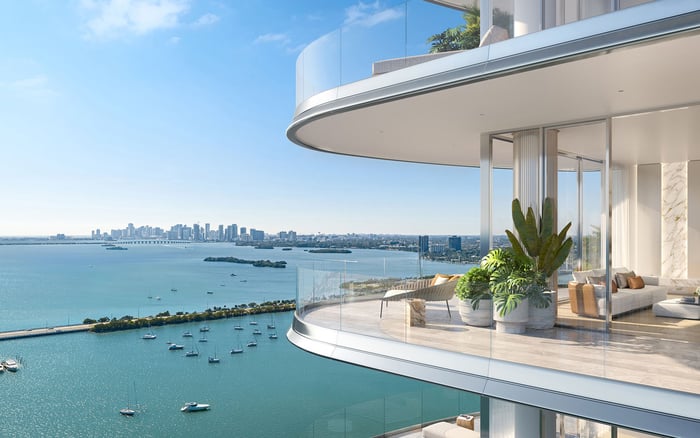
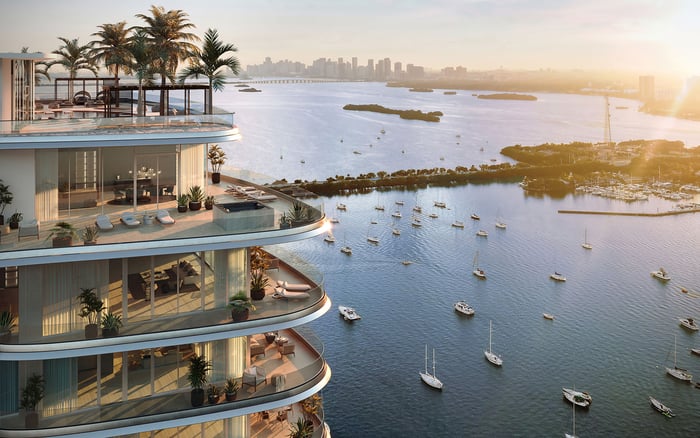
A luxury buyer’s guide to assessing view durability in North Bay Village, with emphasis on legal diligence, neighboring parcels, massing risk, and resale discipline.
In North Bay Village, a view is not simply a pleasant backdrop. It is part of the asset. Buyers considering a bay-facing residence are often underwriting light, privacy, horizon line, boat traffic, skyline orientation, and the psychological ease of open water. The phrase “protected view corridor” therefore deserves careful scrutiny before any purchase decision is made.
The governing principle is straightforward: do not treat “protected” as a design adjective. Treat it as a legal and planning question. A sales presentation may describe a view as open, long, preserved, or unlikely to change, but a buyer should ask what actually prevents a future building, rooftop structure, marina element, landscape installation, or redevelopment from altering that outlook.
This is especially relevant for buyers comparing established waterfront homes with new offerings such as Continuum Club & Residences North Bay Village, Shoma Bay North Bay Village, and Tula Residences North Bay Village. The issue is not whether a residence has a beautiful view today. The issue is how that view holds up under scrutiny.
A buyer should begin by defining the view with precision. “Bay view” is too broad. Is the value in a wide water panorama, a direct downtown skyline angle, morning light, sunset exposure, privacy from neighboring balconies, or the absence of visible rooftops? Each carries a different risk profile.
The most disciplined approach is to stand in the actual residence, or in the best available equivalent if the home is not complete, and document the sightlines from the primary rooms. Living room, primary suite, terrace, kitchen, and bath exposures can each perform differently. A terrace may feel expansive while a bedroom looks directly into a future development envelope. A high floor may clear one obstruction but introduce exposure to another.
This North Bay Village buyer lens belongs in practical Buyer’s Guides because the asset is often both Waterfront and Waterview. The nuance is that water adjacency and view durability are not the same thing. A building can sit on the bay and still have outlooks that depend on neighboring parcels, setbacks, air space, or future massing.
The word “protected” should trigger a document request. Buyers and their advisers should ask whether protection comes from recorded easements, restrictive covenants, site-plan conditions, association documents, setback requirements, height limits, public right-of-way geometry, or the physical limitations of nearby parcels.
Each category carries a different level of strength. A recorded easement may offer more durable protection than a general expectation that a neighboring site is unlikely to change. A view preserved by a narrow gap between buildings may be vulnerable if adjacent ownership changes or redevelopment is proposed. A view that crosses public water may still be influenced by structures, docks, railings, landscaping, or lighting at the edges.
The buyer’s team should distinguish between enforceable protection, regulatory probability, and market assumption. Enforceable protection is the strongest. Regulatory probability requires professional interpretation. Market assumption is the weakest, even when it sounds persuasive.
The view corridor is often controlled by property the buyer is not purchasing. That makes neighboring-parcel review essential. A buyer should examine the current use, zoning posture, lot configuration, frontage, access, and development potential of nearby sites within the relevant sightline.
This is not speculation. It is scenario planning. If the adjacent parcel were renovated, expanded, assembled, or redeveloped, what portions of the current view might remain? What floors are most sensitive? Which rooms would be affected first? Would a change alter open water, skyline, privacy, or simply the foreground?
For a Pre-Construction purchase, this analysis becomes more important because the buyer may be relying on renderings, model views, or projected floor elevations. Renderings can be useful for orientation, but they are not substitutes for a sightline analysis tied to the actual unit, stack, floor, and surrounding development context.
View-corridor diligence is partly legal and partly spatial. The buyer should understand both the vertical plane and the horizontal aperture. The vertical plane asks what height could appear within the sightline. The horizontal aperture asks how wide the view remains if adjacent structures occupy their available envelope.
A narrow but dramatic water slice may photograph beautifully yet carry more fragility than a broad, multi-directional outlook. Conversely, a lower-floor residence with a specific open corridor over a driveway, street, marina edge, or setback may have a surprisingly durable view if the relevant geometry is constrained. The point is not to favor high floors automatically. The point is to price and negotiate based on the durability of the particular outlook.
Buyers should also separate view from light. A future obstruction may not fully remove the bay but may reduce daylight, privacy, or the sense of visual depth. In luxury real estate, those softer qualities often influence daily satisfaction as much as the water itself.
Once the risk is understood, it should shape the transaction. A buyer may request additional documents, extend diligence timing, seek written clarification, or adjust pricing to reflect uncertainty. If the view is central to the purchase thesis, the contract process should not treat it as a minor aesthetic preference.
For resale-minded buyers, this discipline is especially important. Future purchasers will likely ask the same questions. A residence with a well-documented view thesis can be easier to explain, position, and defend. A residence sold primarily on a vague promise of permanence may face more friction when the market becomes selective.
The strongest luxury acquisitions in North Bay Village are those where beauty and diligence meet. The buyer who can say, “This is what I see, this is why it matters, and this is what could change,” is buying with greater control.
What is a protected view corridor? It is a sightline that may be preserved by legal, planning, physical, or ownership constraints. Buyers should verify the specific basis for the protection.
Is a waterfront residence automatically protected from view loss? No. Waterfront position and view durability are different issues, especially when adjacent parcels or foreground elements can change.
Should I rely on renderings for a Pre-Construction residence? Renderings can help explain orientation, but they should be supplemented with unit-specific sightline and surrounding-parcel review.
Which documents should a buyer request? Ask for relevant approvals, surveys, easements, association documents, site plans, and any materials that define setbacks, massing, or view rights.
Do higher floors always offer safer views? Not always. Higher floors may clear certain obstructions, but the durability of the view depends on the exact angle and neighboring development context.
How should a buyer evaluate neighboring parcels? Review how nearby sites could be used, renovated, expanded, or redeveloped, then test how those scenarios would affect the residence.
Can a view be valuable even if it is not legally protected? Yes, but the price should reflect the difference between documented protection and a favorable current condition.
Why does privacy matter in view-corridor analysis? A future building may leave water visible while changing the feeling of seclusion, which can affect both lifestyle and resale appeal.
Should view risk affect negotiation? Yes. If the view is central to value, unresolved uncertainty should influence diligence, pricing, contract terms, or the decision to proceed.
Who should help evaluate a protected view corridor? Buyers typically benefit from coordinated guidance involving real estate, land-use, survey, design, and legal perspectives.
For a confidential assessment and a building-by-building shortlist, connect with MILLION.
If branded residences are on your mind — as a home or as an allocation — we would be glad to share what we are seeing, privately.
Begin a quiet conversation