A discreet buyer’s guide to evaluating private elevators, controlled arrival, security choreography, operations, and long-term value before purchasing in Miami Design District.
In Miami Design District, private elevators and controlled arrival merit the same rigor a buyer applies to views, floor plan, finishes, and building reputation. The promise is compelling: a discreet path from car to residence, limited contact with public corridors, and an arrival sequence that feels closer to a private home than a conventional condominium. Yet the real value is not the phrase “private elevator.” It is how the system performs every day.
A buyer should study the full choreography: curb, valet, garage, lobby, access control, elevator vestibule, in-unit entry, service movement, and emergency procedures. A beautiful cab is only one part of the equation. The more important question is whether the building has created a controlled, legible, and calm sequence for residents, guests, domestic staff, vendors, and deliveries.
That distinction matters in a neighborhood where design fluency is expected. At Kempinski Residences Miami Design District, for example, buyers will naturally focus on brand, architecture, and interior language, but the more revealing tour is often operational: how one arrives, who sees whom, and where friction may emerge at peak hours.
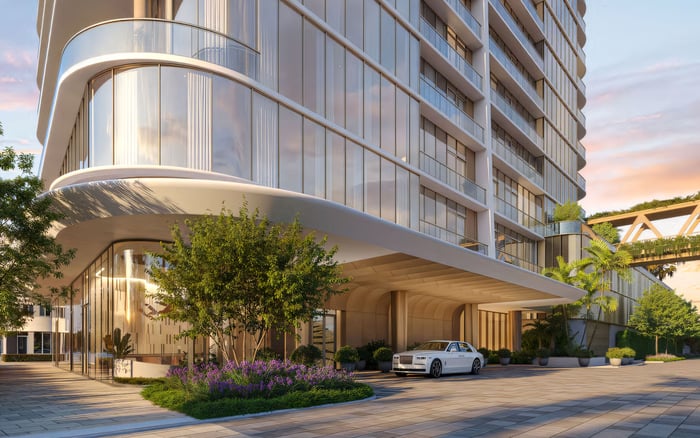
Begin outside the building. Where does a resident’s car stop? Is there a porte cochere, a discreet garage entry, or a shared frontage where arrival competes with visitors and service traffic? Controlled arrival begins before the elevator button is pressed. If the curb experience feels exposed or congested, the private elevator may not deliver the level of seclusion a buyer expects.
From there, walk the path to the elevator as though you already live there. Notice sightlines. Does a guest pass through the same area as residents? Are staff and delivery personnel visible in the primary arrival zone? Is there a clear point of greeting, screening, and release? An ultra-premium building should make privacy feel effortless, not theatrical.
For buyers comparing new-construction options, this walkthrough should happen more than once. Visit during a quiet period and again when the building or sales gallery is busier. The goal is not to test hospitality artificially, but to understand whether the arrival concept has enough depth for real life.
Private elevators are often presented as the ultimate privacy feature, but privacy should not create inconvenience. A strong system allows residents to receive guests gracefully, coordinate staff access, and manage deliveries without turning the home into a checkpoint. The best experience feels controlled, not defensive.
Ask how guests are announced. Can the resident release access remotely? Does the guest arrive directly at a private vestibule, a semi-private foyer, or a corridor shared with another residence? If a private elevator opens directly into the home, what happens when a guest arrives unexpectedly, or when domestic staff need separate timing?
Boutique buildings can offer a particularly intimate arrival experience because fewer residences may reduce daily volume, but boutique scale is not a guarantee. A smaller property still needs disciplined access protocols, redundant systems, and clear staff training. Conversely, a larger building can feel private when circulation is thoughtfully designed.
The cab finish, lighting, ceiling height, and ride quality matter, but the deeper questions concern capacity, programming, and redundancy. How many elevators serve the residence line? Are private elevators paired with service elevators, or must movers, caterers, housekeepers, and maintenance teams use the same vertical path? What happens when one elevator is offline?
Buyers should ask for a plain-language explanation of elevator logic. Which fobs access which floors? Can access be time-limited for vendors? How are amenity levels handled? Are there separate controls for parking, lobby, residence, and service areas? A poorly programmed private elevator can create daily irritation, while a well-programmed system becomes nearly invisible.
In the broader Miami market, vertical arrival has become a meaningful point of comparison among luxury residences. A buyer looking at the Design District may also study how projects such as Miami Design Residences Midtown Miami, Miami Tropic Residences, and 888 Brickell by Dolce & Gabbana frame arrival, branding, and controlled access in different urban settings.
Luxury buyers often concentrate on finishes during a preview, yet the questions that protect long-term enjoyment are operational. Who manages the arrival sequence? How are valets, front desk personnel, security, and residential management coordinated? What training standards govern guest recognition, package handling, contractor entry, and after-hours access?
The service elevator is especially important. If the building lacks a strong service route, residents may feel the consequences during move-ins, renovations, deliveries, and event preparation. The most refined buildings separate ceremonial arrival from functional movement, allowing both to operate without conflict.
Also ask about emergency procedures. Private access should never compromise practical evacuation, fire-life-safety planning, or the ability for authorized responders to reach a residence. Buyers do not need to become engineers, but they should expect confident, direct answers from the development or management team.
A private elevator often opens into a vestibule or gallery that functions as the psychological front door. Treat this space as part of the home. Is it large enough for art, luggage, strollers, flowers, or multiple guests arriving at once? Does it feel like a gracious threshold, or merely a leftover area between cab and living room?
Materials should be durable as well as beautiful. Stone, wood, metal, and wallcoverings in the arrival zone must withstand contact from bags, moving carts, pets, and hospitality traffic. Lighting should flatter art and faces, while making access intuitive at night. Acoustic separation matters too. A buyer should stand quietly near the entry and listen for elevator noise, corridor activity, and mechanical vibration.
A private vestibule can be a resale advantage when it feels intentional. It can disappoint when it is undersized, dark, or awkwardly connected to the residence plan.
A Design District buyer may still compare Brickell, Downtown, Edgewater, Miami Beach, or Coconut Grove to understand how arrival experiences differ by density, building type, and lifestyle. Brickell often sharpens the question of urban convenience, while Downtown can place greater emphasis on high-rise vertical movement and branded hospitality. A project such as Waldorf Astoria Residences Downtown Miami can be useful as a comparison point for buyers studying how arrival, concierge culture, and vertical living intersect.
The key is to compare like for like. A private elevator in a calm, low-density setting is not solving the same problem as controlled access in a dense urban tower. The buyer’s lifestyle should lead the analysis: entertaining frequency, staff needs, art handling, children, pets, second-home usage, and privacy expectations.
Before committing, ask one simple question: would this arrival sequence still feel elegant on an ordinary Tuesday? Not during a curated tour, not in a render, and not during a perfectly staged preview. The right system should make daily life smoother, quieter, and more secure without making the resident feel managed.
Private elevators and controlled arrival are not merely amenities. They are architecture, operations, hospitality, and risk management in one sequence. When well planned, they create a sense of residence before the door opens. When weak, the flaw is felt every day.
Is a private elevator always better than a semi-private elevator? Not always. A well-managed semi-private arrangement can outperform a poorly planned private elevator if access, timing, and service routes are stronger.
What should I ask first when touring a building? Ask to walk the full resident arrival path from car to front door, including garage, lobby, elevator, and vestibule.
Should I be concerned about service access? Yes. Service routing affects move-ins, deliveries, maintenance, catering, housekeeping, and the day-to-day privacy of residents.
Does controlled arrival help resale value? It can support resale appeal when the experience is intuitive, private, and aligned with the expectations of luxury buyers.
How do I evaluate elevator reliability? Ask about redundancy, maintenance protocols, service response, and what happens when one elevator is temporarily unavailable.
Can guests come directly to my residence? That depends on the building’s access programming. Clarify how guests are announced, approved, and directed to the correct floor.
Is a private vestibule considered usable space? It may function as an important arrival gallery, but buyers should review the plan carefully and understand how the space is defined.
What matters most for second-home owners? Remote access coordination, staff protocols, package handling, and secure guest entry are especially important for part-time residents.
Are branded residences automatically better at arrival? Not automatically. Branding may influence service culture, but buyers should still inspect the physical sequence and operating rules.
Should my attorney or inspector review elevator issues? Yes. Appropriate professionals can help review governing documents, maintenance obligations, access rights, and practical risk points.
To compare the best-fit options with clarity, connect with MILLION.
If branded residences are on your mind — as a home or as an allocation — we would be glad to share what we are seeing, privately.
Begin a quiet conversation