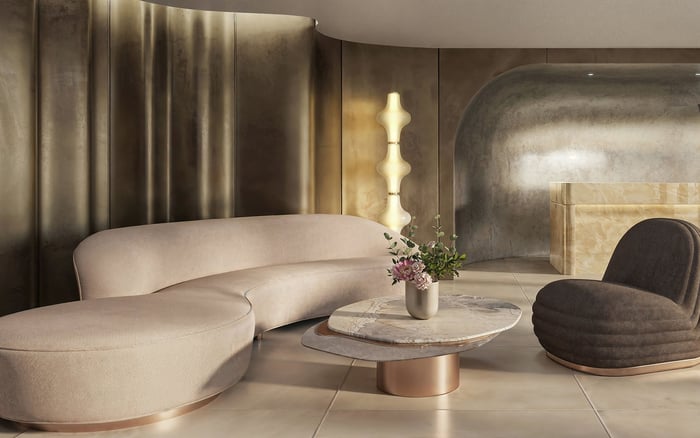
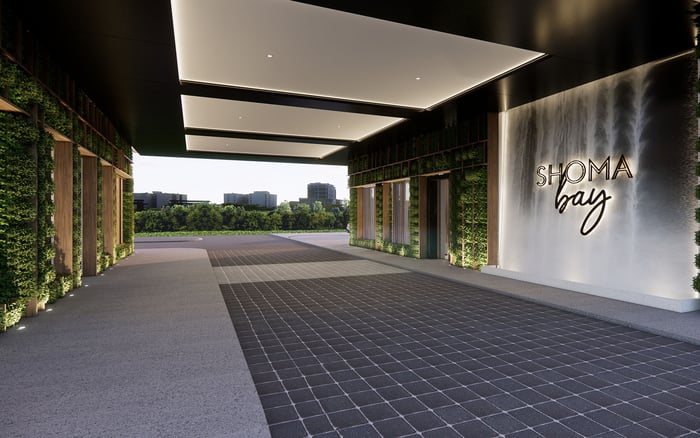
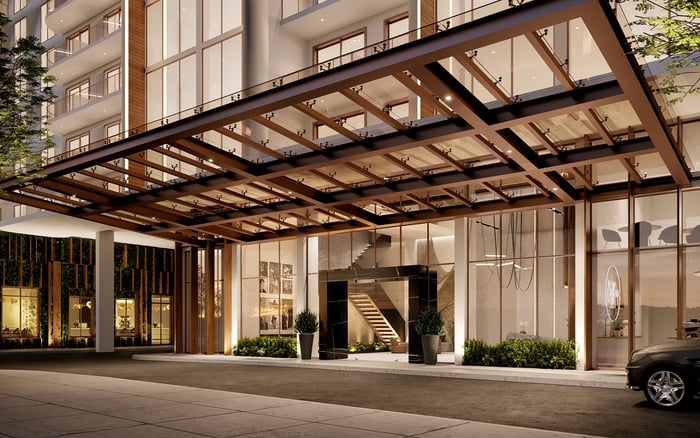
Continuum Club & Residences North Bay Village reframes waterfront entertaining around private-club support, resident-focused access and condominium discretion rather than hotel-style traffic.
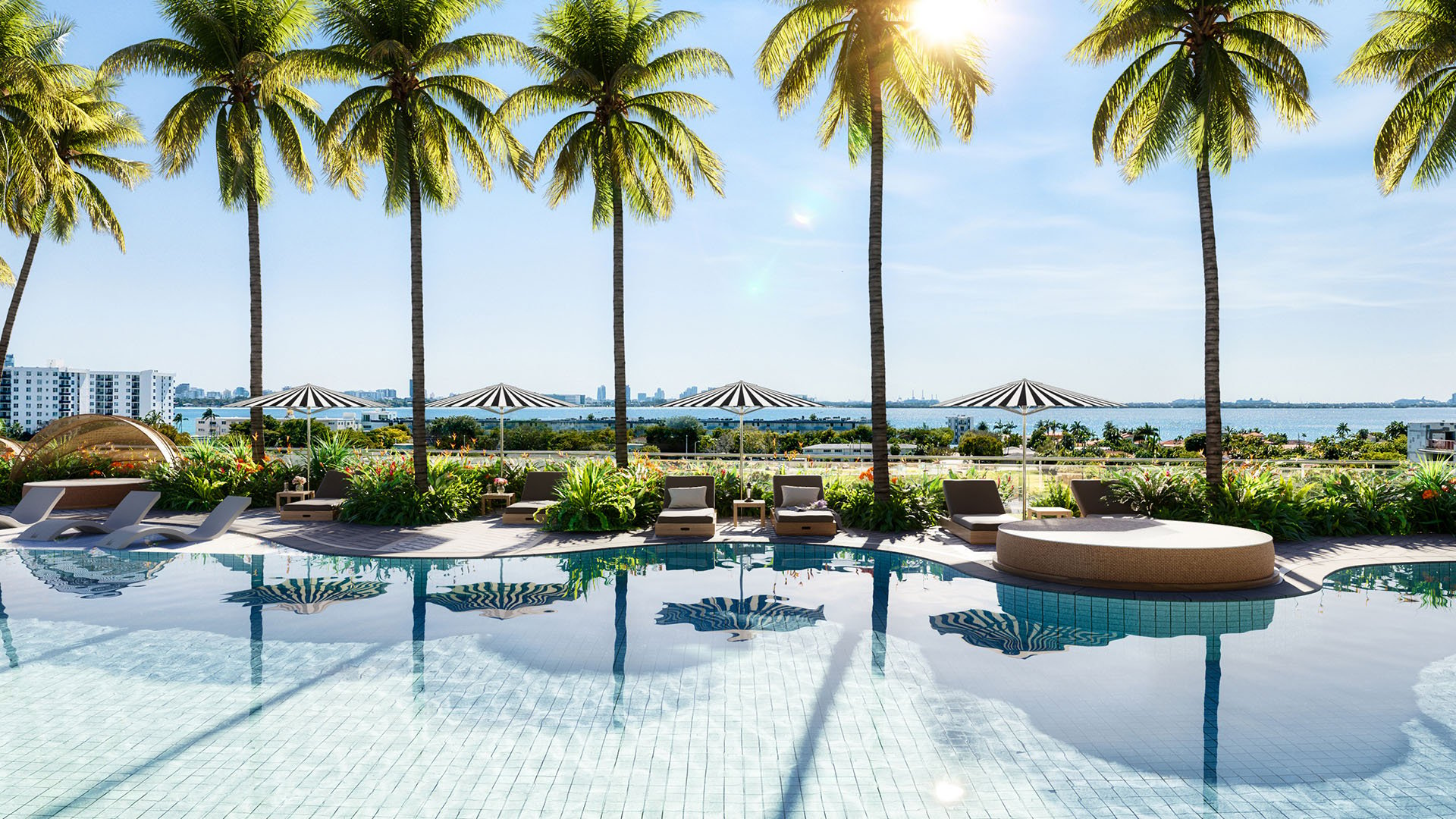
Continuum Club & Residences North Bay Village speaks to a highly specific South Florida buyer: someone who wants the architecture of a social life without the public machinery of a hotel. The promise is not simply amenity abundance. It is the ability to host, dine, gather and receive friends in a setting that feels professionally supported while remaining unmistakably residential.
That distinction matters in Miami’s upper tier. Many buyers admire hospitality-level service, yet hesitate when that service brings transient guest patterns, public arrivals, conference-like circulation or the subtle loss of control that can come with a hotel ecosystem. Continuum Club & Residences North Bay Village is positioned differently: a waterfront residential project with private-club-style amenities and condominium privacy at the center of the proposition.
The appeal is not withdrawal from Miami’s social energy. It is a more edited version of it. North Bay Village’s island setting keeps the project connected to the broader luxury circuit while giving residents a base removed from heavier tourism corridors. For buyers using search shorthand, North Bay Village captures the appeal of being between Miami Beach and the mainland without feeling absorbed by either.
The project’s strongest lifestyle idea is the residence as a social home base. Private dinners, intimate celebrations and larger resident-hosted gatherings are part of the narrative, supported by professional service infrastructure rather than left entirely to improvisation. That is a meaningful shift from the traditional condominium model, where entertaining often depends on the owner’s own staff, outside vendors or the limits of a private apartment.
At Continuum Club & Residences, the club component is framed as an extension of home rather than a separate commercial attraction. The difference is subtle but important. In a hotel-branded condominium, the energy of shared spaces can be shaped by non-resident guests, visitors moving through the lobby, event traffic or food-and-beverage operations designed for volume. Here, the concept emphasizes resident-focused access and curated usage, giving the building a more controlled social rhythm.
That controlled rhythm is especially relevant for buyers who entertain frequently. A dinner that begins in a private residence and continues into a club setting should feel seamless, not public. A gathering with friends should feel elevated, not exposed. The service model centers on discretion and residential comfort, allowing the building to support the host without overtaking the atmosphere.
Luxury buyers often talk about service as if more is always better. In practice, the most sophisticated service is often the least visible. Continuum’s position is built around hospitality-level support delivered inside a controlled residential environment, rather than through a hotel lobby ecosystem. The building can assist with the mechanics of entertaining while protecting the owner’s sense of privacy.
This is where the project separates itself from a condo-hotel mentality, even for buyers actively comparing high-service addresses. A hotel residence can be compelling for those who want brand energy, room-service associations and constant activity. But for an owner who sees the home as a private stage for family, friends and select guests, too much public hospitality can become a liability.
The better question is not whether a building has amenities. It is who uses them, how they are accessed and whether the circulation pattern preserves the dignity of coming home. Continuum’s concept leans into resident-centered usage rather than public hotel traffic, which makes the entertaining offer feel more personal and less transactional.
The bayfront orientation is not a decorative footnote. It is central to the entertaining appeal. In South Florida, water changes the tone of a room before the first guest arrives. A water-view backdrop can turn a simple dinner into a more memorable evening, particularly when the setting feels private rather than performative.
North Bay Village gives this idea a particular clarity. The island setting creates separation without isolation, which is useful for buyers who want to host in Miami without importing the city’s busiest public currents into everyday life. The water becomes part of the event experience, while the residence remains the anchor.
Nearby waterfront and island-oriented projects create useful context. A buyer considering Shoma Bay North Bay Village or Tula Residences North Bay Village may already understand the neighborhood’s appeal as a more residential vantage point within the Miami map. Continuum’s distinction is the specific blend of club support, bayfront atmosphere and controlled access.
Continuum is best understood alongside, not necessarily against, Miami’s broader luxury landscape. In Brickell, buyers may look to a service-rich urban address such as St. Regis® Residences Brickell for a more city-centered version of branded refinement. In Surfside, a project such as The Delmore Surfside speaks to a quieter coastal profile. Each location has its own social grammar.
Continuum’s grammar is different. It is not primarily about being in the densest business district or directly on an oceanfront resort corridor. It is about drawing from Miami Beach, the mainland, dining districts, cultural destinations and business centers while returning to an island base that feels more controlled.
For new-construction buyers, that distinction can be decisive. Many are no longer asking only for a gym, pool or lounge. They are asking whether the building will protect their time, support their hosting style and reduce the friction of social life. They want access without overexposure, service without spectacle and convenience without feeling as though they live above a public destination.
The natural buyer for Continuum is someone who hosts deliberately. This may be a primary resident with a substantial local network, a seasonal owner who wants a polished Miami base or a family that prefers private entertaining to restaurant dependence. The common thread is control. The owner wants professional support available, but does not want the building’s daily life dictated by strangers passing through.
That buyer also tends to value discretion over theatricality. The residence is not a backdrop for constant display. It is a place where friends can arrive, dinner can unfold, conversation can continue and the building can quietly assist in the background. This is a more mature definition of luxury, one that places emotional comfort on the same level as amenity programming.
Continuum Club & Residences North Bay Village also fits the buyer who sees location strategically. The project’s position between Miami Beach and the mainland supports access to dining, cultural and business districts, yet the island setting allows a softer residential return. That balance is why North Bay Village is increasingly legible to luxury buyers who want Miami proximity without hotel-corridor intensity.
The most important evaluation is not whether the phrase private club sounds appealing. It is how the private-club model will function in daily life. Buyers should focus on access protocols, resident usage expectations, event support, guest arrival experience and the relationship between private residences and shared club spaces.
It is also worth thinking carefully about how often one entertains. A buyer who rarely hosts may still value the building’s discretion and waterfront setting, but the full strength of the concept belongs to owners who will actually use the social infrastructure. For them, the building’s ability to support dinners and gatherings without hotel-style intrusion may be the defining advantage.
Finally, buyers should understand that this is a lifestyle choice as much as a real estate choice. Continuum’s appeal rests on a precise balance: enough service to make hosting easier, enough privacy to make home feel protected and enough Miami access to keep the social calendar alive.
What is the core concept behind Continuum Club & Residences North Bay Village? It is positioned as a waterfront residential project that combines private-club-style amenities with condominium privacy.
How is it different from a hotel-branded residence? The concept emphasizes resident-focused access and curated usage rather than public hotel traffic or transient crowd patterns.
Is entertaining a major part of the lifestyle pitch? Yes. The project is intended to support private dinners, social gatherings and larger resident-hosted events with professional service infrastructure.
Does the building rely on a hotel lobby ecosystem? Its positioning centers on hospitality-level support inside a controlled residential environment, not through a hotel-style public setting.
Why does North Bay Village matter for this concept? The island setting offers access to Miami’s lifestyle while feeling removed from heavier tourism corridors.
Are water views part of the appeal? Yes. The bayfront orientation is presented as central to the entertaining experience and the overall residential atmosphere.
Who is the likely buyer for this type of project? The concept suits buyers who host often, value discretion and want service support without the constant presence of non-resident guests.
Can it work as a seasonal residence? It may appeal to seasonal owners who want a refined Miami base with social infrastructure and a quieter residential rhythm.
How should buyers compare it with Brickell or beach addresses? Buyers should weigh whether they prefer urban intensity, oceanfront resort energy or an island-based residence with controlled access.
What should buyers examine before committing? They should review access protocols, club usage expectations, guest circulation and how event support integrates with private residences.
For a confidential assessment and a building-by-building shortlist, connect with MILLION.
If branded residences are on your mind — as a home or as an allocation — we would be glad to share what we are seeing, privately.
Begin a quiet conversation