A discreet buyer’s guide to judging private elevators, arrival sequences, service design, resilience, privacy, and long-term ownership quality in Hillsboro Beach luxury residences.
In the upper tier of South Florida real estate, a private elevator is rarely just a convenience. It is the opening chapter of ownership: the moment a resident moves from the public world into a private refuge. For buyers considering Hillsboro Beach, the question is not simply whether a residence has a private elevator. The more important question is how the entire arrival sequence performs.
A disciplined buyer should study the journey from the first controlled point of access to the moment the elevator doors open into the residence or vestibule. The best designs feel effortless, but that ease is usually the result of careful planning: clear sightlines, discreet staffing, intuitive guest routing, secure parking access, and separation between owner, visitor, delivery, and service movement.
This is where a Hillsboro Beach purchase requires particular sensitivity. Oceanfront and waterfront living rewards privacy, but it also exposes weaknesses in planning. If the arrival path feels ceremonial yet impractical, the experience can become burdensome. If it is efficient but under-designed, it can diminish the emotional value of a premier home.
Private elevators are often presented as a mark of exclusivity, but buyers should evaluate them as part of a privacy system. Ask where a guest is greeted, where a vehicle is screened, how residents are identified, and whether elevator access is keyed, staffed, programmed, or otherwise controlled. The goal is not theater. The goal is a quiet confidence that the building knows who should be where, and when.
A private elevator that opens directly into a residence can feel extraordinary, but it also demands careful consideration. Is there a vestibule or gallery that buffers the living space? Can staff, family members, and guests arrive without disrupting the home? Does the door open into a composed architectural moment, or into a compromised corner shaped by mechanical necessity?
Luxury buyers should walk the route during a showing as if they already live there. Arrive by car. Pause at the entry. Notice whether instructions are needed or whether the sequence is self-explanatory. A well-resolved controlled arrival should reduce friction, not create a performance for every visit.
The more private an elevator feels, the more critical its underlying infrastructure becomes. Buyers should ask about redundancy, service protocols, elevator access for maintenance teams, and how the building manages temporary interruptions. A private lift that becomes a single point of failure is not a luxury amenity. It is an ownership risk.
Look closely at the elevator cab, doors, landing finishes, call panels, ventilation, lighting, and threshold details. These elements reveal whether the system was treated as a design object or merely dressed after installation. Fine materials matter, but durability matters more in a coastal environment. Fingerprints, salt air, humidity, sand, luggage, pets, and service traffic will test even the most elegant finishes.
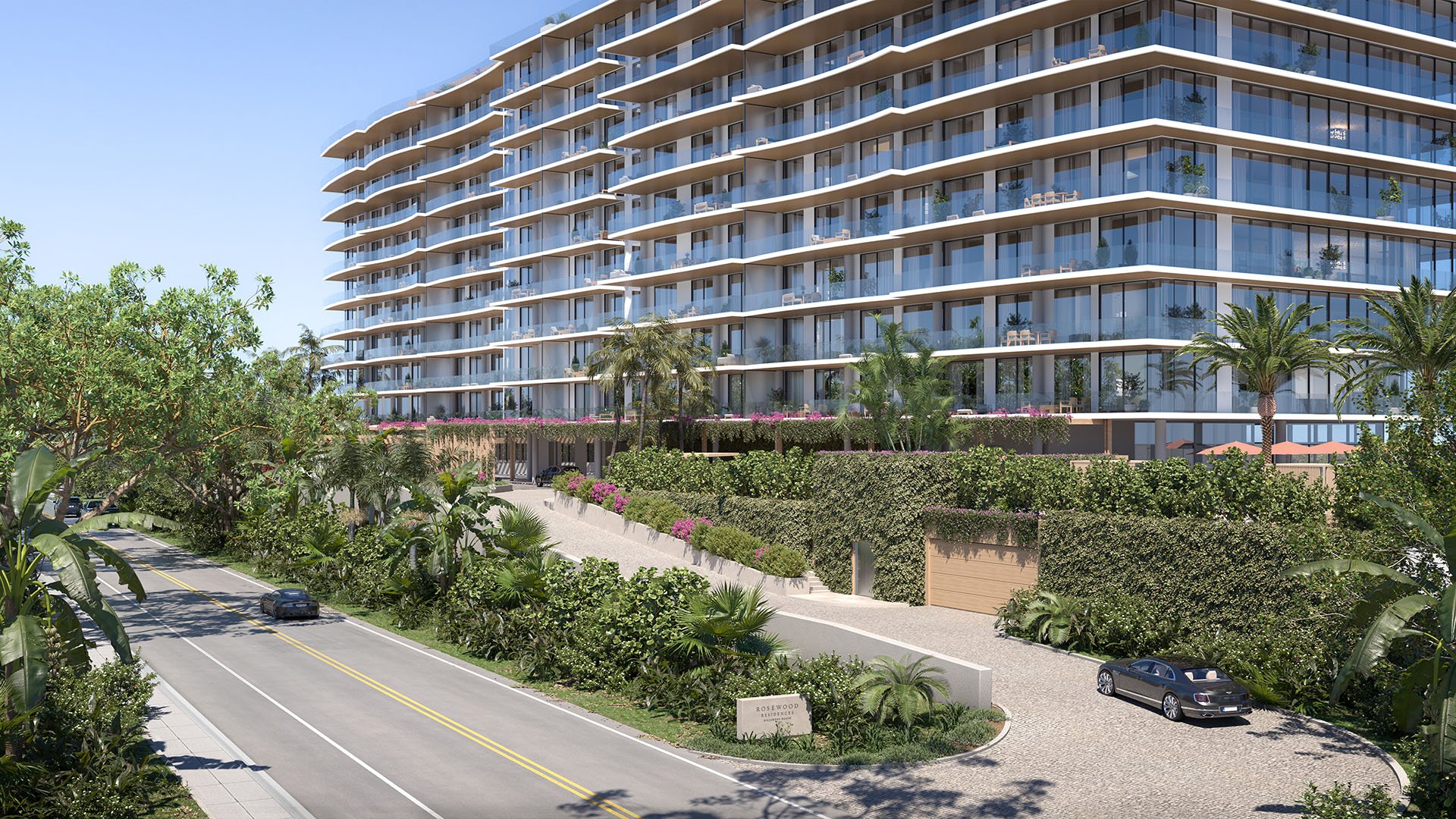
For buyers reviewing newer boutique offerings such as Rosewood Residences Hillsboro Beach, the evaluation should include both the romance of the private arrival and the practical questions that preserve it over time. A beautiful ride from garage to residence is only as successful as the operational thinking behind it.
Security is one layer of controlled arrival, but it should not be confused with hospitality. A severe or confusing checkpoint can make an expensive property feel institutional. Conversely, a building that prizes ease without sufficient control may compromise the discretion buyers expect.
The strongest luxury residential arrivals combine visibility and restraint. Staff should be able to understand who is arriving without making residents feel observed. Guests should feel guided, not interrogated. Contractors and deliveries should have a separate logic whenever possible, especially in properties where residences are large, families travel often, and service activity is frequent.
This balance is visible across South Florida’s most considered residential projects. At coastal addresses such as Armani Casa Residences Pompano Beach, buyers often compare the emotional experience of the arrival with the day-to-day demands of oceanfront living. Farther south, a property like 2000 Ocean Hallandale Beach can help frame how a refined vertical residence should separate serenity from circulation.
Before purchasing, buyers should request a clear explanation of elevator access rights, maintenance responsibility, service response procedures, emergency protocols, and any rules governing guest or vendor use. The documents and building team should tell the same story. If they do not, slow down.
Ask whether the private elevator serves only one residence per stop, whether there is a semi-private vestibule, and how access is managed for household staff. Confirm how packages, catering, move-ins, art installation, medical personnel, and emergency responders reach the residence. These are not secondary concerns. They are the real-life scenarios that separate a polished sales presentation from a resilient ownership experience.
Buyers should also consider how the elevator supports aging in place, multigenerational use, and seasonal occupancy. A controlled arrival should serve the household gracefully whether the owner is hosting a formal evening, returning from travel, or receiving routine maintenance while away.
Hillsboro Beach buyers often evaluate residences across a broader coastal corridor, including Pompano Beach, Fort Lauderdale, Boca Raton, and Palm Beach. That comparison is useful, provided the buyer focuses on experience rather than amenity labels.
A private elevator in a tall tower may feel different from one in a lower-density setting. A staffed porte cochere creates a different rhythm than a discreet garage-to-residence path. A branded environment may emphasize hospitality language, while a boutique building may prize quiet autonomy. None is automatically superior. The correct choice depends on how the owner lives.
For example, The Ritz-Carlton Residences® Pompano Beach offers a useful comparison point for buyers who value service culture, while Four Seasons Hotel & Private Residences Fort Lauderdale can help frame the relationship between hospitality, staff presence, and residential discretion. The lesson for Hillsboro Beach is to identify which type of arrival feels protective without feeling overmanaged.
A serious buyer should pay attention to small details. Does the elevator landing have enough space for luggage and guests? Is there a place for flowers, art, or a console without narrowing circulation? Are materials consistent from the lobby to the cab to the residence entry? Is the lighting flattering at night as well as during the day?
Listen, too. Mechanical noise, door operation, chimes, hallway acoustics, and garage reverberation all shape the sense of privacy. A luxury home should not announce every arrival to adjoining spaces. The most desirable systems feel calm, quiet, and predictable.
The best advice is often simple: buy the arrival you can live with every day, not the one that photographs best for five minutes. A controlled arrival should make ownership feel more composed, more secure, and more personal. If it does not, the private elevator is merely decoration with a motor.
Is a private elevator always better than a shared elevator? Not always. A well-run shared system can outperform a poorly planned private one if access, wait times, and service protocols are stronger.
Should the elevator open directly into the residence? It can be elegant, but many buyers prefer a vestibule or gallery for privacy, deliveries, and a more composed arrival moment.
What is controlled arrival in a luxury residence? It is the managed sequence from property entry to home entry, including vehicles, guests, staff, elevators, and service movement.
What should buyers ask about elevator maintenance? Ask who manages routine service, how interruptions are handled, and how residents are notified when work is scheduled.
How important is a service elevator? Very important for larger residences. It helps separate daily living from deliveries, contractors, housekeeping, and move-in activity.
Can private elevators affect resale appeal? Yes, when they improve privacy and ease. Poorly planned access can create friction that sophisticated buyers notice quickly.
Should buyers test the arrival during a showing? Yes. Arrive as you would in daily life, from vehicle entry through elevator access, and notice whether the sequence feels intuitive.
What matters most in an oceanfront building? Durable finishes, thoughtful maintenance access, quiet operation, and reliable circulation are especially important near the coast.
Are branded residences better for controlled arrival? Not automatically. Strong service culture can help, but the physical plan and operating rules must support the desired privacy.
What is the best first step before purchasing in Hillsboro Beach? Review the elevator experience in person, then compare it with the building documents and the lifestyle you expect to live.
For a tailored shortlist and next-step guidance, connect with MILLION.
If branded residences are on your mind — as a home or as an allocation — we would be glad to share what we are seeing, privately.
Begin a quiet conversation