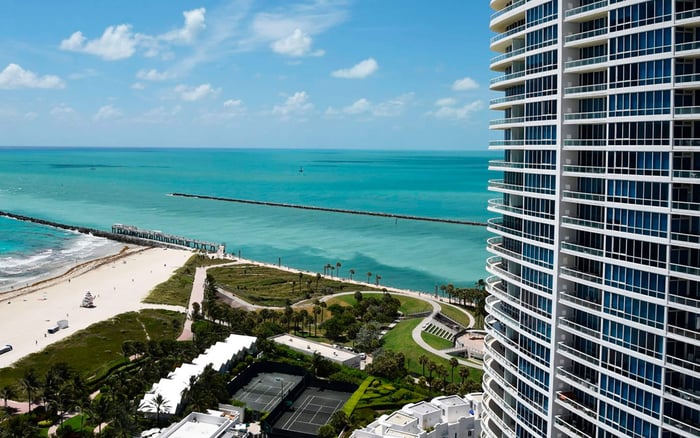
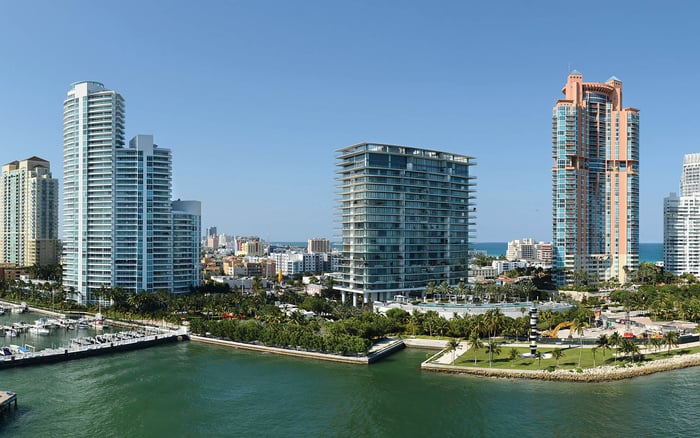
A discreet buyer’s guide to choosing Miami Beach residences for bay views, calmer daily living, and reduced exposure to the practical demands of beachfront ownership.
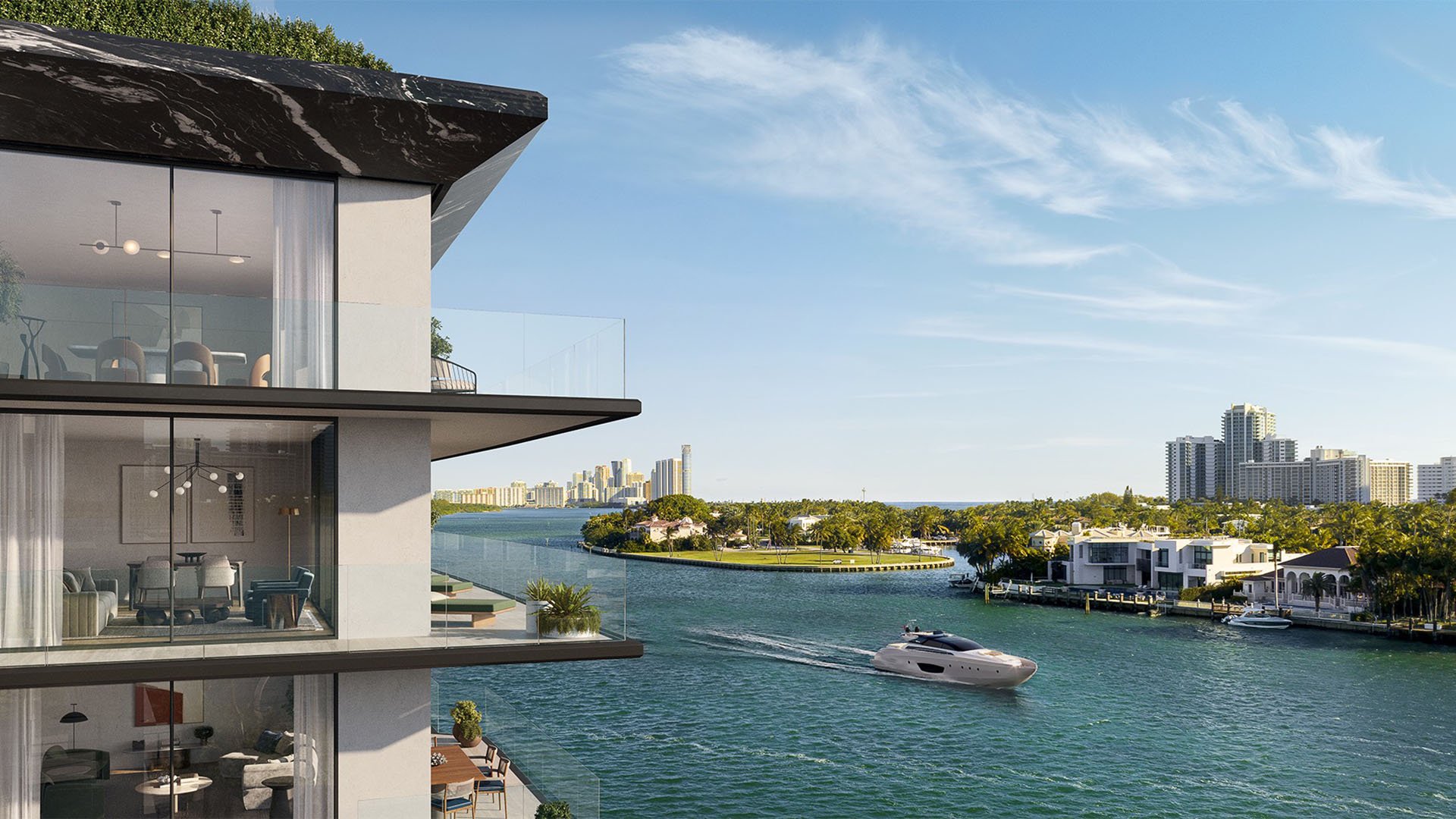
For many Miami Beach buyers, the dream is not necessarily a towel on the sand. It is a terrace with soft water views, a sunset that changes the entire room, and a residence that feels connected to the bay without inviting the daily friction of oceanfront living. The distinction is subtle but meaningful. Beachfront ownership can be magnificent, yet it often brings a more public rhythm: sand, salt, crowds, exposure, and a constant dialogue with the shoreline.
Bay-view ownership is quieter. It favors light over spectacle, outlook over access, and privacy over performance. The buyer who prefers bay views to sand maintenance is often highly intentional: more interested in a well-framed water view than in the status of being directly on the beach. This is a Miami Beach choice rooted in taste, not compromise.
Bay-facing homes often carry a softer daily cadence. Morning light, evening color, boat movement, and the layered silhouettes of the mainland can make the view feel architectural rather than merely scenic. The water becomes part of the interior composition, particularly when living areas, primary suites, and terraces are aligned with the outlook.
This is where waterfront living becomes more than a location label. It is a question of how a residence behaves at different hours. Does the view animate breakfast without glaring through the glass? Does the terrace remain usable in the evening? Does the living room retain privacy after dark? Buyers who answer those questions carefully tend to make better long-term decisions than those who simply chase the widest blue on a rendering.
A bay-view search in Miami Beach should begin with lifestyle radius. Some buyers want the quieter residential mood of Mid-Beach. Others prefer the cultural proximity and restaurant access of South Beach while keeping the residence itself calm. The ideal location is rarely just about distance to the water. It is about how one moves through the day: garage to elevator, elevator to home, home to terrace, terrace to dinner.
Projects such as The Ritz-Carlton Residences® Miami Beach invite a more private-residence lens, where buyers should study arrival sequence, service culture, and how the building frames its relationship to the water. In a different Miami Beach context, Five Park Miami Beach is useful to evaluate for buyers who want a connected urban setting while still prioritizing air, openness, and views over sand-at-the-door living.
The point is not to declare one address universally superior. It is to match the residence to the buyer’s true operating pattern. A buyer who spends every weekend on a boat, entertains at sunset, and works from home three days a week has different needs from a buyer who wants a lock-and-leave pied-a-terre with a beautiful horizon.
Bay-view buyers should approach the building as a complete system. The right questions are practical, not glamorous. How protected is the arrival experience in heavy weather? Is guest parking intuitive? Are service elevators adequate for deliveries and installations? Is there enough storage for water-adjacent living, from paddle gear to luggage to seasonal entertaining pieces?
If a boat slip is part of the wish list, confirm availability, restrictions, access, and operating procedures before emotionally committing to a residence. Do not assume that waterfront proximity equals boating convenience. Likewise, if the building has a marina component or nearby dockage options, understand how that affects privacy, views, traffic, and noise.
Management quality also matters. A well-run bayfront building should feel composed. Staff presence, package handling, valet rhythm, contractor rules, and amenity reservations can shape the owner experience as much as stone, millwork, or ceiling height. In luxury real estate, quiet competence is an amenity.
Inside the unit, sightline discipline is everything. The best bay-view residence does not require a buyer to stand in one perfect corner to enjoy the water. The view should be present from the entry experience, living area, kitchen, primary suite, and ideally from the primary bath or dressing sequence. When evaluating floor plans, ask where the eye naturally lands.
Balcony depth deserves special scrutiny. A shallow terrace may photograph beautifully but live poorly. Buyers should consider whether the outdoor space can accommodate real seating, dining, planters, and circulation without feeling staged. A generous terrace can become the emotional center of the home, especially for owners who prefer sunset entertaining to beach club logistics.
Exposure is equally important. Some buyers adore dramatic afternoon light; others prefer a softer, more consistent glow. The correct exposure depends on art, furnishings, work habits, and the buyer’s tolerance for heat and glare. Window treatment strategy should be part of the acquisition conversation, not an afterthought.
The most refined buyers compare properties through use cases rather than adjectives. At Shore Club Private Collections Miami Beach, a buyer might evaluate how the residence supports a more resort-like Miami Beach life, then ask whether that matches a preference for privacy and low-friction ownership. At Setai Residences Miami Beach, the analysis may involve a different balance of address, service, and beach-oriented energy.
Even when considering ocean-oriented projects, bay-view buyers can learn by contrast. The Perigon Miami Beach may appeal to buyers who want architectural presence and a Miami Beach identity, but the same buyer should still ask whether daily happiness comes from direct sand access or from a calmer water outlook elsewhere. The best acquisition is the one that aligns with lived preference rather than social assumption.
A bay-view buyer should negotiate around the exact assets that matter: protected views, terrace function, parking, storage, building operations, and any water-related privileges or limitations. The premium should be tied to livability, not just the view from the marketing image. If two residences appear similar, the better purchase may be the one with cleaner sightlines, less operational friction, or a stronger sense of privacy.
Due diligence should include multiple visits at different times of day when possible. Sunset is seductive, but morning use matters. Weekday traffic patterns can differ from weekend energy. Elevators, valet, lobby cadence, and amenity use should be observed like a connoisseur studies proportion and finish.
Lifestyle is the real subject. Buyers who choose bay over beach are often choosing control. They want water, but not sand in the elevator. They want a view, but not constant public movement below. They want Miami Beach, but with a residence that can feel like a retreat rather than a stage.
That does not make bay-view ownership less glamorous. It can be more discreet, more personal, and more enduring. In a market where many buyers arrive with inherited assumptions about oceanfront prestige, the confident move is to identify the version of Miami Beach that actually suits one’s life.
Is a bay view less desirable than an ocean view? Not necessarily. For many buyers, bay views offer privacy, sunset light, and a calmer daily experience.
Should I prioritize the view or the building? Prioritize both, but never let a beautiful view excuse weak operations, poor layouts, or inconvenient access.
What makes a bay-view terrace truly usable? Depth, privacy, shade, wind comfort, and enough room for real furniture are more important than photography alone.
Is direct beach access essential in Miami Beach? Only if it matches your actual routine. Many owners prefer proximity to the beach without managing sand every day.
How should I evaluate a water view from inside the residence? Stand where you will actually live: kitchen, sofa, bed, desk, and terrace seating, not just the best photo angle.
Does waterfront always mean boating convenience? No. Confirm access, rules, slips, docking options, and practical logistics before making boating part of the value case.
Are higher floors always better for bay views? Higher floors may improve openness, but mid-level homes can offer a more intimate connection to the water and skyline.
What should second-home buyers emphasize? Security, service, storage, parking, maintenance ease, and a building culture that supports lock-and-leave ownership.
Can a bay-view home still feel like a Miami Beach residence? Yes. The best examples combine water, light, and access to the city’s social life without relying on sand frontage.
What is the biggest mistake bay-view buyers make? They focus on the postcard view and underweight daily operations, terrace function, and privacy after dark.
If you'd like a private walkthrough and a curated shortlist, connect with MILLION.
If branded residences are on your mind — as a home or as an allocation — we would be glad to share what we are seeing, privately.
Begin a quiet conversation