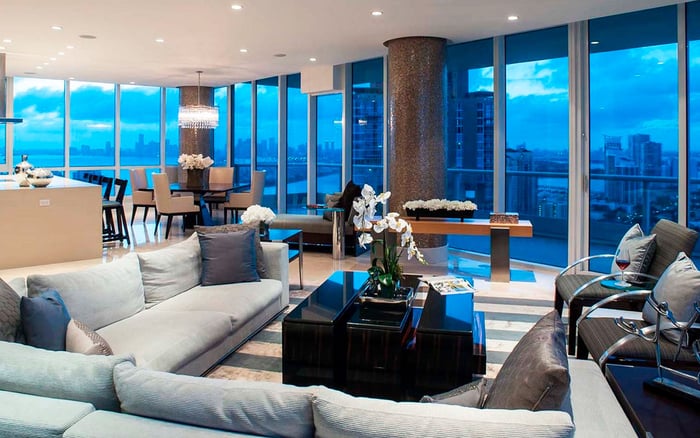
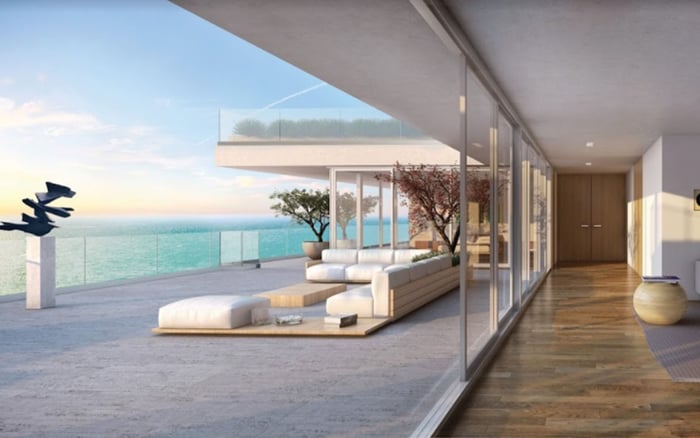
Rivage Bal Harbour’s long-term resale story is less about broad Miami condo momentum and more about scarcity, buyer depth, liquidity discipline and its ability to hold position within a narrow super-prime oceanfront set.
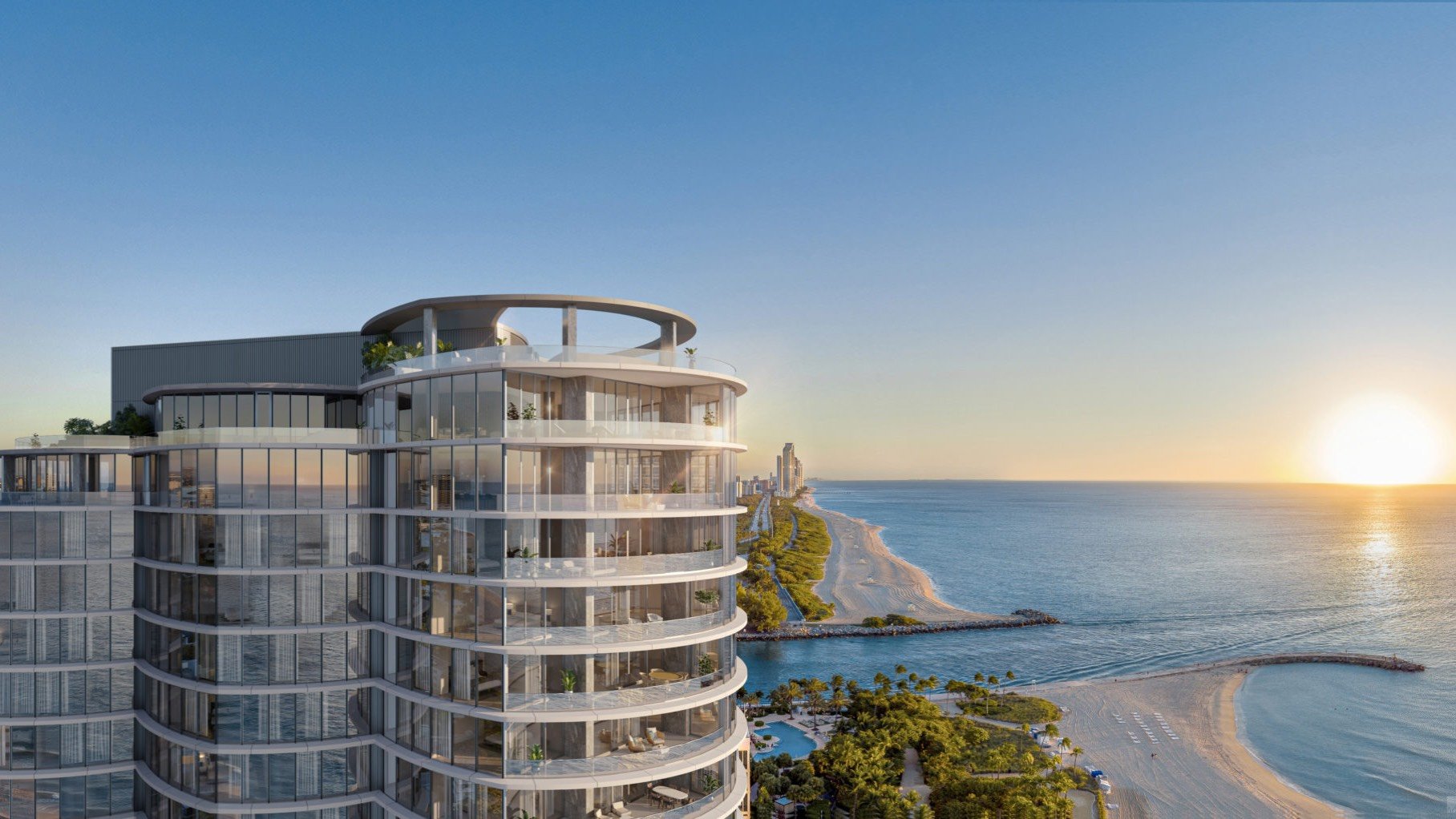
For long-term owners, the central question around Rivage Bal Harbour is not whether Bal Harbour is recognized as a luxury address. It is. The more useful question is how a new ultra-luxury oceanfront condominium may trade once its first full resale cycles begin to take shape.
Rivage Bal Harbour sits within one of South Florida’s most constrained residential settings: true oceanfront land in Bal Harbour. That scarcity matters because future resale buyers are not simply comparing finishes, views or amenity programs. They are weighing the ability to own a new-generation residence in a market where additional oceanfront inventory is structurally limited.
This is why Rivage’s resale positioning should be evaluated differently from a broader Miami luxury condominium. It belongs to a narrower super-prime band, where the buyer universe is smaller, more selective and more globally mobile. In that segment, pricing power is often less about neighborhood discovery and more about whether a building earns lasting relevance among trophy condominium comparables.
Buyer depth for Rivage is best understood as global rather than local. The prospective audience may come from multiple geographies, but demand is still filtered by price tier, carrying costs and the emotional threshold required to transact at the top of the market.
That distinction matters. A residence can have a worldwide buyer pool and still face periods of limited absorption if the price band is high enough. The uppermost residence lines in any super-prime building typically carry more liquidity risk than lower-priced residences in the same property, simply because fewer buyers can act quickly and confidently at that level.
For Rivage, the depth of demand is therefore not a single number. It is layered. Residence lines that offer compelling oceanfront ownership without reaching the most rarefied pricing levels may see stronger liquidity, while the highest-value homes may depend on a more specific buyer arriving at the right moment.
The most relevant competitive frame is not the entire Miami condo market. Rivage is more likely to be judged against established and emerging trophy properties along the northern Miami Beach, Surfside and Bal Harbour coastline.
Within Bal Harbour itself, Oceana Bal Harbour remains a natural reference point for buyers considering established oceanfront condominium value in the same village. Just south, The Surf Club Four Seasons Surfside represents the type of branded, globally legible address that can shape expectations for service, privacy and resale durability.
The comparison set can also extend to newer or highly curated Surfside offerings, where The Delmore Surfside and Fendi Château Residences Surfside help illustrate how narrow the true trophy-coastal field can be. Rivage does not need to appeal to every luxury buyer. It needs to remain credible among buyers already focused on rare oceanfront condominium assets.
Pricing & Trends analysis for Rivage should begin with two realities. First, Bal Harbour’s established luxury identity and limited oceanfront land are supportive long-term forces. Second, high-end resale markets are cyclical, especially when the buyer base is tied to global wealth conditions.
In strong markets, scarcity can amplify competition for the right residence. In softer markets, scarcity can protect positioning, but it does not eliminate the need for price discipline. Sellers who expect immediate liquidity at ambitious pricing may discover that the super-prime buyer is patient, informed and willing to wait for alignment.
The most durable resale outcomes are likely to depend on the building’s architectural and programmatic quality relative to its trophy peers. If future buyers view Rivage as a true top-tier oceanfront asset, its resale thesis strengthens. If the market perceives a gap between pricing and execution, absorption may become more selective.
Ultra-luxury buyers may be less rate-sensitive than conventional buyers, but they are not indifferent to ownership costs. Rising coastal Florida insurance expenses, operating costs and regulatory pressures have become part of the long-term underwriting for oceanfront condominiums.
For Rivage, this does not negate the scarcity thesis. It adds a layer of discipline. Buyers assessing investment quality will look beyond acquisition price to evaluate carrying costs, association strength, insurance exposure and the broader resilience of the ownership experience.
That makes the resale conversation more sophisticated. The future buyer of a Rivage residence may be comfortable with significant capital deployment, but will still expect clarity around long-term operating friction. In this segment, confidence matters as much as desire.
Not all residences in a super-prime condominium behave the same way. The broadest buyer depth usually exists where price, view quality and layout utility meet in balance. The most expensive residences can command exceptional attention, but their buyer pool is naturally thinner.
This is not a weakness specific to Rivage. It is a feature of ultra-luxury real estate. The rarer the asset, the more individualized the buyer match becomes. Owners should therefore think about liquidity as a spectrum rather than a guarantee.
A well-positioned residence may still require patience during global macroeconomic stress. In those periods, buyers can become more cautious, underwriting can tighten and discretionary acquisitions may slow. Long-term value may remain intact, while near-term absorption becomes less predictable.
For buyers considering Rivage, the most important long-term indicators are not only achieved resale prices. Watch how quickly comparable residences absorb, how sellers respond to quieter cycles and whether buyers continue to place Rivage inside the top tier of Bal Harbour oceanfront living.
The strongest resale positioning will come from a combination of scarcity, architectural credibility, programmatic quality and disciplined ownership costs. Bal Harbour gives Rivage an exceptional platform. The building’s long-term market stature will depend on how convincingly it performs within South Florida’s ultra-luxury oceanfront ecosystem.
What is the core resale thesis for Rivage Bal Harbour? The thesis centers on scarce new oceanfront inventory in Bal Harbour and the village’s established luxury identity.
Is Rivage competing with the broader Miami condo market? No. Rivage is better viewed within a narrow super-prime condominium band rather than the broader luxury market.
How deep is the buyer pool for Rivage? Buyer depth is global, but it is limited by price tier and the selectivity of ultra-luxury purchasers.
Are the most expensive residences more liquid? Not necessarily. The highest-priced residence lines may have thinner buyer pools and require more patience.
What supports long-term value in Bal Harbour? Oceanfront land scarcity and Bal Harbour’s luxury brand are key structural supports for long-term positioning.
What could pressure resale pricing? Global macroeconomic stress can affect absorption, buyer confidence and pricing discipline across cycles.
Do insurance costs matter for ultra-luxury buyers? Yes. Rising insurance, operating expenses and regulatory pressures are part of long-term underwriting.
Why do trophy comparables matter? Rivage’s resale strength depends on how buyers judge its quality against established oceanfront trophy condominiums.
Is Rivage best viewed as a lifestyle purchase or an investment? It can be both, but sophisticated buyers should weigh lifestyle appeal alongside liquidity and ownership costs.
What should future sellers monitor most closely? Sellers should monitor buyer depth, absorption pace, pricing volatility and comparable trophy condominium activity.
For a discreet conversation and a curated building-by-building shortlist, connect with MILLION.
If branded residences are on your mind — as a home or as an allocation — we would be glad to share what we are seeing, privately.
Begin a quiet conversation