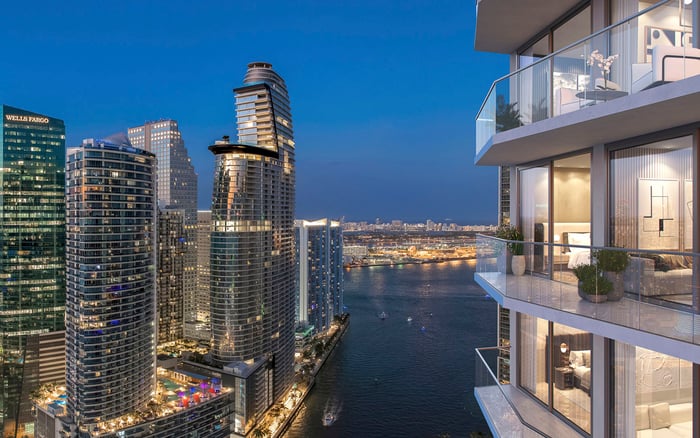
Special assessments can quietly reshape the cost of ownership in South Florida’s full-service condo towers, where service, amenities, reserves, governance and capital planning matter as much as the purchase price.

In South Florida’s luxury condominium market, the headline price is often the least complicated part of the conversation. The more revealing question is what the residence will truly cost to own once service expectations, building systems, insurance, reserves, amenities and board culture are viewed together. That is where special-assessment culture becomes material.
A special assessment is not simply an extra invoice. In a full-service tower, it can signal how the building approaches stewardship. Some associations reserve assessments for clearly defined capital needs. Others allow them to become a recurring substitute for disciplined planning. For a buyer comparing two similar residences, that cultural difference can affect liquidity, negotiating leverage and long-term satisfaction.
The issue is especially relevant across waterfront addresses, where salt air, exposure, complex mechanical systems and hospitality-level expectations can make ongoing care feel more like asset management than ordinary homeownership. A residence may offer a compelling view, a graceful lobby and polished staff, but the financial architecture behind that experience deserves equal attention.
Monthly maintenance is visible. Special assessments are episodic, and therefore easier to underestimate. Buyers often compare buildings by dues per month, then treat assessments as exceptions. A more sophisticated approach is to ask whether the monthly fee is realistic for the level of service being delivered.
A tower with valet, concierge, security, fitness, pool service, spa areas, elevators, facade maintenance and extensive common areas has a different cost profile from a simpler boutique building. If the monthly budget appears unusually restrained, the buyer should ask what is being deferred, what is being underfunded and whether future owners may be asked to close the gap later.
This matters in Brickell, where new and established towers compete on convenience, brand, skyline presence and amenity depth. A buyer considering St. Regis® Residences Brickell, for example, may naturally focus on design, location and service identity. Yet that same buyer should also read association budgets with the same care they would apply to a private club membership or a managed family office asset.
The true comparison is not simply purchase price plus monthly fee. It is purchase price, monthly fee, reserve posture, anticipated capital needs, owner appetite for quality and the likelihood that major work will be funded smoothly rather than abruptly.
Special-assessment culture is revealed through patterns. Are owners consistently surprised by large needs, or does the board communicate early? Are capital projects discussed before they become urgent? Are minutes clear enough to show the tone of debate? Is the association maintaining the property at a level consistent with the building’s market position?
Luxury buyers are accustomed to paying for excellence. The concern is not that a full-service building costs money to operate. The concern is whether the cost is predictable, rational and aligned with the residence’s value. A well-run association can make expensive work feel orderly. A poorly governed one can make even modest work feel disruptive.
In Miami Beach, this distinction can be particularly important because the lifestyle proposition is so strong. A residence at The Perigon Miami Beach speaks to a buyer who values architecture, beachfront living and discretion. That buyer should still ask practical questions: how common-area standards are protected, how future repairs will be funded and what level of owner consensus exists around maintaining the property’s luxury position.
The best buildings tend to have owners who understand that quality is not a one-time delivery. It is renewed through staffing, maintenance, capital planning and governance discipline.
Many buyers assume that newer towers automatically carry less assessment risk. They may, especially when major systems are fresh and common areas have recently been delivered. But new construction introduces its own diligence questions. Early budgets can differ from mature operating realities. Amenity programming may evolve. Staffing levels may change after residents settle in. Developer turnover and association control can also shape future decisions.
That does not make new development less attractive. It simply means the buyer should not confuse newness with financial certainty. The question is how the building is designed to transition from a sales environment into a long-term residential institution.
In Sunny Isles Beach, vertical luxury has long attracted buyers who want scale, views and full-service ease. A property such as Bentley Residences Sunny Isles may invite attention for its architecture and branded identity, but the sophisticated owner will also consider the eventual rhythm of common-area care, service standards and capital reserves. The better the building, the more important it is to preserve the experience without relying on reactive funding.
Resale towers require a different lens. There, the buyer can often study a longer governance history. The question becomes whether past assessments were handled transparently, whether recurring issues appear in board discussions and whether owners have shown willingness to fund the building properly.
Special assessments can affect more than current cash flow. They can influence how a residence trades. A pending or rumored assessment may narrow the buyer pool, slow negotiations or cause buyers to demand credits. A recently completed assessment, by contrast, can sometimes clarify the building’s capital position if the work was meaningful and well executed.
The same invoice can therefore read differently depending on context. An assessment for visible enhancement, life-cycle replacement or important building care may support long-term value. An assessment that appears sudden, poorly explained or tied to chronic underfunding can raise concern.
This is why the strongest buyers do not stop at asking, “Are there any current assessments?” They ask, “What has been discussed, what has been deferred and what is the board’s philosophy on funding?” The answer may be found not in a single document, but in the tone across budgets, meeting minutes, reserve discussions and owner communications.
Along the Broward coast, where resort-style living has become increasingly refined, buyers evaluating The Ritz-Carlton Residences® Pompano Beach may weigh branded service and ocean proximity alongside long-term building economics. The residence is the private asset. The tower is the shared enterprise that protects it.
Before writing an offer, ask for the association’s current budget, recent meeting minutes, reserve information, insurance details, pending capital project discussions and disclosures regarding current or approved assessments. If the purchase is in a new development, ask how the association budget is expected to mature once the building is fully occupied and operating at its intended service level.
The conversation should be practical rather than adversarial. Strong buildings should welcome informed buyers. Serious owners understand that transparency protects everyone. If a property is truly full-service, its financial plan should be able to support the experience it promises.
For buyers drawn to private, low-density settings, Vita at Grove Isle shows how lifestyle, privacy and setting can shape the ownership conversation. Even then, the same principles apply: review the documents, understand the owner culture and distinguish between thoughtful investment and habitual surprise.
The most elegant purchase is not merely the one with the most beautiful view. It is the one where visible luxury and invisible governance work in concert.
What is a special assessment in a luxury condominium? It is an additional charge to owners, typically used to fund a specific building need beyond the regular operating budget.
Why does assessment culture matter in a full-service tower? It shows whether the building plans ahead or relies on owners to solve capital needs after they become urgent.
Are higher monthly fees always a negative sign? Not necessarily. A higher fee may reflect realistic staffing, maintenance, insurance, reserves and amenity costs.
Can a lower monthly fee be risky? It can be if the budget is not sufficient for the building’s service level, upkeep and long-term capital needs.
Should buyers avoid buildings with past assessments? No. The key is why the assessment occurred, how it was communicated and whether it improved the property.
What documents should a buyer review before purchasing? Review budgets, meeting minutes, reserve information, insurance materials and disclosures about current or approved assessments.
Do new towers have fewer assessment concerns? They may have newer systems, but buyers should still study early budgets, future staffing needs and association transition issues.
How can assessments affect resale value? Pending assessments can complicate negotiations, while completed and well-managed projects may clarify the building’s condition.
Is assessment risk different for waterfront towers? Waterfront living can involve demanding maintenance conditions, so planning and reserves deserve particular attention.
What is the most important question to ask? Ask whether the association’s financial culture supports the level of luxury that owners expect over time.
If you'd like a private walkthrough and a curated shortlist, connect with MILLION.
If branded residences are on your mind — as a home or as an allocation — we would be glad to share what we are seeing, privately.
Begin a quiet conversation