A discreet buyer’s guide to evaluating visual privacy, balcony exposure, sightlines, future adjacency risk, and livability before purchasing near neighboring towers in Bal Harbour.
In Bal Harbour, privacy is not a secondary amenity. It is central to the value proposition, especially for buyers who expect an Oceanfront residence to feel serene, protected, and deeply personal. The question is not simply whether a home offers a Waterview, a generous Balcony, or a coveted address. The more refined question is how the residence performs when neighboring towers, adjacent terraces, amenity decks, and future construction possibilities enter the frame.
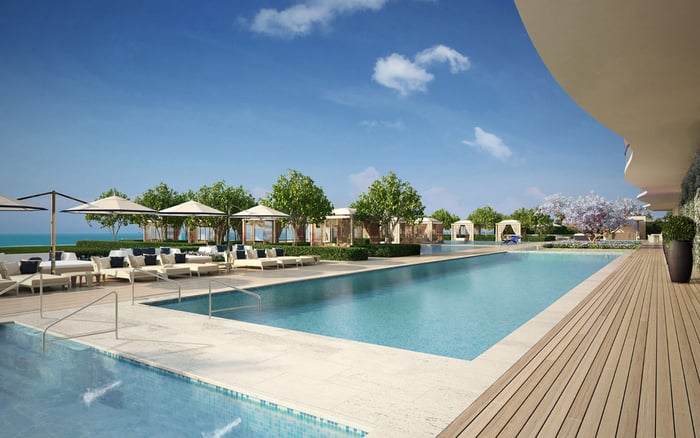
For a buyer considering Rivage Bal Harbour or evaluating resale opportunities such as Oceana Bal Harbour, privacy should be studied with the same discipline as finishes, service, and floor plan. A spectacular view can still feel exposed if the primary bedroom, breakfast area, or main terrace looks directly into another building’s living room. Conversely, a residence without the most dramatic vista may feel more luxurious when its sightlines are composed, layered, and shielded from everyday observation.
This is a Buyer's Guides topic that deserves precision. The best purchase is not always the highest floor, the widest terrace, or the newest building. It is the home where light, view, separation, and daily rituals align.
Privacy begins with a simple exercise: stand where life actually happens. Do not assess the residence only from the center of the living room during a staged showing. Walk to the kitchen island, the primary bath vanity, the dining table, the bed wall, the terrace seating area, and the corridor between bedrooms. Each position creates a different visual relationship with neighboring towers.
A buyer should ask: from this exact point, who can see me, and when? Morning light may expose one room, while evening interior lighting can turn glass into a display case. A tower that feels distant during the day may become visually present at night if residences face each other and both buildings are illuminated.
That is why a privacy evaluation should include more than one visit when possible. Daylight, dusk, and evening conditions reveal different truths. In a luxury coastal residence, the glass line is not only a design feature. It is the boundary between private life and the skyline.
High floors can improve privacy, but they do not guarantee it. An elevated residence may still align with another tower’s upper amenity level, rooftop area, or neighboring penthouse terrace. A lower residence may feel surprisingly private if landscaping, podium setbacks, or angular tower placement interrupts direct views.
The key is not height alone. It is relative height. Buyers should compare the subject residence with the neighboring building’s floors, balconies, amenity decks, and roofline. If the living room sits directly across from a neighboring terrace, the floor number becomes less meaningful. If the primary suite angles away from adjacent glass, the home may feel more discreet even at a less elevated level.
This is especially important in compact luxury corridors, where towers may share view corridors and coastal orientation. A premium should be paid for protected visual composition, not simply for altitude.
The most private residences are often designed with intelligent sequencing. Entry galleries, offset bedrooms, deep terraces, corner living rooms, and angled glazing can all soften exposure. The floor plan should allow residents to live naturally without constantly adjusting shades.
Focus first on the primary suite. Does the bed face another tower? Can a neighboring residence see into the bath or dressing area? Are the closet and bath positioned as buffers, or are they exposed to glass? In a second-home setting, these questions matter because residents often arrive for rest, not compromise.
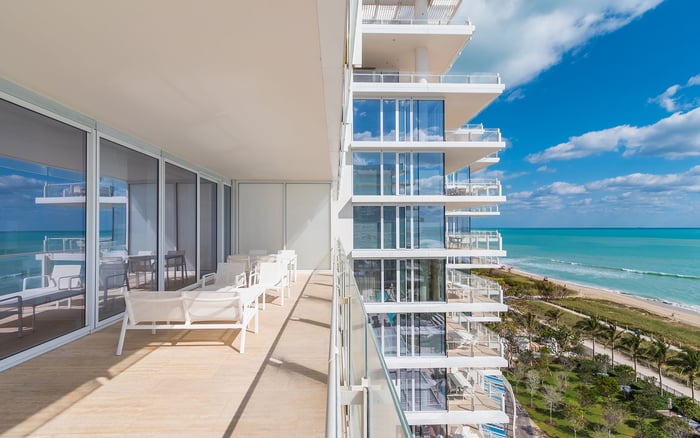
Next, study the kitchen and family areas. These are the spaces where daily life is least formal. A living room can tolerate a theatrical view, but a breakfast table facing an adjacent balcony may feel intrusive. Terrace depth also matters. A deep terrace can create shade and separation, while a shallow Balcony may leave seating areas closer to the exterior edge and more exposed to adjacent residences.
A luxury buyer should understand what the neighboring tower contributes to the privacy equation. Is the adjacent facade primarily glass? Are balconies stacked directly opposite the subject residence? Are amenity areas oriented toward the same view? Does the neighboring building have active outdoor spaces, or is it mostly quiet residential glass?
When comparing Bal Harbour with nearby Surfside or Bay Harbor Islands, it can be useful to examine how different building types handle adjacency. A buyer looking at Fendi Château Residences Surfside, for example, may compare the feel of direct oceanfront positioning with the more layered urban-waterfront experience found around Bay Harbor Towers. The exercise is not about choosing one market over another. It is about training the eye to see privacy as a composition of orientation, distance, glass, terrace placement, and daily activity.
Ask what happens during peak occupancy periods, holidays, and evenings. A neighboring tower that seems calm during a weekday showing may feel more active when more owners are in residence. Privacy is not static. It changes with seasonality, lighting, and lifestyle patterns.
Current privacy is only part of the analysis. Buyers should also consider what could change nearby. Without relying on assumptions, a careful purchaser can still ask practical questions: are there adjacent parcels, aging buildings, underused sites, or potential redevelopment conditions that could alter views or exposure over time? The goal is not to predict the future with certainty. It is to understand whether today’s privacy depends on conditions outside the buyer’s control.
A residence with a protected water view, angled exposure, or strong side separation may carry a different long-term privacy profile than one whose serenity depends on a neighboring low-rise remaining unchanged. In Bal Harbour, where scarcity is part of the appeal, the durability of privacy can be as meaningful as the view itself.
Buyers should request building plans, survey context, and professional guidance before making a final decision. The most discreet purchases are often made by clients who ask unglamorous questions early.
Window treatments are not a failure of design. They are part of living well in glass architecture. The issue is whether shades enhance comfort or become mandatory for privacy at all hours.
During a showing, note which rooms feel comfortable with shades fully open. If the primary bedroom, bath, or family room requires constant screening, the residence may not deliver the privacy expected at its price point. Automated shades, layered drapery, and tinted glazing can help, but they should refine the experience rather than rescue it.
Also consider the effect on views. If maintaining privacy means closing shades across the best Waterview for much of the evening, the buyer is not truly receiving the full value of the exposure. The ideal residence allows openness without vulnerability.
Privacy is difficult to retrofit, which makes it an important resale attribute. Finishes can be updated, furniture can change, and technology can be modernized. Direct exposure to a neighboring tower is far harder to solve.
The most durable luxury residences tend to offer a balanced combination: beautiful outlooks, comfortable separation, well-oriented rooms, and terraces that feel usable at different times of day. When two units appear similar on paper, the one with calmer sightlines may command stronger emotional interest because it feels easier to inhabit.
For Bal Harbour buyers, privacy should be treated as both a lifestyle preference and a capital-preservation question. A home that feels discreet during everyday routines is more than pleasant. It is more defensible.
Before committing, visit at multiple times if possible. Stand in every major room with lights on and shades open. Look outward from seated positions, not just from dramatic corners. Study the neighboring building’s balconies, amenity areas, and glass orientation. Confirm whether the most private rooms are truly private, or merely staged to appear that way.
Ask for floor plans, stack positions, and context drawings. Review terrace depth and room orientation. Consider how guests, household staff, and family members will use the home in real life. Luxury privacy is not theoretical. It is the ability to move through the residence without feeling watched.
Above all, separate view quality from privacy quality. A residence can have both, but they are not the same thing. The finest Bal Harbour purchase is the one where the horizon feels expansive and the interiors remain quietly your own.
Is the highest floor always the most private choice in Bal Harbour? Not always. Relative height, neighboring terraces, amenity decks, and tower orientation can matter as much as the floor number.
Should I visit a residence at night before buying? Yes. Evening conditions reveal how interior lighting affects exposure to neighboring towers and adjacent balconies.
Can window treatments solve a privacy problem? They can help, but they should not be required constantly in the main living areas or primary suite.
What room should I evaluate first for privacy? Start with the primary bedroom and bath, then study the kitchen, living room, and main terrace.
Does an Oceanfront position guarantee privacy? No. Oceanfront exposure may still include side views into neighboring towers or terraces.
How important is Balcony depth? Very important. Deeper terraces can create separation and make outdoor seating feel more protected.
Should I compare nearby buildings before deciding? Yes. Comparing different tower orientations trains the eye and clarifies what feels genuinely discreet.
Can future development affect privacy? It can. Buyers should ask practical questions about adjacent parcels and long-term view dependencies.
Is a Waterview more valuable than privacy? The strongest residences offer both, but a beautiful view can lose appeal if daily life feels exposed.
Is Bal Harbour still suitable for buyers who value discretion? Yes, provided the buyer evaluates sightlines, floor plan, neighboring towers, and long-term adjacency with care.
For a discreet conversation and a curated building-by-building shortlist, connect with MILLION.
If branded residences are on your mind — as a home or as an allocation — we would be glad to share what we are seeing, privately.
Begin a quiet conversation