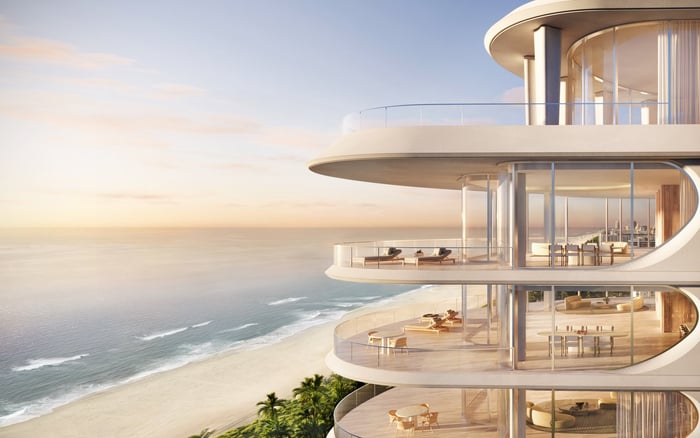
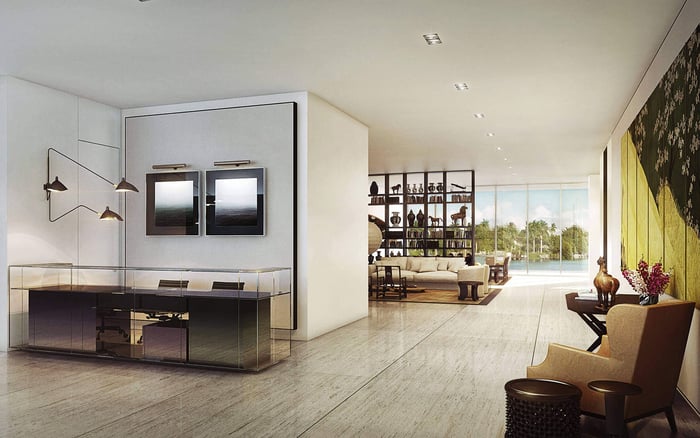
A discreet framework for assessing South of Fifth amenities through privacy, service, daily utility, and long-term residential calm before buying.
In South of Fifth, amenity depth is not simply a matter of counting rooms, pools, treatment suites, or lounges. The more important question is whether the building supports a refined daily rhythm without making home feel like a resort lobby. For many buyers, the ideal residence offers privacy, service, wellness, security, and social ease while keeping those layers quietly in the background.
That distinction matters in Miami Beach, where the ocean, marina, restaurants, and neighborhood walkability already create an extraordinary lifestyle outside the front door. Inside the building, amenities should reduce friction rather than compete for attention. A well-composed amenity program feels intuitive: the elevator arrival is calm, the gym is usable at real hours, the pool deck is not performative, and service appears before it is requested.
This buyer’s-guide approach is especially important in Sofi, where purchasers often compare highly serviced towers with more boutique residential environments. The right answer is personal, but the evaluation process should be disciplined.
Amenity depth means breadth, quality, access, staffing, and durability working together. A building may have an impressive list of features yet still feel thin if those spaces are undersized, difficult to reserve, poorly staffed, or too exposed to guest traffic. Conversely, a smaller building can feel deeply amenitized when every shared space is useful, beautifully maintained, and easy to enjoy.
Before touring, write down how you actually live. If you work from home, assess quiet common areas, package handling, visitor management, and cellular reception on amenity levels. If wellness drives the purchase, determine whether the fitness area supports serious daily use rather than photo-ready equipment. If you entertain, study the arrival sequence, valet choreography, private dining rules, and whether guests can be hosted without disturbing residents.
The most successful South of Fifth buildings do not ask residents to adapt to amenities. They allow amenities to disappear into the ease of the day.
A resort feeling often begins when too many users move through the same spaces for too many reasons. Buyers should pay close attention to who can access each amenity, how guests are registered, where staff circulates, and whether service routes are separated from residential paths. The question is not whether a building is lively. The question is whether residents can choose when to participate.
At a property such as Apogee South Beach, buyers often focus on the relationship between generous private residences and the controlled atmosphere of a highly residential tower. That balance is worth studying in any South of Fifth purchase: how much of the experience happens within the residence, how much is shared, and how carefully the shared environment is managed.
Privacy also includes acoustics. During a showing, pause in corridors, elevator banks, pool approaches, and fitness areas. Listen for doors, music, staff radios, kitchen activity, and street noise. A beautifully designed amenity space loses value if it broadcasts activity into the private portions of the building.
There is a meaningful difference between attentive service and hotel energy. In a primary or second home, the strongest service model is consistent, discreet, and personal. Buyers should ask how the front desk handles repeat residents, how maintenance requests are triaged, how deliveries are managed, and whether valet operations remain calm during peak periods.
Tour at more than one time if possible. A mid-morning visit may show the building at its most composed, while early evening can reveal resident flow, guest arrivals, and parking pressure. Weekend observations are especially valuable in Miami Beach, where the difference between residential service and resort traffic can become more visible.
Buildings such as Continuum on South Beach are often discussed in relation to full-service coastal living, and that phrase should prompt careful questions rather than assumptions. Full service should mean reliability, security, and ease. It should not mean residents feel as if they are passing through a public hospitality venue to reach home.
Lifestyle is one of the most overused words in luxury real estate, but in South of Fifth it still matters. The neighborhood rewards buyers who understand how they spend mornings, afternoons, and evenings. Some want a pool deck that feels social and animated. Others want a quiet terrace, a serious gym, and direct access to the neighborhood without ever lingering in common areas.
A resort feeling often comes from programming that is too visible or too frequent for the resident profile. Ask whether events are held in common areas, how often they occur, who may attend, and what happens afterward. Review whether amenity reservations can be dominated by a small number of residents or outside guests. The best lifestyle infrastructure protects spontaneity while preventing crowding.
This is also where design restraint becomes valuable. Materials, lighting, scent, music, and furniture layout can shift a space from residential to theatrical. A room that photographs beautifully may not be the room you want to cross every morning with coffee in hand.
In South of Fifth, the terrace, view corridor, and private outdoor experience may matter as much as the building amenity deck. Buyers should compare the value of shared amenities with what the individual residence already provides. A large terrace, outdoor kitchen, private plunge environment, or protected water view can reduce reliance on common areas and make a smaller amenity program feel entirely sufficient.
This is one reason some buyers compare South Beach options with newer Miami Beach residences such as The Ritz-Carlton Residences® South Beach, where the broader conversation often includes service, privacy, and the line between branded hospitality and residential calm. The lesson is not that one model is better. It is that buyers should decide how much amenity energy they want inside the building versus outside in the neighborhood.
If the residence itself delivers daily pleasure, amenities can be quieter and still feel abundant.
Amenity depth has a financial life. Pools, spas, gyms, gardens, elevators, security systems, and staff all require ongoing care. Buyers should review association documents, budgets, reserves, insurance posture, rental policies, guest rules, pet rules, and any upcoming capital projects with qualified advisors. The goal is to understand not only what exists today, but how the building intends to maintain its standard.
Ask direct questions about replacement cycles. Fitness equipment ages. Outdoor furniture deteriorates. Salt air is unforgiving. A building with fewer amenities but excellent upkeep may offer a better ownership experience than a building with more spaces and uneven maintenance.
Also evaluate whether the rules match your intended use. A second-home buyer, a family, a frequent host, and a privacy-driven owner may each read the same amenity package differently.
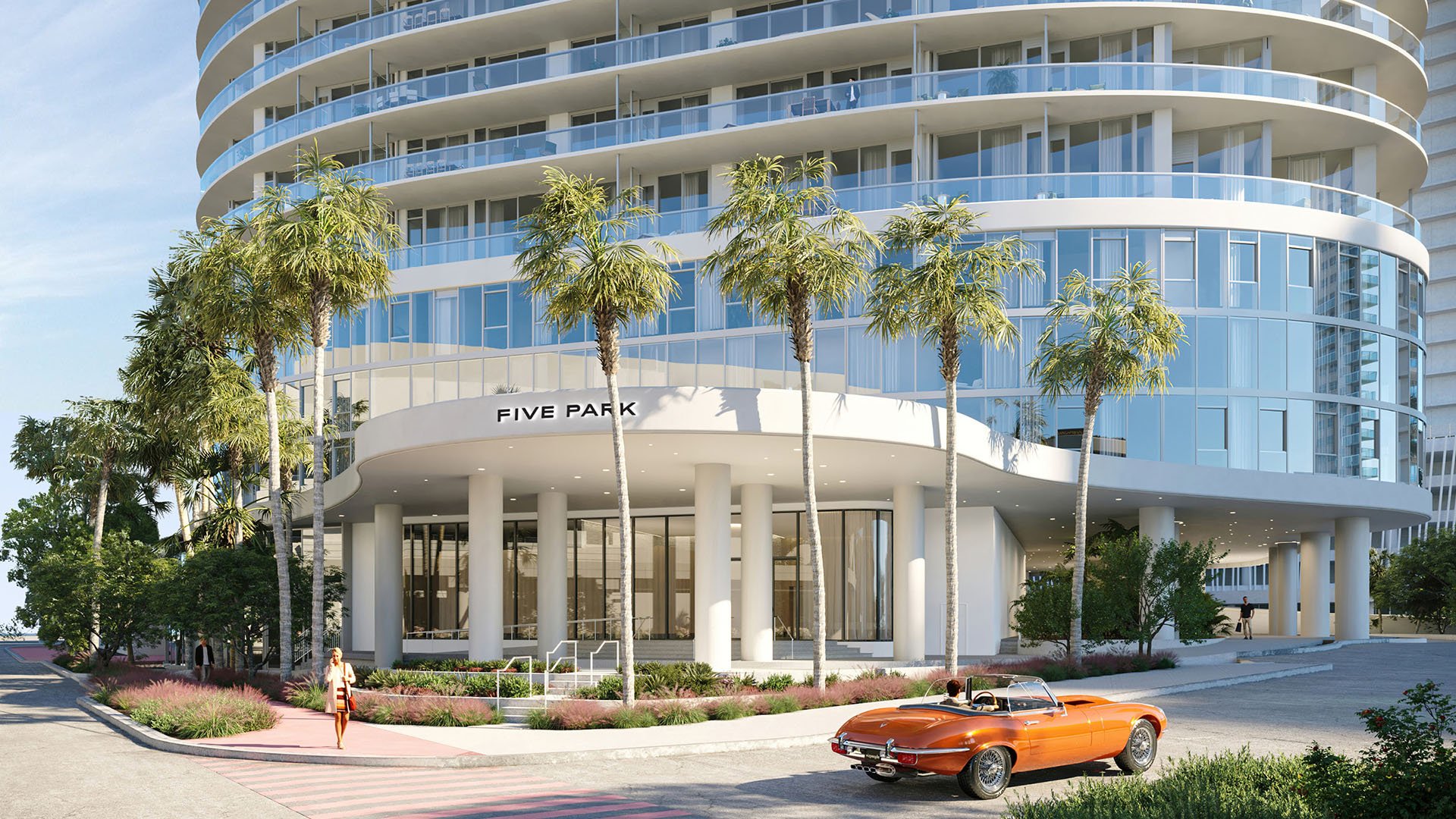
Even if your target is South of Fifth, selective comparison outside the immediate neighborhood can clarify your priorities. A project such as Five Park Miami Beach invites buyers to think about scale, design, and amenity breadth in a wider Miami Beach context. Comparing that experience with established Sofi towers can help reveal whether you prefer expansive programming or a more contained residential atmosphere.
The point is not to chase the longest amenity list. It is to identify the amenities you will use weekly, the services you will rely on quietly, and the spaces that will still feel elegant after the novelty fades.
Before making an offer, imagine an ordinary Tuesday. Where do you enter? Who greets you? How long does the elevator take? Can you exercise without waiting? Can you receive guests without feeling exposed? Is the pool relaxing when the building is busy? Does the lobby feel like home or like a venue?
In South of Fifth, the most compelling amenity packages are often those that preserve the neighborhood’s rare balance: urban access, beach proximity, waterfront atmosphere, and residential discretion. Depth is not noise. Depth is the quiet confidence that everything you need is available, maintained, and intelligently governed.
What does amenity depth mean in South of Fifth? It means amenities are not only numerous, but useful, well staffed, accessible, private, and maintained over time.
How can I avoid buying into a building that feels too resort-like? Study guest access, event policies, pool activity, lobby flow, valet patterns, and how public or private each amenity area feels.
Should I prioritize a larger amenity package or a quieter building? Prioritize the model that matches your daily life. A quieter building with fewer excellent amenities may outperform a larger program you rarely use.
When is the best time to tour amenities? Tour at different times, especially evenings and weekends, to understand real resident flow, noise, and service pressure.
Why do rules matter when evaluating amenities? Rules determine who can use the spaces, how often they can be reserved, and whether residents retain priority over guests.
Are branded residences automatically more resort-like? Not necessarily. The important distinction is whether the service culture feels residential, discreet, and controlled rather than theatrical.
How important is private outdoor space? Very important for many buyers. A strong terrace or view can reduce dependence on shared amenities and increase daily satisfaction.
What should second-home buyers examine most carefully? They should review access procedures, maintenance reliability, guest policies, security, and whether the building feels effortless after long absences.
Can a Boutique building still have strong amenities? Yes. Boutique depth comes from thoughtful spaces, privacy, ease of use, and consistent upkeep rather than sheer quantity.
What is the simplest final test before purchasing? Picture your normal weekday in the building and ask whether every transition feels calm, private, and well supported.
When you're ready to tour or underwrite the options, connect with MILLION.
If branded residences are on your mind — as a home or as an allocation — we would be glad to share what we are seeing, privately.
Begin a quiet conversation