A discreet buyer’s guide to judging whether North Bay Village amenities add daily value, privacy, and residential calm without tipping into a resort atmosphere.
In North Bay Village, the most sophisticated amenity package is not always the one with the longest brochure. For many luxury buyers, the sharper question is whether a building can offer breadth without spectacle, service without performance, and retreat without the constant rhythm of a resort.
That distinction matters because amenity depth now plays a central role in how new residences are evaluated across South Florida. A buyer may want a pool, wellness spaces, lounges, a marina-oriented lifestyle, fitness programming, entertaining rooms, and discreet work areas. Yet the best version of that program should still feel unmistakably residential. The building should not ask residents to move through a hotel-lobby mood every time they return from dinner, meet a trainer, or walk a guest to the elevator.
North Bay Village has a particular advantage for buyers who understand this nuance. Its waterfront setting can support generous residential living, but the purchase decision should focus on how amenity spaces are organized, governed, and experienced in daily life.
Amenity depth is not simply the number of spaces. It is the relationship among use cases. A well-conceived building gives residents multiple ways to live well without forcing every activity into the same social zone. A quiet morning workout, a small family lunch, a private call, a sunset swim, and an evening gathering should not all compete for the same atmosphere.
When reviewing projects such as Continuum Club & Residences North Bay Village, buyers should study the intended sequence of arrival, lobby, elevators, pool deck, wellness areas, and resident lounges. The issue is not whether the building offers lifestyle programming. The issue is whether residents can use those spaces without feeling observed, interrupted, or obligated to participate.
A true residential amenity plan has layers. Some areas are social, some restorative, and some practical. If every space is designed as a scene, the building may photograph beautifully but live loudly.
Luxury buyers often respond to materials first: stone, millwork, lighting, water views, and furniture selections. Those details matter, but circulation can be more revealing. Ask how residents move from the garage or valet to the elevators. Consider whether guests, service providers, delivery traffic, and residents share the same visible paths. Observe whether amenity access requires crossing high-energy zones.
The best buildings make privacy feel effortless. If a buyer can reach the fitness area early in the morning without passing through an active lounge, or host a guest without exposing the building’s entire daily routine, the plan is doing important work. This is where a quieter luxury vocabulary separates itself from resort design.
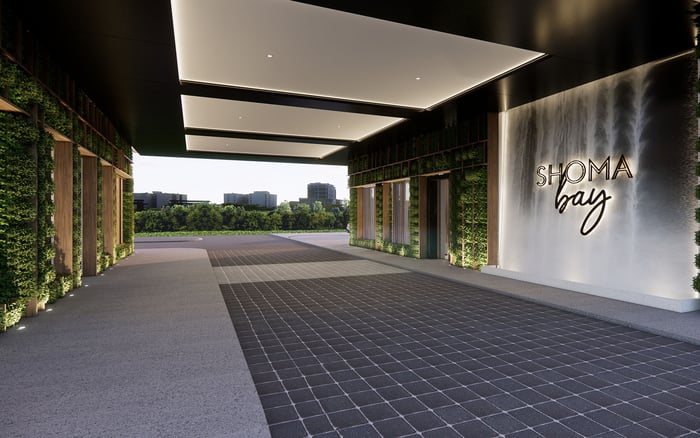
At Shoma Bay North Bay Village, for example, a buyer’s evaluation should move beyond whether the amenity mix is appealing and toward how the building separates energy levels. A dining-oriented area, a wellness area, and a pool environment can coexist beautifully when each has its own tempo.
A morning tour rarely reveals the full personality of a residence. Buyers should seek to understand how amenity areas function at the hours that matter to them: before work, after school, weekend afternoons, and evenings when guests may be present. The central question is simple: does the building still feel composed when it is being used?
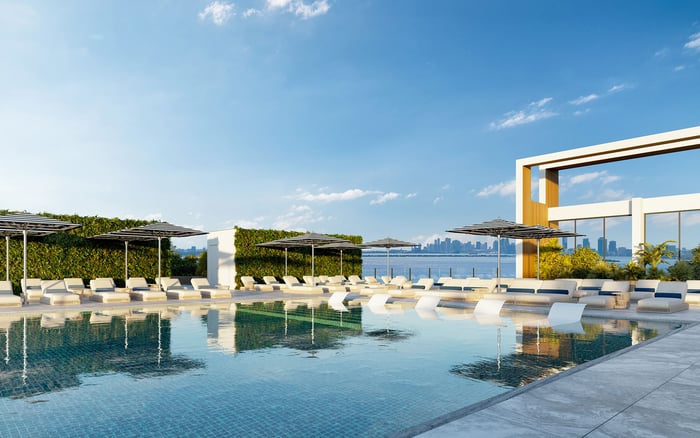
A pool that feels serene in a rendering may become the building’s main social theater if seating, music, bar service, or circulation are not managed carefully. A lounge can become an extension of the lobby if it lacks privacy. A fitness area can feel premium yet inconvenient if access is exposed or if recovery spaces sit too close to higher-traffic areas.
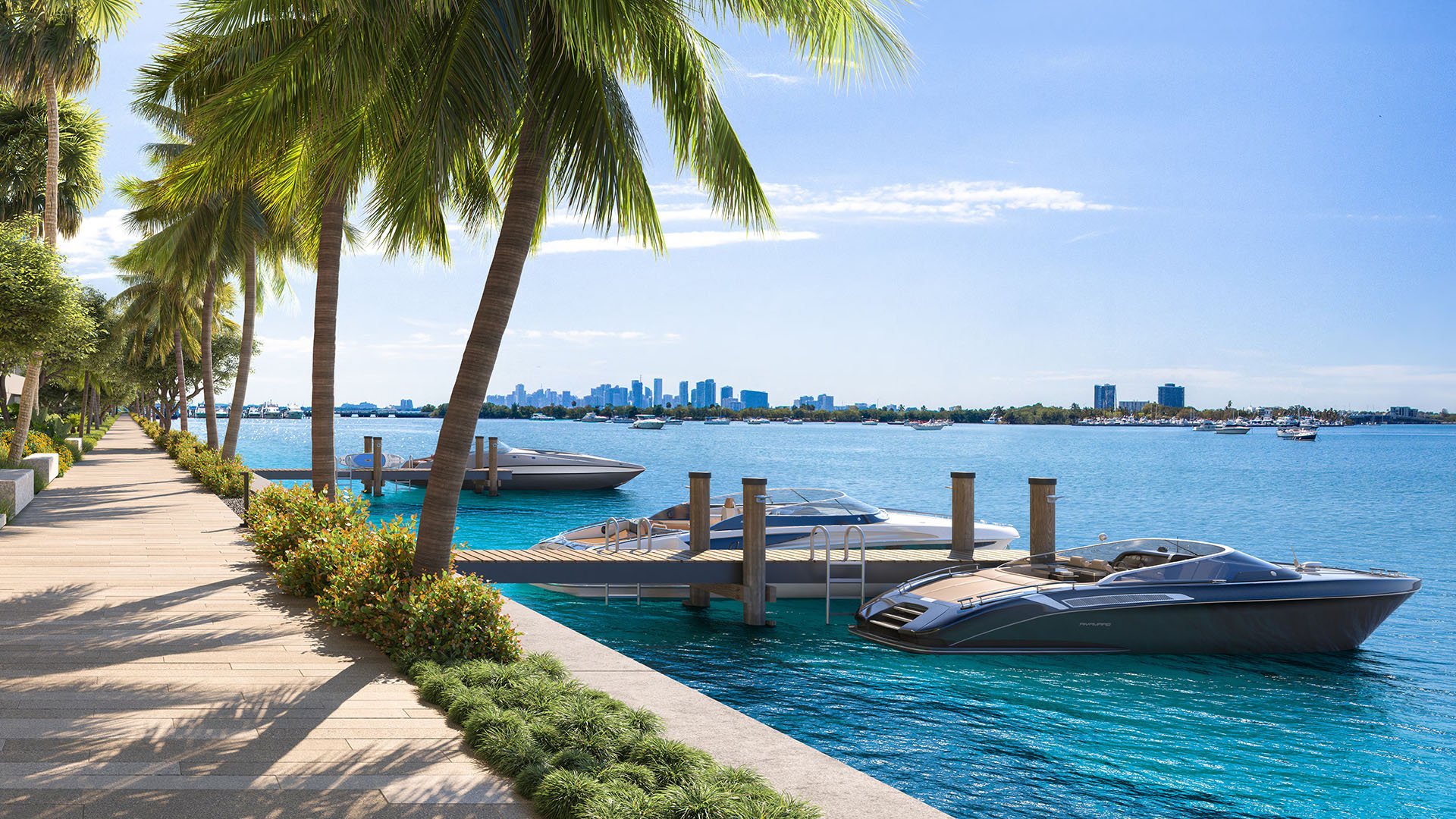
In a waterfront market, the marina conversation also deserves subtle attention. A marina-adjacent or boating-friendly lifestyle can add tremendous appeal, but it should not overwhelm the residential identity of the building. Buyers should look for order, discretion, and thoughtful transitions between the water-facing amenity experience and private residential life.
The most desirable service culture is often the least theatrical. Residents should feel recognized, protected, and assisted, not processed through a resort script. Before purchasing, ask how staff presence will be calibrated. Where are attendants positioned? How are guests announced? How are packages, cars, food deliveries, and service appointments handled?
A building such as Pagani North Bay Village may attract attention because of its design identity, but a buyer should still apply the same disciplined questions. Does the amenity offering create calm repetition for residents, or does it depend on constant novelty? Does service feel intuitive, or does it feel staged?
The answer will influence long-term satisfaction. Resort energy can be enjoyable during a short stay. In a primary or seasonal residence, however, the buyer usually wants service that recedes into the background.
Amenity value is partly architectural and partly operational. A buyer should ask how often amenity spaces can be reserved, whether certain areas are resident-only, how guests are accommodated, and what rules govern music, events, pets, children, and private gatherings. These policies shape the lived character of the building as much as design does.
Scale also matters. A large amenity program can still feel private if spaces are distributed intelligently. A smaller program can feel crowded if every resident is directed to the same few destinations. The ideal answer depends on the buyer’s rhythm. Some owners want a highly social building. Others want wellness, waterfront access, and service with minimal performance.
For comparison, nearby boutique waterfront contexts such as La Baia North Bay Harbor Islands can help buyers clarify their own appetite for intimacy versus breadth. The goal is not to choose the quietest building by default. It is to identify the building whose amenity culture matches the way one actually lives.
Before signing, a buyer should be able to describe the building’s amenity philosophy in one sentence. If that sentence is only about abundance, the analysis is incomplete. A stronger conclusion might be that the building offers layered wellness, gracious entertaining, water-oriented living, and protected privacy without making everyday life feel public.
That is the essence of amenity depth without a resort feeling. It is not anti-hospitality. It is refined hospitality, edited for ownership rather than transient consumption. In North Bay Village, where water, views, and access can all support a compelling residential future, the best amenity choice will feel generous on demand and quiet by default.
What does amenity depth mean in a luxury condominium? It means the building offers a thoughtful range of spaces for wellness, entertaining, work, service, and relaxation, with each space serving a clear daily purpose.
How can a buyer tell if amenities will feel too resort-like? Look for excessive visibility, constant social programming, loud shared zones, and circulation that makes residents pass through active amenity areas too often.
Is a large amenity package always a negative? No. Size is not the issue. The key is whether the spaces are layered, well managed, and easy to use without feeling crowded or performative.
Why is circulation so important? Circulation determines how privately residents, guests, staff, deliveries, and service providers move through the building. Poor circulation can make even beautiful spaces feel exposed.
Should buyers tour amenities at different times of day? Yes. Peak-use periods reveal how calm, private, and functional the building may feel once residents are actively using the spaces.
How should a pool be evaluated? Consider seating, shade, acoustics, guest policies, service points, and whether the pool deck feels like a private residential retreat rather than a public venue.
What role does a marina lifestyle play? A marina-oriented setting can enhance waterfront living, but buyers should confirm that boating activity does not compromise privacy, arrival, or quiet residential flow.
Are branded or design-led buildings automatically more resort-like? Not necessarily. A strong design identity can still feel residential if the plan, service model, and rules are calibrated with restraint.
What questions should buyers ask before committing? Ask about guest access, reservations, event policies, staff protocols, pet rules, delivery handling, and how amenity spaces are separated by use and noise level.
What is the ideal amenity feeling for a North Bay Village residence? The ideal feeling is composed, serviced, and flexible, with enough depth to support daily life while preserving the privacy and calm expected at home.
For a tailored shortlist and next-step guidance, connect with MILLION.
If branded residences are on your mind — as a home or as an allocation — we would be glad to share what we are seeing, privately.
Begin a quiet conversation