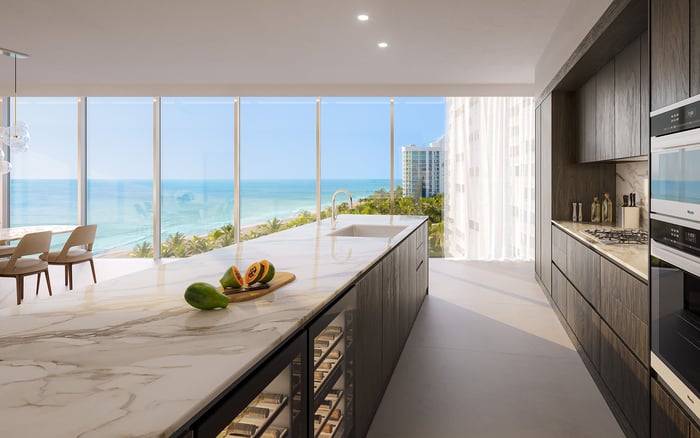
A practical framework for Los Angeles buyers deciding whether a Pompano Beach property should serve as a second home or a genuine primary residence in 2026.

For a Los Angeles buyer, choosing between a second home and a primary residence in Pompano Beach is less about selecting a category than defining a credible pattern of life. Even the most elegant purchase can be the wrong one if its operating demands, layout or location conflict with how the owner will actually use it.
Begin with a twelve-month calendar. Mark expected Florida stays, California commitments, business travel, holidays, family visits and periods when the property will stand empty. If Pompano Beach will become the center of daily life, the residence must function beyond vacation mode. Storage, work areas, privacy, service access and comfortable year-round routines become central. If it will remain a retreat, effortless arrival and reliable oversight may carry greater weight.
This lifestyle exercise should precede the choice of view, floor plan or finish palette. It establishes whether the purchase is designed around permanence, flexibility or a deliberate transition between the two.
Calling a property a primary residence does not, by itself, settle legal domicile, tax treatment, insurance classification or other formal questions. Those outcomes can depend on conduct, documentation and personal circumstances. A buyer contemplating a move from California should coordinate the decision with qualified tax, legal, estate-planning and insurance advisers before closing.
The practical record should align with the intended position. Consider where daily life will be administered, where important records will be maintained and how professional, family and civic ties will be organized. Couples should also determine whether both partners are making the same transition on the same timetable.
A second home demands equal clarity. Define who may use it, whether guests can arrive without the owner, how long vacancies may last and whether leasing is part of the plan. Never assume that investment expectations align with a building's rules or the owner's financing and insurance arrangements. Review all relevant documents and professional advice before relying on rental income or a future change in residency.
A primary residence warrants a more exacting test of everyday function. Walk through a typical Monday rather than imagining only a winter weekend. Assess how the home accommodates calls, deliveries, exercise, entertaining, visiting family and personal collections. Oceanfront exposure may be emotionally decisive, but interior planning and operational simplicity will shape daily satisfaction.
A second home can prioritize immediacy. A well-composed condominium may provide a smoother lock-and-leave experience than a property requiring extensive owner supervision. Yet convenience should be verified, not inferred. Examine staffing, access protocols, maintenance responsibilities, reserve planning, pet provisions, parking and the process for admitting household employees or guests.
Pompano Beach offers several distinct residential propositions worth comparing in person. Armani Casa Residences Pompano Beach and The Ritz-Carlton Residences® Pompano Beach can anchor a discussion of branded residences, service expectations and the value a buyer places on a defined hospitality identity. The objective is not to choose a label, but to determine whether the ownership experience suits the intended cadence.
Purchase price is only the opening figure. Before selecting primary or secondary use, construct a private annual budget reflecting every known obligation associated with the specific residence. Include professional estimates for insurance, taxes, association charges, utilities, interior care, vehicle arrangements, household staffing and periodic travel between coasts. Avoid generalized assumptions when property-specific documents or quotations are available.
New-construction buyers should model the periods before and after completion separately. A future residence may suit a planned relocation, but timing, interim housing and furnishing coordination require their own budgets. Resale buyers should assess immediate work, building procedures and the condition of included interiors.
Management also has value. If the owner will be absent for extended periods, identify who will inspect the residence, coordinate service appointments, prepare it for arrival and respond to an incident. For primary users, assess whether the building's operating model supports everyday autonomy rather than merely occasional convenience.
Consistency produces a better decision than an emotional approach to touring. Apply the same scorecard to every candidate: intended occupancy, privacy, service, floor-plan utility, outdoor space, arrival experience, carrying-cost visibility and ease of oversight. Record unresolved questions after each visit and request the relevant documents before assigning a final score.
The comparison should encompass different expressions of ownership. Ocean 580 Pompano Beach can be evaluated against the same criteria as a larger branded proposition, while W Pompano Beach Hotel & Residences invites careful consideration of how a hotel-associated environment corresponds with the buyer's preferred rhythm of privacy and service. Project names alone cannot answer those questions. Current offering materials, governing documents and contract terms should control the evaluation.
For a primary home, eliminate candidates that compromise essential daily functions, however compelling their presentation. For a second home, penalize operational friction and unclear arrangements for managing absences. This disciplined approach transforms Pompano Beach from a broad coastal search into a focused personal brief.
First, make the occupancy decision without reference to a specific property. Write a one-page statement describing where the buyer expects to spend time, what must be available upon arrival and which responsibilities should be delegated. Include a fallback scenario in case work or family obligations delay a move.
Second, test each residence against that statement. A home should not be elevated to primary status simply because it inspires a major life change during a viewing. Conversely, a property intended as a second home should not be underspecified if the owner may eventually spend substantial stretches there.
The strongest 2026 decision remains coherent under several scenarios. If the move proceeds, the residence should support full-time life. If Los Angeles remains an important base, the property should remain manageable and satisfying. Precision at this stage protects both enjoyment and optionality.
Should I decide between a primary residence and second home before touring? Yes. A preliminary occupancy plan gives every tour a consistent purpose and quickly exposes mismatches.
Can I call the Pompano Beach property my primary residence immediately? Formal treatment depends on individual facts and actions. Obtain tailored legal and tax guidance before making representations or changing records.
What matters most for a lock-and-leave second home? Prioritize clear access procedures, dependable oversight, manageable interiors and a documented plan for vacancies.
Should rental potential influence the purchase? Only after confirming governing rules, contract terms, financing conditions and insurance implications with qualified professionals.
Are branded residences automatically easier to manage? No. Verify the service scope, costs, access and owner responsibilities for the specific property.
How should I compare a resale with new construction? Model timing, condition, furnishing, interim housing and post-closing obligations separately for each option.
What should a primary-residence floor plan accommodate? It should support work, storage, privacy, guests and ordinary weekday routines-not only leisure stays.
How can Los Angeles buyers test the transition realistically? Map a full year of travel and obligations, then assess whether the proposed Florida routine remains practical in every season.
When should insurance be reviewed? Review it early enough for property-specific findings to inform the contract, budget and ownership structure.
Who should be involved before closing? The buyer's real-estate, legal, tax, estate-planning, lending and insurance professionals should coordinate around the intended use.
For a discreet conversation and a curated building-by-building shortlist, connect with MILLION.
If branded residences are on your mind — as a home or as an allocation — we would be glad to share what we are seeing, privately.
Begin a quiet conversation