A buyer-focused guide to evaluating wine storage infrastructure in Pompano Beach luxury real estate, from cellar conditioning and backup power to flood exposure, monitoring, maintenance access, and insurance planning.
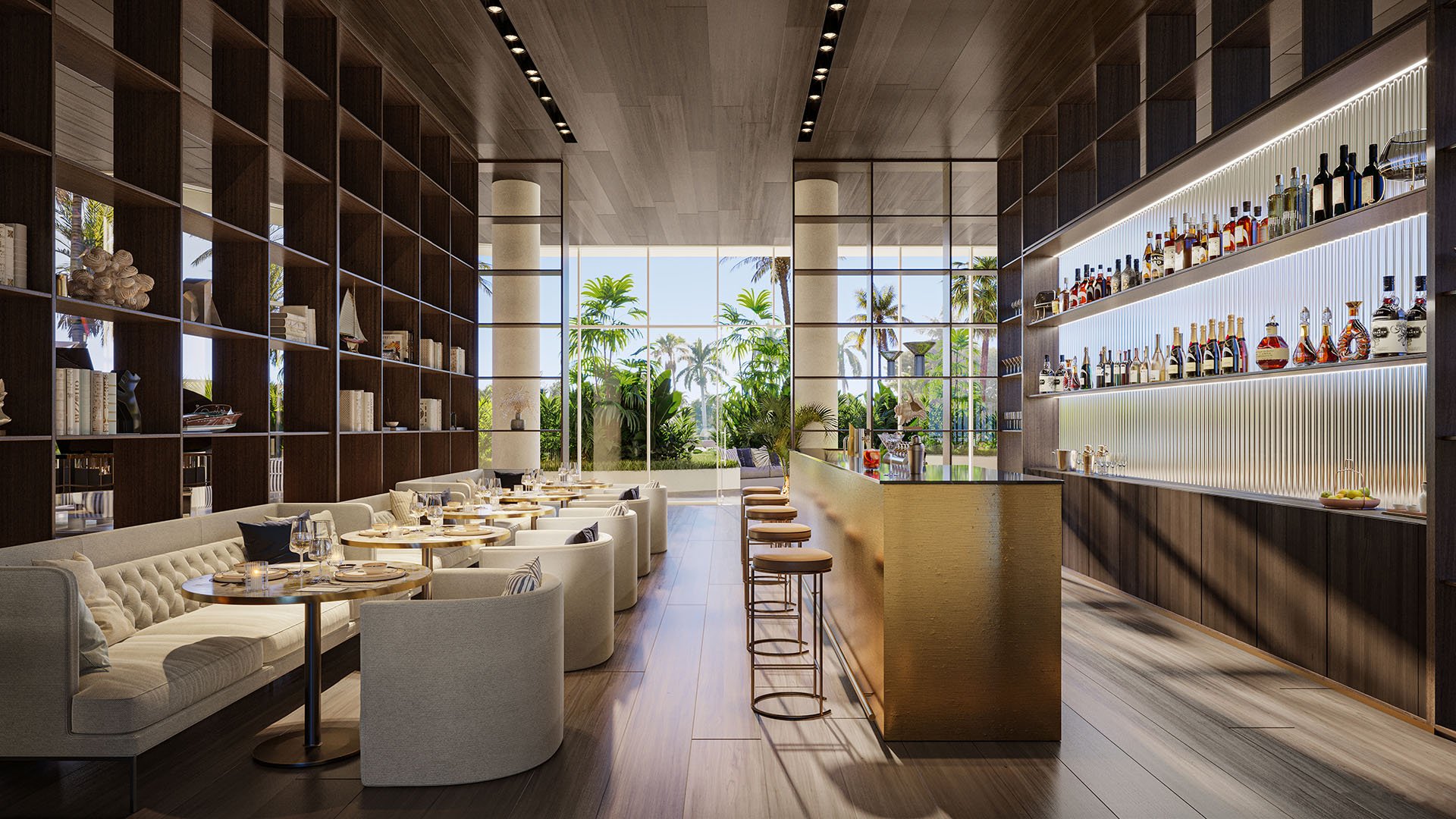
In Pompano Beach luxury real estate, wine storage is often presented as theater: backlit bottles, glass walls, custom millwork, and a dramatic view from the dining room. For a serious collector, the essential question is whether that feature is engineered for long-term preservation or staged primarily for visual impact.
A true wine room is a conditioned microclimate. It is not cabinetry with a cooling vent, nor is it validated by a beautiful glass enclosure alone. Before purchasing, ask whether the space was designed as a sealed, insulated, humidity-aware room with a dedicated wine cooling system. Many collectors use cool, stable storage near 55°F as a benchmark, but the number matters less than the room’s ability to hold a consistent target over time.
That distinction is especially relevant for oceanfront and Intracoastal homes, where heat, humidity, salt air, storm planning, and power reliability are part of ownership. Whether touring Armani Casa Residences Pompano Beach, evaluating a private residence, or comparing new coastal offerings, the most refined question is also the simplest: can the system protect the collection when the house is under stress?
Begin with operating records. Ask for the target set point, historical temperature logs, alarm thresholds, and any alerts from the past year. A room can look immaculate during a showing and still experience temperature swings that are invisible to the eye. Stability is the buyer’s concern.
Humidity deserves the same scrutiny. Air that is too dry can compromise corks; excess humidity can invite mold, label damage, and odor issues. Ask whether humidity is actively monitored, whether the system can correct for low or high humidity, and whether the room has ever shown condensation on glass, doors, ceiling planes, or mechanical grilles.
For Pompano Beach buyers, the question is not whether humidity exists. It does. The question is whether the wine room was designed to control it rather than fight it intermittently. Request maintenance logs, sensor history, and service notes showing how the room performs through summer, storm season, and periods when the residence is unoccupied.
Glass can be elegant, but glass is also a load. Large display walls, frameless doors, and backlit showcases can make the cooling system work harder if they are not properly insulated and sealed. Ask whether glass panels are insulated, whether door gaskets are intact, and whether the enclosure has been tested for air leakage.
The hidden assembly matters even more. A proper cellar should include insulation and a continuous vapor-barrier strategy to reduce warm, humid air infiltration. Without that protection, condensation can develop inside walls or at cold surfaces, turning a luxury feature into a moisture risk.
At The Ritz-Carlton Residences® Pompano Beach and other high-design coastal residences, buyers should appreciate the presentation while still asking construction-level questions. Who designed the wine enclosure? Was it part of the original construction or added later? Were mechanical, electrical, or structural changes permitted and code-compliant? Beauty should be supported by documentation.
Wine rooms may rely on self-contained, ducted, split, or fully ducted split cooling systems. Each configuration affects noise, service access, heat rejection, and reliability. Ask what type is installed, who specified it, and whether it was sized for the actual room volume, glass exposure, lighting load, and expected bottle capacity.
Equally important: where does the rejected heat go? A condenser tucked into an undersized closet, poorly ventilated ceiling space, or hard-to-reach service area can shorten equipment life and complicate repairs. Ask to see the condenser location, drain path, air intake, exhaust path, and service clearance.
For new-construction purchases, raise these questions before finishes are finalized. For resale properties, ask for equipment model numbers, warranty status, installation records, and service invoices. If the system cannot be accessed without disturbing finished living areas, the buyer should know that before closing.
A luxury wine room is only as resilient as its power strategy. In Broward coastal ownership, storm-related outages are not an abstract concern. Ask whether the wine cooling equipment is connected to backup power and whether the generator has enough capacity to run the wine system along with essential home systems.
Do not stop at the word “generator.” Request the load schedule. Confirm fuel type, fuel duration, transfer switch configuration, maintenance history, and safe installation details. A generator that supports lighting and refrigeration may not automatically support a high-load wine room, elevator, air-conditioning zones, security, pool equipment, and other systems simultaneously.
This is particularly relevant when comparing amenity-rich properties such as W Pompano Beach Hotel & Residences or private oceanfront homes with extensive mechanical demands. The goal is not simply continuity of lifestyle. It is preservation of a collection that may be difficult or impossible to replace bottle by bottle.
Wine storage in coastal South Florida should be evaluated against flood exposure. Check the property’s flood map status and ask whether the wine room, electrical controls, panels, condensers, pumps, and monitoring equipment sit above likely flood levels. If any part of the system is below grade or in a low-lying area, ask for waterproofing details, sump protection, backup pumping, and leak alarms.
Mechanical and electrical equipment serving the room should be elevated or otherwise protected where feasible. This includes condensate pumps, control boards, sensors, and power feeds. A beautifully elevated bottle display is incomplete if the controls that protect it are vulnerable elsewhere.
Wind-driven rain also belongs in the conversation. Ask how impact glazing, shutters, roof integrity, balcony drainage, and exterior envelope protection relate to the wine room. A compromised envelope can introduce moisture, heat, and power interruptions long before water visibly enters the cellar.
Remote monitoring is non-negotiable for many collectors. Ask whether the system sends text or email alerts for high temperature, low humidity, power failure, equipment faults, and water detection. Confirm who receives those alerts when the owner is traveling, and whether the building team, property manager, or service vendor has response authority.
Condensate management deserves direct inspection. Drain pans, pumps, drains, and leak sensors should be accessible and alarmed. Moisture control is central to preventing mold and water damage, and a wine room’s cooling equipment can create hidden risk if drains clog or pumps fail.
Lighting should be low-heat and mindful of UV exposure. Dramatic illumination is seductive, but light is one of the storage factors that can degrade wine over time. Ask what fixtures are used, how long they remain on, and whether display settings can be moderated for storage rather than photography.
Finally, speak with an insurance adviser before assuming the collection is covered. Scheduled valuables coverage, inventory documentation, appraisals, transit protection, and off-site storage provisions may be appropriate. At properties such as Waldorf Astoria Residences Pompano Beach, the real luxury is not merely having a wine room. It is knowing precisely how the collection is protected, documented, and recoverable.
Ask for HVAC specifications, cooling-load calculations, equipment manuals, warranty records, maintenance invoices, temperature and humidity logs, alarm history, generator load schedules, flood-zone information, permit records, and any insurance schedules tied to the collection. If the seller cannot produce records, the buyer can still proceed, but should price the uncertainty and order a specialist inspection.
The best wine infrastructure is quiet, stable, accessible, and boring in the most reassuring sense. It performs without drama. In Pompano Beach, that means it must work through humidity, seasonal absences, storm preparation, and the realities of coastal ownership.
Is a glass wine wall the same as a conditioned wine room? No. A glass display may be decorative unless it has proper insulation, sealing, cooling, humidity control, and monitoring.
What temperature should I ask about? Ask for the target setting, historical logs, and alarm thresholds. Many collectors use about 55°F as a practical storage benchmark.
Why does humidity matter in Pompano Beach? Low humidity can affect corks, while excess humidity can contribute to mold, odors, and label damage.
Should the wine system be on generator power? Ideally, yes. Confirm the generator load schedule and fuel duration, not just the existence of backup power.
What cooling system details should I request? Ask whether the system is self-contained, ducted, split, or fully ducted split, and whether it was sized for the actual room.
Are condensate drains important? Yes. Drains, pans, pumps, and leak sensors should be accessible, maintained, and alarmed.
Should I check flood exposure for a wine room? Yes. Confirm whether the room and its mechanical or electrical components are elevated or otherwise protected.
Can lighting damage wine? Prolonged heat and light exposure can affect wine quality, so ask about low-heat fixtures and UV-conscious design.
Do wine-room modifications need permits? They may if structural, electrical, mechanical, or HVAC work was involved. Ask for permit records and code compliance documents.
Does homeowners insurance automatically cover a wine collection? Not always. Ask about scheduled coverage, inventory records, appraisals, transit coverage, and off-site storage protection.
For a tailored shortlist and next-step guidance, connect with MILLION.
If branded residences are on your mind — as a home or as an allocation — we would be glad to share what we are seeing, privately.
Begin a quiet conversation