A disciplined Grove Isle purchase should treat marina access as a legal, operational, financial, and resale question, not a lifestyle assumption.
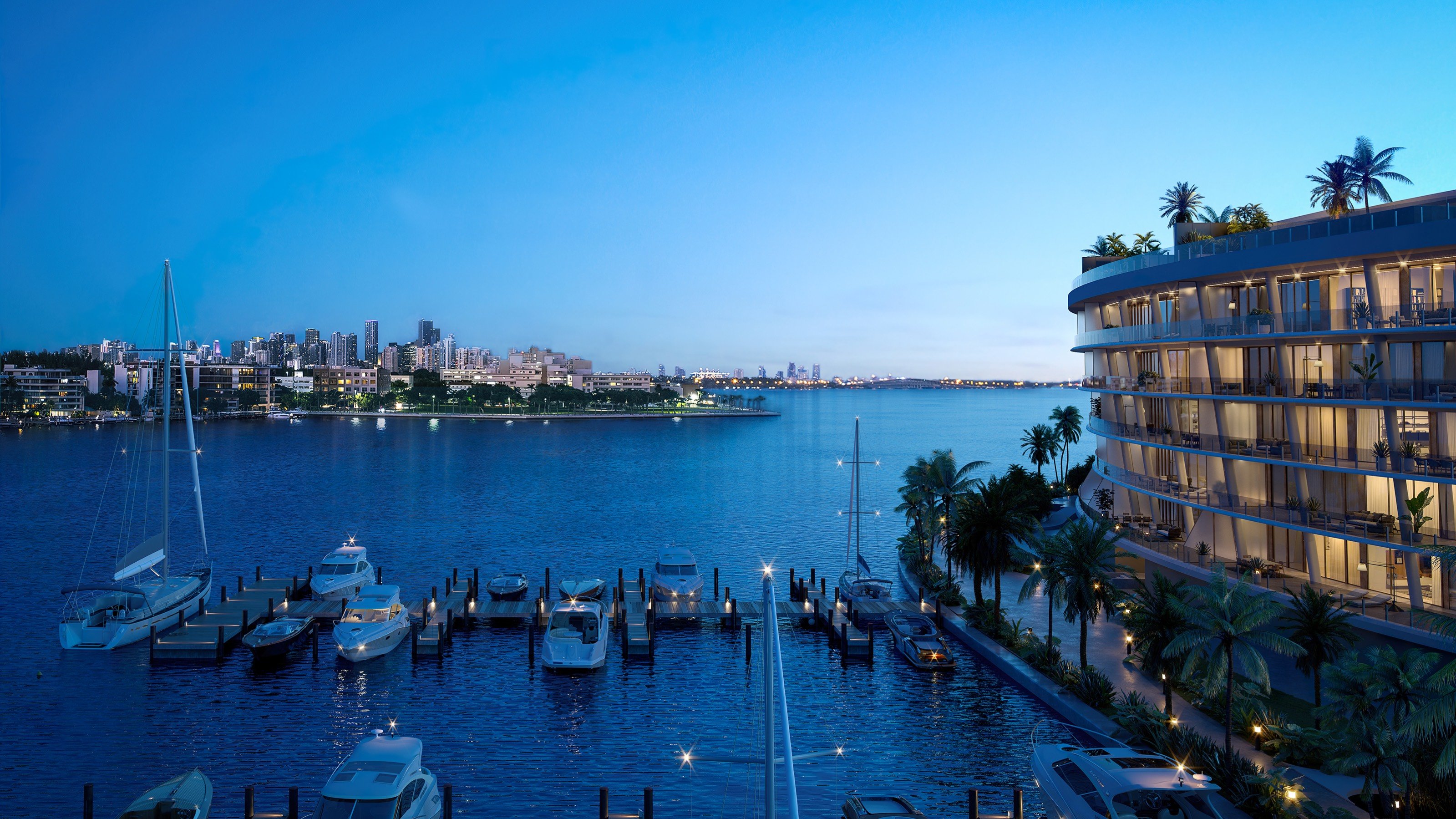
A marina can make a waterfront residence feel complete, but it can also introduce a diligence layer that is more complex than a view, a terrace, or a private elevator. For a Grove Isle buyer, the first question is not whether the setting feels nautical. It is whether the boating use is clearly defined, reliably governed, financially understood, and aligned with how the owner actually plans to live.
That distinction matters. A serious marina strategy treats the berth, channel, dock rules, association structure, insurance environment, and future capital requirements as part of the purchase itself. The residence and the boating program may feel inseparable, yet the rights attached to each can be very different. Before purchasing, buyers should slow down, ask precise questions, and avoid relying on assumptions.
In Coconut Grove, where privacy, bay proximity, and resort-like living often converge, that discipline becomes even more important. Buyers evaluating Vita at Grove Isle should look beyond the romance of arriving by water and examine whether the marina concept functions as a durable ownership advantage. This is a Buyer's Guides issue as much as a lifestyle issue.
The most important diligence item is the nature of the marina right. Is access tied to ownership, separately licensed, leased, assigned, waitlisted, or subject to approval? Can it be transferred upon resale, and if so, under what conditions? Does a buyer receive a specific boat slip, priority for one, or merely eligibility to apply?
These answers are not interchangeable. A deeded or clearly transferable right may influence value differently than a revocable license or a place on a waiting list. If the marina arrangement is not embedded in the same instrument as the residence, buyers should understand the separate agreement and its termination provisions. If the right depends on association discretion, the approval standards should be clear, written, and consistently applied.
The buyer should also confirm whether the marina can accommodate the intended vessel. Length, beam, draft, power access, tender storage, fueling limitations, and service protocols all matter. A slip that works for one owner may be impractical for another. The goal is to match the legal right to the actual boat, not discover constraints after closing.
Luxury buyers are accustomed to scrutinizing floor plans, ceiling heights, kitchens, baths, and views. Marina governance deserves the same attention. The relevant documents should explain who controls the facility, who sets rules, who determines fees, and who is responsible for maintenance, repairs, insurance, and future improvements.
A prudent buyer asks for the current marina rules, applicable association documents, budgets, meeting materials, disclosed pending assessments, if any, and policies governing guest use or captain access. The question is not simply whether the dock looks polished on a showing day. It is whether the operational structure is professional enough to support premium ownership over time.
This is also where lifestyle preferences become practical. Some owners want quiet private access; others need frequent provisioning, captain coordination, and guest circulation. The marina rules should support that rhythm without creating friction for the owner, the crew, or neighbors.
A marina-oriented purchase should include a boating cost model. Monthly or annual slip fees are only one part of the analysis. Buyers should understand insurance requirements, maintenance charges, utilities, dockage adjustments, repair reserves, and any special assessments connected to waterfront infrastructure.
The broader property budget matters too. Waterfront ownership can require recurring attention to seawalls, docks, lighting, security, storm preparation, access systems, and common-area upkeep. If those expenses are shared, buyers should understand the allocation. If they are separately billed, the schedule should be clear.
The point is not to make the lifestyle feel less desirable. It is to price it correctly. A residence that appears comparable to another on paper may carry a different ownership profile if one includes a robust marina program and the other does not. When buyers compare Grove Isle to other Coconut Grove options such as Four Seasons Residences Coconut Grove, the marina question should be separated from the residence question so the analysis remains clean.
A marina strategy should be evaluated through the lens of actual use. How does an owner arrive at the dock? Is access controlled, intuitive, and secure? Where does a captain park or stage supplies? Are there limits on contractors, marine service providers, guests, noise, hours, or overnight activity? How does the property prepare for storms, and who communicates procedures to owners?
Buyers should also examine the experience from residence to water. A beautiful slip can lose practical value if the path is inconvenient, poorly lit, or operationally awkward. Conversely, a smaller or simpler facility can work well if the rules are thoughtful and the access pattern is discreet.
For many luxury owners, the best marina is the one that feels almost invisible until needed. It should function quietly, with professional standards and minimal improvisation. That level of refinement is not accidental. It comes from documentation, management, and a culture of enforcement.
The marina can be a meaningful differentiator, but only if a future buyer can understand and value it. Resale strength depends on clarity. If the berth right is ambiguous, nontransferable, or dependent on uncertain approval, the feature may be harder to monetize. If the right is documented, predictable, and aligned with buyer demand, it may become part of the property’s core narrative.
A buyer should ask how the marina component will be described in a future sale. Will it appear as a transferable benefit, a separate arrangement, an optional cost, or a lifestyle proximity? Each version has a different valuation implication. The cleanest answer is usually the one that can be explained in one paragraph and verified in the governing documents.
This is where waterfront and waterview should not be confused. A residence may have spectacular water exposure without solving the boating question. Similarly, a marina right may be valuable even if the residence itself is not the most panoramic option. The strongest purchase aligns both, but buyers should evaluate each component independently.
Grove Isle has its own identity, and serious buyers often consider it because they want privacy, water, and a sense of retreat without leaving Coconut Grove. Still, the purchase should be tested against nearby alternatives. A buyer who wants wellness, design, or walkable Grove energy may also examine The Well Coconut Grove, while another focused on established bayfront condominium living may compare the broader feel of Park Grove Coconut Grove.
These comparisons help reveal the real priority. If the boat is central to the purchase, the marina documentation may outweigh other amenities. If the boat is occasional, the buyer may prefer a residence where the waterfront lifestyle is more visual than operational. Neither choice is inherently superior. The right answer depends on use, risk tolerance, and long-term plans.
A disciplined comparison also protects against paying twice for the same emotion. Bay views, privacy, and boating access each have their own value. Buyers should identify which one is carrying the purchase decision and whether the documents support that premium.
Before moving from interest to contract, buyers should assemble a concise marina checklist. Confirm the legal nature of the slip right. Confirm transferability. Confirm vessel compatibility. Review rules, budgets, insurance obligations, maintenance responsibility, and approval requirements. Ask whether there are disclosed pending changes to the marina operation, fees, or capital plan. Make sure the contract timeline allows enough room to review every relevant document.
The best buyers do not treat these questions as adversarial. They treat them as standard practice for a sophisticated waterfront acquisition. A clear marina strategy benefits everyone because it reduces ambiguity before emotions harden into expectations.
In the ultra-premium market, discretion and diligence can coexist. The most elegant Grove Isle purchase is not merely the one with the prettiest approach from the bay. It is the one where ownership rights, marina operations, financial exposure, and the future resale story are all in harmony.
What is the first marina question a Grove Isle buyer should ask? Ask what legal right, if any, is attached to marina use and whether that right transfers with the residence.
Is a boat slip always included with a waterfront purchase? No. Buyers should confirm whether the slip is deeded, licensed, leased, waitlisted, or separately approved.
Why does transferability matter? A transferable right is easier for a future buyer to understand and may be easier to reflect in resale positioning.
Should I review marina rules before contract? Yes. Rules can affect vessel size, service access, guests, hours, storm preparation, and everyday convenience.
How should buyers think about marina fees? Model slip costs, utilities, insurance obligations, maintenance charges, and possible capital exposure together.
Can a marina improve resale value? It can, but only when the right is clear, useful, documented, and relevant to the future buyer pool.
What if I do not own a boat today? Still evaluate the marina because it may affect costs, community operations, and future marketability.
Should I compare Grove Isle with other Coconut Grove residences? Yes. Comparing alternatives helps separate the value of boating access from views, privacy, and amenities.
Who should review the marina documents? Use qualified legal and insurance advisors familiar with condominium, waterfront, and boating-related ownership issues.
What is the safest mindset for a marina-focused purchase? Treat the marina as an ownership system, not an amenity photograph, and verify every assumption in writing.
For a discreet conversation and a curated building-by-building shortlist, connect with MILLION.
If branded residences are on your mind — as a home or as an allocation — we would be glad to share what we are seeing, privately.
Begin a quiet conversation