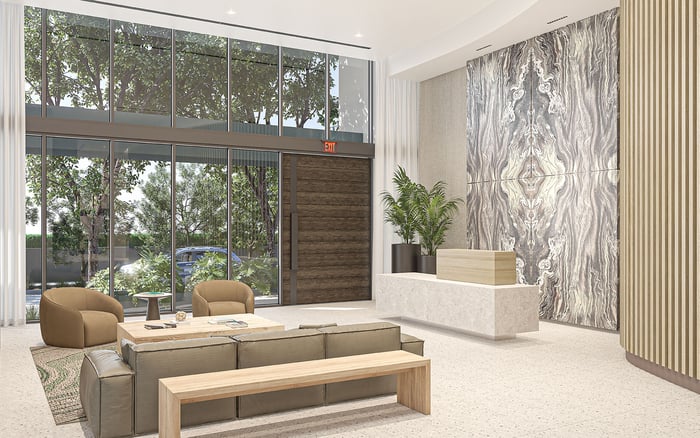
A discreet buyer’s guide to evaluating staff-ready Coconut Grove residences as durable, livable long-term purchases rather than surface-level luxury acquisitions.

A staff-ready residence is not simply a large home with an extra bedroom. For a serious long-term purchase in Coconut Grove, it is a property that can absorb the rhythms of private life without making those rhythms visible. The strongest examples allow principals, guests, household employees, vendors, drivers, tutors, chefs, security consultants, wellness providers, and maintenance teams to move through the home with clarity and restraint.
That is why staff readiness should be evaluated less as a luxury flourish than as operational architecture. A residence may photograph beautifully and still fail if deliveries interrupt the main entry, household storage is inadequate, mechanical access is awkward, or service areas sit too close to primary entertaining spaces. In Coconut Grove, where buyers often prize privacy, landscape, and a village-like pace, the long-term winner is the property that feels calm because it functions well.
This applies across product types. A gated estate, a large townhome, and a full-service condominium may all be staff-ready, but they achieve it differently. Four Seasons Residences Coconut Grove speaks to one side of the equation, where managed residential services can reduce friction for owners who want lock-and-leave confidence. A private home speaks to another, where the buyer controls more of the staffing model but also assumes more of the infrastructure burden.
The first question is simple: can the household operate without crossing itself? A staff-ready residence should create logical separation between arrival, service, family, and guest movement. The main entry should remain ceremonial. The service path should be practical. The kitchen should support daily family use and event-level preparation without turning every gathering into a back-of-house negotiation.
For long-term ownership, this matters because households evolve. Children grow up, parents visit for longer periods, health and wellness routines become more structured, and travel patterns change. A floor plan that feels glamorous for the first season may become frustrating if every operational task requires compromise. Buyers should study where groceries land, where luggage is staged, where housekeepers store supplies, where a chef can prep privately, and whether a driver or security presence can be accommodated without creating social awkwardness.
In vertical living, the building itself becomes part of the service plan. Elevator access, package handling, valet flow, loading protocols, and staff entry policies should be understood before purchase. At Park Grove Coconut Grove, the broader appeal of elevated Grove living makes buyers think carefully about how private residential convenience compares with the autonomy of a single-family estate. Neither is inherently superior. The correct choice depends on how the household actually lives.
Large square footage can conceal poor planning. A true staff-ready property creates privacy through sequence, acoustics, sight lines, and thresholds. The principal suite should not be exposed to service movement. Guest rooms should feel independent enough for extended stays. Secondary bedrooms should have practical access to laundry and storage. Outdoor spaces should allow entertaining without turning the entire home into a public stage.
Coconut Grove rewards this nuance. Its mature landscaping and residential texture naturally support discretion, but buyers should not assume every property delivers it equally. The difference between a beautiful home and a deeply livable one is often found in the unglamorous details: mudrooms, service closets, staff restrooms, pantry depth, discreet parking, outdoor equipment storage, and the distance between entertaining zones and private quarters.
For buyers comparing Estates & Single-Family options with boutique condominium living, the question becomes control versus convenience. A private estate can be tailored around a family’s household structure. A boutique building may provide a more managed environment, but it requires careful review of rules, access, and staffing protocols. Arbor Coconut Grove is a useful example of how smaller-scale Grove residential offerings can appeal to buyers who want neighborhood intimacy rather than a resort-like tower experience.
A staff-ready residence is often revealed by its kitchen plan. The show kitchen may satisfy the eye, but the working kitchen determines whether the home can host with composure. Buyers should look for prep surfaces, ventilation logic, pantry capacity, refrigeration strategy, cleanup flow, and a place for staff to work without occupying the social center of the house.
Storage carries equal weight. Seasonal wardrobes, sports gear, children’s equipment, wine, art materials, pet supplies, luggage, pool items, household paper goods, and service inventory all require a place to disappear. When storage is insufficient, staff readiness collapses into improvisation. Closets become staging areas. Garages become overflow rooms. The house begins to feel smaller than its measurements.
The same principle applies to wellness and outdoor living. A gym, pool, sauna, massage room, or garden terrace becomes more valuable when there is adjacent storage, towel handling, water access, and maintenance logic. Waterfront buyers should be especially disciplined about back-of-house needs, since outdoor equipment and marine-adjacent routines can place additional demands on storage and service access. Waterfront beauty is most durable when the operational layer has already been solved.
The most serious Coconut Grove buyers are not only purchasing for today’s household chart. They are buying optionality. A staff room may later become a nurse’s room, study, security office, newborn support suite, or quiet workspace. A secondary family room may become a tutoring area or wellness lounge. A garage bay may need to support both vehicles and household operations. Flexibility is not vagueness. It is the ability to adapt without expensive reinvention.
This is where newer residential offerings can be compelling, provided the layouts are genuinely usable. The Well Coconut Grove, for instance, sits within a buyer conversation increasingly shaped by wellness, daily services, and the desire for homes that support private routines. Meanwhile, Opus Coconut Grove underscores the continued interest in new-construction design language within the Grove context. The buyer’s task is not to be seduced by novelty, but to ask whether the plan will still make sense after years of real household use.
A long-term purchase should also account for maintenance culture. Staff-ready homes depend on systems that can be accessed, serviced, and managed without disrupting the principal living experience. Mechanical rooms, utility locations, smart-home infrastructure, landscape irrigation, pool systems, generator planning where applicable, and vendor access all influence whether ownership feels elegant or exhausting.
Coconut Grove has always appealed to buyers who want Miami without surrendering to Miami’s most performative instincts. The neighborhood’s strongest residences tend to offer retreat, greenery, and residential continuity. In that setting, staff readiness should feel quiet. It should never turn the home into a hotel, nor should it make private life feel over-managed.
The right residence balances welcome and withdrawal. It gives owners the ability to host beautifully, travel easily, support family comfortably, and employ help discreetly when needed. It also avoids overbuilding for a fantasy lifestyle. A serious buyer should be honest about the household’s true cadence: daily cooking or catered dinners, full-time staff or periodic help, frequent guests or private weekends, school-year routines or seasonal occupancy.
That honesty turns staff readiness into investment discipline. The homes most likely to remain desirable are those that solve enduring problems: privacy, flow, storage, adaptability, and ease of care. Finishes can be changed. Furniture can be replaced. But circulation, structural flexibility, and operational calm are much harder to retrofit.
What is a staff-ready residence? It is a home designed to support household help, vendors, and private services without disrupting principal living areas or guest experiences.
Does staff-ready always mean a separate staff suite? Not always. A separate suite helps, but service circulation, storage, privacy, and operational access can be just as important.
Is a condominium or a single-family home better for staff-ready living? Each can work. Condominiums may offer managed services, while single-family homes can provide more control over staffing and service areas.
What should buyers inspect first? Start with circulation. Study how groceries, laundry, luggage, vendors, guests, and residents move through the property on an ordinary day.
Why is storage so important? Storage keeps operations invisible. Without it, even a large residence can feel cluttered and operationally exposed.
How does privacy affect long-term value? Privacy supports daily comfort and future resale appeal because it is difficult to add after a home has been designed or built.
Should buyers prioritize a show kitchen or working kitchen? Ideally, both. For staff-ready living, the working kitchen logic is often the more important long-term test.
Can a staff-ready home still feel intimate? Yes. The best examples separate service functions while preserving warmth, scale, and family-centered spaces.
What is the biggest mistake buyers make? They focus on finishes before studying how the home actually operates under daily use, hosting, maintenance, and travel.
Why is Coconut Grove well suited to this kind of purchase? Coconut Grove attracts buyers who value privacy, landscape, and residential ease, all of which align naturally with staff-ready planning.
When you're ready to tour or underwrite the options, connect with MILLION.
If branded residences are on your mind — as a home or as an allocation — we would be glad to share what we are seeing, privately.
Begin a quiet conversation