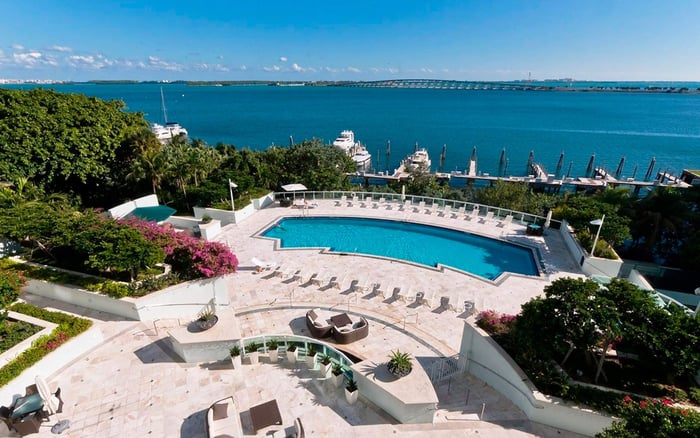
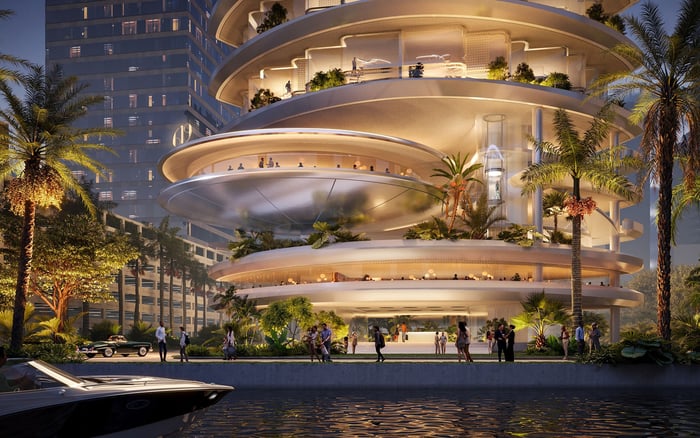
For waterfront penthouse buyers, bridge clearance is not a niche boating detail. It can influence marina strategy, convenience, resale depth, and the practical cost of owning a trophy residence in South Florida.
A South Florida penthouse is often judged first by altitude, exposure, architecture, privacy, and the sweep of the waterline below. Yet for a certain tier of buyer, the real calculation begins at sea level. Bridge clearance can determine whether a yacht, tender, or day boat fits naturally into the rhythm of the residence, or whether ownership quietly requires a second layer of logistics.
This is not a nautical footnote. In a region where waterfront living is central to the language of luxury, access can be as important as outlook. A penthouse may command a premium for open-water views, but if the route from home to ocean requires compromises, timing, transfers, or a separate marina plan, the real cost of ownership changes. The question is not only what the residence costs to acquire. It is what it costs to live the life that justified the purchase.
For the penthouse buyer who also thinks in terms of vessels, bridge clearance belongs beside ceiling heights, terrace depth, elevator privacy, and garage access. It is a component of daily ease.
Bridge clearance is the vertical space available for a vessel to pass beneath a bridge. In luxury real estate, the relevant number is not theoretical. It is measured against the yacht’s air draft, including radar arches, antennas, towers, hardtops, and other features above the waterline. A bridge that accommodates a low-profile tender may not work for a larger sport yacht or a vessel configured for open-ocean comfort.
The ownership implications are immediate. If a residence sits behind restrictive bridges, the owner may need to keep a primary vessel elsewhere, use a smaller tender near home, or build the weekend around tide, routing, and opening schedules where applicable. None of those choices necessarily diminishes the beauty of the penthouse. They do, however, change the utility of the address.
This is where two residences with similar views can diverge in real-world value. One offers a cinematic panorama. The other offers that same panorama with a clean, intuitive relationship to the water. For buyers who prize spontaneity, the difference is material.
The first hidden cost is time. A route that appears simple on a map may feel less graceful in daily use if it requires careful timing, repeated bridge considerations, or a separate drive to reach the yacht. Trophy ownership is built around discretion and ease. Friction is expensive because it reduces use.
The second cost is duplication. A buyer may love a waterfront penthouse but discover that the vessel cannot be kept nearby in the way originally imagined. That can mean a second slip arrangement, a separate club or marina relationship, additional crew coordination, and more planning around departures and returns. In the language of real estate, the residence still performs. In the language of lifestyle, it may no longer be the complete solution.
The third cost is resale filtering. Future buyers may not own the same vessel, but many at this level expect optionality. A property that offers a refined waterfront setting, strong building services, and practical marine access can speak to a broader audience. A property with more limited access may still be exceptional, but it may appeal to a narrower buyer profile.
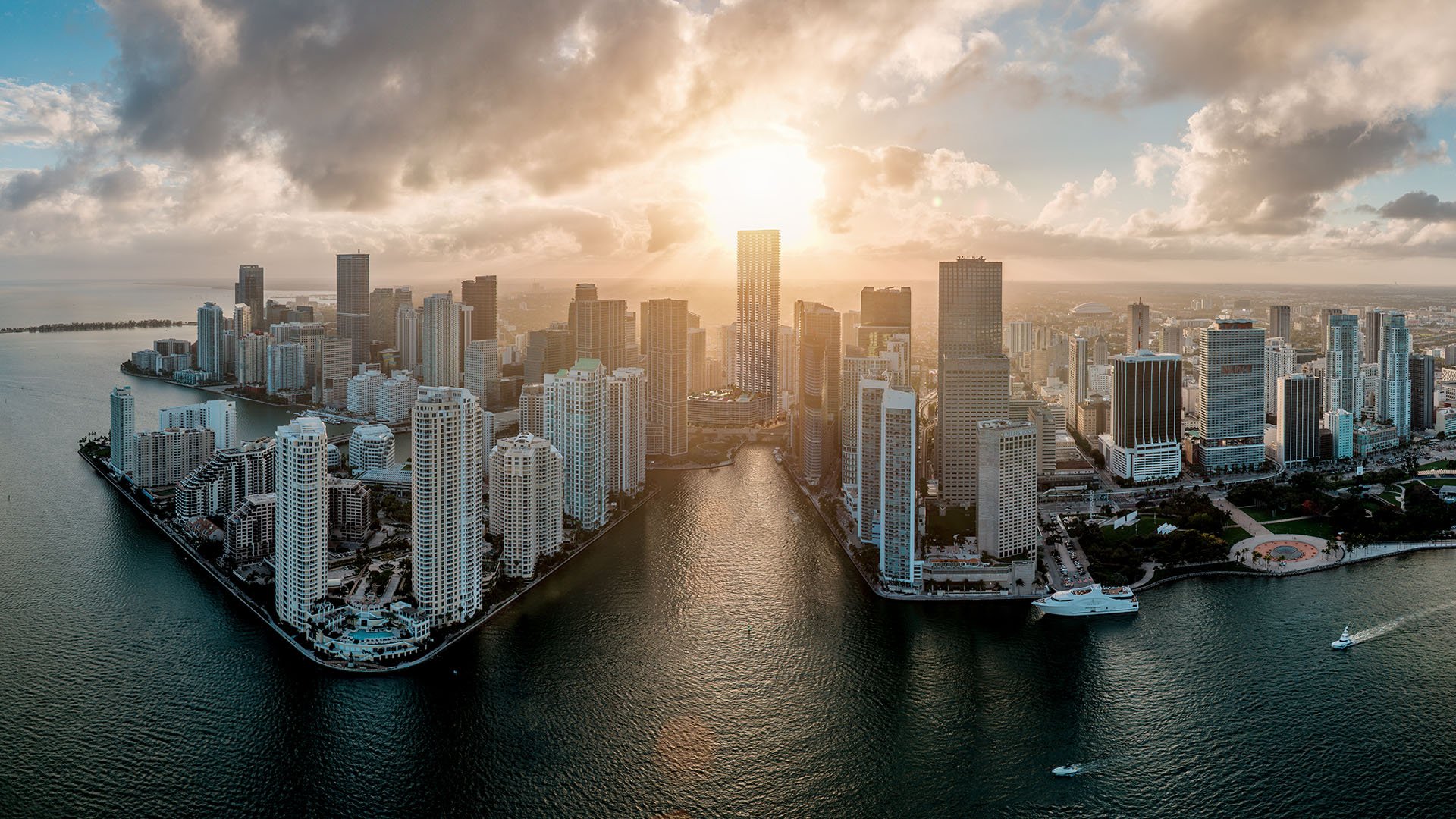
Brickell is a useful example of how nuance matters. The neighborhood offers an urban waterfront lifestyle where the penthouse experience is defined by skyline energy, bay views, restaurants, finance, and cultural proximity. For many buyers, that is the point. The yacht may live at a preferred marina, while the residence functions as a high-design city base.
That approach can be entirely rational. A buyer considering Una Residences Brickell, for instance, may be drawn to the prestige of bayfront living while treating vessel logistics as part of a broader Miami lifestyle plan. In this context, bridge clearance is less about rejecting an address and more about understanding which role the address plays. Is it the primary marine launch point, the urban residence, or both?
The best acquisitions are honest about that distinction. A penthouse that is perfect for entertaining, workday convenience, and panoramic living does not need to be the yacht’s home port to be the right purchase. But the buyer should know that before the contract, not after the first season of ownership.
Fort Lauderdale often enters the conversation because boating is deeply embedded in the area’s identity. Yet even in a market so closely associated with canals, waterways, and yacht culture, not all water is equally usable for every vessel. The distinction between waterfront and practical access remains essential.
Residences such as Riva Residenze Fort Lauderdale speak to buyers who want architecture, views, and a residential relationship with the water. A sophisticated buyer will still examine the route, the vessel profile, nearby docking options, and the daily choreography between home, boat, car, and airport. The address may be highly compelling, but the marine plan should be equally refined.
This is where the right advisory conversation becomes valuable. The aim is not simply to ask whether water is nearby. It is to determine whether that water supports the buyer’s vessel, habits, crew structure, and sense of ease.
In neighborhoods such as Bay Harbor Islands, Aventura, and Surfside, buyers often balance privacy, boutique scale, school or family convenience, beach access, and proximity to the bay. These markets can be especially attractive to owners who want waterfront atmosphere without the intensity of a larger urban core.
A project like Onda Bay Harbor may appeal to those who value a quieter bayfront setting, while Avenia Aventura places the conversation in a different pattern of neighborhood convenience and regional access. In each case, the vessel question should be specific rather than romantic. What boat do you own now? What boat might you own next? Is a boat slip part of the plan, or is the residence primarily about view, air, and privacy?
The best waterfront buyers preserve optionality. They choose residences that match the current lifestyle while avoiding unnecessary constraints on the next version of it.
Before committing to a trophy penthouse, ask the practical questions early. What is the route from the property to open water? Are there fixed bridges, movable bridges, or other constraints along the way? How does the vessel’s air draft compare with the route? Where will the primary yacht, tender, or center console actually live? Who manages departures, returns, fueling, cleaning, and guest arrivals?
Also ask whether the penthouse premium is being paid for scenery, marine utility, or both. There is no wrong answer. A buyer may decide that the most beautiful residence is worth a separate yacht plan. Another may decide that the residence and vessel need to function as a single ecosystem. The mistake is assuming those outcomes are identical.
For Coconut Grove buyers, Vita at Grove Isle illustrates another important point: waterfront serenity, privacy, and access to Miami’s boating culture can coexist, but the details still need to be examined through the lens of the buyer’s actual vessel and habits.
At the highest end of the market, wealth does not remove the importance of logistics. It heightens the expectation that logistics disappear. Bridge clearance matters because it determines whether ownership feels effortless or managed. It influences how often the yacht is used, how naturally guests move from residence to water, and whether a penthouse feels like a complete waterfront life or simply a spectacular place above it.
The most successful trophy purchases begin with a complete map of desire: the view, the building, the staff experience, the vessel, the drive times, the guest flow, and the future resale audience. Bridge clearance sits quietly inside that map, but it can redraw the economics of the entire acquisition.
Does bridge clearance matter if I do not own a yacht? Yes. It can still affect resale appeal, buyer optionality, and how the property is perceived by waterfront-focused purchasers.
Is a waterfront penthouse always better if it has nearby docking? Not always. The right answer depends on the buyer’s vessel, lifestyle, privacy preferences, and willingness to use a separate marina.
What is air draft? Air draft is the height of a vessel above the waterline, including elevated equipment such as antennas, arches, and towers.
Can a smaller tender solve a bridge clearance issue? Sometimes. A tender can add convenience, but it may not replace the experience of keeping the primary vessel close to home.
Should bridge clearance be reviewed before making an offer? Yes. It should be considered early, especially if boating is central to the reason for purchasing a waterfront residence.
Does bridge access affect penthouse value? It can. Practical access may broaden the future buyer pool, while constrained access can make the property more lifestyle-specific.
Is an oceanfront penthouse free from these concerns? Not necessarily. Oceanfront living may reduce some waterway questions, but docking, marina access, and vessel storage still matter.
What if the residence is perfect but the yacht cannot be kept nearby? The purchase can still make sense if the buyer intentionally plans for separate marina arrangements and accepts the added coordination.
Are bridge openings the same as bridge clearance? No. Clearance is the available height beneath a bridge, while an opening bridge may involve timing, operation, and route planning.
What is the main lesson for trophy buyers? Treat bridge clearance as part of the ownership cost, not a technical afterthought reserved for captains.
For a confidential assessment and a building-by-building shortlist, connect with MILLION.
If branded residences are on your mind — as a home or as an allocation — we would be glad to share what we are seeing, privately.
Begin a quiet conversation