For buyers comparing Brickell and Coconut Grove, the decisive distinction is not a neighborhood-wide amenity promise. It is whether beach access, cabana reservations, and guest privileges fit the household and are documented as residential rights.
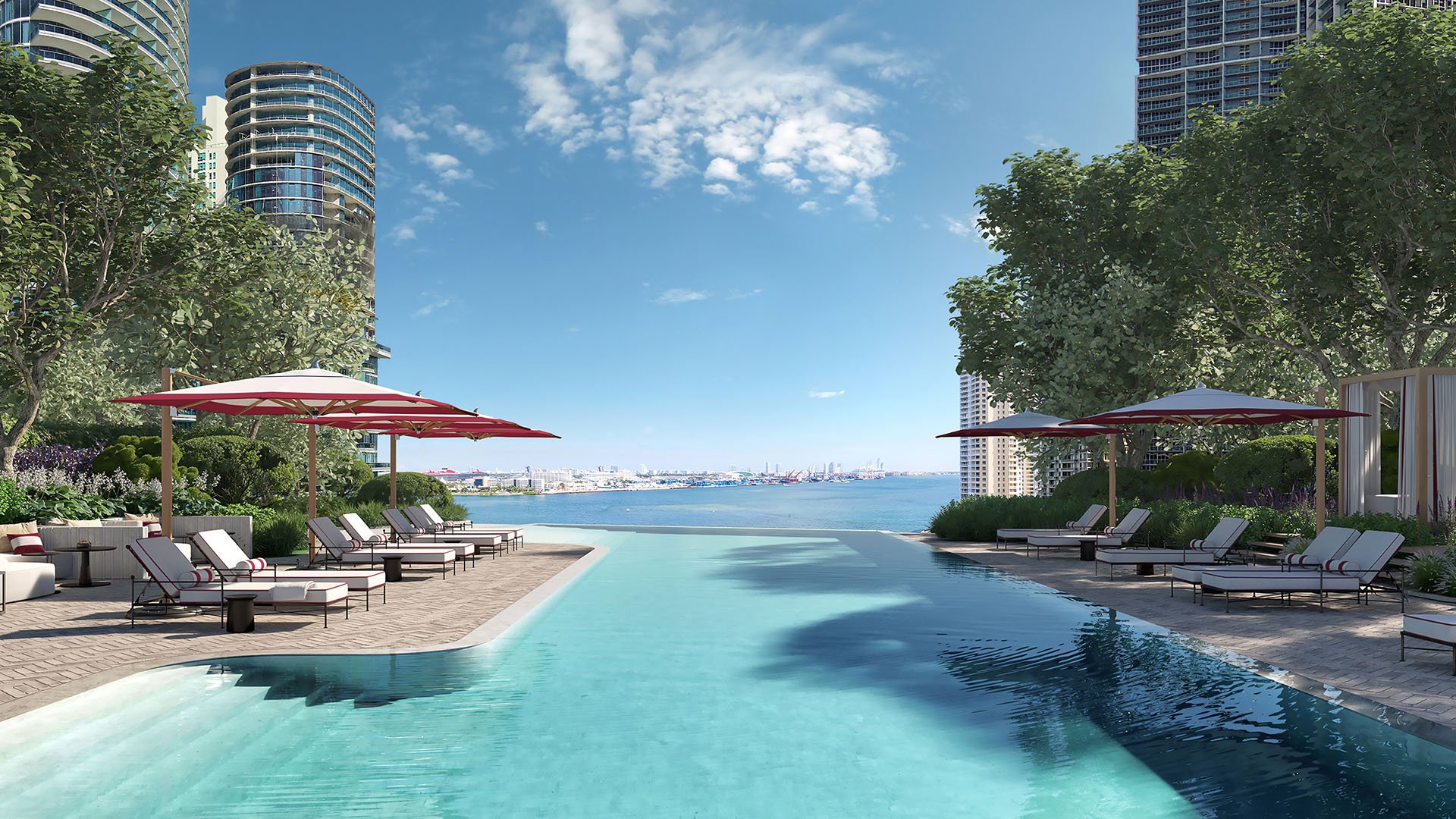
For a luxury buyer comparing Brickell and Coconut Grove, the decisive amenity question is not simply whether a property offers a cabana or mentions beach access. It is who may use that benefit, under what conditions, and whether it belongs to the residence or depends on a separate hospitality arrangement.
These neighborhoods should not be reduced to a contest between strict rules and easygoing access. The examples here reflect different operating arrangements, not neighborhood-wide standards: controlled cabana reservations at one Brickell property and an off-site beach benefit for guests of a Coconut Grove hotel. Neither establishes what every residential purchaser receives.
The useful comparison is personal. A couple seeking occasional beach service, a family hosting visiting relatives, and an owner planning rental use need different answers. An amenity has value when its written terms support the way the household intends to live.
One property-specific example in Brickell illustrates how cabana access can be managed: one cabana per unit, a maximum of six guests, use from sunrise through sunset, and a $25 cleaning and disinfecting fee for each reservation. Pets are prohibited in the cabana area.
These provisions are an example, not a statement of current rules across Brickell. Buyers should obtain the latest adopted policies before relying on the fee, hours, or guest allowance. The six-guest restriction should not be treated as a total occupancy limit without clarifying how residents are counted.
For someone considering 2200 Brickell, the practical exercise is to describe an ordinary weekend to management: visiting family, an afternoon reservation, and perhaps a pet accompanying the household. The example restrictions cannot be assigned to that project; they identify the questions its own documents must answer.
A buyer comfortable with defined daytime use may find clear limits reassuring. A frequent entertainer should test whether the permitted headcount, reservation frequency, and access hours accommodate the intended gathering. Predictability can be a luxury, but only when it matches the owner's routine.
A Coconut Grove hotel's advertised private beach benefit in Miami Beach is specifically for hotel guests. It includes two reserved chairs and towels through a beach-service partnership. This is an off-site hospitality offering, not evidence of on-site beachfront access in Coconut Grove.
That distinction matters to buyers who want a serviced beach day without choosing their residence around direct beach access. The benefit is offered to hotel guests; it does not establish that residence owners or their visitors qualify, or that the arrangement transfers with a residential sale.
Anyone considering Mr. C Tigertail Coconut Grove should keep the residential purchase and the hotel's advertised privileges separate until written residential terms establish a connection. Shared branding alone is not proof of shared amenity rights.
For a household with more than two beachgoers, the two-chair offering raises a practical question: what, if anything, is available for additional people? Transport, booking procedures, extra charges, and continuity of service should also be confirmed rather than assumed. A beach benefit is most useful when its logistics are as clear as its presentation.
The Coconut Grove hotel's pool cabanas have seating for up to five people, privacy or shade curtains, and a refreshment center stocked with chilled water and towels. Hotel guests book through the hotel, with reservations subject to availability, blackout dates, and other restrictions.
The conditions also prohibit outside food and beverages and specify a 24-hour cancellation rule. Buyers should clarify the precise cancellation consequences and timing before treating any comparable arrangement as flexible weekend access.
The five-person seating description is not equivalent to the six-guest restriction in the Brickell example. One describes seating; the other sets a guest limit. Neither figure alone answers whether children count, whether an owner must remain present, or whether overnight visitors can reserve independently.
For a buyer evaluating Park Grove Coconut Grove, this distinction belongs in the property's own amenity review. The hotel's terms do not govern that residence. The relevant question is whether cabana use, if offered, is reservable shared space, an exclusive entitlement, or a separately charged service-and what documentation supports that status.
Day visitors, overnight personal guests, and short-term renters require separate review. A rule governing one category does not establish the rights of another. Permission to host a relative does not itself establish whether that relative may use an amenity without the owner present.
At The Club at Brickell Bay, owners sued their association over alleged unlawful short-term rentals and unsafe conditions. Enforcement action against unlawful rentals was reported, and an August 11, 2026, letter ordered the property to immediately cease illegal vacation rentals. These events concern that property; they do not establish every Brickell building's rental or guest policy.
For buyers considering Una Residences Brickell, the takeaway is to review personal guest privileges and rental permissions separately, not to infer anything about that project's practices. Confirm whether the intended occupancy is permitted, then ask which amenities each authorized occupant may use. Rental enforcement history elsewhere cannot substitute for those answers.
The occasional beachgoer should prioritize eligibility and reliable booking over the breadth of an amenity description. The family host should focus on headcounts, accompaniment requirements, and visitor access. Buyers seeking quiet, predictable shared spaces should examine reservation controls and enforcement rather than assume either neighborhood is inherently more restrictive.
Before committing, request the current association rules, applicable amenity agreements, reservation policies, and fee schedules. Ask for written confirmation of who qualifies, how many guests may attend, what happens on peak dates, and whether privileges survive resale or depend on a separate membership or hotel stay. Review unresolved contractual questions with counsel.
Brickell and Coconut Grove can serve different buyers without conforming to a single rulebook. The strongest choice is the residence whose documented access supports the buyer's actual calendar: family weekends, private afternoons, occasional beach days, and visiting friends. Distinguishing an advertised benefit from an ownership right is essential to turning a polished promise into a dependable lifestyle.
For a discreet comparison of residences aligned with your beach, cabana, and guest-use priorities, connect with MILLION.
If branded residences are on your mind — as a home or as an allocation — we would be glad to share what we are seeing, privately.
Begin a quiet conversationThe documented examples do not establish a neighborhood-wide difference. Buyers should compare each property's current rules and residential agreements.
The document specifies one cabana per unit, a maximum of six guests, and use from sunrise through sunset. These are property-specific provisions, not confirmed current rules for all Brickell buildings.
It specifies a $25 cleaning and disinfecting fee for each reservation. Buyers should verify the current fee schedule before relying on that amount.
The example association document prohibits pets in the cabana area. That restriction should not be applied to other properties without reviewing their rules.
The advertised access is in Miami Beach and is specifically for hotel guests. It is an off-site hospitality benefit, not on-site beachfront access in Coconut Grove.
It includes two reserved chairs and towels through a beach-service partnership. Additional guests and services should not be assumed to be included.
The hotel offering does not establish residential ownership rights or transferability. Buyers need written residential terms confirming any entitlement.
The cabanas have seating for up to five people. That seating description should not be treated as a complete guest-access policy.
Reservations are subject to availability, blackout dates, and other restrictions, with hotel guests directed to book through the hotel. The conditions prohibit outside food and beverages and specify a 24-hour cancellation rule.
No; personal guest access and rental permission should be reviewed separately. Buyers should also confirm which amenities each authorized occupant may use.