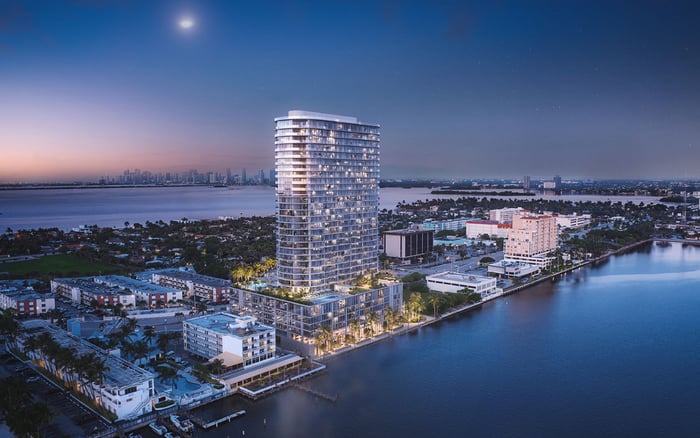
At Shoma Bay, the ownership question extends beyond waterfront amenities to who can shape their operation. A buyer-focused look at board authority, budget scrutiny, service standards and the documents that should govern expectations.
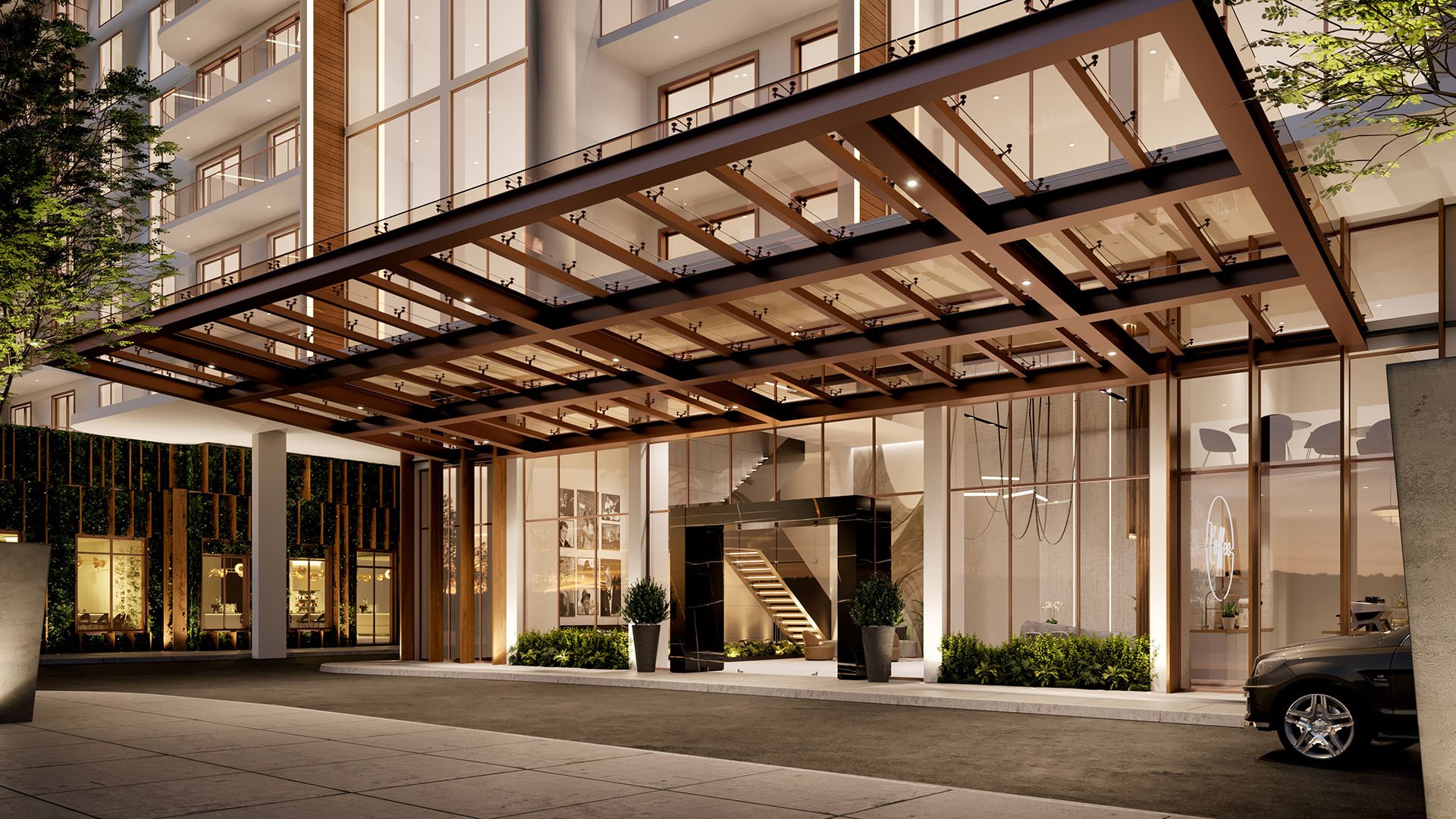
At Shoma Bay North Bay Village, the appeal begins with a waterfront address and an ambitious mixed-use program. The more consequential ownership question is quieter: who will decide how that environment is funded, maintained and experienced after purchase?
Planned as a 333-residence, 24-story condominium tower by Shoma Group, the development pairs residential amenities with a substantial commercial component. That combination makes governance an essential part of purchase diligence, not merely an administrative detail.
Owner-controlled board elections could give residents a way to influence spending priorities and service expectations. But owner control is a question for the documents, not an assumed Shoma Bay feature. Buyers should establish board composition, election procedures, turnover conditions and any retained developer rights before assigning value to that prospect. Better alignment with owners is a possibility; lower assessments are not a promise.
The first distinction is between electing directors and determining what those directors may change. For Shoma Bay, counsel should review the declaration, bylaws, offering documents and relevant agreements together to identify who appoints or elects each seat and when those rights change.
The inquiry should extend beyond a projected turnover date. Ask what triggers the transition, what voting rights attach to residential and commercial interests, and whether any decisions require approval beyond the board. Request a clear explanation of any developer rights that continue afterward.
Election mechanics deserve equal attention: nomination procedures, eligibility, notice requirements and the practical means for owners to participate. Second-home purchasers should understand how to participate before closing, rather than improvise when an important vote approaches.
A buyer also considering Continuum Club & Residences North Bay Village should ask these questions independently there. A shared neighborhood is not evidence of a shared ownership structure.
If an owner-elected board has the relevant authority, it could seek clearer budget explanations, reconsider discretionary priorities or examine whether service contracts deliver the intended value. These are potential avenues for oversight, not confirmed changes at Shoma Bay.
Start with a budget that distinguishes daily operations, recurring maintenance and long-term funding. Buyers should request the proposed assessment schedule, its underlying assumptions and the applicable reserve information. A single monthly figure says little about the service level it is intended to support.
Any proposed reduction deserves a second question: what changes with it? A lower expense could reflect a better contract, fewer service hours, postponed work or a different allocation of responsibility. For an owner, those outcomes are not interchangeable.
An owner-led board could also favor greater spending to support the desired standard. Evaluate a budget against a defined ownership experience, rather than treating the smallest assessment as the best result.
Shoma Bay's planned amenity program includes a pool terrace, cabanas and a summer kitchen, alongside a spa, hammam and gym. An owners’ lounge with a bar and golf simulator, a pet spa and a children’s club broaden the planned experience.
The presence of these spaces does not establish their operating hours, staffing levels or association-funded costs. Buyers should ask which services are included, which might carry separate charges, and who is responsible for equipment maintenance and replacement.
For any future owner-controlled board, the discussion should begin with standards, not cuts: desired cleanliness, reliable equipment, access arrangements and responsiveness when something needs attention. Those standards provide a basis for evaluating proposals, rather than debating an isolated line item.
Consider the pool terrace as a diligence exercise. Before judging its budget, ask what cleaning, maintenance and access arrangements are contemplated. Apply the same discipline to wellness spaces: an attractive amenity description should be paired with a clear explanation of ongoing operation.
The development's commercial plans include an approximately 35,000-square-foot Publix and an additional 15,628 square feet of retail space. The prospect of convenient shopping is distinct from the question of how residential and commercial obligations are divided.
Buyers should request the documents governing shared facilities and expense allocations. Ask whether any access routes, parking, utilities, security functions or building systems are shared and, if so, how responsibility is assigned. These are questions to resolve, not confirmed arrangements.
Do not assume retail activity subsidizes residential services. Nor should buyers assume residents bear commercial operating costs. The relevant agreements should explain the allocation and the process, if any, for reviewing or changing it.
Shoma Group has secured $172.5 million in C-PACE financing for Shoma Bay. That project-level figure does not establish an individual owner's obligation. Purchasers should have counsel determine whether any related assessment or payment responsibility applies to the contemplated residence and how it is disclosed.
The strongest case for owner participation is not austerity. It is the opportunity, where the documents permit, to connect spending decisions with the experience owners want to preserve.
A prospective owner-led board could begin by requesting an inventory of contracts, renewal dates, service scopes and performance expectations. Before seeking replacement bids, it should establish which terms can be changed and what continuity would require. A different provider is not automatically a better one, and a lower price is not meaningful without comparable scope.
Buyers weighing Shoma Bay against The Perigon Miami Beach can apply the same scrutiny without assuming equivalent governance. In Miami Beach or North Bay Village, the diligence question remains the same: what documents connect the promised residential experience to an accountable operating plan?
For Shoma Bay, that means evaluating potential owner influence alongside the obligations and service expectations that would remain after an election.
Before purchase, seek a written explanation of the path to owner representation, the decisions owners or their directors could influence, and the limits on that authority. Pair it with the proposed budget, reserve information, service scopes and residential-commercial allocation documents. Have condominium counsel review the package as a whole.
The practical test is straightforward: can you identify who decides, who pays and what standard the payment is meant to deliver? If an answer depends on a future election, contract negotiation or approval, distinguish that possibility from a commitment already contained in the documents.
At Shoma Bay, owner-controlled elections could matter most as a mechanism for accountable stewardship. Their value should be measured by the authority they confer and the quality of decisions they support, not by an assumed reduction in cost.
For a discreet perspective on South Florida condominium ownership, explore MILLION.
If branded residences are on your mind — as a home or as an allocation — we would be glad to share what we are seeing, privately.
Begin a quiet conversationShoma Bay is a Shoma Group mixed-use waterfront condominium development in North Bay Village, planned as a 333-residence, 24-story tower.
Owner control should not be assumed. Buyers should verify board composition, election rights, turnover conditions and retained developer rights in the governing documents.
Where the governing documents and applicable requirements permit, owner-elected leadership could reconsider spending priorities, scrutinize contracts and define service expectations. These are potential avenues for oversight, not confirmed Shoma Bay outcomes.
Lower assessments are not guaranteed. Owners could instead prioritize additional spending to maintain or improve the desired service standard.
Request the proposed budget, assessment schedule, underlying operating assumptions and reserve information. Review these alongside service scopes and expense-allocation documents.
Plans include a pool terrace, cabanas, summer kitchen, spa, hammam, gym and owners’ lounge with a bar and golf simulator. A pet spa and children’s club are also planned.
The advertised amenity program does not establish staffing, operating hours or association-funded costs. Buyers should seek specific service and maintenance arrangements.
Plans include an approximately 35,000-square-foot Publix and an additional 15,628 square feet of retail space. Residential-commercial cost sharing should be examined separately in the governing agreements.
No. The $172.5 million project-level financing figure does not establish individual owner obligations; counsel should review any applicable payment responsibilities and disclosures.
Establish who controls decisions, who pays each category of expense and what service standard the budget supports. Distinguish enforceable commitments from possibilities dependent on future elections or negotiations.