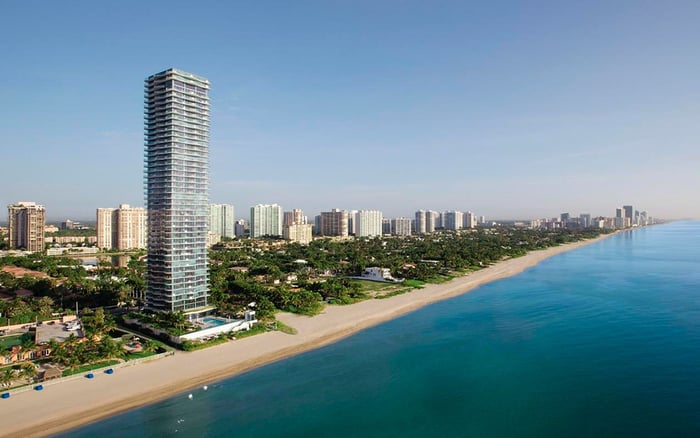
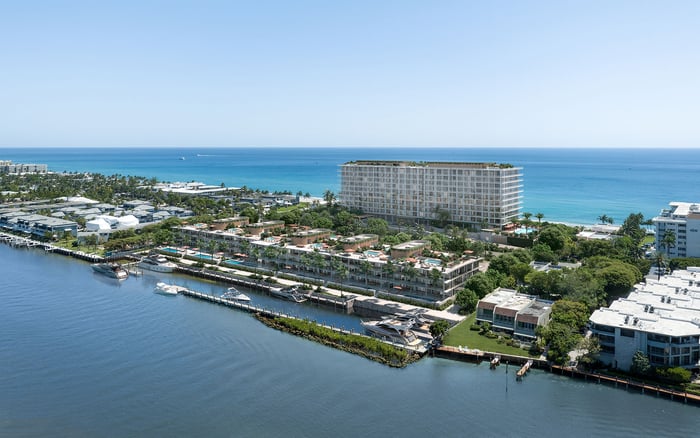
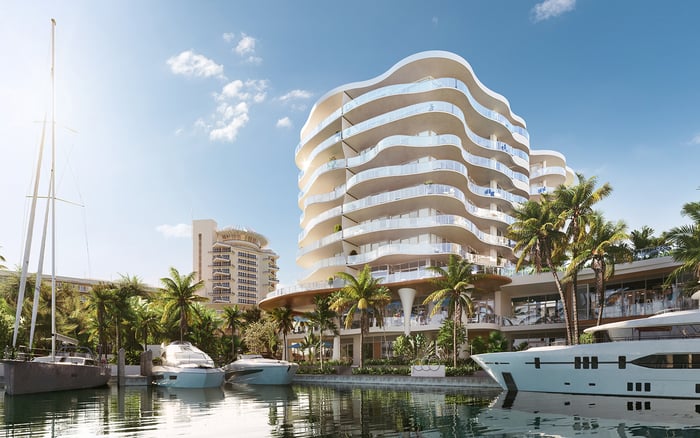
A buyer-oriented look at Hillsboro Beach, Florida: a 3.2-mile barrier-island town defined by privacy, strict residential character, and a rare ocean-to-Intracoastal lifestyle. From its single-road calm on A1A to sea-turtle-minded lighting and landmark coastal heritage, Hillsboro Mile continues to attract second-home buyers who value discretion over scene. We also look at what today’s pricing signals, how branded new construction is reshaping expectations, and what to evaluate before you commit.
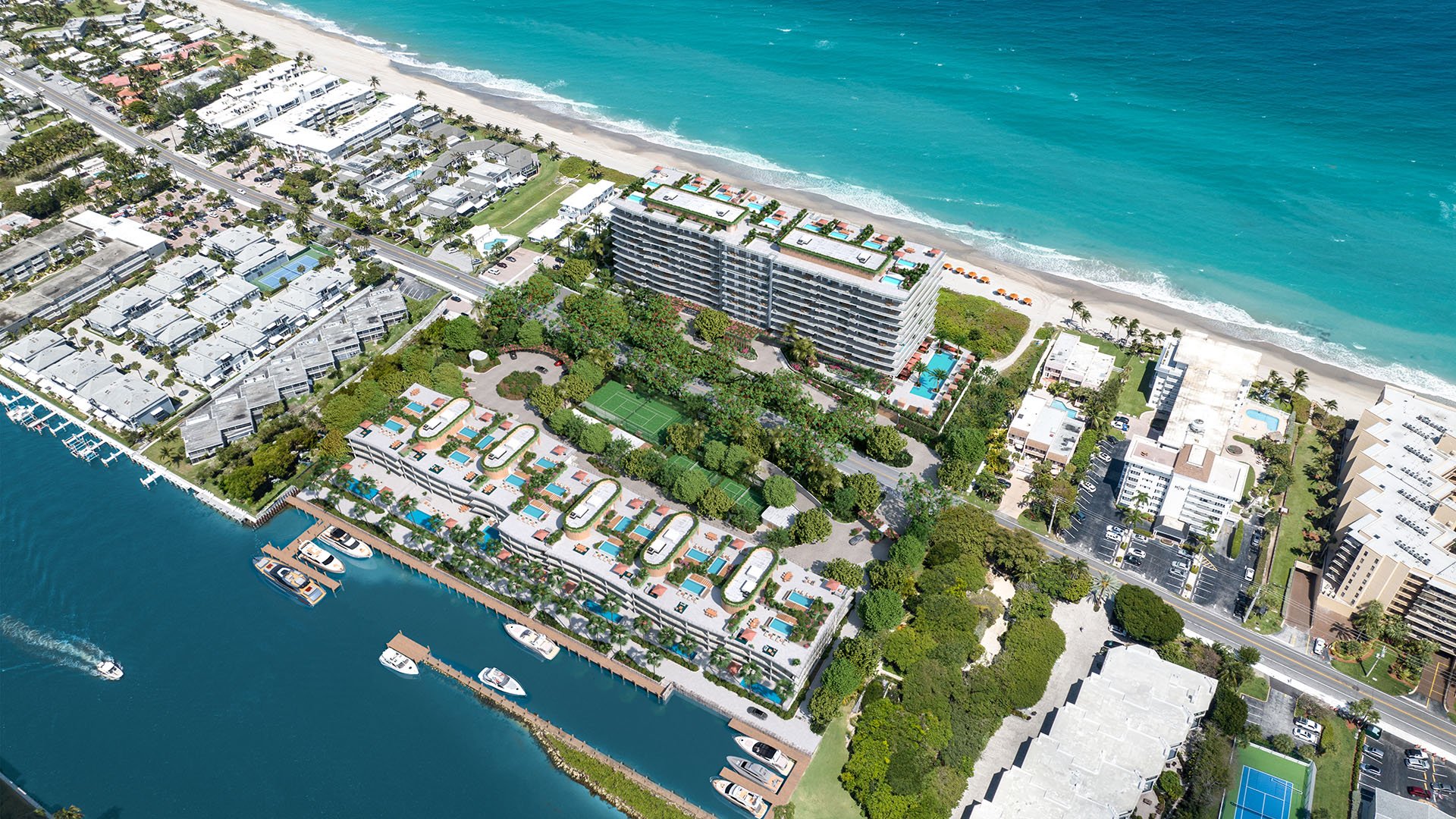
Hillsboro Beach sits on a 3.2-mile-long barrier island along State Road A1A-a slender ribbon of land often referred to simply as Hillsboro Mile. It feels intentionally edited: one roadway runs the town’s full length, and the setting reads as almost entirely residential. That simplicity is the point. For buyers who want the ocean within steps but prefer life without the tempo of a commercial strip, the town’s low-key structure becomes a form of luxury.
In practice, the lifestyle is highly defined. You arrive, you exhale, and you operate within a tight geography, with daily needs handled just beyond town limits. Viewed through a portfolio lens, Hillsboro Beach functions less like a typical beach municipality and more like a private enclave. That impression is reinforced by the town’s character and policies, including the well-known absence of street lights.
Hillsboro Beach is known for having no street lights, a choice tied to preserving sea turtle nesting. The impact is immediate after dusk. Without the glare and visual noise common to coastal corridors, the Mile feels calmer, darker, and more residential. For many owners, that is part of the romance: a beachfront address that still holds onto a natural nighttime horizon.
For buyers, the takeaway is both practical and aesthetic. Lighting here isn’t simply a design preference-it’s an operating consideration. Outdoor fixtures, balcony illumination, and beachfront-facing light spill should be planned with care. When touring properties, note how a building manages exterior lighting and how a single-family home handles landscape and pool lighting, especially when the lot sits close to the sand.
The town is widely noted for having no commercial properties within its limits. Hillsboro Beach is also a community with no schools. For full-time households with school-aged children, those facts may shape the decision immediately. For second-home buyers and primary residents who prefer a quieter, adult-oriented atmosphere, the same realities can read as advantages.
The trade is straightforward: you gain residential continuity and give up walk-to-everything convenience. Many owners treat that as a feature rather than a bug, leaning into a rhythm of private time at home and intentionally chosen outings nearby. In that sense, Hillsboro Beach aligns with other privacy-forward enclaves around South Florida, where home is meant to be the destination.
Hillsboro Beach’s population is estimated at roughly 2,020 people (2023), with a median age in the mid-60s. That demographic profile can translate to longer holding periods and limited turnover-conditions that often keep inventory tight. When supply is constrained by geography and ownership patterns, pricing tends to hinge less on broad averages and more on the specifics of each offering: direct ocean frontage, Intracoastal views, boat access, updated systems, and a building’s service level.
Recent public snapshots have placed typical mid-market reference points around the mid-$600,000s for median property value and median listing price, but Hillsboro Mile does not behave like a median-driven market. Trophy inventory can sit in a different universe, and pricing dispersion can be significant depending on frontage, privacy, and renovation pedigree. A high-end listing at 999 Hillsboro Mile illustrates how dramatically a single property can reset expectations for the corridor.
If you are approaching Hillsboro Beach as an asset class, treat it like a micro-market: analyze recently sold patterns, not just active listings, and map transactions to specific location and building variables.
What distinguishes Hillsboro Beach is not only the beachfront-it’s the ability to live between the Atlantic Ocean and the Intracoastal Waterway within the same narrow band of land. For some buyers, the ideal is an ocean-view residence with marina adjacency and boat slips. For others, the priority is the Intracoastal side for calmer water and a yachting-forward day-to-day.
This is where Hillsboro Mile becomes a connoisseur’s market. The conversation moves quickly from generic “waterfront” to specific preferences: sunrise vs. sunset exposure, wind, building setback, the feel of beach access, dockage availability, and the way a residence frames water as art.
Those who also track branded luxury projects across Broward often compare the Mile to service-minded experiences farther south in Fort Lauderdale, such as Auberge Beach Residences & Spa Fort Lauderdale, where hospitality DNA informs resident expectations. Hillsboro Beach remains quieter, but the region-wide benchmark for service and amenities has risen.
For buyers, the significance extends beyond the brand association. It signals a shift in what “new” means on Hillsboro Mile: larger floor plans, a more resort-caliber amenity set, and the ease of a professionally managed lifestyle. Even if you ultimately purchase a resale condo or a single-family home, the presence of a top-tier branded project can reshape the competitive landscape by resetting expectations for finish levels, wellness programming, and service.
As you evaluate options, pressure-test how a building’s operations and amenity mix align with how you actually live. Do you need a marina component, or are you focused on a private beach experience? Do you want full-service arrivals and maintenance, or do you prefer a simpler, lock-and-leave footprint?
Hillsboro Inlet’s lighthouse adds a note of heritage to a coastline known primarily for modern residential life. The Hillsboro Inlet Lighthouse was first lit in 1907 and was later automated. Even for residents who rarely visit it directly, the landmark can function as a psychological anchor: a reminder that this is a historic maritime corridor, not a newly manufactured resort strip.
For buyers, this kind of identity matters. In markets where product can feel interchangeable, place-specific character is what tends to endure. Hillsboro Beach’s combination of natural darkness, slender geography, and coastal heritage is difficult to replicate.
Across Florida, beach access can be a sensitive topic, with ongoing debate about the practical boundaries between public shoreline use and adjacent private property interests. In a community like Hillsboro Beach-where many buyers prize discretion and controlled environments-it’s worth understanding how access works in real life: where you can comfortably walk, where entry points are located outside town limits, and how buildings manage resident beach setups.
Treat beach access as experiential due diligence, not a checkbox. Visit at different times of day, observe the flow, and ask direct questions about how residents use the sand, where equipment is stored, and what rules govern chairs, umbrellas, and lighting.
Hillsboro Mile sits within a broader coastal luxury continuum that includes Pompano Beach, Fort Lauderdale, and the northern edge of Miami-Dade’s branded tower ecosystem. Each node expresses luxury differently.
Pompano Beach is increasingly defined by new luxury vertical living, including projects such as Armani Casa Residences Pompano Beach, where branding and contemporary amenity stacks are central to the pitch. Hillsboro Beach, by contrast, sells calm and scarcity: fewer distractions, fewer reasons for strangers to pass through, and a sense that the address is intentionally under-programmed.
Farther south, Sunny Isles and Miami Beach offer a more high-rise, high-service, high-visibility lifestyle, exemplified by properties like Regalia Sunny Isles Beach. Those markets can be ideal for buyers who want immediate access to dining, culture, and a denser luxury community. Hillsboro Beach tends to attract those who prefer the opposite: the coastal equivalent of a private club, where the soundtrack is mostly wind and water.
Hillsboro Beach rewards buyers who ask the right questions early.
First, clarify your water relationship. If boating is central, prioritize Intracoastal adjacency and confirm how dockage works, including any restrictions that affect vessel size and availability. If you are beach-first, evaluate dune conditions, setback, and how the property manages lighting and privacy.
Second, calibrate your appetite for quiet. The absence of commercial property and street lights creates a specific feel that is not for everyone. Spend a full evening on the Mile before making decisions, and consider how guests will arrive and navigate at night.
Third, treat building operations as value. On a barrier island, maintenance standards and management competence matter. Hurricane readiness, exterior upkeep, and clear policies around renovations and common-area lighting can protect both lifestyle and long-term value.
Finally, consider your time horizon. In a micro-market, entry points can be infrequent. Buyers who plan to hold through cycles often value Hillsboro Beach’s scarcity and identity more than short-term fluctuations in broader market sentiment.
Where is Hillsboro Beach located? It is a barrier-island town along State Road A1A on Hillsboro Mile in Broward County.
How long is Hillsboro Beach? The town spans about 3.2 miles from end to end along the island.
Is Hillsboro Beach mainly residential? Yes, it is primarily residential and is widely known for having no commercial properties.
Why are there no street lights in Hillsboro Beach? The policy is associated with preserving sea turtle nesting conditions along the beach.
Are there schools in Hillsboro Beach? No, there are no schools within the town limits.
What kind of buyer typically chooses Hillsboro Mile? Many are privacy-driven owners seeking a quiet second-home or low-distraction primary residence.
Can I find both ocean and Intracoastal lifestyles here? Yes, the town’s narrow geography supports both oceanfront and Intracoastal-oriented living.
What is notable about the Hillsboro Inlet Lighthouse? It was first lit in 1907 and later became automated, remaining a defining coastal landmark.
Do branded residences matter in Hillsboro Beach? They can, as they often raise expectations for service, amenities, and large-format floor plans.
What should I do before buying a home in Hillsboro Beach? Visit during the day and at night, confirm access patterns, and evaluate building operations and lighting.
For a tailored shortlist and next-step guidance, connect with MILLION Luxury.
If branded residences are on your mind — as a home or as an allocation — we would be glad to share what we are seeing, privately.
Begin a quiet conversation