A considered approach to entertaining at home in South Beach, from private-chef starting prices and staffing quotes to building access, late-night service and conditional municipal requirements.
The most successful private dinner feels effortless to guests because its logistics are settled in advance. For a South Beach homeowner, that means treating the menu, service team, residence access and final cleanup as one plan while pricing each component separately.
Second-home ownership makes this discipline particularly valuable: the person approving the event may not be present for deliveries, setup or the final handover. A written scope gives the owner or household representative a clear basis for authorizing changes.
For buyers considering Apogee South Beach, entertaining should also inform due diligence. Ask how a proposed dinner would work within the residence and building rules; a beautiful dining room does not settle the operational questions. A useful budget carries the evening through the last collection, not just the final course.
A starting price of $800 for a Miami Beach private-chef dinner serving 4-12 guests provides one planning reference. That figure generally excludes premium ingredients, rentals, additional servers, alcohol, taxes and gratuity. It is a starting point, not a promise of an all-inclusive luxury evening.
For the same service, buffet-style events start at around $1,500 for approximately 15-40 or more guests, including chef-prepared food, setup, warming equipment and cleanup. An approximate planning range of $75-$150 per person varies with menu, ingredients, guest count, service format, staffing and extras. These figures represent a single service option, not a verified South Beach market average.
Compare formats only after defining what each includes. A buffet with setup and cleanup is not directly comparable to a plated dinner with separately quoted service staff. Before treating any starting price as a working budget, ask whether the proposed guest count changes the minimum charge, staffing plan or equipment requirements.
A clear proposal should separate the following categories, even when some are included in a package:
Food, menu upgrades and chef labor.
Service staff, bartending and any separately required security.
Rentals, rental coordination, delivery and collection.
Setup, breakdown and final cleaning.
Alcohol, tax, service charges and gratuity.
Minimum hours, overtime and any after-hours charges.
For the same private-chef service, rental coordination starts at $300, with rental costs charged separately. Coordination can cover sourcing linens, china, glassware, silverware and décor; it is not the cost of the items themselves.
A 50% deposit may be required to secure the date. Before paying, request the cancellation terms, payment schedule, guest-count deadline and process for approving changes. Ask explicitly whether a service charge includes gratuity and which portions of the proposal remain variable. A deposit secures a commitment; the written scope defines what that commitment buys.
There is no established universal hourly rate here for servers, bartenders or security, nor a standard South Beach late-night surcharge. Treat each as a quote-based expense rather than applying an assumed percentage to the catering bill.
Ask each provider to specify staff numbers, roles, minimum paid hours, arrival times and expected release times. Separate guest-facing service from preparation and breakdown. An evening that ends for guests at midnight still needs a defined plan for clearing, packing and departure.
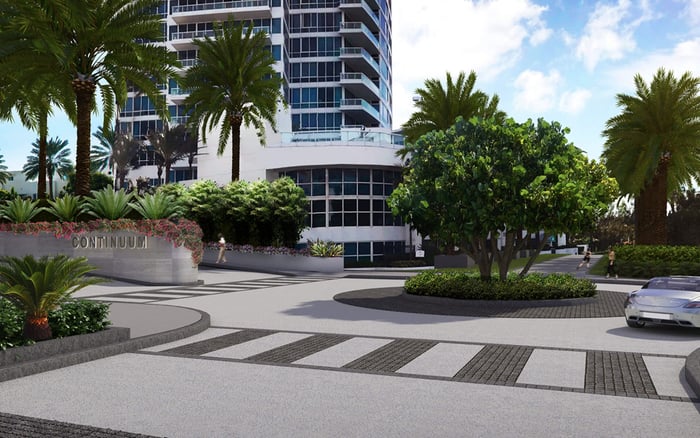
For a residence under consideration at Continuum on South Beach, ask management which access windows and vendor procedures would govern the proposed schedule. This is a due-diligence question, not an assumption about the property's policies.
Request a written extension scenario detailing the cost of additional service time, any late collection charge and who may authorize either. The objective is not to predict every overrun, but to prevent an unpriced extension from becoming the default.
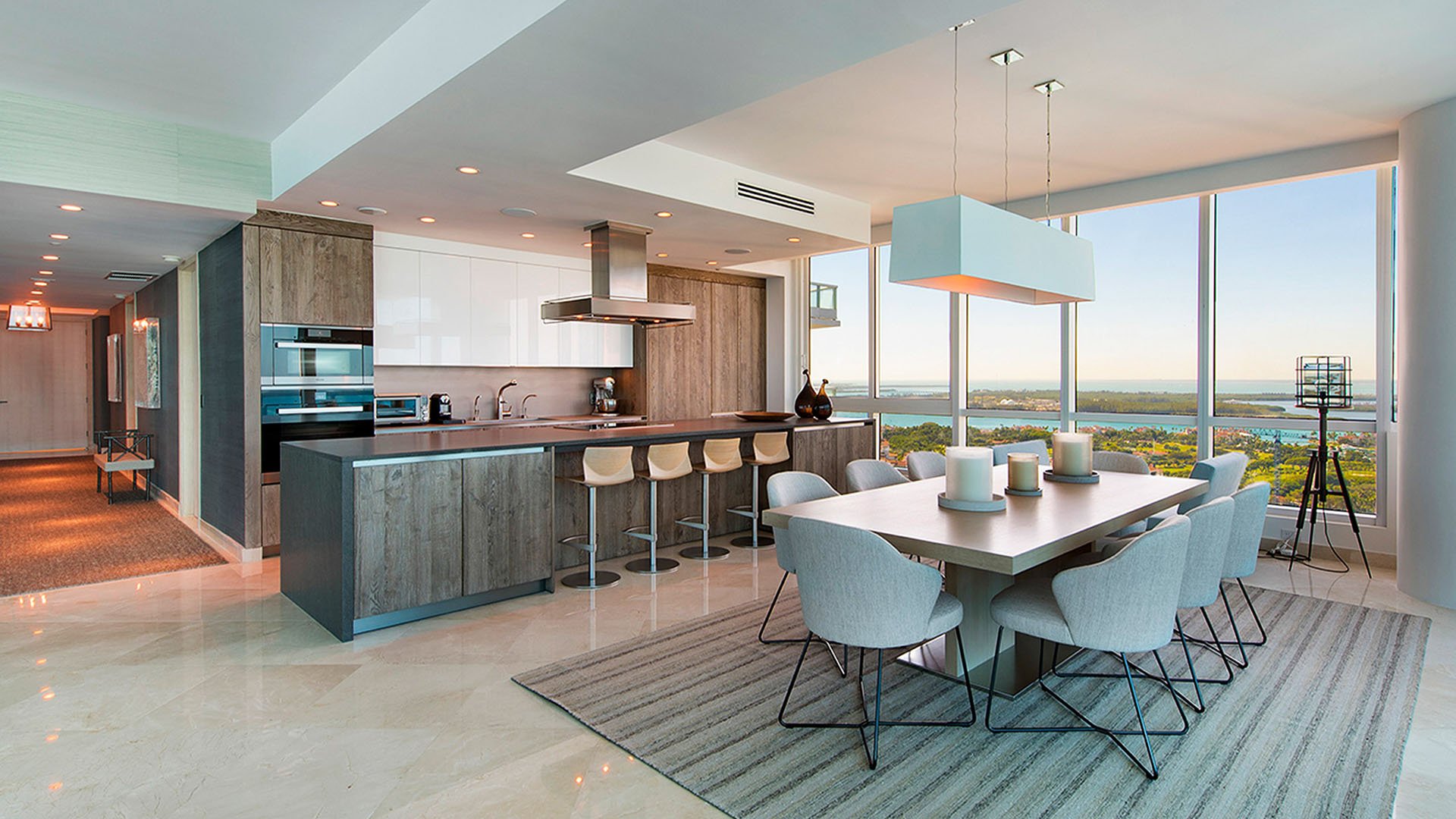
Before choosing a more elaborate menu, ask the chef to review preparation space, refrigeration, plating areas and the route between the kitchen and dining table. Confirm what equipment would be brought in and whether management would accept the proposed setup.
At Five Park Miami Beach, a prospective buyer can apply the same practical test: request the rules for vendor entry, deliveries, equipment movement and cleanup before translating entertaining ambitions into a budget. Do not presume access to shared spaces or service facilities.
Ask whether insurance documentation, reservations or approvals are needed, and whether any building charges would apply. Keep those answers separate from the caterer's quotation. Check the requirements of the residence, vendor and municipality independently.
Miami Beach requires permits for certain large-scale residential parties, including qualifying events expecting more than 100 attendees during designated peak periods. This is not a blanket permit requirement for ordinary home dinners. For covered events, applications generally must be submitted at least 90 days in advance, with costs determined by scope, nature and expected attendance.
Where supplemental city services or equipment rentals are required, fully paid receipts or invoices must generally be documented at least two weeks before the event. Additional municipal services may be charged to the applicant and deducted from the security deposit.
City requirements include a $500 security deposit, while certain public-location events may incur a 25% user fee on combined city services. Neither should be added automatically to a private dinner budget; confirm the applicable category and fee schedule.
Failure to obtain and comply with a required permit can trigger fines of $1,000 a day for a first violation and $5,000 a day for subsequent violations. An irreparable or irreversible violation may carry a $15,000 penalty. Compliance belongs before vendor commitments, not after them.
Paying staff to stay later does not authorize louder entertainment. Miami Beach noise rules apply on private and public property. Between 11 p.m. and 7 a.m., sound from covered equipment plainly audible at least 100 feet from a building or structure constitutes prima facie evidence of a violation.
That standard is not permission to create disruptive noise earlier or within 100 feet. A special-event permit may authorize a limited departure, but it must specify how limits may be exceeded, for how long and at which locations.
When evaluating Setai Residences Miami Beach, include the intended entertaining schedule in your questions to management. Confirm permitted arrangements rather than inferring them from the property's name.
Before the event, reconcile the vendor quote, any applicable building charges and any required municipal costs. Record refundable deposits separately from expected expenses, and identify who can approve overtime or changes. The owner may choose a discretionary reserve, but it should not substitute for unresolved pricing.
For a residence search shaped by the way you live and entertain, explore South Florida properties with MILLION.
If branded residences are on your mind — as a home or as an allocation — we would be glad to share what we are seeing, privately.
Begin a quiet conversationOne Miami Beach private-chef offering starts at $800 for 4–12 guests. Premium ingredients, rentals, extra servers, alcohol, taxes and gratuity are generally additional.
The same offering starts buffet-style events around $1,500 for approximately 15–40 or more guests. Its description includes chef-prepared food, setup, warming equipment and cleanup.
No. It is an approximate planning range from one private-chef offering, with costs varying by menu, ingredients, guest count, staffing, service format and extras.
The cited starting price of $300 covers coordination, with rental costs additional. Confirm delivery, collection and other related charges in the proposal.
The private-chef offering indicates that a 50% deposit may be required to secure the date. Confirm cancellation terms, remaining payments and change approvals before paying.
No universal staffing rate or standard late-night surcharge is established here. Request minimum hours, overtime triggers, release times and extension costs in writing.
No. Permits apply to certain large-scale residential parties, including qualifying events expecting more than 100 attendees during designated peak periods; confirm whether your event is covered.
Applications for covered large-scale residential events generally must be submitted at least 90 days before the event. Required supplemental city services and equipment rentals also have advance payment-documentation requirements.
No. The fee concerns certain public-location events and combined city services, not an automatic private-residence catering surcharge.
Between 11 p.m. and 7 a.m., covered equipment sound plainly audible at least 100 feet from a building or structure constitutes prima facie evidence of a violation. This is not permission for disruptive noise earlier or at shorter distances.