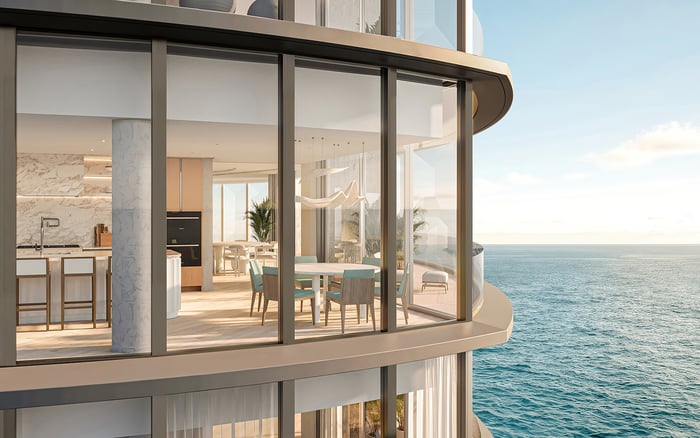
For collectors, the Miami Beach versus Bal Harbour decision is less about address alone and more about infrastructure, service access, privacy, and the way a wine program lives inside the residence.
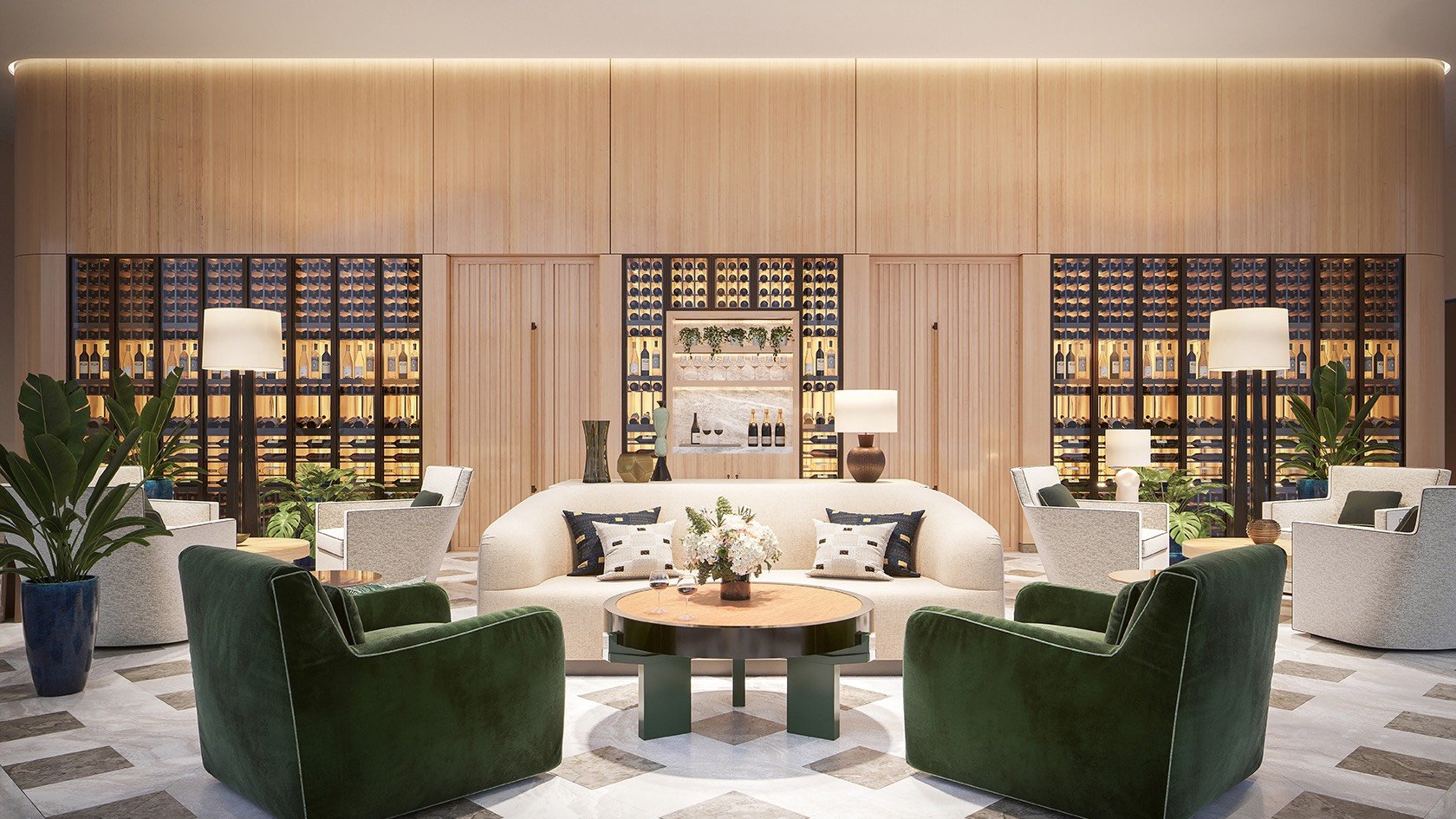
A residence that feels effortless for daily living may not be effortless for a serious wine program. Once a buyer begins asking about temperature stability, humidity, backup power, service access, vibration, security, insurance documentation, and the route from delivery vehicle to cellar, the familiar comparison between Miami Beach and Bal Harbour becomes far more precise.
Some buyer briefs reduce the choice to Miami Beach versus Bal Harbour. Collectors tend to ask the more revealing question: which environment will protect the collection while supporting the way the owner actually entertains? Oceanfront living adds another layer. Salt air, glass exposure, mechanical loads, and seasonal occupancy patterns make the storage plan as important as the view corridor.
In Miami Beach, the appeal is breadth: cultural energy, dining proximity, beach life, and residences that can support both private living and a more social calendar. In Bal Harbour, the appeal is concentration: calm, privacy, polished retail proximity, and a slower residential tempo. Wine infrastructure does not replace these lifestyle factors. It clarifies which one matters more.
Not every wine room is a cellar in the serious sense. Some are designed for presentation near a dining room. Others are engineered for long-term storage, where performance matters more than spectacle. Buyers should separate the two early.
A display wall can be beautiful, but it may be better suited to near-term bottles. A deeper collection usually needs dedicated climate control, minimal light exposure, careful racking, and a location that is not constantly disturbed by heat, vibration, or foot traffic. In a condominium, the best solution may be a professionally designed in-residence room, a private storage room if available, or a hybrid approach that keeps daily-drinking bottles at home and investment-grade bottles in specialized storage elsewhere.
That distinction can shift the neighborhood preference. A Miami Beach buyer who hosts frequently may value a residence where wine is integrated into the entertaining sequence, from kitchen to dining room to terrace. A Bal Harbour buyer may place more weight on quiet storage, privacy, and lower drama around deliveries and service visits.
Miami Beach suits the collector who wants wine to participate in the life of the home. The question is not only where bottles are stored, but how they appear over the course of an evening: an aperitif by the water, dinner indoors, late conversation outside, and perhaps a final pour after guests leave. A residence such as 57 Ocean Miami Beach naturally belongs in that conversation because buyers evaluating the beachfront lifestyle often think in terms of both wellness and hospitality.
The practical inspection should be exacting. Where would a conditioned wine room sit relative to sun exposure? Can millwork be designed without compromising circulation? Is there sufficient mechanical planning for a dedicated cooling system? How do a service elevator, loading protocol, or parking arrangement affect deliveries? These questions are not glamorous, but they determine whether collecting feels pleasurable or burdensome.
New-construction residences can be appealing because buyers may have more opportunity to coordinate storage design with consultants before interiors are finalized. Still, the buyer should not assume that a luxury building automatically solves cellar requirements. The best outcome comes from confirming capacity, noise, drainage, electrical needs, and maintenance access before committing to an interior plan.
For those drawn to a more composed stretch of Miami Beach, The Perigon Miami Beach suggests a different lens: not nightlife-driven, but still connected to the wider Miami Beach rhythm. The wine question becomes how to preserve a private, residential atmosphere while remaining close enough to the city’s culinary life to make the collection feel actively used.
Bal Harbour often appeals to buyers who want fewer variables around the home. The mood is quieter, the daily radius more edited, and the address more discreet. For wine storage, that can be valuable. A collector who travels frequently or treats the residence as a second home may care less about nightly entertaining and more about stable systems, building management culture, and a controlled arrival sequence for valuable deliveries.
At Rivage Bal Harbour, the very act of considering Bal Harbour frames the search around privacy and refinement. The buyer’s wine consultant should be part of the design conversation early, especially if the residence is expected to hold a meaningful number of bottles. A beautiful storage wall in the wrong location can become an expensive compromise; a quieter, less visible room may be the more luxurious answer.
Bal Harbour also suits buyers who prefer the collection to be felt rather than displayed. A formal dinner can still feature exceptional bottles, but the infrastructure can remain behind the scenes. The best residences allow service to move gracefully, without turning the cellar into a performance. That discretion is often the deciding factor for collectors who view wine as patrimony, not decoration.
For buyers comparing established options, Oceana Bal Harbour can enter the discussion as part of the broader Bal Harbour lifestyle set. The same questions apply: where is the wine protected from heat and light, how will the room be serviced, and what happens if the owner is away for an extended period?
The terrace is where many South Florida residences win the heart, but it is also where wine service can become complicated. Outdoor living encourages long meals, warm evenings, and open doors. A collector should ask how wine moves from storage to table without lingering in heat or bright light. The route matters.
In Miami Beach, a terrace may be central to entertaining, so the wine plan should anticipate frequent movement between interior and exterior zones. At Shore Club Private Collections Miami Beach, buyers drawn to a historic coastal setting may think carefully about how contemporary private living, service, and presentation meet.
In Bal Harbour, terraces may support quieter meals and smaller gatherings. The service choreography can be less theatrical, but no less important. A dedicated staging area, proper glass storage, and a short path from cellar to dining space can make a meaningful difference.
Choose Miami Beach if the collection is part of an active hosting life, if proximity to dining and culture matters, and if the residence must support a broader range of moods. Choose Bal Harbour if the collection is more private, the household rhythm is more controlled, and the owner values a highly edited setting with fewer outside distractions.
The best buyer does not ask, “Which address is better?” The better question is, “Which address makes the wine program easier to own?” For a serious collector, the answer will be found in mechanical planning, service culture, privacy, and the relationship between storage and entertaining.
Does every luxury condo support a serious wine room? No. A buyer should verify mechanical, electrical, drainage, space, and service requirements before assuming a wine room is feasible.
Is Miami Beach better for collectors who entertain often? It can be, especially for buyers who want the collection integrated into a social coastal lifestyle and frequent dining rhythm.
Is Bal Harbour better for privacy-focused collectors? Often, yes. Its quieter residential character can suit owners who prefer discretion and controlled service movement.
Should wine be stored near the kitchen? Convenience helps, but performance matters more. Heat, light, vibration, and maintenance access should guide placement.
Can a display wall replace a true cellar? Usually not for long-term storage. Display walls are best treated as presentation unless engineered for serious preservation.
What should second-home buyers prioritize? They should prioritize stability, monitoring, backup planning, and clear service protocols when the residence is unoccupied.
Does oceanfront exposure affect wine planning? It can influence mechanical loads and interior placement. The storage area should be protected from heat and direct light.
When should a wine consultant join the purchase process? Ideally before interiors are finalized. Early input can prevent expensive redesigns and unsuitable room placement.
Is a smaller cellar still worth planning carefully? Yes. Even a modest collection benefits from consistent temperature, humidity control, and thoughtful access.
What ultimately decides between Miami Beach and Bal Harbour? The decisive factor is lifestyle fit: active entertaining and variety versus discretion, calm, and controlled ownership.
For a discreet conversation and a curated building-by-building shortlist, connect with MILLION.
If branded residences are on your mind — as a home or as an allocation — we would be glad to share what we are seeing, privately.
Begin a quiet conversation