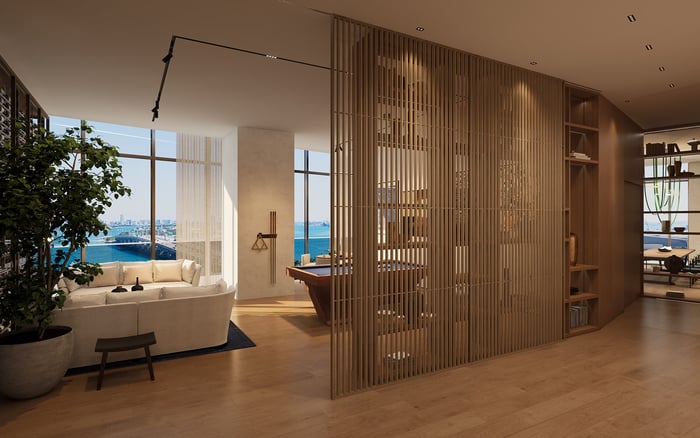
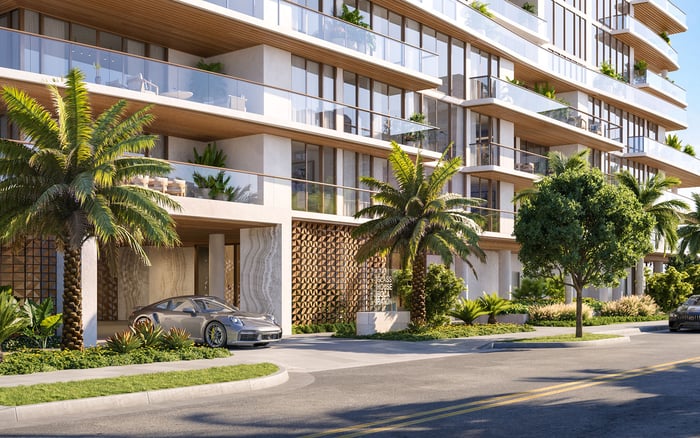
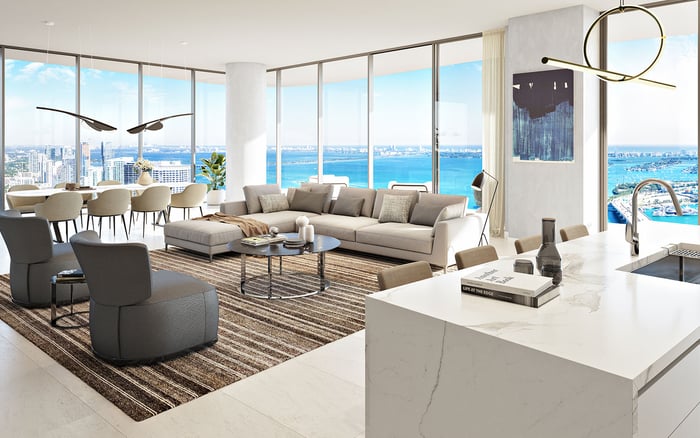
A discreet buyer’s comparison of Glass House Boca Raton and Casa Bella by B&B Italia Downtown Miami, focused on service choreography, private entertaining, luxury deliveries, and acoustic privacy.
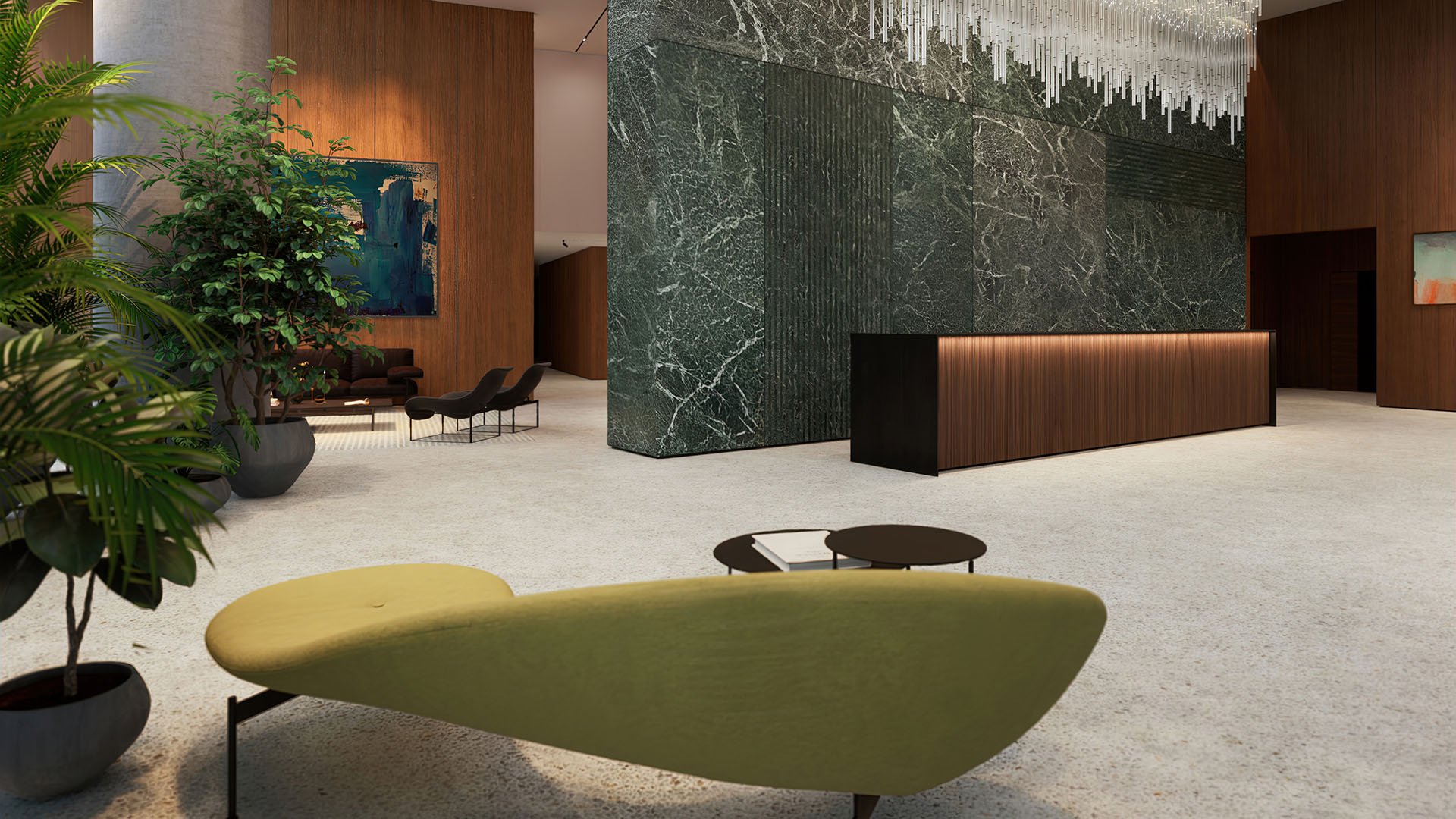
For a buyer moving art, wine, couture, furnishings, and catered dinners through a South Florida residence, the question is rarely limited to finishes. The more consequential issue is choreography. Who sees the delivery? Which elevator is used? How close is the route to the lobby? Can guests arrive for dinner without crossing paths with vendors, staff, or other residents at the wrong moment?
That is why Glass House Boca Raton and Casa Bella by B&B Italia Downtown Miami create such a useful comparison. One is framed as the quieter, more boutique Boca Raton alternative for privacy-sensitive buyers. The other is the more vertical, branded Downtown Miami residence, with a fuller urban-service environment and proximity to Miami’s cultural and business core.
This is not simply Boca Raton versus Miami. It is a decision between boutique discretion and branded urban service intensity.
Glass House Boca Raton will appeal to buyers who want luxury living and walkability without the intensity of Downtown Miami. In this comparison, its strongest conceptual advantage is the calmer residential context. For owners who prize anonymity, fewer touchpoints can matter as much as amenity count.
That does not mean a buyer should assume every logistical issue is already solved. A serious collector or host should still ask how oversized works, wine shipments, floral installations, private chefs, and furniture deliveries move from arrival to residence. The relevant due diligence is not whether the building feels elegant, but whether it supports controlled movement when service demands increase.
For buyers also studying Boca Raton’s broader high-end condominium landscape, Alina Residences Boca Raton can be a useful local reference point for understanding how different residential environments present privacy, arrival, and daily service expectations. The core question for Glass House remains specific: does the smaller-scale residential environment support discreet entertaining with minimal visibility?
Casa Bella by B&B Italia Downtown Miami speaks to a different buyer psychology. Its Downtown setting is relevant for owners who want an urban, branded-residence lifestyle close to Miami’s cultural and business core. The appeal is not just location. It is also the prestige of design curation and the convenience of a more hospitality-like tower environment.
That environment calls for sharper scrutiny. In a larger vertical building, luxury service depends on timing, separation, and staff coordination. Buyers should ask how deliveries are received, how vendors are routed, whether guest arrival can be separated from service movement, and how private events are managed when multiple residences or amenity spaces are active.
Downtown comparisons can be instructive. A buyer considering Casa Bella may also look at Waldorf Astoria Residences Downtown Miami and Aston Martin Residences Downtown Miami to understand how different branded or architecturally prominent towers position prestige, arrival, and service culture. The due diligence should stay practical: can the building preserve privacy during high-touch entertaining and high-value deliveries?
Private dining begins before a guest reaches the table. For both buildings, buyers should map the entire route from curb or valet to lobby, elevator, corridor, residence, terrace, or amenity setting. A beautiful dining space loses its advantage if guest movement creates congestion or visibility.
At Glass House, the buyer should test whether a more controlled residential atmosphere supports a quieter arrival experience. The relevant questions are intimate: Can a dinner party arrive without feeling staged? Can a chef, sommelier, or florist work discreetly? Can a high-value wine delivery be handled without unnecessary attention?
At Casa Bella, the questions become more operational. How are catered events coordinated in a tower setting? How do staff members communicate? Are service routes intuitive? Can guest arrival remain elegant while deliveries and back-of-house activity continue in parallel? For new-construction and pre-construction buyers, these questions should be addressed before contract decisions, not after move-in.
For serious owners, deliveries are not occasional inconveniences. They are part of the residential program. Art may require careful handling and protected routes. Wine may require timing, temperature awareness, and secure transfer. Luxury furnishings may require elevator planning and protective measures. None of these issues should be treated as an afterthought.
Buyers should ask each project team to describe the path of a high-value delivery in plain language. Where does it enter? Who receives it? Is there a place for inspection? Which elevator is used? How is access controlled? How are neighbors, guests, and staff kept apart when privacy is essential?
Glass House may be better aligned with buyers who want fewer visible steps and a calmer environment. Casa Bella may be better aligned with buyers who want the energy, staffing, and polish of a full-service urban tower. Neither answer is universal. The best fit depends on whether the owner values quiet anonymity or the capacity of a more layered service platform.
Acoustic privacy is often where a luxury residence reveals its true quality. Buyers hosting dinners, maintaining collections, and coordinating deliveries should ask specifically about sound control between residences, corridors, service areas, amenity spaces, and outdoor entertaining zones.
This is especially important because privacy is not only visual. A neighbor should not hear the rhythm of a catered dinner. Guests should not be aware of service noise. Delivery activity should not compromise the atmosphere of a residence. Outdoor entertaining zones deserve the same scrutiny, particularly when conversations, music, and staff movement intersect.
In Glass House, the focus is whether the boutique setting can maintain quiet separation in daily life and during private events. In Casa Bella, the focus is whether a larger Downtown building can preserve acoustic calm while supporting a more active hospitality-style environment.
Choose Glass House Boca Raton if your priority is a quieter market, a more discreet residential rhythm, and potentially fewer touchpoints around daily life. It is the more natural fit for buyers who want walkability and luxury without the heightened pace of Downtown Miami.
Choose Casa Bella by B&B Italia Downtown Miami if your priority is brand prestige, design curation, and the urban convenience of a full-service tower. It is better suited to buyers who want to be close to Miami’s cultural and business core and who are comfortable evaluating a more complex service ecosystem.
In both cases, the most refined buyer will go beyond the sales presentation. Ask to understand service paths, receiving protocols, elevator strategy, event coordination, and acoustic separation. The most luxurious residence is the one that makes complicated things feel invisible.
Which building is better for a privacy-sensitive buyer? Glass House Boca Raton is positioned as the quieter, more boutique option. Casa Bella offers a more urban, branded tower environment that requires deeper service-logistics review.
Is Casa Bella by B&B Italia Downtown Miami better for buyers who want city energy? Yes. It is framed around a Downtown lifestyle with access to Miami’s cultural and business core. Buyers should still study how privacy is maintained in a larger vertical setting.
What should art collectors ask before buying? Ask how art enters the building, who receives it, which elevator is used, and how the route avoids unnecessary exposure. The answer should be operational, not vague.
Why does wine delivery require special due diligence? High-value wine shipments depend on timing, secure handling, and discreet transfer. Buyers should understand the building’s receiving and staff-coordination process.
Does private dining depend only on amenities? No. The arrival path, elevator sequence, staff movement, and sound control are just as important as the dining room or entertaining space itself.
What is the key question for Glass House Boca Raton? Buyers should determine whether its smaller-scale residential setting supports controlled, discreet entertaining flow. The objective is privacy with minimal friction.
What is the key question for Casa Bella by B&B Italia? Buyers should determine whether the tower can maintain privacy during catered events, luxury deliveries, and guest arrivals. Vertical logistics are central.
Why is acoustic separation so important? Sound can compromise privacy even when sightlines are controlled. Ask about separation between residences, corridors, service areas, amenities, and outdoor zones.
Should buyers compare other Downtown projects? They can, especially to understand different branded tower service models. The comparison should remain focused on privacy, logistics, and entertaining flow.
Is this mainly a Boca Raton versus Miami decision? Not entirely. The deeper decision is boutique discretion versus branded urban service intensity.
For a discreet conversation and a curated building-by-building shortlist, connect with MILLION.
If branded residences are on your mind — as a home or as an allocation — we would be glad to share what we are seeing, privately.
Begin a quiet conversation