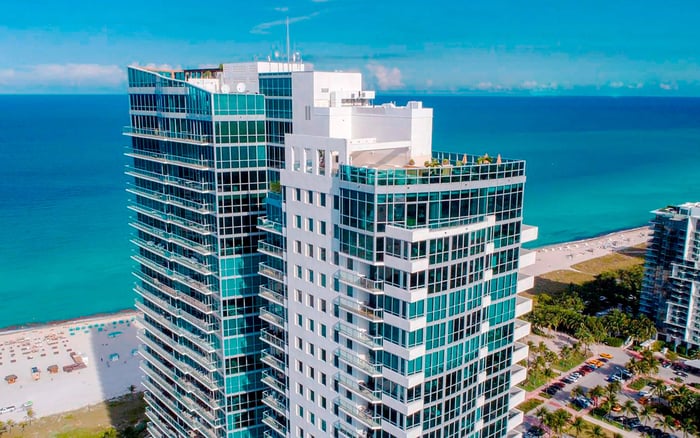
For owners managing homes in Monaco and Surfside, residency discipline begins with a coherent operating record. Utility statements, title consistency, travel, banking, registrations and occupancy documents should tell the same chronological story.

A residence can be exquisitely appointed yet remain administratively unconvincing. For internationally mobile owners, the decisive issue is not simply where a home is held, but whether the household’s documents consistently reflect how it is occupied and operated. Utility records matter because they are recurring, address-specific and difficult to reconstruct after the fact. Their value is greatest, however, when they align with deeds or leases, travel dates, banking activity, registrations and the owner’s declared chronology.
This is not a conventional entry in a buyer’s guide. It is a framework for protecting the credibility of a cross-border household. An owner dividing time between Monaco and Surfside should build two separate files, then reconcile them through a single master chronology. Neither a utility bill nor a Florida Declaration of Domicile establishes the entire case on its own.
The strongest residency file is a coherent operating history, not a single document.
A disciplined file answers three questions without strain: who occupies the residence, what legal right supports that occupancy and whether ordinary household activity aligns with the stated timeline. Identity documents and an ownership deed, registered lease or accommodation certificate establish the formal layer. Utilities, telecommunications, card activity and bank statements help establish the operating layer. Travel records and government registrations connect both layers to time and place.
For a second-home owner, apparent contradictions warrant early attention. Service gaps, shutoffs, persistently low consumption or bills issued to an unrelated person can conflict with a claim of active principal-home use. None of these details necessarily determines an outcome alone, but each can invite broader questions. The objective is not to engineer consumption. It is to preserve an accurate record of genuine household operations.
A Monaco tax-purpose residence-certificate application calls for valid identification, the requesting body’s submission, income evidence and the latest water, electricity or gas bill. A standard residence-certificate application also requires the most recent electricity or gas bill. Foreign nationals seeking a tax-residence certificate must also hold a valid residence permit, establish occupation of a Monaco dwelling and meet the applicable principal-residence or center-of-activities criteria.
The latest statement may satisfy an application requirement, but prudent recordkeeping extends further. Preserve a full year of water, electricity and telephone bills alongside the deed, lease or accommodation certificate. A tenant’s residence-card file should include a rental agreement registered with the Monaco Tax Services Department, lasting at least one year and identifying the property as the tenant’s main residence.
Account titles merit particular scrutiny. Recent electricity, water, landline or internet evidence should match the applicant’s name and Monaco lease address. Homes owned through companies or trusts can create avoidable inconsistencies when services remain under another entity or individual. Authorities may request supplemental evidence and compare utility-consumption patterns with local banking, credit-card and telecommunications activity.
Florida domicile rests on intent supported by substantive connections, not a stand-alone 183-day rule. Agencies commonly request two records showing the residential address. Potentially accepted documents include a lease or deed, utility or cell-phone bill, bank statement, voter or vehicle registration, insurance bill and government mail. Water, gas, electricity, cellular and cable statements can all contribute to the address record.
For an oceanfront residence at The Delmore Surfside and Arte Surfside, elegance of ownership does not replace administrative precision. Use a genuine residential-coded address, maintain a valid deed or lease and, where feasible, place a household utility in the resident’s name. A commercial mail-receiving address is a poor substitute for an operating home.
A Declaration of Domicile becomes more persuasive when it aligns with identification, voter and vehicle registrations, local healthcare relationships, Florida-addressed financial accounts and utilities. Preserve this evidence from the domicile-change date onward. A former state may seek historical documents, making the opening months of the Florida chronology especially important.
Consumption naturally varies with travel, household size, renovation, seasonal use and building operations. The goal is not a perfectly uniform graph, but an explainable history supported by contemporaneous records. If a residence is vacant during an extended journey, retain the travel documentation. If building management handles a service, preserve statements and agreements documenting that arrangement. If an account changes name, keep both the closing and opening records.
The same discipline applies at Fendi Château Residences Surfside and The Surf Club Four Seasons Surfside. Before a filing, compare every service address, account holder and coverage period with the deed or lease. Correct clerical mismatches through ordinary provider channels, preserving the resulting correspondence rather than silently replacing older records.
Create separate digital folders for Monaco and Surfside, organized by year and month. Save original PDFs, complete statements and account metadata-not only spreadsheet totals or screenshots. Within each month, retain utilities, telecommunications, relevant bank and card statements, travel confirmations and official correspondence.
Maintain a master chronology recording arrival and departure dates, the home occupied, major household events and significant filings. The chronology should reconcile, rather than reinterpret, the underlying documents. At quarter-end, review it for overlapping travel claims, missing statements, unexplained service interruptions, outdated addresses and inconsistent account names.
For households considering Ocean House Surfside, this protocol should begin before or at closing-not when an audit letter arrives. Coordinate utility activation, insurance, banking addresses and government updates around the genuine move sequence. Family offices and household managers can administer the archive, but the resident and advisers should understand the story it tells.
An annual review with qualified advisers in each jurisdiction can test whether presence, intent and household operations remain aligned. Begin with the master chronology, sample months from both residences and every official filing that states an address or domicile. Escalate discrepancies early, particularly those involving ownership entities, trusts, family members or staff-held accounts.
Residency and domicile are fact-specific, and more than one jurisdiction may examine the same period under different legal standards. Good records do not predetermine a legal conclusion. They allow counsel to assess the facts efficiently and the household to present an orderly, contemporaneous account rather than a reconstruction assembled under pressure.
For discreet guidance on South Florida residences suited to an internationally managed household, connect with MILLION.
If branded residences are on your mind — as a home or as an allocation — we would be glad to share what we are seeing, privately.
Begin a quiet conversationNo. A utility bill is most persuasive when it aligns with occupancy documents, travel, financial activity, registrations and the declared chronology.
A prudent Monaco file preserves a full year of water, electricity and telephone bills alongside the deed, lease or accommodation certificate.
The application requires the latest water, electricity or gas bill, together with the other required identity, submission and income materials.
Recent utility or telecommunications evidence should match the applicant’s name and Monaco address, particularly when a company or trust owns the home.
No. Florida domicile is based on intent supported by substantive residential, governmental, financial and personal ties.
Examples include a deed or lease, utility or cell-phone bill, bank statement, registration, insurance bill and government mail.
Preserve records from the domicile-change date and throughout any period that may later be reviewed.
Not by themselves. Variations should be explainable through contemporaneous travel, household, renovation or building-service records.
Maintain separate monthly folders for Monaco and Surfside, plus one chronology reconciling travel, utilities, transactions and official filings.
Original PDFs preserve account names, service addresses, billing periods and metadata that a summary may omit.