At a 25-residence oceanfront condominium, statutory reserve compliance is only one layer of ownership diligence. Buyers should also examine proposed budgets, insurance assumptions, warranties, liquidity, governance and the potential concentration of major costs across a limited ownership base.
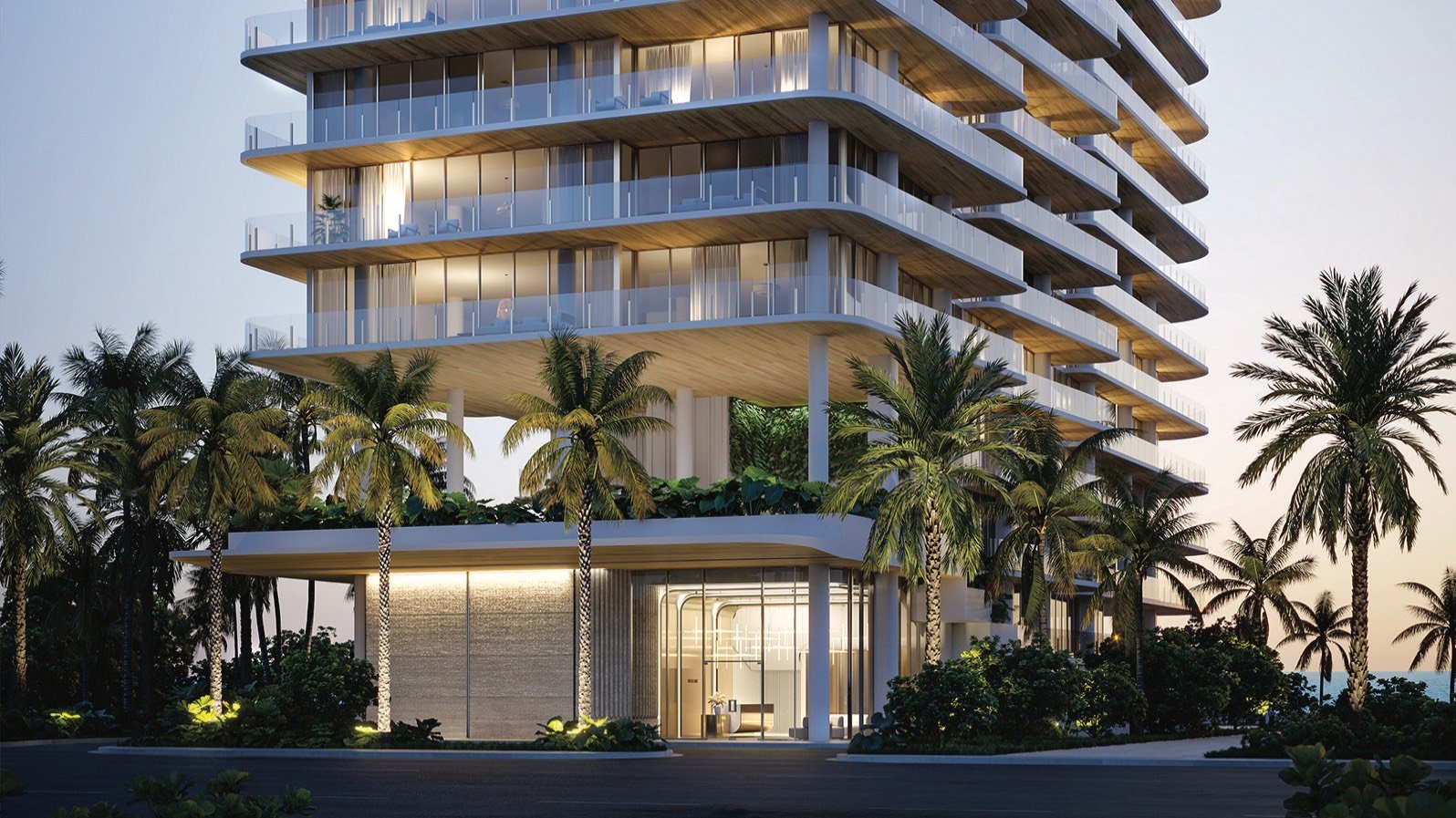
Planned for 9317 Collins Avenue, Ocean House Surfside is a 12-story, 25-residence oceanfront condominium developed by Multiplan and designed by Arquitectonica. Residences range from two to five bedrooms, with approximately 2,093 to 6,279 square feet of interior space. Completion is anticipated in 2027, though preconstruction delivery schedules can change.
Its limited collection is central to the appeal-and equally important to the economics. Operating expenses, reserve contributions and major capital costs will ultimately be allocated across a relatively small ownership base. For an ultra-premium buyer, the pertinent question is not simply whether the condominium will comply with Florida reserve requirements. It is whether the complete financial architecture remains credible under both expected and adverse scenarios.
Reserve compliance is a baseline, not a complete portrait of ownership risk.
This distinction belongs at the center of any Oceanfront Investment review. It is also why the analysis fits naturally within practical Buyer's Guides for Surfside rather than being treated as a narrow engineering exercise.
Florida's condominium safety framework generally requires residential condominium buildings of three stories or more to obtain a Structural Integrity Reserve Study, commonly called a SIRS. A qualifying condominium must complete one at least every 10 years after the condominium's creation. Buyers should therefore confirm the legal creation date and applicable deadlines rather than rely on the anticipated completion year.
A SIRS estimates the reserves needed for future major repairs and replacement of covered common-area components, based on a visual inspection. Those components include the roof, structure, foundation, fireproofing and fire-protection systems, plumbing, electrical systems, waterproofing, exterior painting, windows and exterior doors. A licensed engineer or architect must perform the visual inspection, although other qualified professionals may prepare other portions.
For a direct oceanfront property, waterproofing, coatings, windows and exterior doors warrant particular attention. Yet a visual reserve study is neither an invasive engineering investigation nor a forensic review of latent construction defects. It is also distinct from a milestone inspection, a separate statutory process focused on structural safety and necessary repairs.
The statutory significance is substantial. Associations subject to the rules must prepare annual budgets using the applicable SIRS findings, and owners cannot vote to waive or reduce required structural reserves for budgets adopted on or after December 31, 2024. Still, compliance cannot answer every consequential ownership question.
A compliant study does not establish that an association carries adequate insurance, can comfortably absorb deductibles, maintains sufficient liquidity or benefits from disciplined board governance. These matters fall outside the defined structural-reserve scope, but each can materially affect annual charges and the likelihood of a future assessment.
The project's luxury amenities and highly finished shared spaces also introduce costs beyond the components expressly covered by a SIRS. Buyers should distinguish statutory structural reserves from planning for elevators, generators, pools, landscaping, technology, lobby finishes and other amenity assets. The objective is to determine whether the proposed budget treats these items as routine operations, separately reserved replacements or costs deferred to future owners.
Comparative context can sharpen the questions without suggesting that buildings share identical economics. Boutique Surfside properties such as Arte Surfside and The Delmore Surfside illustrate why buyers often prioritize privacy and a limited residence count. A nearby benchmark such as The Surf Club Four Seasons Surfside may offer broader context for the service expectations attached to the area's highest tier. Each condominium, however, demands its own document-level review.
Because Ocean House Surfside is in its Pre-Construction phase, an established operating history may not yet exist. The most useful starting documents are therefore the proposed condominium declaration, estimated operating budget, reserve schedule, insurance assumptions, offering documents, construction warranties and developer turnover provisions.
The proposed budget should be read as a set of assumptions, not merely a quoted monthly figure. Counsel and financial advisers can test which expenses are fixed, which vary with occupancy and which could rise after developer control ends. They can also examine how unsold developer inventory is addressed, when owner contributions commence and whether early operations depend on assumptions that may not persist at stabilization.
Warranty diligence should map covered building systems, claim procedures and relevant time periods as disclosed in the project documents. Turnover provisions deserve equal scrutiny because they frame the transfer of records, contracts and decision-making authority to the owner-controlled association. None of this replaces engineering review. It integrates engineering, legal and financial inquiry into a single ownership analysis.
In a 25-residence condominium, buyers should model per-unit exposure across multiple scenarios. These can include higher insurance deductibles, accelerated façade or waterproofing work and slower-than-expected sales of developer inventory. The exercise should distinguish recurring operating increases from reserve contributions and one-time assessments.
Allocation methodology matters as much as total cost. The declaration and budget should reveal how common expenses are shared among residences. Buyers can then calculate the effect of a funding gap on the specific home under consideration rather than rely on a simple building-wide average.
Any eventual comparison between SIRS recommendations and actual reserve balances should go one step further: determine whether fee increases or special assessments would be required to close the gap. A healthy balance on a single date may still prove inadequate if projected expenditures, contribution timing and inflation assumptions are misaligned.
Price context makes this analysis especially relevant. The broader offering has been positioned at approximately $5 million to $60 million, depending on size and configuration, while current availability has included asking prices from $10 million to $17.6 million and an average near $4,051 per square foot. These are marketing and asking figures, not a substitute for negotiating diligence, but they underscore the scale of capital under consideration.
Once association operations begin, the diligence file should expand. Audited financial statements, board minutes, insurance policies, claims history, litigation disclosures, delinquency reports and records of loans or special assessments can reveal how initial assumptions perform in practice.
Owners should track reserve balances against the latest study, the timing of anticipated projects and the association's cash position. Minutes can provide context for deferred work, contract changes and emerging disputes. Insurance review should consider coverage and deductibles together, while delinquency and loan records help clarify whether the association is collecting enough cash to meet its obligations.
The most refined ownership review is continuous. A SIRS provides a disciplined framework for specified long-term components, but it cannot evaluate every operating choice, amenity replacement or governance decision. At Ocean House Surfside, the combination of direct coastal exposure, elevated finishes and a 25-home ownership base makes that broader perspective essential.
For discreet guidance on South Florida luxury condominium opportunities and buyer diligence, connect with MILLION.
If branded residences are on your mind — as a home or as an allocation — we would be glad to share what we are seeing, privately.
Begin a quiet conversationA SIRS estimates reserves needed for future major repairs and replacement of specified common-area components, using a visual inspection.
No. A SIRS is based on visual inspection and reserve projections, not invasive testing or a forensic defect investigation.
Covered categories include the roof, structure, foundation, fire-protection systems, plumbing, electrical systems, waterproofing, exterior painting, windows and exterior doors.
No. A milestone inspection focuses on structural safety and necessary repairs, while a SIRS estimates reserves for covered components.
A qualifying condominium must complete a SIRS at least every 10 years after the condominium's creation.
Operating expenses, reserve contributions and major capital costs are allocated across a relatively small ownership base, potentially concentrating per-unit exposure.
Key documents include the proposed declaration, estimated budget, reserve schedule, insurance assumptions, offering documents, warranties and turnover provisions.
No. Coverage adequacy, deductibles, liquidity and claims exposure require separate financial and legal review.
Elevators, generators, pools, landscaping, technology and highly finished common spaces may require planning beyond expressly covered SIRS components.
Review audited financials, board minutes, insurance policies, claims, litigation disclosures, delinquencies, loans and special assessments.