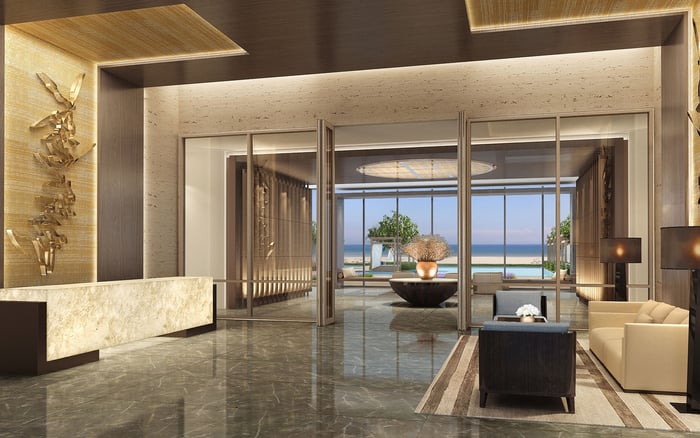
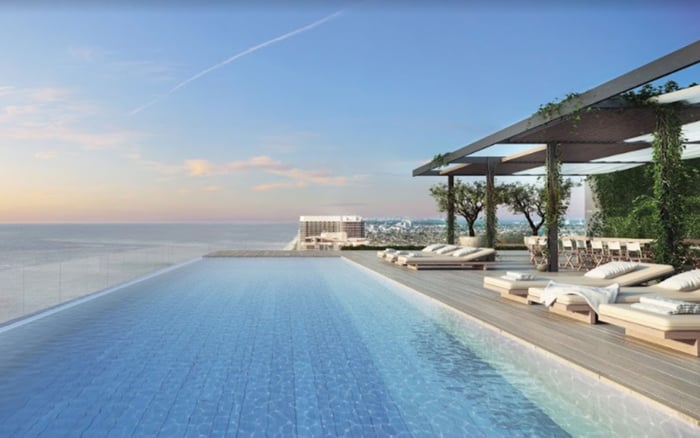
Fendi Château’s reported six-month minimum lease and two-leases-per-year limit favor residential continuity over frequent rental turnover. Buyers should still verify governing documents, exact lease definitions, screening practices, access controls and exposure to nearby registered rentals.

At Fendi Château Residences Surfside, the most consequential leasing detail may be what the building is not designed to be. The reported framework permits long-term rentals only, with a six-month minimum lease and no more than two leases per year. An owner may reportedly lease immediately after purchasing, while Airbnb rentals, hotel partnerships, condo-hotel inventory and an on-site rental program are excluded.
That framework favors residential continuity over vacation-style turnover. Yet sophisticated due diligence should look beyond the phrase “long-term.” The essential questions are how a lease is defined, how applicants and guests are managed, and whether surrounding properties create noise or access patterns beyond Fendi Château’s control.
For readers of MILLION Buyer's Guides, this is where investment strategy intersects with long-term and short-term rentals in Surfside.
A six-month minimum and two-lease-per-year ceiling should materially reduce resident changeovers compared with a building that accommodates nightly or monthly stays. Fewer turnovers can mean fewer credential replacements, fewer authorized-occupant updates and less repeated orientation for incoming tenants. They may also make unfamiliar faces or unusual access behavior easier for residents and staff to notice.
These are operational advantages, not guarantees. A leasing restriction does not establish screening rigor, staffing levels, camera coverage, visitor procedures or response protocols. Nor does it eliminate disturbances from owners, long-term tenants, household members or invited guests. It reduces one specific risk: recurring vacation-guest turnover.
The distinction matters when comparing the atmosphere at boutique Surfside residences such as Arte Surfside or established oceanfront addresses such as The Surf Club Four Seasons Surfside. Buyers should never assume that proximity, branding or price produces identical leasing and security practices. Each association’s current documents control.
Surfside defines a short-term rental as occupancy lasting from one day to no more than six months. An exact six-month lease at Fendi Château therefore requires explicit confirmation with both the association and the town. Buyers should determine whether the building means six calendar months, 180 days or a term exceeding six months.
Marketing language is no substitute for legal interpretation. The tension between “long-term rentals only” and the possibility of seasonal rentals should not be resolved by choosing the more convenient phrase. The prudent course is to obtain the declaration, bylaws, rules, leasing addenda, application package, fee schedule and every relevant amendment.
A purchaser should also confirm whether approval is required, how long it typically takes, which deposits apply and whether the process includes background or credit review. Comparable condominium practices may provide context, but they are not Fendi Château’s governing rules.
Lower turnover can support a calmer lobby, fewer move-ins and a more predictable rhythm in elevators, parking areas and amenity spaces. Longer leases also reduce exposure to repeated party-oriented bookings. These benefits may be especially valuable to owners who treat the residence as a primary home or discreet second home rather than a high-frequency rental asset.
Still, the building’s controls end at its property line. Qualifying neighboring properties may operate registered short-term rentals under town rules, introducing different guest groups throughout the year even when Fendi Château does not permit comparable turnover. When evaluating nearby residences, including Ocean House Surfside and The Delmore Surfside, the relevant inquiry remains property-specific rather than neighborhood-wide.
Surfside rules prohibit short-term occupants from exceeding town noise limits and regulate vehicle parking. Refusing a direction to leave may also carry trespass consequences. These mechanisms matter, but their practical value depends on reporting, evidence, response time and consistent enforcement.
Begin with the complete, current governing package and reconcile every leasing reference. Request written clarification of the minimum term, annual lease count and any prohibition on transient occupancy, subleasing or platform-based bookings. Confirm whether immediate leasing after acquisition remains permitted and whether pending amendments could alter that right.
Then examine operations. Ask management to explain tenant screening, guest registration, key and fob issuance, lost-credential procedures, delivery access, visitor parking and event restrictions. Where legally available, review recent board minutes, violation records, security incidents and proposed rule changes. The objective is to understand how written policy functions on an ordinary weekend, not merely how it reads in a sales discussion.
Finally, visit at several times of day. Observe lobby traffic, service arrivals, ride-share activity, garage access and sound from adjacent properties. Speak discreetly with residents or management about recurring pressure points. Map nearby buildings eligible for short-term rental use, since the most relevant residual disturbance may originate beyond the association’s jurisdiction.
For an owner prioritizing privacy and predictability, the reported restrictions may be an advantage. For one seeking frequent repricing, seasonal rotation or Airbnb-style yield, they can constrain flexibility. Good diligence turns that tradeoff into an intentional ownership choice.
Does Fendi Château reportedly allow short-term rentals? The reported framework permits long-term rentals only, with no Airbnb or on-site rental program.
What is the reported minimum lease term? The reported minimum is six months, subject to confirmation in the current governing documents.
How many leases are reportedly allowed each year? The reported limit is no more than two leases per year.
Can an owner reportedly lease immediately after purchase? Yes, although application requirements, screening, fees, deposits and approval timing require verification.
Why does an exact six-month term require clarification? Surfside’s short-term rental definition extends through no more than six months, creating a potential interpretive boundary.
Do longer leases guarantee a quiet residence? No. Owners, tenants, household members and invited guests can still create noise.
Can lower turnover improve access control? It can reduce credential changes and occupant updates, but it does not establish security effectiveness.
Can nearby rentals affect Fendi Château residents? Yes. Registered rentals at qualifying neighboring properties may create external traffic or noise.
Which documents should a buyer obtain? Request the declaration, bylaws, rules, leasing addenda, applications, fee schedules and amendments.
What should an on-site review include? Observe visitor flow, deliveries, parking, noise and staff response at different times.
When you're ready to tour or underwrite the options, connect with MILLION.
If branded residences are on your mind — as a home or as an allocation — we would be glad to share what we are seeing, privately.
Begin a quiet conversation