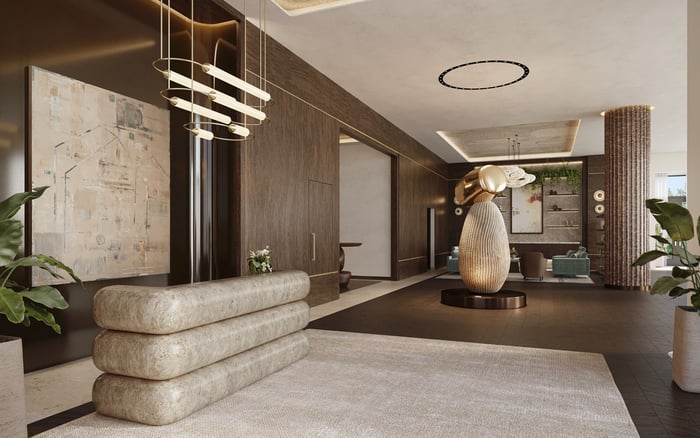
A family-focused due-diligence guide to asking sharper questions about air filtration, humidity control, HVAC documentation, maintenance responsibility, and indoor air quality at Four Seasons Residences Coconut Grove.

For family buyers considering Four Seasons Residences Coconut Grove, indoor air quality should not sit in the soft-focus category of wellness language. It belongs in the same diligence folder as floor plans, association budgets, insurance questions, elevator strategy, and long-term maintenance obligations.
The appeal of a branded residence in Coconut Grove is clear: privacy, service, design discipline, and a setting that continues to attract families seeking a more residential rhythm within Miami. Yet the systems behind the walls matter, particularly for households with young children, elders, asthma, allergies, or immunocompromised family members. The air a residence breathes is not a decorative amenity. It is part of daily livability.
That does not mean buyers should assume the building has, or does not have, any particular filtration standard. The sharper position is more disciplined: ask for the written standard. In an ultra-luxury purchase, the difference between a marketing phrase and a measurable specification can be substantial.
The first question is direct: does the residential HVAC system have a documented filtration specification? Family buyers should request the filter type, MERV rating, and replacement schedule in writing. If those details are not yet available in a buyer-facing package, ask whether they can be provided through the project team, mechanical engineer, or contract documentation before signing.
A verbal assurance that the building is wellness-oriented is not the same as a performance standard. A specification allows a buyer and their advisor to understand what is being filtered, where filtration occurs, how often filters are changed, and who is responsible for sustaining the standard over time.
This is especially important in a new-construction or pre-construction setting, where buyers may be making decisions before all systems are visible. The right moment to ask is before contract commitment, not after closing, turnover, or move-in.
A filtration standard can sound comprehensive while applying only to limited areas. Family buyers should ask whether the standard covers individual residences, common corridors, amenity spaces, parking areas, fresh-air intake systems, or only selected common areas.
That distinction matters. Families spend time in elevators, hallways, play-adjacent amenity areas, fitness spaces, garages, and arrival zones. If the building’s filtration conversation focuses only on the most visible public spaces, buyers should understand what happens in the routine circulation areas that shape daily life.
For a household that prioritizes balcony use, terrace living, pool time, pet policies, and private-school commutes, the air-quality conversation should include the path from garage to residence, not only the air inside the living room. In the Coconut Grove market, those practical transitions can be as relevant as the broader lifestyle narrative.
In Miami, filtration alone is not the complete answer. Moisture management is central to indoor air quality because weak humidity control can elevate mold risk even if filters are upgraded. Family buyers should ask how the project manages humidity throughout residences, corridors, amenity areas, and mechanical systems.
The most useful questions are specific. How is dehumidification addressed? Are coils, condensate pans, ducts, and related equipment covered by written maintenance protocols? What happens after a storm, water intrusion, or extended power disruption? Is there an emergency response procedure that protects both mechanical performance and indoor air quality?
These questions are not signs of distrust. They are signs of a mature luxury buyer evaluating a building as a long-term family environment. At this level, confidence should come from documentation, not assumptions.
Families should also clarify the building’s HVAC configuration. Does the building use centralized fresh-air systems, in-unit dedicated outdoor air systems, fan-coil units, or another arrangement? Each configuration carries different implications for filtration, maintenance, control, and responsibility.
The question is not which system sounds more impressive in a sales conversation. The question is how the chosen system performs for a family residence in daily use. Buyers should ask how outside air is introduced, how it is filtered, and whether fresh-air intakes are located away from loading areas, garages, trash rooms, kitchen exhaust, and other pollutant sources.
The placement of intakes can be easy to overlook because it is not as photogenic as a view corridor or a lobby finish. Yet it can materially affect the quality of the air entering a building. A thoughtful buyer will ask for the mechanical logic behind the design, not just the lifestyle language surrounding it.
Another important question is whether the building will monitor indoor air quality metrics such as PM2.5, CO2, humidity, and temperature in common areas or residences. Monitoring does not automatically solve air-quality issues, but it can make invisible conditions more legible and easier to manage.
If monitoring is planned, buyers should ask where it occurs, who reviews it, and whether residents receive access to the information. If monitoring is not part of the plan, families should still request the written maintenance protocols that govern filters, coils, condensate pans, ducts, and dehumidification equipment.
Maintenance is where many wellness promises either become real or fade. Filters require replacement. Coils and pans require attention. Ducts and mechanical rooms need oversight. The best specification is only as strong as the budget, staffing, and procedures that keep it alive.
One of the most overlooked questions is who maintains the air-filtration standard after turnover. Is responsibility held by the developer, operator, condominium association, individual owner, or some combination? Families should ask how the association budget accounts for filter replacements, inspections, emergency response, and ongoing maintenance.
The answer can affect both livability and monthly carrying costs. A high standard that is not funded or clearly assigned may become difficult to preserve. Conversely, a well-documented responsibility structure gives buyers a clearer view of how the building intends to protect the resident experience over time.
This is also where Four Seasons Residences Coconut Grove should be evaluated like any top project: the brand, architecture, and service promise may define the first impression, but the operating details define the lived experience.
Families with asthma, allergies, young children, elders, or immunocompromised members should ask whether higher-grade in-unit filtration upgrades are permitted. They should also ask whether residents may install supplemental air purifiers without violating design, electrical, or association rules.
Event protocols deserve equal attention. What happens during smoke, dust, hurricane, or high-pollen events? Are temporary filtration upgrades available? Can air-intake settings be adjusted? Who decides, and how are residents informed?
A luxury building should feel calm during ordinary days and organized during unusual ones. For family buyers, that means understanding not only the baseline standard, but also the response plan when South Florida’s climate, storms, or environmental events place additional pressure on the building.
The most practical document to request is the mechanical engineer’s indoor air quality narrative or HVAC design summary. This can help translate sales language into system-level detail. It may also reveal whether filtration, ventilation, humidity control, monitoring, and maintenance have been considered together or treated as separate talking points.
The central principle is simple: ask for written specifications before relying on wellness claims. A family residence is intimate infrastructure. It is where children sleep, grandparents visit, pets move through daily routines, and parents expect the home to recover from Miami’s weather without constant intervention.
At Four Seasons Residences Coconut Grove, the air-filtration conversation should be conducted with discretion, but also with rigor. The right questions do not diminish the luxury proposition. They refine it.
Should family buyers ask for the MERV rating? Yes. Ask for the documented filter type, MERV rating, and replacement schedule in writing.
Is a wellness amenity claim enough? No. A measurable written specification is more useful than a verbal or marketing-level assurance.
Should the questions cover only the residence? No. Ask about residences, corridors, amenity spaces, parking areas, and fresh-air intake systems.
Why is humidity control important in Miami? Filtration does not prevent mold risk if moisture control is weak. Ask how humidity is managed throughout the building.
What document should buyers request before signing? Request the mechanical engineer’s indoor air quality narrative or HVAC design summary when available.
Can families request higher-grade in-unit filtration? They should ask whether upgrades are permitted, especially for households with asthma, allergies, children, elders, or immunocompromised members.
Should buyers ask about air-quality monitoring? Yes. Ask whether PM2.5, CO2, humidity, and temperature are monitored in common areas or residences.
Who maintains filtration standards after turnover? Buyers should verify whether the developer, operator, association, owner, or another party is responsible.
Do storm protocols matter for air quality? Yes. Ask about smoke, dust, hurricane, high-pollen, and water-intrusion response procedures.
Can residents add portable air purifiers? Ask whether supplemental purifiers are allowed under design, electrical, and association rules.
For a confidential assessment and a building-by-building shortlist, connect with MILLION.
If branded residences are on your mind — as a home or as an allocation — we would be glad to share what we are seeing, privately.
Begin a quiet conversation