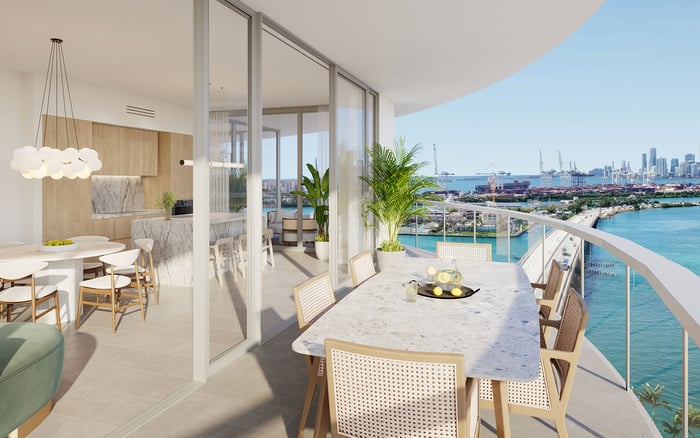
A buyer-focused guide to negotiating hurricane-rated openings in South Florida luxury residences, with emphasis on diligence, leverage, credits, seller work, and preserving the right deal.

In South Florida, windows and doors are never merely architectural details. They frame the view, moderate the sound of the city or shoreline, shape interior comfort, and sit at the intersection of insurance, maintenance, and long-term resale value. For a luxury buyer, the question is not simply whether the openings are hurricane-rated. The sharper question is whether their condition, documentation, installation history, and association context support the price being paid.
That distinction matters. A remarkable residence should not be lost because a negotiation becomes too rigid around items that can be repaired, documented, credited, or handled after closing. At the same time, hurricane-rated openings are too important to treat casually. The goal is to turn uncertainty into a clean economic conversation while preserving your ability to secure the right home.
This is especially true in markets where glass is central to the ownership experience. In Brickell, a residence such as The Residences at 1428 Brickell reflects a broader shift toward highly designed vertical living, where façade performance and interior calm are part of the luxury promise. Along the coast, the calculus is equally refined: oceanfront buyers may be weighing exposure, view corridors, terrace life, and the quiet confidence of properly specified openings.
The most effective negotiation begins with documentation. Ask for permits, product information, warranties if available, association approvals, and any records of prior replacement or repair. In a condominium, also request the association’s rules for exterior openings. Even when windows and doors appear to belong to the residence, the building may impose strict requirements on appearance, color, tint, vendor approval, or installation method.
This is where luxury buyers often gain leverage without sounding adversarial. Instead of saying, “the windows are a problem,” the stronger position is, “we need confirmation that the openings were approved, properly documented, and consistent with the building’s standards.” That language keeps the conversation objective. It also gives the seller an opportunity to produce evidence rather than forcing an immediate price confrontation.
If records are incomplete, the issue becomes negotiable. Missing documentation is not always the same as defective work, but it does introduce uncertainty. In a premium transaction, uncertainty has value. The buyer can ask for a credit, a seller-paid inspection by a specialist, a post-closing escrow where appropriate, or additional time to complete diligence.
Not every imperfection deserves the same negotiating weight. Faded frames, worn hardware, difficult sliders, seal issues, and visible corrosion may each signal something different. Some items are maintenance. Others may point to installation, water intrusion, or end-of-life concerns. The right approach is to have the openings reviewed by the appropriate professional, then categorize the findings by urgency and cost exposure.
A buyer should avoid treating every observation as a deal-breaker. In high-value residences, especially older resale properties with exceptional locations, the best home may require a measured improvement plan. If the residence has the right line, ceiling height, terrace depth, privacy, and view, a window or door issue may be a negotiation point rather than a reason to walk away.
The reverse is also true. If openings are central to the home’s identity, such as broad water-facing glass, large terrace doors, or primary suite exposures, uncertainty becomes more material. A residence near the sand, such as The Perigon Miami Beach, naturally invites a more exacting lens on how the envelope supports daily living. The negotiation should reflect the role those openings play in the home’s utility and desirability.
There is no single best concession. A credit can be elegant because it lets the buyer control the work after closing, select preferred vendors, and coordinate timing with interior design. It is often the cleanest path when the seller is unlikely to complete work to the buyer’s standard.
Seller repairs can make sense when the issue is narrow, the scope is clear, and closing timing allows proper completion. This might include hardware, adjustment, sealing, or documentation retrieval. For more complex work, buyers should be cautious. A rushed repair can create more uncertainty than it resolves.
Replacement is the most sensitive request. It may require approvals, lead time, building coordination, and aesthetic consistency. In a luxury condominium, the buyer should understand whether replacement is feasible on the desired timeline. Asking for full replacement without that context may weaken an otherwise thoughtful negotiation.
An escrow can be useful when both sides agree that an issue exists but the exact cost or timing remains unresolved. It must be structured carefully through the proper professional channels. The tone should remain practical: the buyer is not punishing the seller, but reserving funds for a defined risk.
New-construction negotiations around openings are usually less about age and more about specifications, delivery condition, punch-list items, and warranties. Buyers should review what is being delivered, what is covered, and how post-closing service requests are handled. The negotiation may focus less on price and more on certainty, timing, and written commitments.
In resale transactions, the history of the openings matters more. Who installed them, when, with what approvals, and under what documentation trail? A spectacular older apartment can still be the superior purchase if the price reflects any envelope uncertainty and the buyer has a plan for future upgrades.
This contrast is visible across the region. A buyer considering Rosewood Residences Hillsboro Beach may think about openings within the context of a newly delivered coastal lifestyle. A buyer evaluating a legacy waterfront condominium may instead be underwriting a blend of location premium, building history, and upgrade potential.
The best negotiators do not make the seller defensive. They make the seller comfortable solving a defined issue. Present the concern with professional language, attach the relevant findings, and propose a proportional remedy. Avoid emotional phrasing. Avoid broad statements about safety unless a qualified professional has made that determination. Keep the negotiation tied to cost, documentation, and closing certainty.
This is particularly important when the property is rare. In South Florida, the right residence may be a specific stack, a particular view, a scarce low-density building, or a home with irreplaceable outdoor space. If the asset is difficult to replicate, the buyer’s leverage should be used with precision. The objective is not to win every point. It is to own the right residence on terms that recognize the risk.
For buyers drawn to private, design-forward settings, a project such as Alina Residences Boca Raton shows why the broader ownership experience can matter as much as any single inspection item. Openings are part of that experience, but they are not the whole story.
Before finalizing your position, confirm the documentation, identify association constraints, obtain specialist input where needed, and convert findings into a remedy the seller can understand. Then decide whether the requested concession is essential, preferable, or merely tactical.
If the residence is otherwise exceptional, a well-calibrated credit may be more valuable than a drawn-out dispute. If documentation is absent and the exposure is significant, a stronger concession may be warranted. If the seller refuses to engage at all, that response is also information. Luxury negotiation is not about pressure for its own sake. It is about clarity.
The right outcome leaves the buyer with confidence, the seller with a path to close, and the residence preserved as the main prize.
Are hurricane-rated openings always a deal-breaker if documentation is incomplete? No. Incomplete documentation creates uncertainty, but it can often be addressed through additional diligence, credits, or other negotiated protections.
Should I ask the seller to replace questionable windows before closing? Only when the scope is clear and timing is realistic. For larger work, a credit or escrow may give the buyer more control.
Who should evaluate the windows and doors during diligence? Use the appropriate licensed or qualified professional for the concern, especially if there are signs of water intrusion, corrosion, or installation issues.
Do condominium associations affect what I can replace? Yes. Associations may have standards for appearance, approvals, vendors, and installation procedures, so review rules before negotiating replacement.
Is a credit better than a seller repair? Often, yes, because a credit lets the buyer control quality and timing. Seller repairs work best for narrow, well-defined items.
How should I frame the issue to avoid antagonizing the seller? Keep the language objective. Focus on documentation, professional findings, cost exposure, and a practical path to closing.
Does oceanfront exposure make openings more important? It can make the review more consequential because openings often influence comfort, maintenance, and the daily experience of the residence.
Can I negotiate differently in new-construction? Yes. New-construction discussions often center on delivery condition, specifications, warranties, and written commitments rather than age.
What if the residence is rare and the seller will not concede much? Decide which protections are essential and which are tactical. A scarce residence may justify a narrower, more strategic request.
Should hurricane-rated openings affect resale value? They can influence buyer confidence and marketability, especially when records are clear and the condition supports the residence’s price.
When you're ready to tour or underwrite the options, connect with MILLION.
If branded residences are on your mind — as a home or as an allocation — we would be glad to share what we are seeing, privately.
Begin a quiet conversation