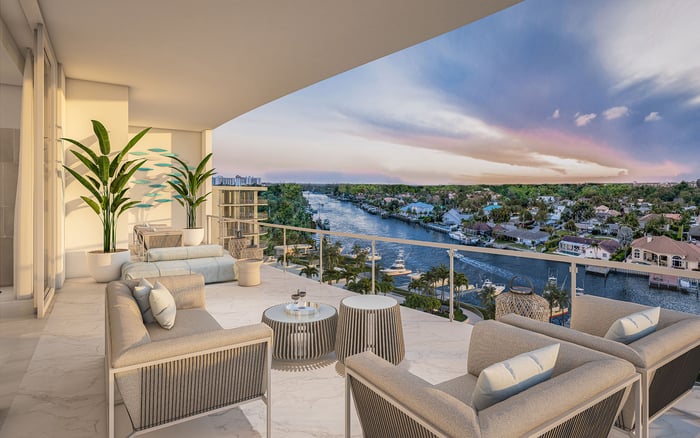
A discreet due-diligence guide for ultra-luxury buyers evaluating leak-detection systems, response protocols, and water-risk documentation at Four Seasons Hotel & Private Residences Fort Lauderdale.

Four Seasons Hotel & Private Residences Fort Lauderdale occupies a rare place in the South Florida luxury imagination: branded hospitality, private ownership, and the expectation of effortless coastal living. Yet some of the most consequential features in a residence are also the least photogenic. Leak-detection systems rarely appear in a rendering, but they can shape the ownership experience, the insurance conversation, and the long-term preservation of finishes.
For an ultra-luxury buyer, the question is not whether water risk exists. In South Florida, it does. The sharper question is whether that risk has been anticipated, documented, monitored, and assigned to responsible parties before a small failure becomes a residence-wide event. This is especially relevant for buyers comparing high-service coastal properties across Fort Lauderdale and Broward, where the reassurance of a branded setting should be matched by disciplined building-systems diligence.
In the buyer’s vocabulary, this topic belongs beside Four Seasons Hotel & Private Residences Fort Lauderdale, High-floors, Balcony, new-construction expectations, and investment preservation. It is not about alarmism. It is about confirming that the invisible infrastructure is worthy of the visible design.
Begin with the residence itself. Ask for a written description of any leak-detection coverage serving kitchens, laundry areas, water heaters, mechanical closets, wet bars, bathrooms, and any areas where supply lines or condensate lines are present. If the answer is general, refine the question: where are the sensors, what do they detect, and what happens when they activate?
A meaningful system is more than a device placed under a sink. Buyers should understand whether detection is local only, whether alerts go to the owner, building staff, or both, and whether any automatic shutoff function is included. If shutoff exists, ask what it controls: a single appliance, a branch line, or the residence’s main water supply. If shutoff does not exist, ask what the response protocol is and how quickly staff can access the residence when the owner is away.
The most elegant homes often include custom cabinetry, stone, millwork, integrated appliances, and concealed mechanical pathways. That discretion is part of the appeal, but it can make early detection more important. Ask whether sensors remain accessible after finishes are installed, whether battery or power status is monitored, and whether replacement procedures are documented for future owners.
Luxury water-risk diligence cannot stop at the private threshold. A leak can originate above, below, next door, or in a common element. Buyers should ask how the building monitors mechanical rooms, riser areas, pump rooms, amenity spaces, and service corridors. The goal is not to audit the entire property personally. It is to understand whether there is a layered approach that distinguishes private-residence responsibility from association or operator responsibility.
Balcony transitions deserve particular attention in coastal living. Ask how exterior doors, drains, thresholds, waterproofing details, and routine inspections are handled. Do not assume that a water event must originate from plumbing. Wind-driven rain, clogged drains, failed seals, and condensation can all create damage patterns that look similar once they reach finished interiors.
For buyers considering high-floors, remember that elevation can change the experience but does not erase water exposure. A high residence may have fewer concerns about street-level intrusion, yet it still depends on roof systems, vertical plumbing, façade performance, mechanical systems, and neighboring units. The best diligence treats the entire building as a connected water-management environment.
Ask who receives alerts, who acts on them, and what authority that person has. A sensor alert is only as useful as the response chain behind it. In a primary residence, the owner may be nearby. In a seasonal residence, the owner may be across the country or abroad. For South Florida’s lock-and-leave buyer, the response protocol should carry the same weight as the sensor itself.
Clarify whether building staff can enter after an alert, under what conditions, and how access is documented. Ask whether after-hours coverage differs from daytime procedures. Ask whether alerts generate written logs, maintenance tickets, or incident records. These details may feel operational, but they become essential if there is a claim, a neighbor dispute, or a resale question later.
A buyer should also ask how the system is tested. Annual, semiannual, or turnover-based testing can reveal dead batteries, disconnected devices, blocked sensors, or outdated contact information. If there is a service contract, request clarity on what it covers and whether it belongs to the unit owner, the association, the hotel operation, or another party.
Before closing, speak with an insurance professional who understands luxury condominium ownership in coastal South Florida. The right questions are practical: does leak-detection equipment influence coverage, deductibles, exclusions, or premium review? Does the insurer require documentation? Are automatic shutoff devices treated differently from passive sensors? The answer may vary by policy, so assumptions are not enough.
Independent inspection is equally important. Even when a residence presents beautifully, an inspector or qualified building professional can review visible plumbing connections, appliance installations, drain pans, shutoff access, caulking, and signs of prior moisture. For a high-value investment, this diligence is not adversarial. It is the same level of verification a buyer would apply to views, parking, service standards, and closing documents.
Resale should also be part of the conversation. Future buyers may ask sharper questions about leak prevention, service records, and water-event history. A current owner who keeps documentation organized can turn an invisible system into a quiet confidence marker. In an ultra-premium market, the absence of drama is often part of the asset.
Before relying on any presentation language, request written answers to five essentials. First, what leak-detection equipment serves the private residence? Second, where is it installed? Third, who receives alerts and who responds? Fourth, what is tested, how often, and by whom? Fifth, what responsibilities belong to the owner, association, operator, vendors, and insurer?
The final layer is documentation. Keep system descriptions, inspection notes, warranties if applicable, service records, alert logs, and insurance correspondence in one file. If a sales statement is important to your decision, ask that it be reflected in writing through the proper channel. In luxury real estate, confidence is not created by a rendering. It is created when beauty, maintenance, governance, and risk management align.
Does Four Seasons Hotel & Private Residences Fort Lauderdale have a specific leak-detection system? Buyers should not assume a specific brand, sensor layout, shutoff function, or monitoring protocol without written verification from the appropriate party.
What should I ask the sales team first? Ask for a written summary of leak-detection scope inside the residence and in relevant common areas, including who receives alerts.
Are leak sensors enough for a luxury residence? Sensors are only one layer. Response authority, access procedures, testing, and maintenance records are just as important.
Should I ask about automatic water shutoff? Yes. Confirm whether any shutoff exists, what it controls, and whether it is tied to a monitored alert or requires manual action.
Why does this matter for seasonal owners? A seasonal owner may not be nearby when an alert occurs, so staff access and response timing become critical.
Should an inspector review leak-related items before closing? Yes. A qualified inspector can review visible connections, appliance areas, shutoff access, drain pans, and signs of moisture.
Can common-area leaks affect a private residence? Yes. Water can travel from neighboring units, risers, amenity areas, roofs, or façade conditions before appearing inside a residence.
Should insurance be part of the leak-detection review? Yes. Ask your insurance professional whether equipment, shutoff capability, and documentation affect coverage or underwriting review.
What records should an owner keep after purchase? Keep system descriptions, testing records, vendor contacts, inspection notes, alert history, and insurance correspondence together.
Is this diligence only for older buildings? No. Even newer or highly designed residences benefit from documented water-risk prevention, monitoring, and response protocols.
For a discreet conversation and a curated building-by-building shortlist, connect with MILLION.
If branded residences are on your mind — as a home or as an allocation — we would be glad to share what we are seeing, privately.
Begin a quiet conversation