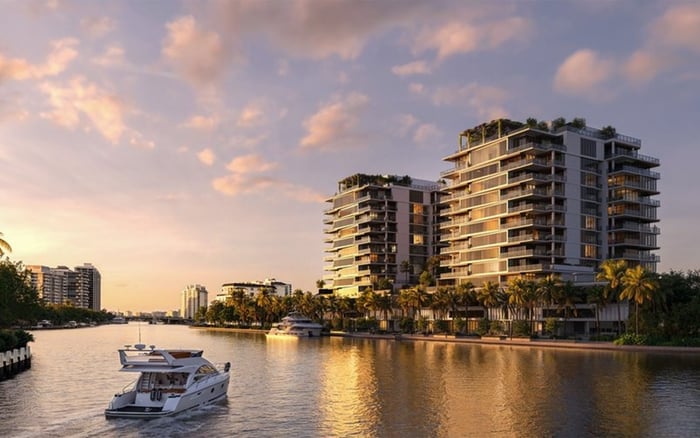
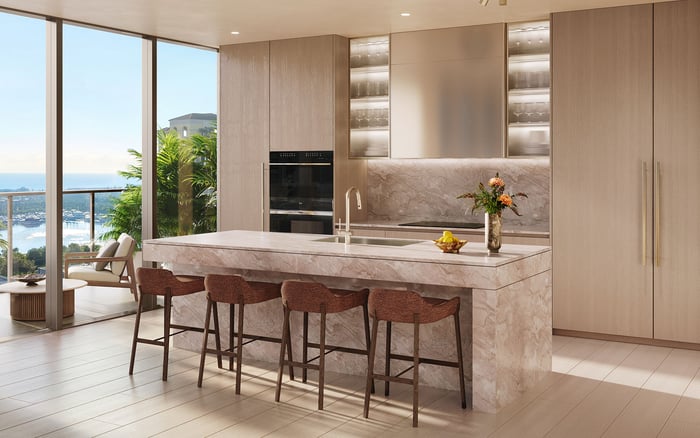
A refined touring guide for family buyers comparing Fort Lauderdale and West Palm Beach, focused on lifestyle fit, education logistics, property due diligence, and long-term usability.

Fort Lauderdale and West Palm Beach can both read beautifully on a tour day: palms, water, polished interiors, generous terraces, and the easy refinement that makes South Florida compelling for families who want warmth without surrendering sophistication. Yet the right choice rarely comes from the first impression. For family buyers, the more useful question is not which city feels more glamorous. It is which city supports the household’s ordinary Tuesday as gracefully as its best holiday weekend.
Before touring, build a written map of your family’s actual week. Include school drop-off, office days, pediatric appointments, sports, tutoring, grandparents, airport runs, dinner habits, boating, beach time, and the places teenagers will eventually want to reach without turning every outing into a production. Then use each showing as a rehearsal. A residence may have the right finishes, but if the morning circuit feels fragile, the property may not live as well as it photographs.
This is especially important for families moving from larger metropolitan markets, where prestige is often attached to a narrower set of addresses. In South Florida, the calculus is more personal. Privacy, water access, school fit, commute tolerance, insurance comfort, and community texture can outweigh a marginal difference in square footage or view.
In Fort Lauderdale, family buyers should pay close attention to how the home handles movement. Ask how children, guests, service providers, pets, and weekend equipment enter and exit the property. A striking main living room is only one part of the equation. The practical luxury is whether wet towels, sports bags, strollers, paddleboards, bicycles, and groceries have a logical path that does not cut through the formal heart of the home.
If the tour includes waterfront property, treat the exterior as an extension of the floor plan. Ask how outdoor areas are shaded at different times of day, where children can be supervised from inside, how the pool is secured, and whether entertaining zones conflict with quiet bedroom wings. A family home should feel composed when it is full, not only when it is staged.
For condominium and new development buyers, the building’s rhythm matters as much as the residence itself. Understand elevator patterns, parking assignments, guest access, pet policies, delivery procedures, storage, and the feel of shared amenity spaces during after-school and weekend hours. The best luxury building for a family is not necessarily the one with the longest amenity list. It is the one whose rules, staffing, and circulation make daily life feel discreet and controlled.
In West Palm Beach, the family tour should be equally disciplined. Study the relationship between the residence and the family’s preferred orbit. Some buyers want a lock-and-leave lifestyle with cultural, dining, and waterfront access close at hand. Others want a quieter residential cadence, with larger indoor-outdoor living, more separation between bedrooms, and room for extended family visits.
When touring, linger in transitional spaces. Mudrooms, laundry rooms, secondary entrances, garage bays, elevator landings, and storage rooms often reveal more about family suitability than the primary suite. Ask whether the home can absorb growth: a child becoming a driver, a parent working from home, a grandparent staying for a season, or a guest room becoming a study room. A residence that adapts quietly will serve the household longer.
For buyers considering vertical living, examine how private the residence feels once the elevator doors open, how acoustics perform between social and sleeping areas, and whether balconies or terraces are genuinely usable for children and family dinners. For buyers considering single-family options, look closely at site planning, setbacks, shade, parking, and the ease of moving between the kitchen, pool, and guest spaces.
Family buyers often evaluate schools, commutes, and housing as separate decisions. In practice, they are one decision. A school that looks ideal on paper may strain the household if the drive interrupts work calls, younger children’s naps, or a parent’s ability to return home between commitments. A beautiful residence may lose appeal if every activity requires a negotiation.
Tour during the times you would actually use the property. If mornings are the pressure point, visit early. If weekends matter most, walk the neighborhood and drive the errands on a Saturday. If a child has a recurring afternoon activity, test that route before signing. The most expensive surprise is not always a repair item. Sometimes it is the realization that a home’s location asks the family to spend too much time in transit.
Families weighing private-school priorities should also look beyond admissions. Consider the full ecosystem: after-school programs, sibling schedules, carpool options, athletic calendars, and how easily caregivers can participate. A property that simplifies these patterns may be worth more to the family than one with a slightly grander entertaining room.
Before a second showing, organize questions into three categories: structure, carrying cost, and governance. Structure includes roof, windows, drainage, elevation, mechanical systems, outdoor surfaces, and the durability of materials in a coastal climate. Carrying cost includes insurance, maintenance, utilities, landscaping, staff needs, association dues where applicable, and the realistic cost of keeping the property at the standard you expect. Governance includes association rules, architectural review, rental restrictions, pet limits, guest policies, dock rules, construction approvals, and renovation timelines.
New construction can be especially attractive to families seeking modern layouts, resilient systems, and a cleaner handover. Still, a new residence deserves careful review. Ask about delivery expectations, warranty procedures, finish substitutions, building operations, reserves, and how the developer or association will manage early occupancy. A flawless sales gallery is not the same as a settled building culture.
For resale homes, do not let charm obscure capital planning. Family buyers should understand what must be addressed immediately, what can wait, and what would disrupt occupancy. If children are starting school or a parent is beginning a new role, a renovation that seems manageable in theory may be poorly timed in practice.
The Fort Lauderdale versus West Palm Beach decision is not a contest with a universal winner. It is a fit exercise. Fort Lauderdale may be evaluated through the lens of Broward routines, boating preferences, beach access, airport patterns, and the buyer’s desired blend of city and resort energy. West Palm Beach may be evaluated through the lens of Palm Beach adjacency, cultural rhythm, residential calm, and the kind of social orbit a family wants to build.
Use practical language inside your search brief. Label notes clearly: Fort Lauderdale for city-specific Fort Lauderdale observations, West Palm Beach for West Palm Beach impressions, Broward for county-side logistics, Palm Beach for north-market context, private school for education planning, and new construction for delivery and building-operation questions. That may feel prosaic, but disciplined notes prevent emotional tours from blurring together.
During final comparisons, avoid ranking homes only by price per square foot or headline amenities. Instead, ask five questions. Which home makes mornings easier? Which one protects privacy when guests are present? Which one gives children room to become older without forcing a move? Which one has the clearest maintenance profile? Which one still feels calm when every family member is using it at once?
Plan no more than a few meaningful showings in a day. Luxury homes deserve time, and families need space to notice how they feel in them. Bring the decision makers, but also consider the perspective of the people who manage the household’s daily flow. A nanny, household manager, architect, designer, or trusted advisor may see friction that buyers miss while focusing on views and finishes.
Take the same photos and notes in every property: arrival, parking, kitchen, family room, primary suite, children’s rooms, laundry, storage, outdoor areas, service access, and the route from garage to pantry. Consistency turns subjective impressions into comparable evidence.
Finally, give each city a second look under different conditions. A home that feels serene at midday may feel less convenient at school pickup time. A building that seems quiet on a weekday morning may have a very different weekend personality. The family buyer’s advantage is patience. The right residence should make life feel more elegant, not more complicated.
Should family buyers choose Fort Lauderdale or West Palm Beach first? Start with the family’s weekly routine, then compare homes. The better city is the one that supports school, work, activities, and downtime with less friction.
Is a larger home always better for a family? Not necessarily. Layout, storage, privacy, bedroom separation, and outdoor usability often matter more than headline square footage.
What should buyers ask during a waterfront home tour? Ask about supervision from indoor spaces, pool safety, exterior maintenance, shaded areas, service access, and how the outdoor zones function during gatherings.
How important are schools in this comparison? Very important, but the choice should include commute patterns, after-school logistics, sibling schedules, and caregiver participation, not only school preference.
Are condominiums practical for families? They can be, if elevator access, parking, storage, pet policies, guest rules, and amenity culture align with the household’s daily needs.
What should buyers review before pursuing new construction? Review delivery expectations, warranties, building operations, association rules, reserves, and how early occupancy will be managed.
What is the biggest touring mistake families make? They tour for visual impact rather than daily function. The most beautiful home still needs to work on rushed mornings and full weekends.
How many homes should a family tour in one day? Fewer, better-planned tours are usually more productive. Leave enough time to test routes, inspect service areas, and discuss tradeoffs.
Should children join luxury home tours? For a shortlist, yes. Children can reveal practical details about bedrooms, play areas, stairs, outdoor spaces, and how comfortable the home feels.
What is the best way to shortlist comparable options for touring? Start with location fit, delivery status, and daily lifestyle priorities, then compare stacks and elevations to validate views and privacy.
For a tailored shortlist and next-step guidance, connect with MILLION.
If branded residences are on your mind — as a home or as an allocation — we would be glad to share what we are seeing, privately.
Begin a quiet conversation