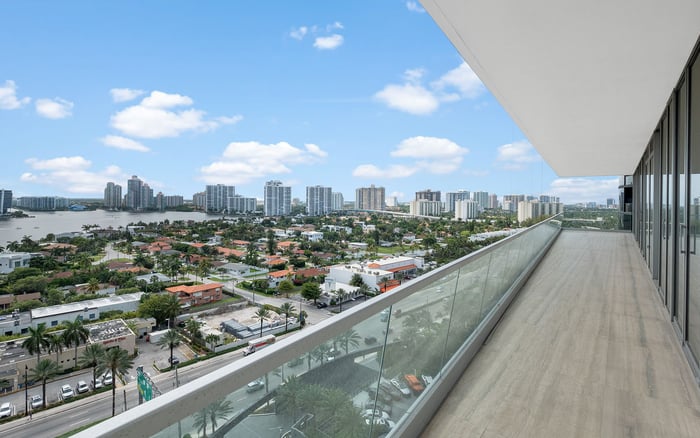
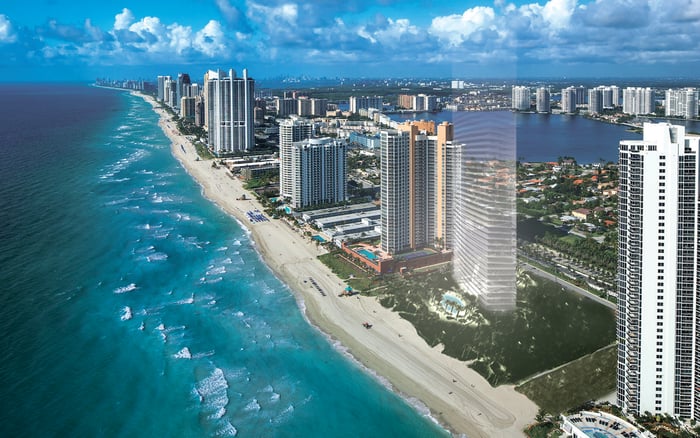
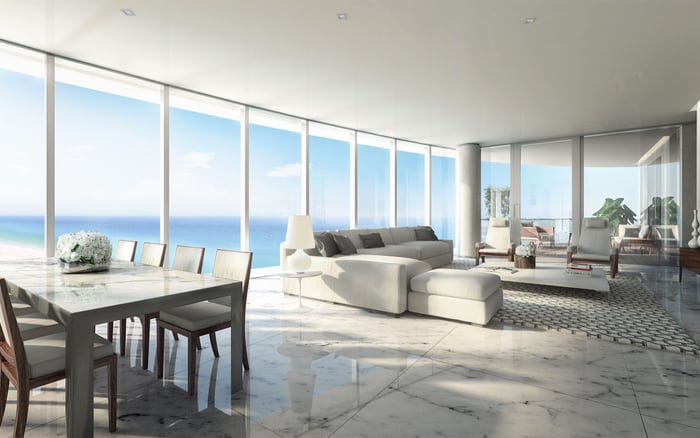
At The Estates at Acqualina, a completed SIRS is an essential compliance document, not a complete measure of financial preparedness. Buyers should reconcile tower-specific reserve recommendations with adopted budgets, cash balances, insurance, assessments and planned amenity spending.
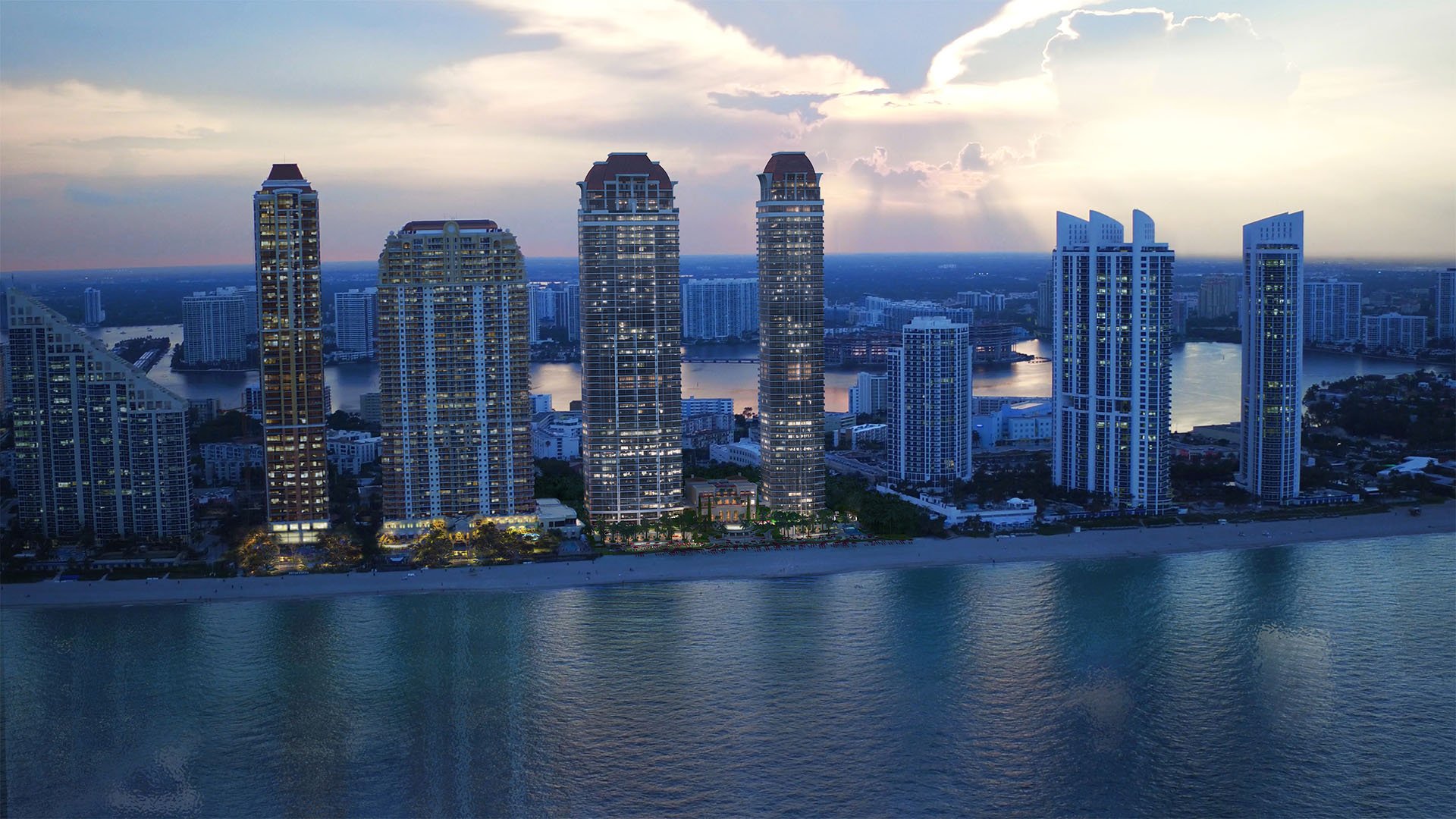
For a buyer considering The Estates at Acqualina Sunny Isles, the Structural Integrity Reserve Study, or SIRS, should be the opening document in a broader financial review. The development comprises 247 residences across Via Acqualina 777 and Via Acqualina 888, two 50-story towers well above Florida’s three-habitable-story threshold for mandatory studies.
Florida condominium associations subject to the requirement must complete a SIRS for each qualifying building at least every 10 years. The study estimates the remaining useful life and replacement or deferred-maintenance cost of covered components, then recommends an annual reserve contribution. That makes it indispensable. It does not, however, answer every question relevant to ownership in an amenity-rich oceanfront property.
SIRS compliance is the beginning of financial diligence, not its conclusion.
For the sophisticated buyer, the distinction is central. A tower can have a completed study while still facing pressure from operating costs, insurance, projects outside the study’s scope or a mismatch between recommended funding and actual reserve balances.
The mandatory categories include the roof, structure, fireproofing and fire-protection systems, plumbing, electrical systems, waterproofing and exterior painting, plus windows and exterior doors. The study may also capture another component above the statutory cost threshold when its failure would negatively affect a listed structural or safety component. That catch-all threshold begins at $25,000 and is adjusted annually for inflation.
A buyer’s review should extend beyond the report’s cover page. Confirm the inspection date, the precise building studied, the covered components, remaining-life estimates, projected costs and recommended annual contributions. Then determine whether completed work, revised bids or evolving project schedules have changed the underlying assumptions.
Qualifying owner-controlled associations in existence on or before July 1, 2022, were required to complete their initial SIRS by December 31, 2025. Yet a timely report is only one checkpoint. Boards that delay or skip required work can encounter regulatory, negligence and insurance-related complications, making the chronology and tower-specific compliance record material.
SIRS findings must flow into the annual budget. Buyers should compare the component schedule line by line with adopted contributions and current reserve balances, looking for omitted categories, delayed funding or projected deficits. For budgets adopted on or after December 31, 2024, owners cannot vote to waive or reduce required contributions for SIRS components.
Restricted reserves demand particular attention. Money reserved for SIRS components generally cannot be redirected to unrelated purposes. A healthy structural reserve therefore should not be mistaken for readily available cash to renovate interiors, replace furnishings or modernize an amenity. Request schedules that clearly distinguish restricted SIRS funds, non-SIRS reserves and operating cash.
This analysis is especially important when approaching a resale acquisition. Historical funding decisions remain embedded in the association’s current balance sheet, regardless of how recently a residence was completed or renovated. The relevant questions are not simply whether reserves exist, but how much is held, how it is allocated and whether contributions align with the study’s timetable.
The Estates offers pools, spa facilities, dining and other luxury common amenities. These features are integral to its ownership proposition, but their operating and renewal costs may not all qualify as mandatory SIRS components. Common-area interiors, technology, furnishings and amenity renovations should therefore have a separate capital plan.
The same discipline applies throughout Sunny Isles Beach. Buyers comparing The Ritz-Carlton Residences® Sunny Isles, Jade Signature Sunny Isles Beach or Turnberry Ocean Club Sunny Isles should use the same framework: structural funding and lifestyle funding are related, but they are not interchangeable.
Weak non-SIRS reserves can produce assessment volatility even when a tower is technically compliant. A rigorous investment review should map anticipated amenity spending alongside structural projects, insurance costs and normal operations. That combined view is more informative than any isolated reserve-fund label.
Published charges can vary materially by residence. Unit 1002 at 17901 Collins Avenue carried a reported HOA fee of $6,988 per month, with a reserve fund described among management, amenities, utilities, security and other services. Unit 4005 at the same address carried a reported association fee of $9,743.
These figures are snapshots, not verified current obligations or evidence that reserves are adequate. A reference to a reserve fund does not disclose its balance, component-level allocations, projected shortfalls or consistency with the SIRS schedule. Nor does a headline fee necessarily reveal special assessments, unit-specific charges or the distinction between tower and shared obligations.
Obtain a current unit-specific estoppel, fee schedule and tower budget. Confirm exactly what the monthly amount covers, whether any assessment has been levied or discussed, and whether the selected residence carries an unpaid balance. The objective is to establish a documented cost of ownership rather than rely on marketing shorthand.
Via Acqualina 777 and Via Acqualina 888 may have distinct budgets, reserves, assessments and governance records. Request documents for the buyer’s actual tower rather than accepting development-wide materials as substitutes. At minimum, the package should include the latest SIRS, current budget, reserve schedules, audited financial statements, insurance costs, assessment history, recent board minutes and planned non-SIRS capital work.
Minutes warrant careful reading because they can reveal projects under consideration before those projects appear in an adopted budget. Compare those discussions with cash on hand and expected contributions. If a major amenity renewal is contemplated without a corresponding reserve, evaluate the potential ownership impact before contract deadlines expire.
An experienced Florida condominium attorney and a reserve-study or accounting professional can add precision at this stage. Their work should test compliance, funding alignment and the association’s practical capacity to meet both structural and lifestyle obligations.
A SIRS can establish the expected timing and funding needs of critical components. It cannot establish that every future association obligation is fully reserved. At The Estates at Acqualina Sunny Isles, financial diligence should connect four layers: the engineering schedule, the adopted tower budget, actual reserve cash and the capital demands of a high-service lifestyle.
For Buyer's Guides to South Florida’s most consequential condominium decisions, explore private opportunities with MILLION.
If branded residences are on your mind — as a home or as an allocation — we would be glad to share what we are seeing, privately.
Begin a quiet conversationA SIRS estimates the remaining useful life and replacement or deferred-maintenance cost of covered components and recommends annual reserve contributions.
A qualifying association must complete a SIRS at least every 10 years for each building with three or more habitable stories.
No. It addresses specified structural and safety-related components, not every operating, amenity or capital obligation.
Categories include the roof, structure, fire-protection systems, plumbing, electrical systems, waterproofing, exterior painting, windows and exterior doors.
The comparison shows whether recommended contributions have been adopted and can expose omitted categories, delays or projected deficits.
Generally, funds reserved for SIRS components cannot be used for unrelated purposes, so non-SIRS capital needs require separate analysis.
The two towers may have distinct budgets, reserves, assessments and governance records, making development-wide documents insufficient.
No. Published fees are snapshots and do not disclose reserve balances, allocations, shortfalls or consistency with the SIRS schedule.
Request the current budget, reserve schedules, audited financials, insurance costs, assessment history, board minutes and planned non-SIRS work.
A Florida condominium attorney and a reserve-study or accounting professional can assess compliance, funding alignment and financial exposure.