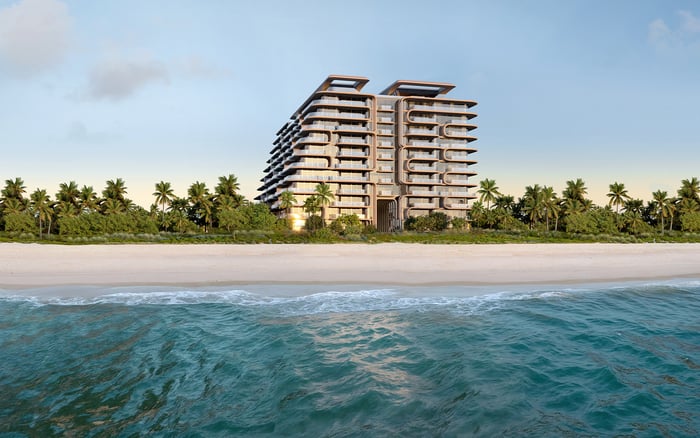
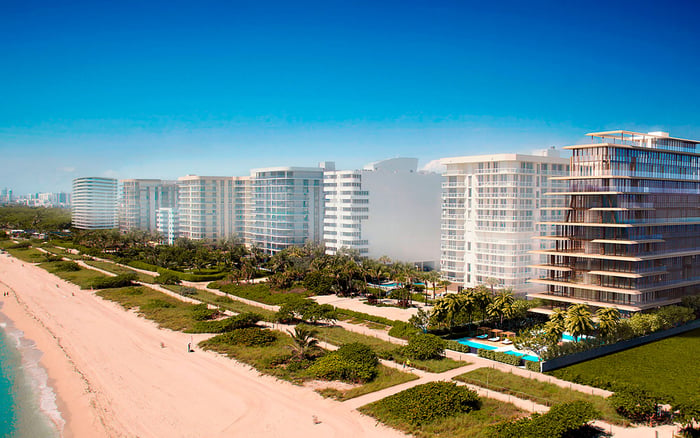
Ocean House Surfside pairs a boutique oceanfront setting with advertised direct beach access. For buyers, distinguishing that experience from legally exclusive shoreline rights is an essential part of evaluating privacy, access and future site flexibility.
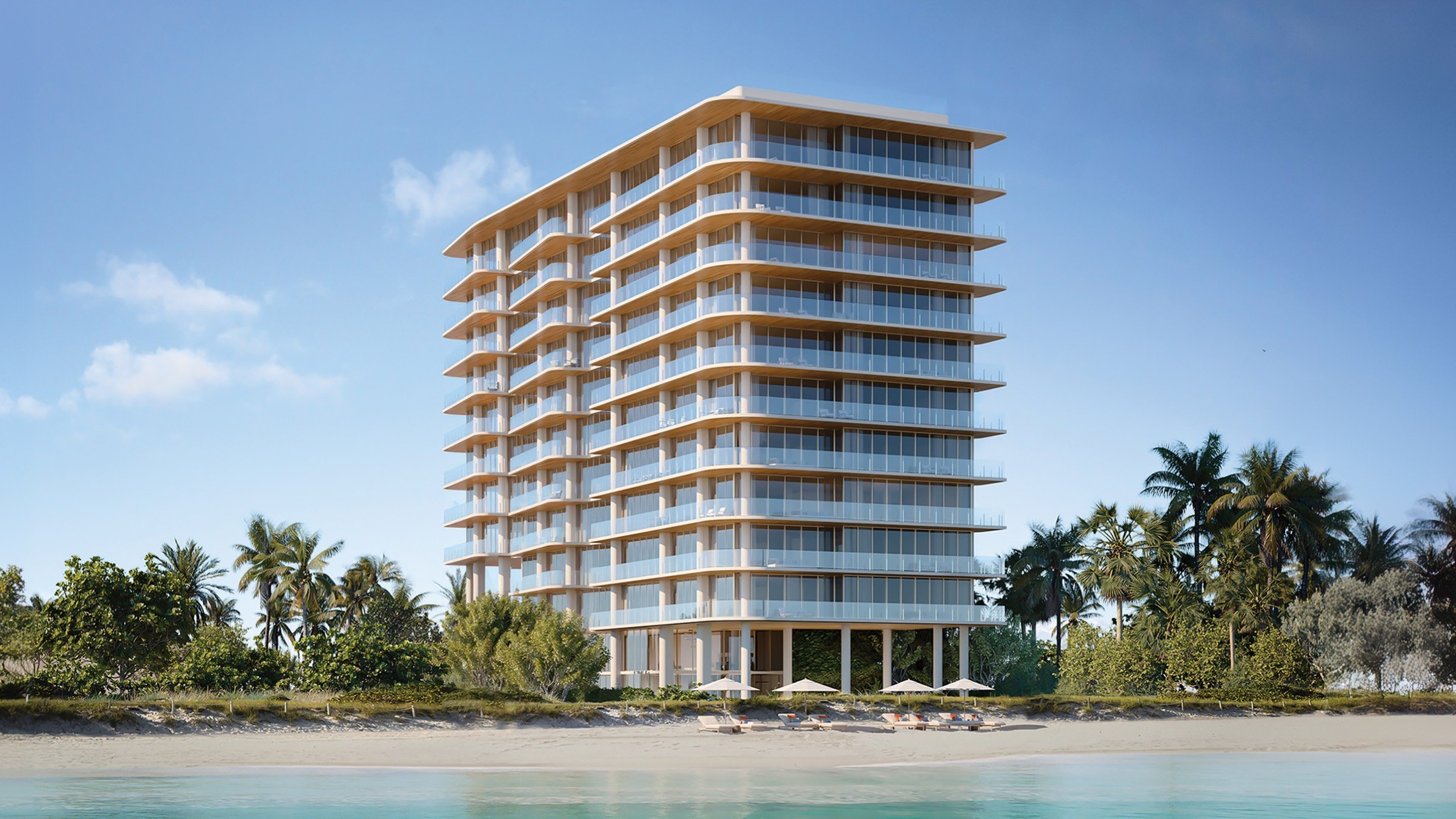
For a buyer considering Ocean House Surfside, the appeal is straightforward: an oceanfront address at 9317 Collins Avenue, Surfside, FL 33154, between Miami Beach and Bal Harbour. The development is described as an 11-story boutique condominium with approximately 25 residences. Its advertised direct beach access promises an uncomplicated connection between home and the Atlantic.
That convenience should be understood on its own terms. Direct beach access describes an amenity. It does not, by itself, establish exclusive ownership of the shoreline or the right to exclude others from every stretch of sand in front of a building.
For buyers who value discretion, the distinction matters without being inherently alarming. An Ocean House-specific public-access easement should not be presumed to exist. Nor should a private-feeling setting substitute for a review of the legal rights governing access. The objective is to understand precisely what the residence offers, rather than assign legal meaning to atmosphere.
A small residential building and attentive service can shape expectations of privacy. Ocean House advertises beach- and pool-chair service alongside direct beach and ocean access. Those features address the resident experience: how conveniently one reaches the beach and what assistance may be available there.
Ownership and access rights answer different questions. Who may use a particular route? Where does it begin and end? Does an established public right affect land within the parcel, or is public access provided independently nearby?
Chair service cannot answer those questions. Neither can the word private when used to describe an ambiance. Even deeded beach access is not automatically exclusive; the governing instrument determines who benefits and what the right permits.
A buyer also considering The Delmore Surfside should apply the same distinction to each property's representations. Comparisons are more useful when service, physical access and legal rights are evaluated separately, without assuming neighboring addresses share identical obligations.
Florida's coastal-access framework distinguishes private ownership from established public access. A public beach accessway can exist through privately owned beachfront land by easement or another legal means. In that situation, ownership of the underlying land does not erase the access right.
Scope matters. A legally established easement may permit non-residents to use a specified route without opening the entire condominium property to public use. A right to pass through a defined corridor is not permission to use residential amenities.
For buyers, the essential inquiry is not simply whether an easement exists, but what it allows and where it applies. Counsel should identify its beneficiaries, permitted use and physical limits, then compare those terms with the property survey.
The 2022 coastal-access provisions protect established accessways against development interference unless a comparable alternative is provided. Current law and its application to a particular parcel require confirmation. This is a due-diligence issue, not a conclusion that Ocean House carries any specific public-access burden.
Start with the recorded instruments and the survey, read together. Ask counsel to determine whether any established public route touches or crosses the parcel and explain its relationship to the proposed resident beach route. A line on a drawing is useful only when its legal meaning is understood.
The review should separate three questions:
The right: What recorded instrument or other legal basis establishes access, and who may exercise it?
The location: Where is the route relative to the parcel boundaries and resident circulation?
The conditions: What restrictions or preservation requirements govern its use or alteration?
Next, review applicable coastal permits. Access-preservation or relocation conditions may affect what can be changed later, even when today's layout appears straightforward. Florida's environmental permitting authority may require alternative access when development would interfere with public access along the beach.
Ask for the practical implications in plain language. Would a contemplated gate, landscape adjustment or revised path obstruct a protected accessway? Would a change require further review or a comparable alternative? These are questions to resolve through documents and professional advice, not conclusions to draw from a rendering.
Finally, do not treat the current waterline, mean high-water line and erosion control line as interchangeable boundaries. Have the relevant professionals explain which lines matter to the parcel and why. The view from a terrace cannot resolve that distinction.
If an established route affects a property, its position and scope should guide the privacy discussion. Buyers can ask how resident circulation relates to that route and how management intends to distinguish public passage from residential areas while respecting applicable rights.
Pedestrian traffic, privacy and security are potential considerations, not documented problems at Ocean House. An easement's existence alone would not establish how often it is used or its effect on daily life. Conversely, a quiet visit would not prove that access is legally exclusive.
Separate legal review from the operational conversation. Counsel can interpret rights; the project team can explain the intended beach-service arrangement and circulation plan. Those explanations should be consistent. For a buyer seeking a retreat, that consistency is more valuable than an expansive but undefined promise of privacy.
Nearby Bal Harbour has a public beach entrance at 96th Street and Collins Avenue, on the Surfside border. That neighborhood entrance provides access independent of private condominium entrances. Its presence does not establish an easement across Ocean House or settle rights over any particular parcel.
For buyers also considering Oceana Bal Harbour, the useful comparison is between each property's documented access arrangements, not a generalized impression of the surrounding beach. Neighborhood access and parcel-specific obligations belong in the same review, but they are not interchangeable evidence.
This perspective keeps the evaluation proportionate: understand how the area connects to the shore, then examine the property itself.
The strongest purchase decision aligns the advertised lifestyle with the legal and operational details supporting it. At Ocean House, direct access and chair service can be appreciated without assuming ownership or exclusion rights those amenities do not independently establish.
Before committing, seek a clear explanation of any applicable access instruments, their surveyed location and relevant permit conditions. Confirm current law and ask what those findings mean for everyday privacy and future site changes. A defined public route, if one exists, need not negate a refined residential experience. Understanding its boundaries allows a buyer to judge that experience accurately.
For a discreet conversation about your South Florida residential priorities, connect with MILLION.
If branded residences are on your mind — as a home or as an allocation — we would be glad to share what we are seeing, privately.
Begin a quiet conversationOcean House Surfside is an oceanfront condominium development at 9317 Collins Avenue, Surfside, FL 33154, between Miami Beach and Bal Harbour.
The project is described as an 11-story boutique building with approximately 25 residences.
No. Direct beach access describes an amenity and does not, by itself, establish exclusive ownership or a right to exclude others from the shoreline.
No Ocean House-specific public-access easement is established here. Buyers should have counsel determine whether any applicable access right touches or crosses the parcel.
Yes. An established public accessway can pass through privately owned beachfront land without making the entire property available for public use.
No. Beach-chair service is an operational amenity, separate from ownership and legal access rights.
Buyers should have counsel compare recorded access instruments with the property survey and review applicable coastal permits for access-preservation or relocation conditions.
Yes. Changes that obstruct a protected accessway may face constraints or require a comparable alternative, subject to current law and applicable permits.
Bal Harbour has a public beach entrance at 96th Street and Collins Avenue, on the Surfside border. That entrance does not establish an easement across Ocean House.
No. The governing instrument determines the beneficiaries and scope of deeded access, so exclusivity should not be assumed.