At The Delmore Surfside, a private residential experience should not be confused with exclusive ownership of the beach. Buyers should examine access rights, recorded easements and association authority before treating privacy expectations as permanent property rights.
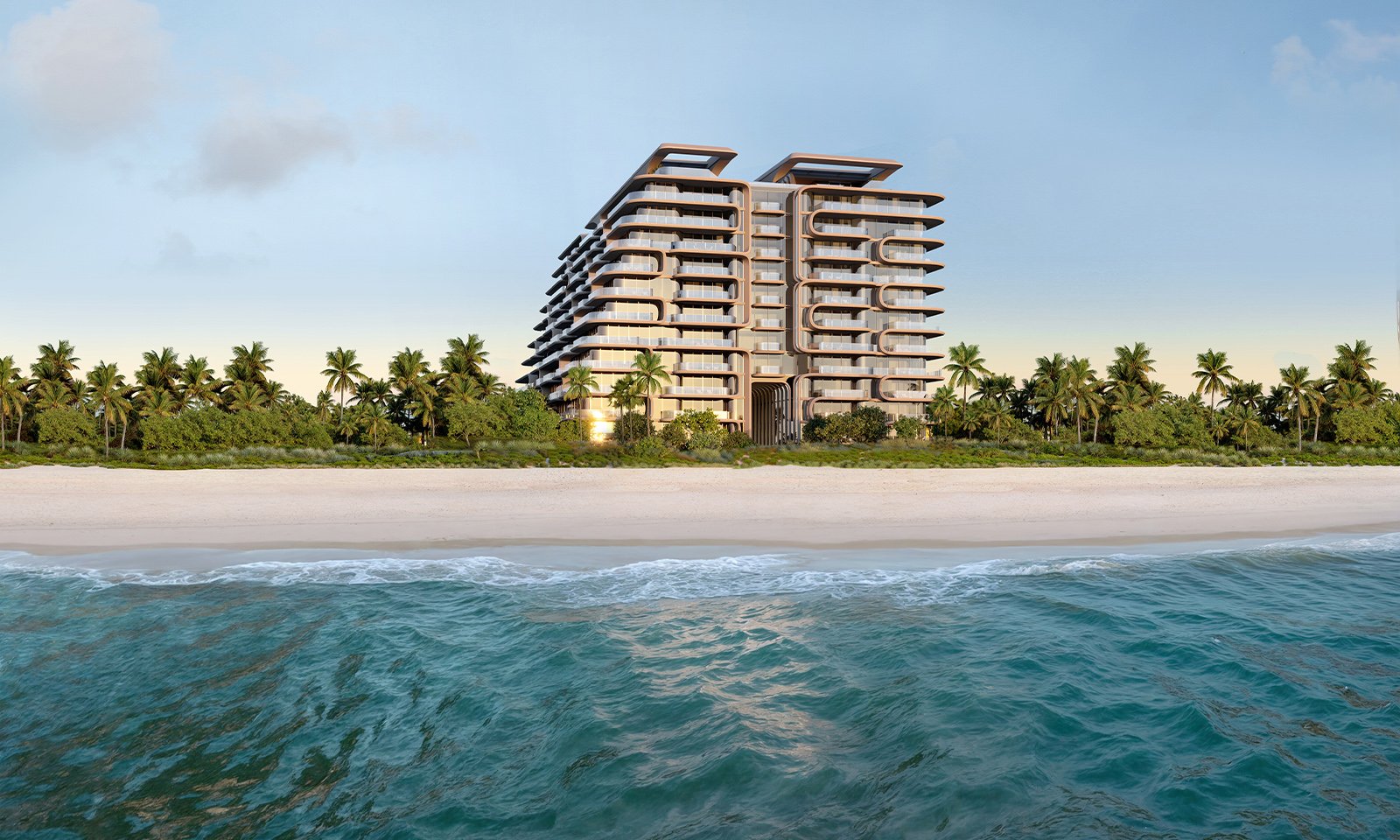
For a buyer considering The Delmore Surfside, the appeal begins with an intimate residential scale and an Atlantic Ocean address. Yet architecture alone cannot answer the most consequential questions about privacy. Those turn on the legal distinctions between a private residential environment, a public beach and the rights governing movement between them.
A private beach experience is not the same as private ownership of the beach. Nor does a beach’s public status automatically permit the public to cross condominium grounds. Both distinctions matter in an oceanfront purchase, especially when seclusion is central to a buyer’s expectations.
The inquiry should be precise: what rights attach to the residence, which routes serve the property, who may use them and who can change them? Whether a public-access easement affects The Delmore’s parcel requires project-specific legal review. It cannot be inferred from the setting or its presentation.
The Delmore is planned as a 12-story oceanfront condominium at 8777 Collins Avenue in Surfside, developed by DAMAC International and designed by Zaha Hadid Architects. The site fronts the Atlantic between Miami Beach and Bal Harbour.
The marketed offering comprises 37 residences on approximately 1.9 acres, with four- and five-bedroom homes advertised from around $15 million. These figures describe the offering and asking prices, not recorded sales. A foundation permit approval in August 2025 marked a development milestone, not evidence of completed construction.
These distinctions deserve the same disciplined review as access rights. A small residence count may shape expectations for the residential environment, but it does not establish shoreline ownership or prove that every adjoining route is reserved for residents. Price, scale and design are separate from the legal instruments governing land and access.
Surfside’s oceanfront beach should not be assumed to belong exclusively to condominium owners. The general understanding of the town’s beach as state-owned and open to public recreation is a starting point, not a title determination for an individual parcel. Exact boundaries require separate review.
Three questions should remain distinct. First, what land does the condominium own? Second, what rights do owners, guests and invitees have to reach the beach? Third, does anyone else hold a right to cross a defined part of the property?
A public beach does not, by itself, answer the third question. Likewise, a private entrance or controlled residential setting does not establish whether a recorded access right exists elsewhere on the parcel. Neither conclusion should rest on appearance alone.
For a buyer also considering Ocean House Surfside, these questions offer a useful comparison framework. Each property’s documents should establish its own rights; a shared town or coastline cannot substitute for that review.
The 2025 statutory framework contemplates nonexclusive ingress-and-egress easements over streets, walks and rights-of-way serving condominium units, or dedication of those routes to the public. That framework does not establish a public route through any particular development.
The word “nonexclusive” deserves careful reading. It is not shorthand for unrestricted public use. Counsel should identify the beneficiaries and permitted purposes of each relevant instrument rather than rely on a label.
Ask counsel to examine the title commitment and referenced recorded instruments alongside the survey, condominium declaration and amendments. The objective is to connect written rights to physical locations and determine how access routes are classified.
For each identified route, the review should address:
The beneficiaries and permitted purposes of access.
Whether the right is exclusive or nonexclusive.
The route’s location within or beside the property.
Provisions governing modification or relocation.
These are recommended inquiries, not findings about The Delmore. Any relationship between a route and residential amenities should be established through the documents and plans, not assumed.
An easement review should extend beyond the configuration presented at purchase. Under the 2025 statutory framework, unless the declaration prohibits it, an association board may grant, modify or move easements across common elements or association property without individual unit-owner joinder.
That authority makes the declaration particularly important. Buyers should ask counsel to identify restrictions on the board’s power and explain whether the documents constrain future changes to access arrangements. An attractive layout today is not, by itself, a promise that circulation rights will remain unchanged.
The distinction is between a current condition and an enforceable limitation. A buyer may be comfortable with the first and still want clarity about the second. Review should therefore cover both existing easements and the governance provisions that could shape later decisions.
Counsel should confirm current law and the applicable project documents before drawing conclusions. This statutory discussion reflects the 2025 framework and serves as a basis for diligence, not transaction-specific legal advice.
The statutory framework also protects condominium owners, guests and invitees against local-government restrictions on pedestrian access to a contiguous public beach, except where necessary for public health, safety or natural resources.
That protection is distinct from any right of the general public to traverse condominium grounds. A resident’s protected ability to reach a public beach should not be confused with a public entitlement to use a particular private route.
Buyers comparing a Bal Harbour option such as Rivage Bal Harbour should keep those categories separate. Meaningful comparison requires understanding each property’s access rights without assuming that one building’s arrangements apply to another.
For an ultra-premium purchase, privacy is a practical expectation as much as an aesthetic preference. Begin by defining what privacy means to the buyer, then ask which documents support that expectation. Beach ownership, permission to cross the grounds and association authority are related, but not interchangeable.
At The Delmore, public-access easements warrant attention as a due-diligence question, not as an assumed defect or an assumed absence. The strongest purchasing position aligns the residence’s appeal with a clear legal understanding of access. That clarity allows the buyer to evaluate the setting on its actual terms rather than an expansive interpretation of “private.”
For a considered approach to South Florida oceanfront ownership, explore MILLION.
If branded residences are on your mind — as a home or as an allocation — we would be glad to share what we are seeing, privately.
Begin a quiet conversationThe Delmore is planned at 8777 Collins Avenue in Surfside, fronting the Atlantic Ocean between Miami Beach and Bal Harbour.
DAMAC International is the developer, and Zaha Hadid Architects is the architect of the planned 12-story condominium.
Project marketing describes 37 residences on approximately 1.9 acres. Marketed homes have four or five bedrooms, with asking prices starting around $15 million.
No. The foundation permit approval marked a development milestone, not completed construction.
No. Buyers should distinguish a private residential experience from ownership of the beach and have counsel confirm the property's boundaries and rights.
Not by itself. Permission to cross a particular property depends on the rights applicable to that property, not simply on the beach being public.
No. Whether such an easement affects the parcel requires project-specific review of title, recorded instruments, the survey and condominium documents.
Recommended review includes the title commitment, referenced recorded instruments, survey, condominium declaration and amendments. Counsel should identify route locations, beneficiaries, permitted uses and modification provisions.
Under the 2025 statutory framework, unless the declaration prohibits it, a board may grant, modify or move easements across common elements or association property without individual unit-owner joinder. Counsel should confirm current law and project-specific restrictions.
It protects owners, guests and invitees against local-government restrictions on pedestrian access to a contiguous public beach, subject to health, safety and natural-resource exceptions. That protection does not itself establish a public crossing right through condominium grounds.