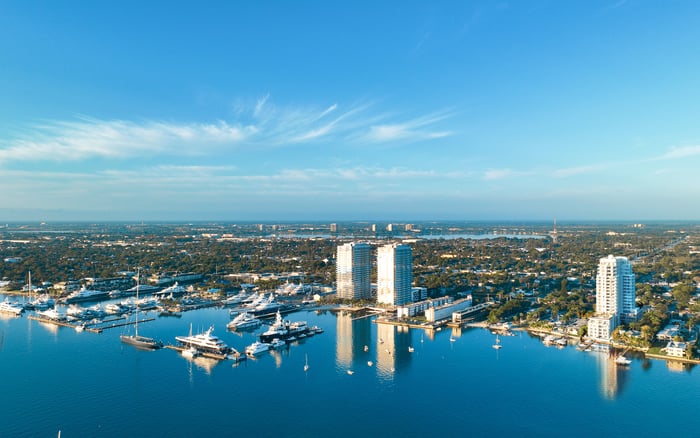
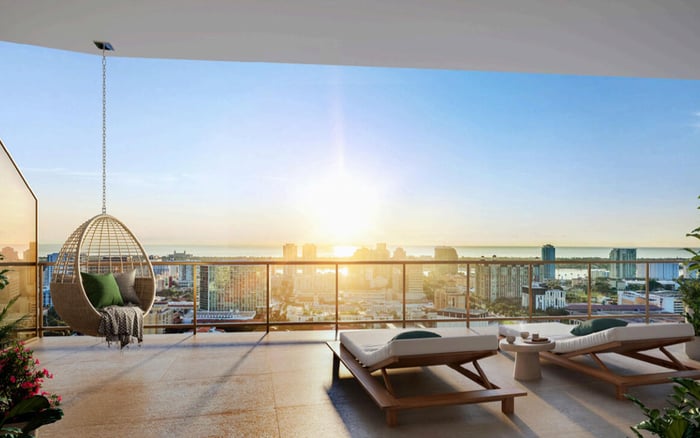
On West Palm Beach’s Flagler Drive, luxury has become as much about optics as address. From glass-forward waterfront towers to more classical dual-tower planning, today’s buyer is evaluating not just square footage, but the physics of exposure: sunrise versus sunset, sightlines over the Intracoastal, terrace depth, and how amenity floors deliver “second-horizon” experiences beyond the home. Here is how three headline projects articulate that view-first promise, and how to translate marketing language into a practical buying decision.
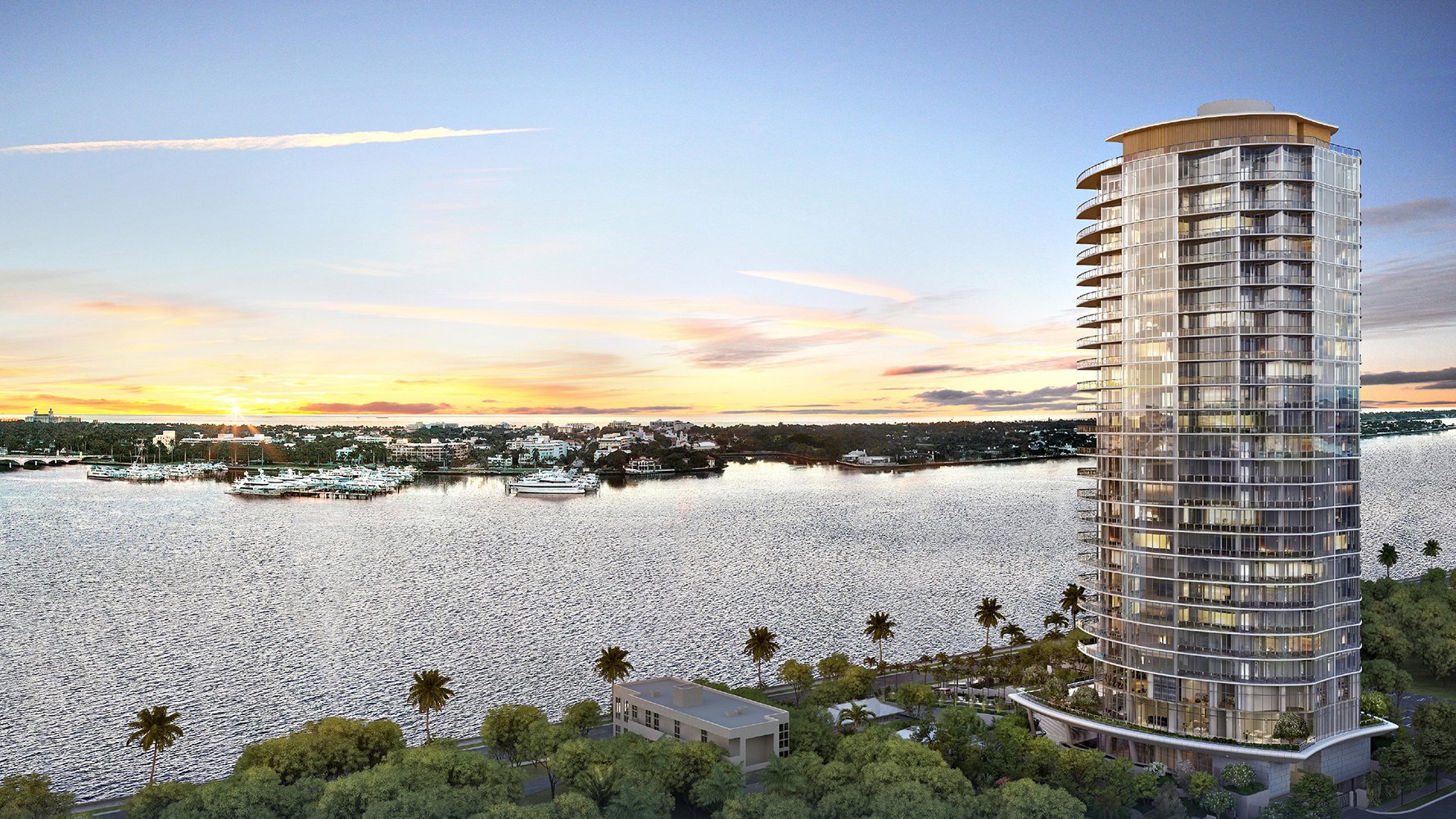
West Palm Beach’s Intracoastal edge has long carried a premium for simple proximity to the water. What feels different now is how precisely the best buildings sell the outward experience. Buyers are no longer content with “waterfront” as a broad category. They want to know how a residence reads from morning to night: where the first light lands, whether sunset is visible from the primary suite, and how terrace geometry changes what you truly see from inside.
For a West Palm Beach audience, that is not philosophical. When a home is used full time, a water view is a daily utility, not a postcard. Exposure influences sleep patterns, entertaining, and even how often you slide doors open during shoulder season. As new construction along Flagler Drive raises expectations, the most durable value is often tied to what you cannot renovate later: orientation, tower placement, and an unobstructed horizon.
Luxury marketing is fluent in superlatives. A smarter approach is to evaluate view performance the way a designer would, with inputs and outcomes.
Start with exposure. Many buyers ask, “Do I have a view?” The higher-value question is, “Which directions do I see, and from which rooms?” A residence with a true panorama from primary living areas will live very differently than one where the water shows up only at an angle.
Next, treat glass as architecture, not decoration. Floor-to-ceiling glazing can pull in daylight and widen sightlines, but it also shapes privacy, heat gain, and the emotional scale of a room. Ask specifically about impact-rated windows and doors, and how indoor and outdoor zones connect in practice.
Then, evaluate terrace depth and usability. A terrace is not a bonus; it is part of the view system. A deep terrace can become a shaded, wind-protected outdoor room, which usually determines whether you actually spend time in the view or simply look at it.
Finally, measure shared spaces. The strongest buildings do not reserve the best horizon only for penthouses. They distribute view moments across amenity floors: lap pools, lounges, wellness suites, and arrival sequences that make even an ordinary weekday feel like a retreat.
Flagler Drive is not offering one unified idea of waterfront luxury. It is offering distinct philosophies, each with a different interpretation of light, outlook, and lifestyle.
Alba West Palm Beach is positioned as a modern, glass-forward waterfront building with 55 residences across 22 stories at 4714 N Flagler Drive. Public materials emphasize indoor-outdoor living through large terraces, floor-to-ceiling glass, and impact-rated windows and doors, all aimed at preserving daylight and Intracoastal outlooks.
A recent report highlighted a Lower Penthouse Collection of six residences on floors 19 through 21, marketed with 11-foot ceilings and pricing reported from $6.95M. Those homes are described as oriented toward broad sightlines, with outdoor space treated as part of the main event, including terraces cited around 2,140 square feet in the coverage. Delivery has been reported as targeting 2026, a timeline that matters for buyers trying to synchronize a move with construction cycles.
The Bristol, at 1100 S Flagler Drive, represents a different and highly specific idea of luxury: flow-through living. The building is a 25-story tower with 68 residences, and it promotes Flow-Through-units designed for east-to-west exposures. In plain terms, the promise is a daily rotation of light and outlook, water on one side and city and sunset on the other. Residences are marketed as three- to five-bedroom homes, with interior sizes described from roughly 3,700 to 14,000 square feet, and floor-to-ceiling glass sits at the core of the pitch.
For market context, a penthouse sale at the building was reported at $28M in 2024, underscoring that the top of the view stack continues to command its own tier.
South Flagler House, planned at 1355 S Flagler Drive, shifts away from the all-glass silhouette and into a more classical register. It is described as two 28-story towers with 108 residences, designed by Robert A.M. Stern Architects. The architectural vocabulary matters, but view-focused buyers should pay special attention to the planning move: RAMSA has described leveraging spacing and offset between the two towers to maximize light and air and to shape view framing from residences.
Residence sizes are marketed from about 2,000-plus square feet up to about 13,000-plus square feet including penthouses, a reminder that “the view” is not a single product even within one address. Amenity programming is promoted at approximately 80,000 square feet, including a 25-meter lap pool, spa facilities, fitness studios, and entertainment spaces. The fact sheet also highlights practical systems such as EV charging and emergency generator capacity, details that become especially relevant for full-time waterfront living.
In today’s best buildings, the amenity deck is not an afterthought. It functions like a parallel residence, a curated sequence of places where the water is experienced in different modes: active in the morning, social at dusk, and quiet after dark.
Alba’s amenity program, for example, includes two pools positioned for sunrise and sunset, and it also promotes private dock access and boat slips. That is a meaningful distinction. It suggests the Intracoastal is treated not only as a view corridor, but as a functional lifestyle amenity, where you can leave the building and step onto the water with minimal friction.
South Flagler House’s amenity scale, anchored by a 25-meter lap pool, signals a different buyer profile: someone who wants club-level wellness and entertaining without leaving the property. Meanwhile, buildings like The Bristol emphasize that resort-level experiences can be delivered with a more residential tone, pairing privacy with a robust spa and fitness offering.
The throughline is simple: shared spaces are now designed to compete with private terraces. Buyers should ask where the best vantage points are located, how those spaces are programmed, and whether they will feel like part of daily life or only a special-occasion floor.
Not every buyer is shopping for the same view. Some prioritize a clean, contemporary envelope and a terrace-led lifestyle. Others prefer a more service-driven environment, or an address that pairs water outlooks with walkability and cultural access within South Florida.
If your lens is contemporary Intracoastal living, Alba West Palm Beach is a project to watch for its glass, terrace, and indoor-outdoor emphasis, plus publicly promoted boating access. If you are calibrating value around a Flagler Drive address with a more intimate waterfront feel, Forté on Flagler West Palm Beach may fit that thesis.
For buyers who want a branded, hospitality-inflected rhythm in day-to-day life, The Ritz-Carlton Residences® West Palm Beach enters the conversation as a benchmark for service and lifestyle expectations in the area. And for those tracking the next wave of the corridor’s evolution, Shorecrest Flagler Drive West Palm Beach and Mr. C Residences West Palm Beach reflect the broader market reality: Flagler Drive is becoming a portfolio of distinct residential experiences rather than a single “waterfront” label.
Before committing to a line and floor, pressure-test the story with questions that translate marketing into livable reality.
Begin with orientation and obstructions. Ask for the exact exposure of the residence, what sits between you and the Intracoastal today, and what could be built tomorrow.
Then study the glass-to-terrace relationship. Floor-to-ceiling glass can look flawless in renderings, but day-to-day experience hinges on how doors open, how deep the terrace is, and whether the outdoor area can truly function for dining, lounging, and entertaining.
Ask how the building distributes view value. A strong amenity program can make a mid-level residence feel larger because your “home” includes horizon access from the pool deck, lounge, or wellness floor.
Finally, confirm livability systems. Items like impact-rated windows and doors, EV charging, and emergency generator capacity are not glamour details, but they are decisive for anyone using a waterfront residence as a primary home.
What is the most valuable type of view on Flagler Drive? Generally, the most durable premiums are tied to broad, unobstructed Intracoastal outlooks and strong natural light, but value varies by exposure and floor.
What does “flow-through” mean in a condo layout? It typically describes a home with exposures on opposite sides of the building, often marketed as enabling both water views and city or sunset views.
Do floor-to-ceiling windows always mean a better view? They can widen sightlines and daylight, but the best result depends on orientation, privacy, and how the terrace and doors are designed.
Why do terraces matter so much for waterfront living? A usable terrace turns the view into living space, making outdoor dining and lounging part of a daily routine rather than occasional use.
What makes a waterfront amenity deck feel “resort-level”? Look for wellness depth, thoughtful social spaces, and programs like lap pools or sunrise and sunset pool positioning.
Is boating access really a lifestyle advantage or just a talking point? When a building offers private dock access and boat slips, the Intracoastal becomes a functional amenity rather than only scenery.
How should buyers compare boutique versus larger towers? Boutique buildings may feel more private day-to-day, while larger amenity footprints can create more shared view moments and more programming.
What questions should I ask about future construction nearby? Ask what can be built on adjacent parcels and whether your sightline is protected by geography, setbacks, or existing low-rise conditions.
Do higher floors always win? Higher floors usually improve horizons, but layout, terrace design, and angle to the water can matter as much as elevation.
Which details matter most for full-time waterfront living? Prioritize exposure, impact-rated openings, backup power strategy where available, and the daily usability of amenities and outdoor space.
For private guidance on view-first buying along Flagler Drive, explore MILLION Luxury.
If branded residences are on your mind — as a home or as an allocation — we would be glad to share what we are seeing, privately.
Begin a quiet conversation