A discreet, buyer-oriented look at Fisher Island: why its access model, club culture, and limited inventory shape pricing power, and how to evaluate residences and lifestyle fit in 33109.
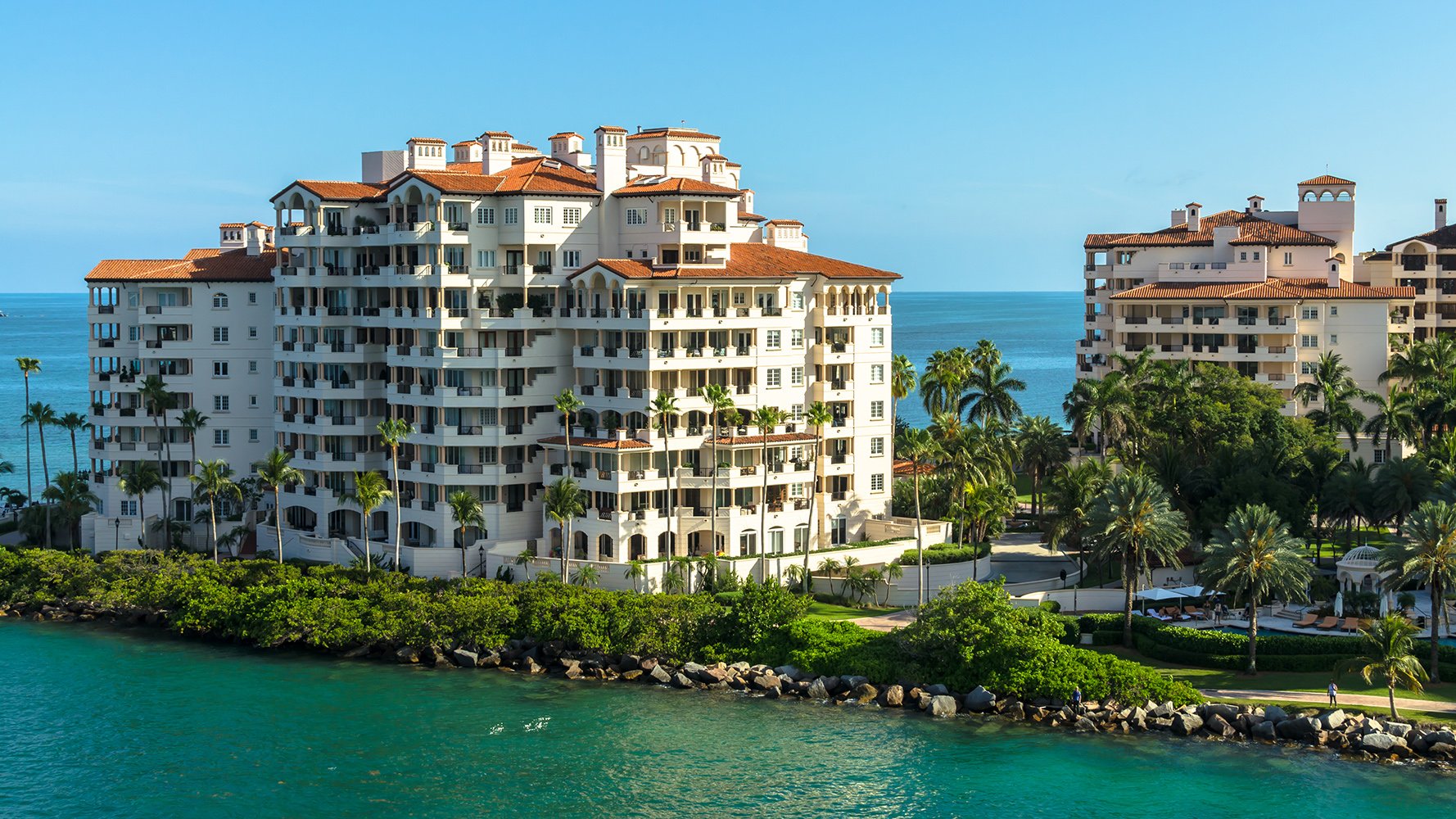
Fisher Island is a 216-acre enclave just off Miami Beach, separated by Government Cut and defined as much by geography as by culture. There is no road or causeway connection. The practical result is a lifestyle that starts with a choice: you arrive by ferry, private boat, yacht, or helicopter-and you depart the same way. For buyers accustomed to gated communities, Fisher Island’s gate is the water itself.
That access model shapes what matters in ultra-prime real estate: privacy, predictability, and a built-in limit on day-to-day foot traffic. It also establishes a distinctive rhythm of living. A quick dinner in South of Fifth may be close in miles, but it still requires intention in motion. For many owners, that is precisely the appeal.
Fisher Island’s permanent population is small, with 561 residents recorded in the 2020 U.S. Census. In a market where “exclusive” is often used loosely, Fisher Island’s numbers and logistics make the word feel literal.
For buyers, the takeaway is not the headline. It’s what tends to underpin resilience here: limited supply, a high share of second-home ownership, and a preference for discretion over visibility. Fisher Island is not a neighborhood built to scale; it is a neighborhood built to remain itself.
Inventory is also characteristically trophy-leaning. Even when offerings are condominiums, they often present as large-format residences designed for private entertaining and long stays, not pied-à-terre minimalism.
Fisher Island’s story reads like a timeline of American wealth, but its relevance is practical: legacy often sets the tone for governance, preservation, and expectations.
Government Cut was dredged between 1905 and 1911, physically separating the landmass and cementing its island identity. Carl G. Fisher acquired the island in 1919 from Dana Dorsey, a prominent Black businessman in early Miami history. In 1927, Fisher traded part of the island to William Kissam Vanderbilt II in exchange for Vanderbilt’s yacht, beginning an era that still informs the island’s social mythology.
Vanderbilt’s Mediterranean-style mansion, designed by architect Maurice Fatio and completed in 1940, is more than a historical footnote. It signals a long-standing preference for architecture and grounds that feel finished, composed, and private.
Later ownership shifted among wealthy industrialists, and in 1963 the island was sold to a group that included Bebe Rebozo, Sen. George Smathers, and Richard Nixon. The throughline is consistent: Fisher Island has rarely been an “up-and-coming” place. It has been a place people arrive once they already have arrived.
On Fisher Island, amenities are not a bonus. They are an organizing principle. The Fisher Island Club opened in 1987 and later transitioned to an equity club structure in 1993. Membership is positioned as a formal program, and the island’s lifestyle is often described in terms of what the club makes seamless.
Amenities publicly described by the club include golf, tennis, a marina, a beach club, and spa and fitness offerings. For buyers, that matters in two ways:
First, it reduces the need to leave the island for daily recreation. Second, it creates a social ecosystem that can feel both protective and demanding: highly service-oriented, yet structured by rules, traditions, and expectations.
Buyers should evaluate Fisher Island the way they would a private members’ environment in London or New York, translated into a waterfront setting. The home is the private realm; the club is the public realm; the island stitches the two together.
Fisher Island real estate tends to sort into a few buyer-readable buckets.
A significant share of the island’s stock is condominium living executed at a private-club standard: staffed arrivals, curated common spaces, and a sense that the building itself is part of the lifestyle proposition. For an illustrative reference point, Palazzo del Sol is positioned as a luxury condominium on the island, reflecting how “condo” here often means expansive, finished, and service-driven.
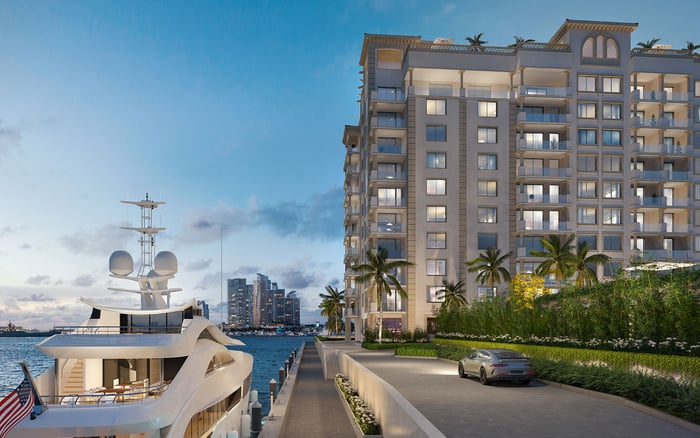
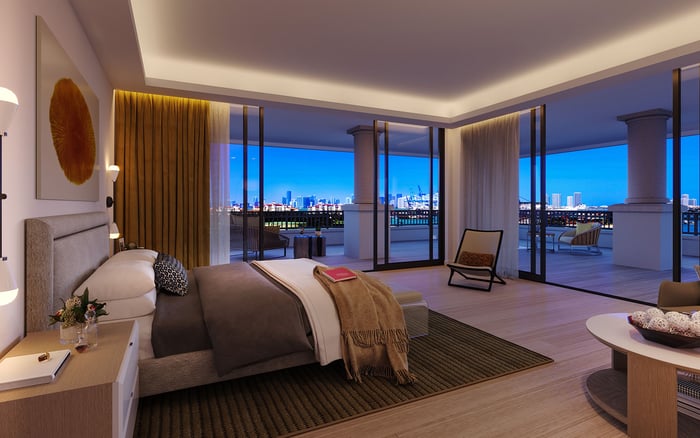
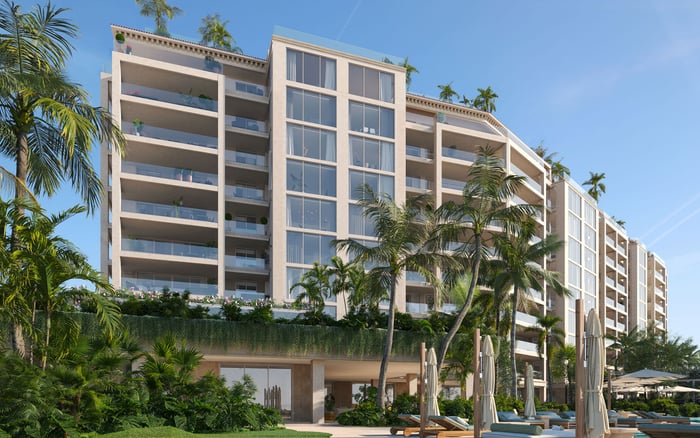
New inventory on Fisher Island is not abundant, which makes true new-construction offerings feel consequential. The Residences at Six Fisher Island is marketed as new construction with 50 total residences. Publicly shared materials emphasize very large, multi-bedroom layouts and extensive amenities, with a waterfront posture that aligns with what buyers expect at this level.
The project has also attracted high-profile culinary leadership for its dining experience-a signal that developers understand the island’s stay-on-island pattern and the preference for in-house excellence over off-island dependency.
For buyers who prefer a more land-forward lifestyle, Fisher Island’s limited acreage keeps estate inventory inherently scarce. Where it does exist, it tends to be the purest expression of controlled privacy: fewer neighbors, more autonomy, and a daily experience that can feel like a resort you never check out of. The most important diligence items here are practical: access logistics, service routing, and how island rules intersect with renovation ambition.
Fisher Island rewards buyers who treat it like a jurisdiction as much as a destination.
Because there is no road or causeway connection, your personal pattern matters. How often do you plan to commute to Brickell, Coral Gables, or airports? Do staff and guests need frictionless arrivals? The difference between romantic isolation and operational inconvenience is a personal threshold.
If the club ecosystem is central to your reason for buying, you should understand how membership works, what daily usage looks like, and how your household will engage with golf, tennis, marina life, beach routines, and wellness. If you prefer to keep social life off-property, you may find you are paying for a lifestyle you do not fully use.
In ultra-luxury condos, rules are often the invisible architecture. Buyers should review renovation parameters, delivery and move-in policies, pet policies, and any limitations that could affect privacy, staffing, or long-stay hosting. In Fisher Island’s small community, governance can be especially consequential because the island is not trying to accommodate mass turnover.
For families, it is notable that Fisher Island Day School serves Fisher Island and nearby communities, reinforcing that the island can function as a true primary residence for the right household, not only as a seasonal base.
For context, Fisher Island’s prestige is different in kind, not merely in degree.
Miami Beach offers high-gloss convenience and immediate access to dining and culture; Apogee South Beach is one example of the South of Fifth lifestyle where walkability and skyline views are part of the daily equation. Fisher Island, by contrast, asks you to choose separation-and then pays you back in quiet.
Bal Harbour and Surfside deliver refined oceanfront living with a boutique feel, but they remain connected to the city’s circulation. Oceana Bal Harbour captures that polished, coastal sensibility while keeping you on the grid. Fisher Island’s appeal is precisely that it is not on the grid.
And while Brickell has become a global tower district, it optimizes for proximity to commerce, dining, and nightlife-not seclusion. Fisher Island sits outside that logic. It is less about being at the center and more about being protected from the center.
Fisher Island tends to work best for buyers who value:
Predictable privacy over spontaneous access.
A club-oriented lifestyle with on-island routines.
Large-format residences designed for extended stays.
A low-density environment where discretion is the prevailing style.
It can be less ideal for buyers whose lifestyle depends on constant movement across Miami or who prefer to keep amenities unbundled and à la carte.
Is Fisher Island connected to Miami by a bridge? No. There is no road or causeway connection; access is primarily by ferry, private boat, yacht, or helicopter.
How big is Fisher Island? The island is about 216 acres in total area, making it notably compact and low density.
How many people live on Fisher Island year-round? The permanent population is very small, with 561 residents recorded in the 2020 U.S. Census.
Why is Fisher Island considered so exclusive? Controlled access, limited land area, and a club-centric lifestyle combine to create real scarcity.
Is Fisher Island known for high home prices? Yes. In a widely covered 2025 ranking, ZIP 33109 placed #1 nationally by median sale price at $9.5 million.
What amenities define daily life on the island? The island’s club ecosystem is central, with publicly described amenities including golf, tennis, marina, beach club, and wellness offerings.
Is there new construction on Fisher Island? Yes, but it is limited. Some offerings are marketed as new construction with a small number of total residences.
What is The Residences at Six Fisher Island? It is a new-construction ultra-luxury condominium project marketed with 50 total residences.
Does Fisher Island have a private school? Yes. Fisher Island Day School serves Fisher Island and nearby communities.
Is Fisher Island better as a primary residence or a second home? It can work as either, but it most naturally suits buyers who embrace the island’s access logistics and on-island routines.
If you'd like a private walkthrough and a curated shortlist, connect with MILLION Luxury.
If branded residences are on your mind — as a home or as an allocation — we would be glad to share what we are seeing, privately.
Begin a quiet conversation