A discreet household-operations comparison for buyers weighing branded Surfside condominium convenience against Fisher Island estate-enclave living, with emphasis on access, staffing, privacy, vendor flow, and document-level diligence.

For certain South Florida buyers, the most revealing comparison is not which residence photographs better, which lobby feels more theatrical, or which address carries the louder social signal. It is how the home performs on a Tuesday morning when a principal is traveling, a chef is receiving provisions, a house manager is coordinating maintenance, and a guest arrival needs to be handled without friction.
That is the practical lens for comparing Fendi Château Residences Surfside with The Links Estates at Fisher Island. One is best understood as a branded luxury residential option in Surfside. The other is best understood as an estate offering within the Fisher Island environment. Both may appeal to buyers who value privacy, but they are likely to place different demands on household operations, access planning, vendor control, and owner oversight.
This is not a contest between glamour and seclusion. It is a choice between two operating styles: branded condominium convenience in Surfside, or estate-enclave living on Fisher Island. For buyers who prefer understated service over social spectacle, the correct answer begins with how much of the household should be absorbed by the building or community, and how much should remain under the owner’s own management.
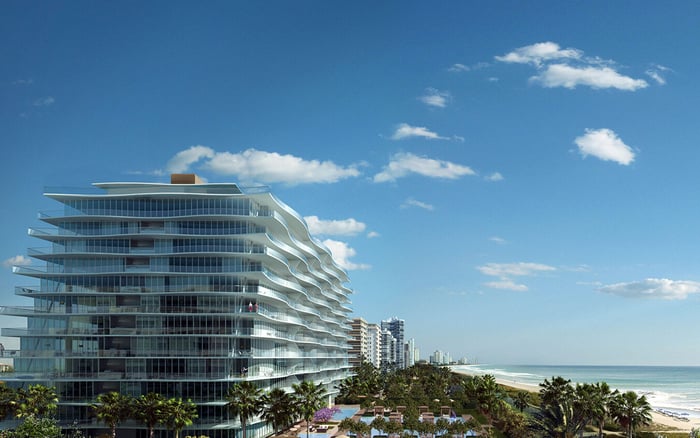
Fendi Château Residences Surfside sits in the branded-residence category, where design identity and residential service expectations matter. For a buyer who wants oceanfront living without the scale and open-ended logistics of an estate setting, that category can be compelling. The appeal is not necessarily maximal staffing. It is the possibility of a more contained residential framework, shaped by association rules, building protocols, shared infrastructure, and a recognizable luxury design language.
The key operational question is what the condominium structure actually provides today. Buyers should verify concierge scope, valet procedures, housekeeping options, security protocols, service-elevator rules, vendor access windows, delivery procedures, and association policies before assuming any household function is included. A branded name can signal a refined residential culture, but it should not be mistaken for a substitute for current documents.
For households that already employ a private assistant, housekeeper, chef, driver, or estate manager, the Surfside model may reduce certain variables. Staff and vendors can often be coordinated around building systems rather than island access, community entry, or separate estate-maintenance structures. Still, the important diligence is granular: Who may enter? At what hours? Through which loading area? With what insurance requirements? Under whose approval?
Surfside buyers often compare this type of residence with nearby luxury alternatives such as The Delmore Surfside and The Surf Club Four Seasons Surfside when deciding how much brand, building service, and neighborhood discretion they want in daily life. In this context, Fendi Château Residences Surfside is most useful as the design-led, branded condominium side of the household-operations equation.
The Links Estates at Fisher Island belongs to a different mental category. It is positioned as an estate product in Fisher Island, making it the private-island, residential-estate side of this comparison. That can be attractive for buyers who want a larger sense of separation, a more enclave-like environment, and a household rhythm that feels removed from the mainland.
But estate-style living usually shifts more responsibility to the buyer’s own operating team. Before purchase, the household should verify estate-management obligations, island-access rules, security procedures, vendor requirements, maintenance responsibilities, and any club or community obligations that may affect daily life. None of these should be assumed, minimized, or generalized. Fisher Island can be a powerful privacy proposition, but privacy has an operating architecture.
That architecture matters most in invisible routines. How do contractors arrive? How are deliveries screened? What happens when a principal hosts family for a holiday week? Can a house manager move freely enough to solve problems quickly? Which costs belong to the estate, which belong to the association or community structure, and which relate to optional or required memberships? These are not lifestyle footnotes. They determine whether a residence feels serene or administratively heavy.
For some buyers, the Fisher Island side of the ledger is worth the extra diligence because it offers a more estate-oriented residential posture. A family considering The Links Estates may also examine The Residences at Six Fisher Island to understand how different Fisher Island residential formats frame privacy, service, and control. The point is not to assume one is more discreet than the other. The point is to test how each structure handles the household’s real operating pattern.
Understated service is not the same as more service. In the best households, it means fewer visible seams. A driver does not need to explain access twice. A chef knows where provisions are received. A housekeeper understands the service path. A security team or front desk, if applicable, recognizes authorized vendors without turning arrival into a performance. The owner experiences calm because the system was clarified in advance.
At Fendi Château, the buyer’s diligence should focus on condominium mechanics. Ask for the current rules that affect service elevators, deliveries, guest registration, domestic staff access, vendor insurance, package handling, valet procedures, and after-hours maintenance. If the household expects recurring staff, confirm whether badges, approvals, parking, or specific entry protocols apply.
At The Links Estates, the questions widen. Island access, estate-level maintenance, community security, vendor coordination, service frequency, emergency repair procedures, and any club or community framework should be reviewed with equal seriousness. A property can feel extraordinarily private while also requiring precise coordination. The more complex the household, the more these rules matter.
Second-home owners should be especially careful. An occasional-use residence still requires air-conditioning oversight, storm preparation, cleaning schedules, pantry management, car logistics, and emergency contacts. Resale candidates should also request current operating documents rather than relying on prior descriptions, because policies can evolve.
The cleanest way to think about the comparison is this: Surfside branded-residence convenience may suit the buyer who wants a polished, design-forward condominium environment with fewer estate-style variables. Fisher Island estate living may suit the buyer who wants greater separation and is comfortable managing, or delegating, a broader operational platform.
Neither choice should be reduced to social life. A buyer who dislikes spectacle can live discreetly in a branded condominium if the building’s procedures protect privacy and staff movement is well managed. A buyer can also live quietly on Fisher Island if access, vendor logistics, and community obligations are fully understood before closing.
The decisive factor is household temperament. Some principals want the building to absorb friction. Others want a private team to control nearly every touchpoint. Some families value proximity to Surfside, Bal Harbour, and Miami Beach routines. Others prefer the psychological distance of an island environment. The better residence is the one whose rules, costs, and service pathways match the way the household actually lives.
Before choosing, request the practical documents and ask operational questions in writing. For Fendi Château Residences Surfside, focus on concierge, valet, housekeeping, security, service access, vendor registration, association rules, and any limits on household staff activity. For The Links Estates at Fisher Island, focus on estate-management scope, island access, security, vendors, maintenance, operating costs, and any club or community obligations relevant to ownership.
A discreet buyer should also stage a day-in-the-life review. Map arrivals, deliveries, staff schedules, pet care, entertaining, emergency repairs, and seasonal absences. If the residence works beautifully under that pressure test, the architecture and finishes become easier to enjoy. If the operating structure feels vague, pause until it is clarified.
For this buyer profile, the winner is not the property with the most visible prestige. It is the one that allows a high-functioning household to run quietly, consistently, and without unnecessary exposure.
Which residence is better for a buyer who wants branded condominium convenience? Fendi Château Residences Surfside is the better fit to evaluate for branded Surfside condominium living, subject to current document review.
Which residence is better for estate-style privacy? The Links Estates at Fisher Island is the more estate-oriented option in this comparison, with island-specific diligence required.
Does Fendi Château guarantee a dedicated household concierge per residence? That should not be assumed. Buyers should verify concierge scope and staffing policies through current project or association materials.
Does The Links Estates require social participation? That should not be assumed. Any club, community, or access obligations should be reviewed in current purchase and governing documents.
What should Surfside buyers verify first? Confirm valet, security, housekeeping, vendor access, service-elevator use, delivery rules, and association procedures.
What should Fisher Island buyers verify first? Confirm island access, estate-management responsibilities, security rules, vendor procedures, maintenance duties, and operating costs.
Is oceanfront condominium living simpler than an estate? It can be simpler for some households, but only if the building’s rules align with the owner’s staff, delivery, and privacy needs.
Is The Links Estates at Fisher Island more private by default? It may offer an estate-enclave setting, but practical privacy depends on access rules, vendor control, security procedures, and household planning.
How should second-home buyers compare these options? They should test absentee-owner routines, including maintenance checks, storm planning, cleaning, deliveries, and emergency response.
What is the most important takeaway for understated service? Choose the residence whose operating rules make daily life quieter, not the one that merely sounds more luxurious.
For a confidential assessment and a building-by-building shortlist, connect with MILLION.
If branded residences are on your mind — as a home or as an allocation — we would be glad to share what we are seeing, privately.
Begin a quiet conversation