A collector-focused due-diligence guide for evaluating Faena House Miami Beach as both a luxury residence and a private-gallery platform, with attention to floor plan, light, climate, access, security, resilience, association review, contract timing, and resale discipline.
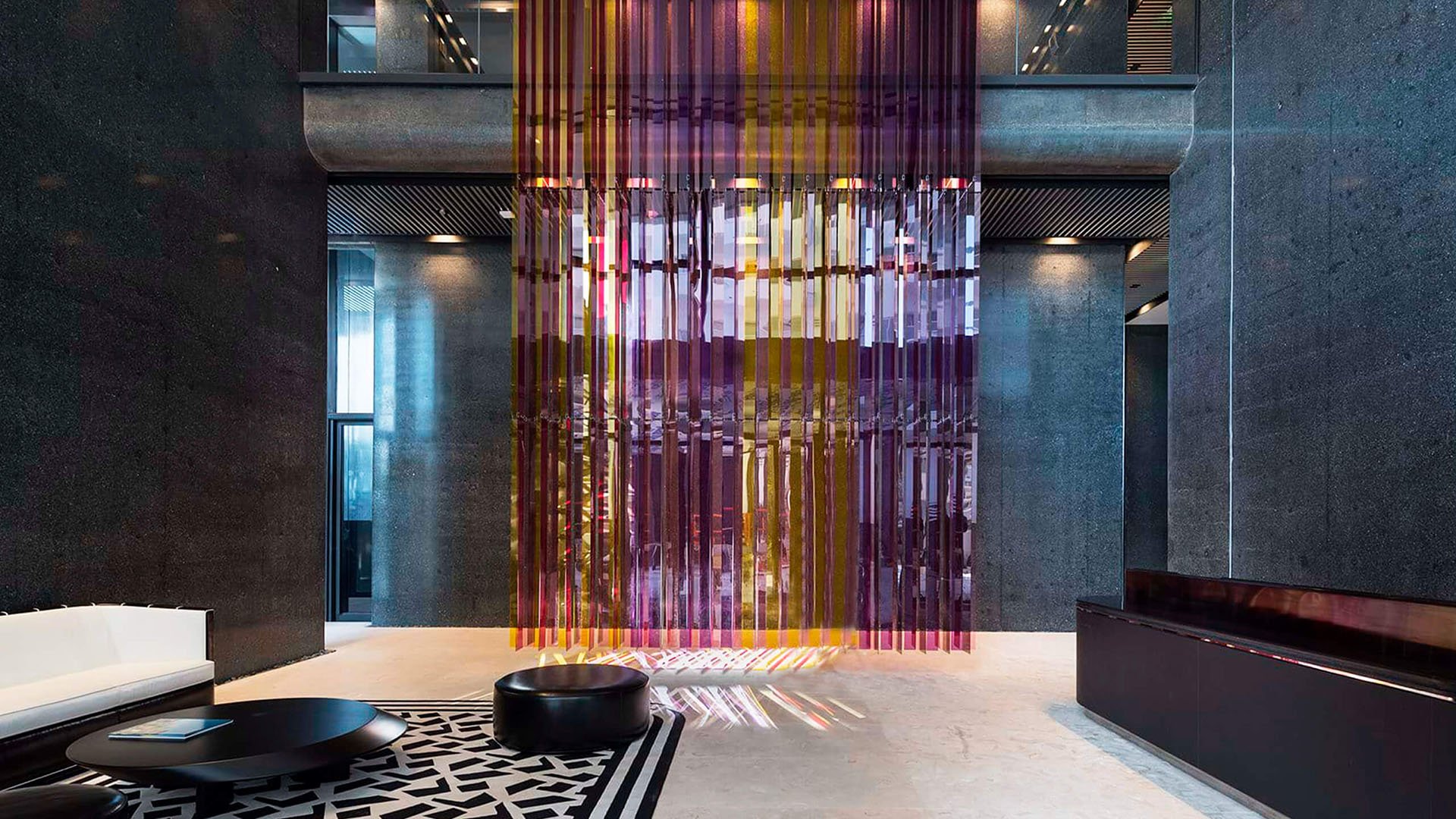
Faena House Miami Beach occupies a rare position in the luxury market: it is not merely a residence to furnish, but a potential platform for storing, displaying, entertaining around, and discreetly circulating valuable works of art. For the collector-buyer, due diligence must extend beyond views, finishes, and lifestyle. The central question is whether a specific unit can support the operational demands of a private gallery without compromising the ease, privacy, and elegance expected from oceanfront living.
That distinction matters in 2026 because serious art ownership inside the home has become increasingly technical. Light, humidity, access, insurance, security, and service movement are no longer back-of-house details. They are central to whether a residence can hold fragile assets with confidence. At Faena House Miami Beach, the surrounding Miami Beach cultural setting may reinforce the lifestyle fit, but the unit itself must still pass a practical checklist. The best private-gallery layouts are not theatrical. They are calm, legible, flexible, and professionally supportable.
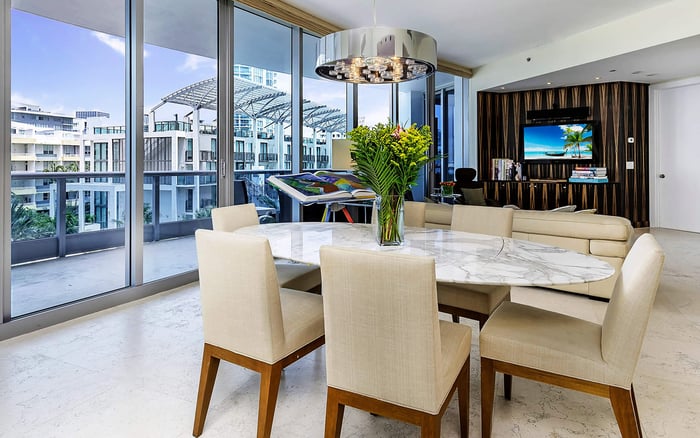
A private-gallery evaluation should begin with the floor plan, before any conversation about hanging. The buyer should identify where living, dining, display, storage, guest circulation, and service access can coexist without friction. A strong layout allows visitors to experience selected works without moving through overly private rooms, while art handlers can reach key zones without disrupting the household.
The essential exercise is to walk the unit as three different users: the owner, the guest, and the handler. The owner needs daily comfort. The guest needs a graceful path through display moments. The handler needs elevator access, turning radius, protected flooring routes, and a place to pause without blocking circulation. If those three paths overlap too heavily, the residence may still be beautiful, but it may not function as a disciplined gallery environment.
Storage deserves equal scrutiny. A private collection rarely consists only of what is visible. Crates, archival materials, rotating works, condition reports, and temporary packing needs require discreet space. The buyer should also test whether service areas can support recurring curator visits, minor installations, and documentation without turning the residence into a worksite.
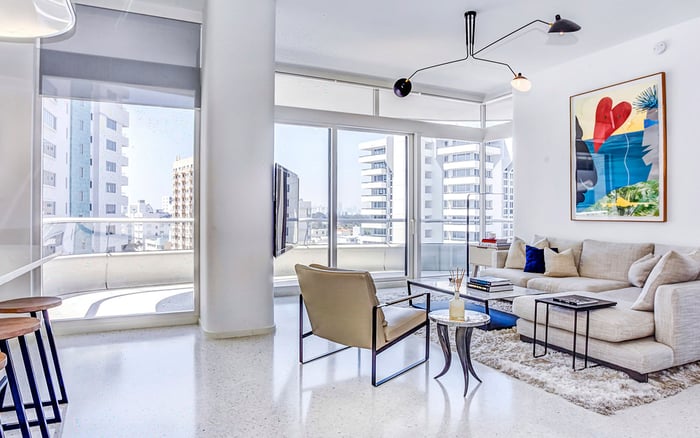
Faena House is defined in part by its oceanfront setting and generous glazing, both of which create beauty and complexity. For art, glass is never neutral. Daylight, glare, UV exposure, and thermal load can affect how works are experienced and, for sensitive media, how they age. A collector should map orientation and solar exposure before committing to museum-grade lighting, blackout systems, UV films, or climate-sensitive placements.
Primary wall runs should be measured with unforgiving precision. Large-format works need more than square footage. They need uninterrupted visual fields without conflicts from doors, windows, mechanical grilles, sprinklers, speakers, built-ins, thermostats, or awkward transitions. The ideal wall is not simply long. It is stable, serviceable, properly lit, and free of visual noise.
Terrace conditions add another layer. Outdoor transitions can soften light and extend the spatial drama of a residence, but they also create thresholds where temperature and humidity behavior should be understood. Works placed near terrace openings, heavily glazed corners, or transitional areas deserve particular caution. Oceanfront beauty is part of the value proposition, yet oceanfront exposure requires technical discipline.
No private-gallery plan should proceed on aesthetics alone. Before closing or before any significant build-out, a buyer should retain specialists to review HVAC capacity, humidity stability, filtration, and redundancy. The standard is not whether the apartment feels comfortable during a showing. The standard is whether the environment can remain stable enough for the intended collection under ordinary use, seasonal shifts, entertaining, terrace openings, and service visits.
Lighting should also be treated as infrastructure. A room that feels luminous at noon may be punishing for certain works, while a dramatic evening installation may require track placement, dimming, beam control, and glare management that existing ceiling conditions do not easily support. Curtain-wall orientation should be modeled before the buyer approves lighting schemes or installs sensitive works. In a serious collection, light is conservation, not decoration.
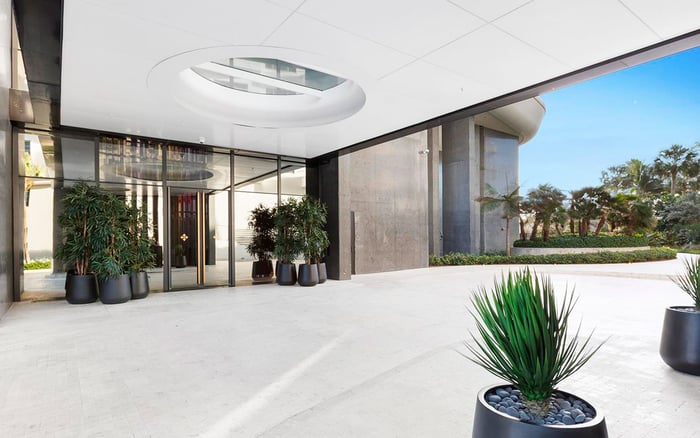
Security belongs in the same conversation. Planning should address the full route from building arrival to in-unit display: lobby movement, staff access, visitor protocols, cameras, alarms, private storage, and the transition between public-facing hospitality and truly private rooms. The goal is not visible fortification. The goal is discreet control.
A collector should review condominium rules with gallery use in mind. Private viewings, receptions, contractor access, art-handler deliveries, recurring curator visits, and installation windows may each be subject to building procedures. The question is not only whether these activities are allowed, but whether they can be executed with enough discretion and predictability for valuable works.
Movement logistics are equally important. Elevator dimensions, loading procedures, service-corridor access, parking logistics, certificates of insurance, and scheduling restrictions should be understood before the buyer acquires or relocates major works. A painting that fits beautifully on a wall may still be impractical if it cannot be moved through the building safely and without excessive disruption.
Insurance review should be coordinated early. The carrier may care about alarms, storage, flood exposure, transit procedures, staff protocols, and documentation. Because Faena House Miami Beach is oceanfront in Miami Beach, resilience planning should be part of the file: storm procedures, emergency power, water intrusion risk, evacuation protocols for art, and the practical timing of moving works before a major weather event. This is where Miami Beach romance meets operational reality.
Private-gallery buyers should study association financial health, reserve planning, maintenance schedules, and any expected façade or mechanical, electrical, and plumbing work. Even well-managed buildings require ongoing care, and building projects can affect vibration, access, air quality, service elevators, noise, and the timing of in-unit improvements. For a household with art, these are not inconveniences. They can become collection-management issues.
The buyer’s contract should preserve sufficient time for technical inspections by art-conservation, lighting, HVAC, security, insurance, and structural professionals. If the plan includes heavier works, specialized mounts, or any intervention affecting walls, ceilings, lighting, or mechanical performance, the review period must be realistic. A luxury closing timeline that works for a furnished residence may be too compressed for a residence intended to function as a private gallery.
Customization can enhance a residence when it is intelligent, reversible, and beautifully executed. It can also narrow the buyer pool when it feels too specific. The private-gallery layout should therefore be evaluated not only for display quality, but for resale liquidity. Future buyers may value museum-quality lighting, refined wall runs, and quiet security infrastructure, but they may resist overbuilt systems that limit conventional living.
The best strategy is restraint: create display capability without making every room subordinate to the collection. Preserve generous living areas, protect sightlines, and avoid interventions that make the home feel like a public institution. Terrace living, family privacy, and entertaining should remain intact. The practical vocabulary for this purchase is simple: Miami Beach setting, oceanfront exposure, terrace behavior, Art Basel season logistics, and resale discipline.
Is every unit at Faena House Miami Beach suitable for a private-gallery layout? No. Each unit should be evaluated individually for floor plan, wall runs, light exposure, climate control, access, and building procedures.
What should a buyer study first? Start with circulation. The plan should separate daily living, display zones, guest movement, storage, and service access as cleanly as possible.
Why is glazing such a major issue for art? Generous glass can introduce daylight, glare, UV exposure, and thermal load. Those conditions should be modeled before placing sensitive works.
Do the terraces help or complicate art display? They can enhance the residence and soften light, but terrace transitions may affect humidity and temperature near art zones.
Which specialists should be involved before closing? Consider art-conservation, HVAC, lighting, security, insurance, and structural professionals, especially for valuable or sensitive works.
Should condominium rules be reviewed for private viewings? Yes. Rules may affect receptions, deliveries, contractor access, service elevators, visitor protocols, and recurring curator visits.
What logistics matter for large works? Elevator dimensions, loading routes, parking, service corridors, scheduling procedures, and insurance requirements should all be confirmed.
How should storm planning be handled? Buyers should review emergency power, water intrusion risk, storm procedures, and evacuation options for artworks before installing a collection.
Can gallery infrastructure help resale? Yes, if it is discreet, flexible, and well executed. Overly specific improvements may reduce appeal to non-collector buyers.
What is the main due-diligence principle? Treat the residence as a luxury home first and a collection platform second, then verify that both uses can coexist without compromise.
For a tailored shortlist and next-step guidance, connect with MILLION.
If branded residences are on your mind — as a home or as an allocation — we would be glad to share what we are seeing, privately.
Begin a quiet conversation