For South Florida luxury buyers, “new” is only the beginning. This editorial outlines how to evaluate coastal structural integrity and elevation strategy in a way that respects engineering realities, insurance logic, and long-term resale.
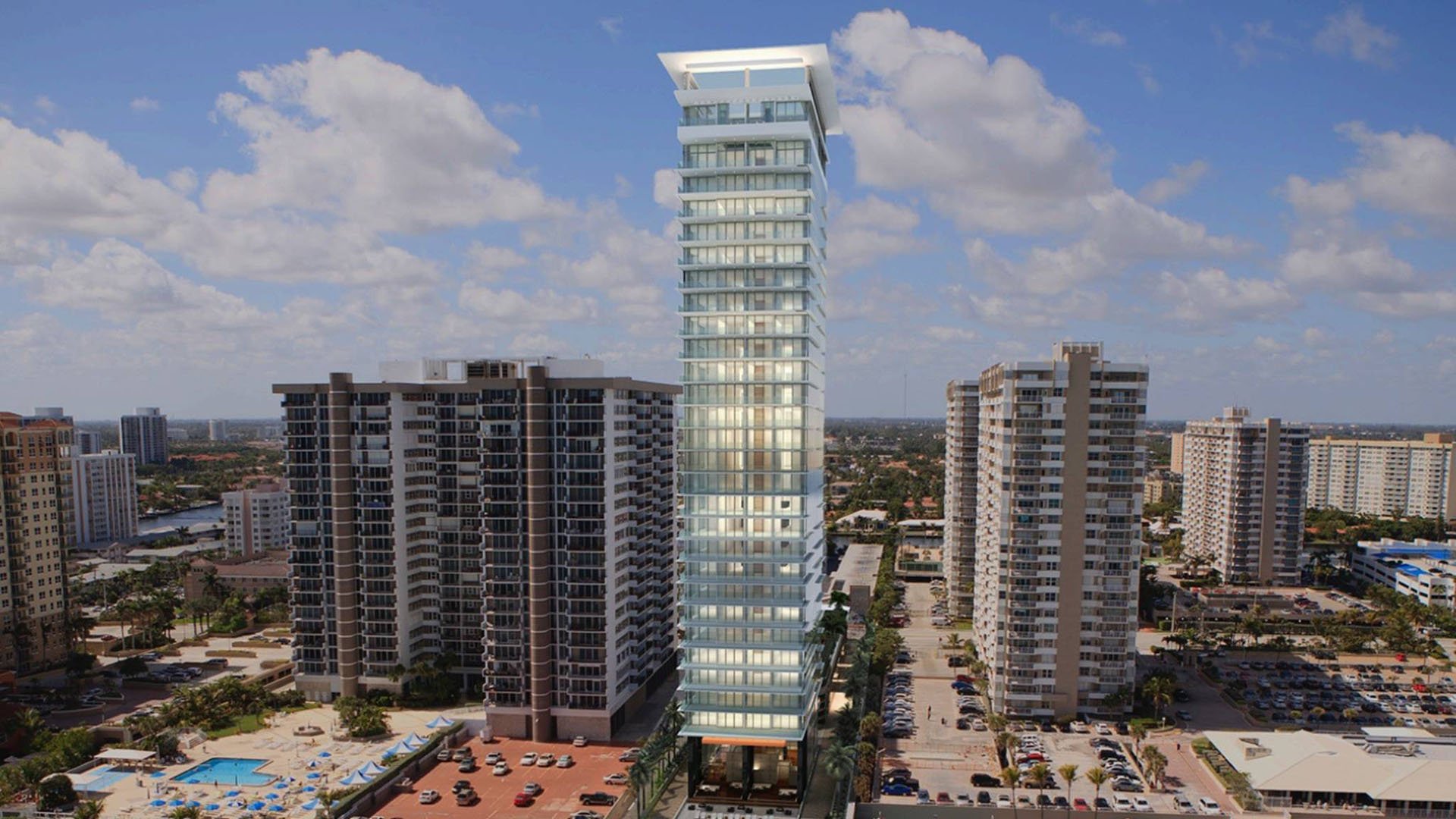
New coastal construction can look flawless on day one-and perform very differently over decades. In South Florida, the real separator is rarely the lobby finish package or the brand name on the porte cochere. It’s whether the structural design, elevation decisions, and water-management plan were conceived as one integrated system.
For a luxury buyer, this is less about fear and more about calibration. A well-sited, properly elevated building can mean fewer disruptions after heavy rain, less salt-driven deterioration over time, and a smoother ownership experience when lenders, insurers, and future buyers ask predictable questions.
Consider this a buyer-oriented framework for evaluating integrity and elevation-without getting lost in jargon or leaning on broad neighborhood assumptions.
“Elevation” is often treated as a single number. In reality, you’re evaluating a sequence of interlocking decisions: site benchmarks, finished floor elevations, garage and entry thresholds, and how the property sheds water when conditions are worst.
Key items to ask the developer, seller, or building representative to clarify:
and how it is referenced. Coastal projects may cite different vertical datums; you want clarity so comparisons are meaningful.
for residential levels and critical equipment rooms. A beautiful ground-floor amenity level is less reassuring if essential systems sit at vulnerable thresholds.
Lobby, garage, and driveway thresholds, including where water would go if it overtops the curb line. This is where many day-to-day issues surface first.
As-built verification
(post-construction) rather than only design intent. Even the most sophisticated drawings still require field confirmation.
In practice, elevation strategy is also architectural. Many of today’s coastal towers rely on podiums, raised amenity decks, and tightly controlled ground-floor programming. In Brickell, for example, buyers touring 2200 Brickell often focus on design and lifestyle-yet it is just as valuable to understand how the building handles ground-plane transitions, stormwater routing, and the placement of critical systems.
In salt air, “strong” is not simply thicker concrete or heavier rebar. Long-term integrity comes from aligned choices across the structural system, corrosion resistance, waterproofing, detailing, inspection access, and maintenance culture.
When evaluating a new coastal building, keep the focus on fundamentals:
Ask whether the building relies on a robust combination of shear walls, moment frames, and core systems suited to high-wind regions. The objective is predictable behavior-not a value-engineered minimum.
Coastal concrete is about permeability control and detailing that limits chloride intrusion. You don’t need mix designs to be an informed buyer, but you should listen for specificity rather than vague assurances.
Stainless components, coatings, cathodic approaches, and thoughtful cover depths can all be part of the story. What matters is that the project team treats corrosion as constant pressure, not a remote possibility.
Water intrusion is often an envelope issue before it becomes a structural one. Ask about window/curtain wall testing, pressure ratings, and how sealant cycles are planned.
Oceanfront properties intensify these considerations. Touring Miami Beach, the conversation around 57 Ocean Miami Beach naturally centers on privacy and the shoreline experience. Pair that with direct questions about how the envelope is designed to resist wind-driven rain and salt exposure-and how maintenance access is built into the facade strategy.
Sophisticated coastal projects are, in many ways, hydrologic designs wrapped in luxury. Heavy rainfall and high tides reveal how a site receives, stores, and releases water. Even a well-elevated residential floor can be undermined by poor surface drainage that traps water in garages, loading areas, and service corridors.
A practical walk-through mindset:
Subtle grading away from entrances, well-placed trench drains, and protected ramp transitions aren’t glamorous, but they matter.
If the site uses pumps, understand redundancy and power continuity assumptions.
Bioswales, permeable surfaces, and controlled planting beds can be both aesthetic and functional.
In boutique coastal settings, ground-plane decisions can be especially legible. A project like 2000 Ocean Hallandale Beach is a reminder that even at an intimate scale, drainage planning and threshold management are central to day-to-day resilience.
Buyers often ask whether their unit is “high enough,” then stop there. A more sophisticated question is: Are the building’s critical systems located and protected in a way that supports continuous operation?
Focus on these systems and locations:
Where are they, and how are they protected from water intrusion?
Are they positioned with flooding scenarios in mind?
How is water kept out of shafts and control areas?
Are paths of travel designed to stay functional when the ground plane is stressed?
In high-rise districts like Downtown and Brickell-where signature towers shape the skyline-it’s worth remembering that glamour is vertical, but operations often live at the base. If you are evaluating a branded supertall concept such as 888 Brickell by Dolce & Gabbana, pair the design narrative with a simple operational lens: how the tower anticipates maintenance, equipment access, and continuity during adverse weather.
You don’t need to be an engineer to ask for coherent documentation. High-quality teams are accustomed to sophisticated buyers and should be able to respond in a professional, organized way.
Reasonable requests include:
that identifies site benchmarks and how elevations are referenced.
when applicable to the building type and permitting pathway, including elevation-related records used in approvals.
that explains soil conditions and the foundation concept in plain language.
describing the primary structural system and wind design intent at a high level.
and waterproofing approach.
The goal isn’t to litigate design. It’s to confirm that the project’s elevation and structural decisions are explicit, consistent, and professionally defensible.
Two nearby properties can experience water very differently. Street crown, adjacent basins, canal connections, and roadway outfalls can influence how quickly water accumulates-and how fast it clears.
A few disciplined habits help:
Visit after heavy rain, if possible, and observe how water moves around curb lines and ramps.
Notice the relationship between the building entry and the street. A dramatic drop or a flat approach can signal different drainage challenges.
Ask where service access and deliveries occur. Back-of-house areas often reveal the building’s real relationship with water.
This is also where local knowledge matters. Buyers comparing Miami Beach, Hallandale, Sunny Isles, and Brickell should avoid treating “coastal” as a monolith. Each micro-context has different exposure patterns and infrastructure relationships.
In luxury real estate, confident language is easy to find. What you want is specific language.
Green flags include:
Clear differentiation between design elevations and as-built confirmations.
Straight answers about where critical systems are located.
A maintenance-forward mindset: access, inspection, sealant cycles, and facade service.
Willingness to describe how the building behaves under stress, not just how it looks on a sunny day.
Red flags include:
Overreliance on generic phrases like “built to code” without context.
Evasive answers about equipment placement or water management.
A sales narrative that treats elevation as a marketing badge rather than an operational choice.
Structural integrity and elevation levels aren’t abstract technicalities. They shape how a property ages, how it performs in unpleasant weather, and how confidently it trades in the future.
When you evaluate new coastal construction, think like a steward. Ask where the building meets the ground, where the systems live, and how the structure and envelope were designed for salt, wind, and water as constants-not exceptions.
What is “finished floor elevation” and why does it matter? It is the elevation of occupied floors relative to a vertical benchmark, and it helps indicate flood exposure and operational continuity.
Is living on a higher floor enough protection from flooding? It helps for your unit, but building operations can still be affected if lobbies, garages, or equipment rooms take on water.
What should I ask about the building’s critical equipment? Ask where electrical gear, pumps, and generator systems are located and how they are protected from water intrusion.
Does “built to code” guarantee long-term durability near the ocean? No; durability depends on detailing, corrosion protection, envelope strategy, and maintenance planning beyond minimum requirements.
How can I evaluate drainage during a tour? Look for grading away from entrances, protected ramp transitions, and visible drainage elements that direct water to collection points.
What is the biggest long-term structural threat on the coast? Salt-driven corrosion and water intrusion are persistent pressures that can degrade materials if not addressed proactively.
Should I request engineering documents as a buyer? Yes, at a high level: survey references, elevation-related records, geotechnical summaries, and a structural narrative are reasonable.
How important is the facade system to “structural integrity”? Very; many performance issues begin as envelope failures that let water reach components that are harder to repair.
Can two buildings on the same beach have different risk profiles? Absolutely; micro-topography, threshold design, and equipment placement can differ meaningfully even within one area.
What is the simplest way to compare two new coastal projects? Compare their elevation strategy, critical-system locations, and water-management approach, not just the amenity list.
For a confidential assessment and a building-by-building shortlist, connect with MILLION Luxury.
If branded residences are on your mind — as a home or as an allocation — we would be glad to share what we are seeing, privately.
Begin a quiet conversation