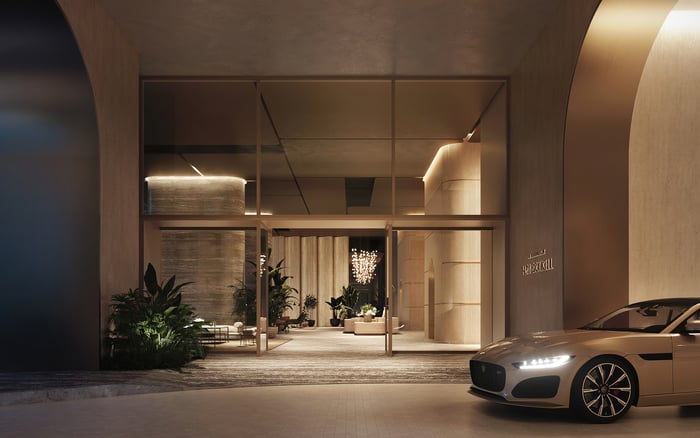
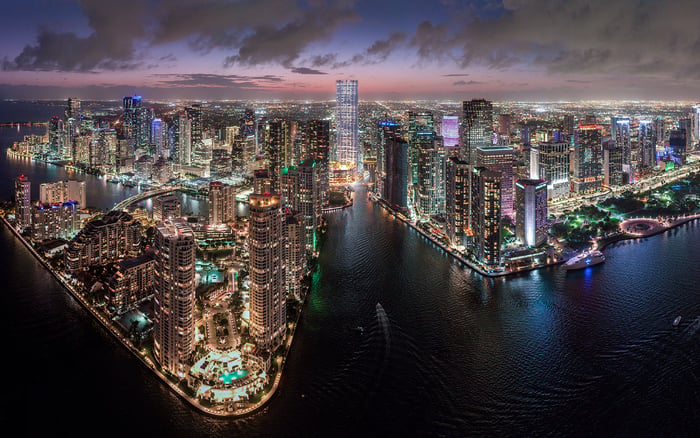
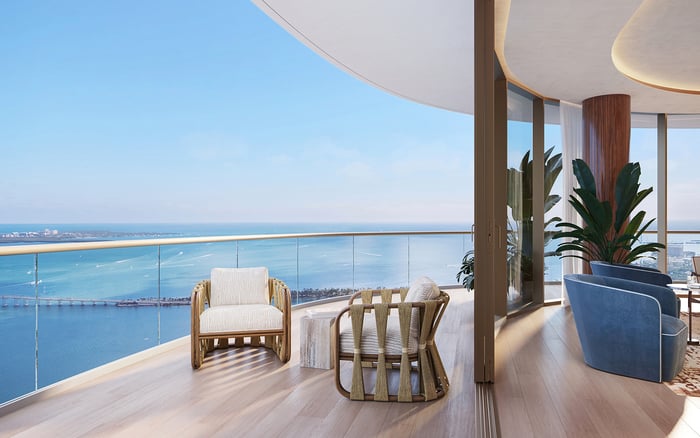
A buyer-focused look at Colette Residences Brickell and the larger question of whether Brickell’s luxury market is maturing into a true long-term residential neighborhood.
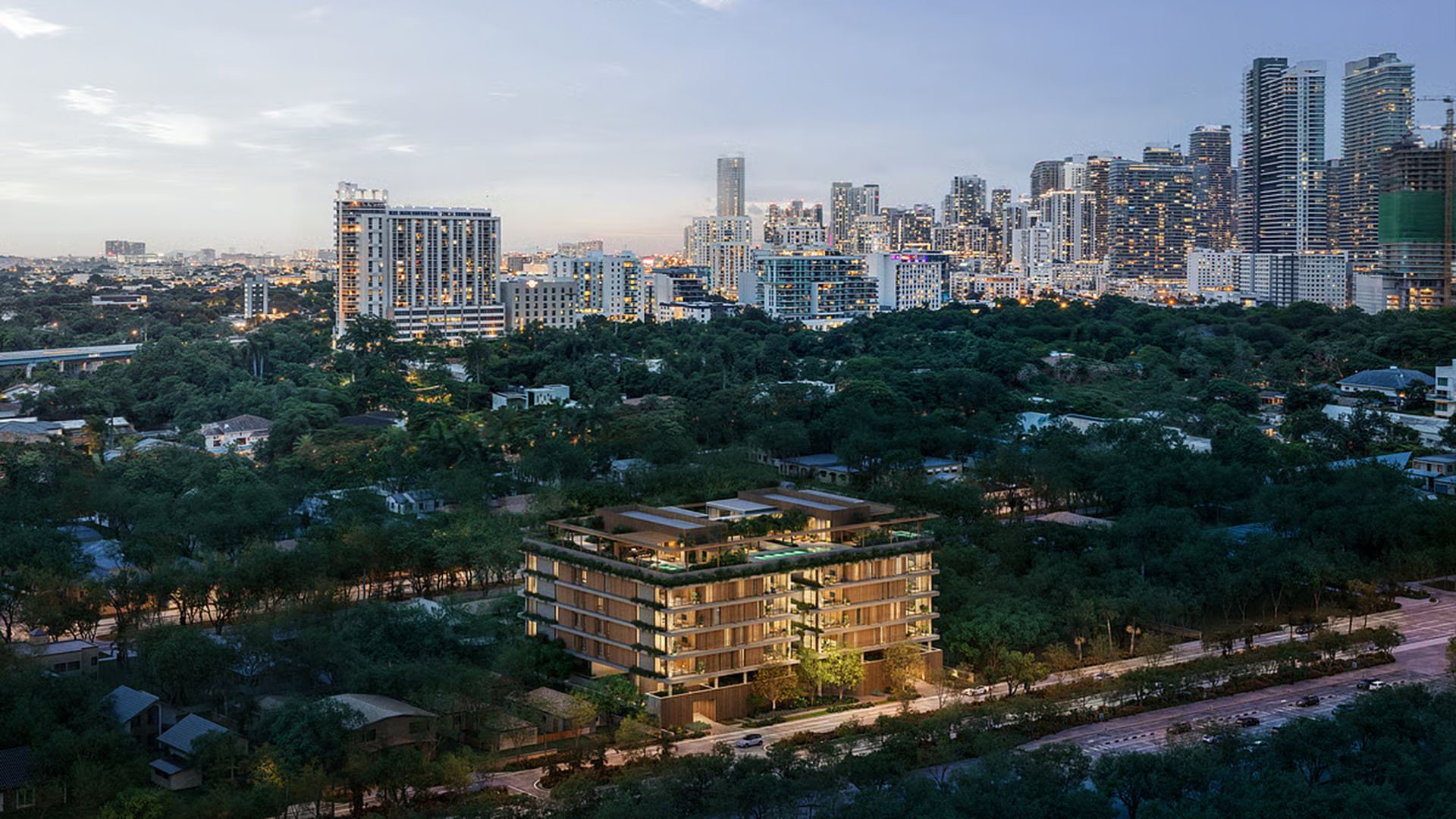
Brickell has long known how to sell a view, a lobby, a skyline address, and the currency of proximity. For years, that was enough. The neighborhood could function as a high-performance real estate market even when many owners treated it as a foothold, a second base, or a portfolio asset. The newer question is more exacting: can Brickell also work beautifully as a place to live for many years?
That is where Colette Residences Brickell becomes a useful focal point. The project sits within a broader shift in buyer psychology. Affluent purchasers still care about location, design language, and status, but they are also asking quieter, more practical questions. Will the residence hold up to daily life? Is there enough privacy to decompress after work? Can a household live here full time without feeling as though it is borrowing a hotel suite?
This is not a rejection of Brickell’s energy. It is an attempt to refine it. Long-term livability in Brickell depends on whether luxury buildings can absorb the intensity of the district and return something more composed to the resident.
The most important way to read Colette Residences Brickell is not as another entry in the race for spectacle. Its relevance lies in whether it can participate in the primary-home conversation. A residence intended for occasional occupancy can be forgiven for small compromises. A residence intended for years of daily use cannot.
For long-horizon buyers, the checklist changes. Floor-plan functionality matters more than photogenic drama. Storage becomes a serious luxury rather than a footnote. Acoustic performance, elevator experience, privacy between residences, service consistency, package handling, guest access, and ease of daily arrival all enter the value equation. These are the details that separate a beautiful apartment from a sustainable home.
Brickell’s newest projects are increasingly judged through this lens. 2200 Brickell, Cipriani Residences Brickell, and other current offerings show how varied the district’s residential language has become. Some buyers want the branded-service world. Others want something more discreet. In either case, the question is no longer simply whether the building feels luxurious on arrival. It is whether it remains comfortable on an ordinary Tuesday.
Colette Residences Brickell fits naturally into the discussion around boutique luxury living in a district known for density and amenity-forward towers. The word boutique should not be reduced to size alone. In a serious residential context, it can imply a different relationship between resident and building: fewer frictions, a calmer rhythm, more legible circulation, and a stronger sense that the property is organized around private life rather than public theater.
That distinction matters in Brickell. The neighborhood’s appeal is inseparable from movement. Restaurants, offices, waterfront corridors, retail, and transit all contribute to the area’s urban charge. Yet the more animated Brickell becomes, the more valuable residential calm becomes. A building that can create a threshold between the city and the home gives owners something rare: access without exhaustion.
This is where Colette’s positioning matters. Without leaning on unsupported specifics, it can be considered part of a residential wave in which buyers are looking for intimacy and durability as much as presence. In the same market where Baccarat Residences Brickell and The Residences at 1428 Brickell speak to distinctive luxury identities, Colette’s relevance is tied to the buyer who asks how a building will feel after the first season of ownership.
No Brickell residence can solve livability alone. A well-planned building can make daily life easier, but long-term comfort also depends on the neighborhood around it. The serious buyer should evaluate mobility, walkability, proximity to everyday retail, access to green space, childcare options, schools, and the practical experience of moving through the district at different times of day.
This is where Brickell’s strength and tension coexist. Its density supports convenience. A resident can often accomplish more on foot than in many luxury enclaves built around cars and gates. At the same time, density requires careful building selection. The difference between a residence that feels connected and one that feels overexposed can come down to entry sequence, orientation, service management, and the way private spaces are shielded from the city’s pressure.
For a multi-year owner, these are not minor preferences. They affect sleep, routine, entertaining, family logistics, and resale appeal. A pied-à-terre buyer may prioritize ease of arrival and dramatic views. A primary resident may want all of that, but also pantry depth, laundry practicality, a place for luggage, a calm bedroom, and a staff experience that does not make daily life feel transactional.
The presence of Colette Residences Brickell in the market helps illustrate a larger evolution. Brickell is not only adding luxury inventory. It is being asked to prove that luxury can be livable, not merely impressive. That distinction is becoming central to how sophisticated buyers assess value.
In earlier cycles, a strong Brickell address could function largely as a statement of access. Today, buyers are more disciplined. They compare the psychology of living in a tower against the privacy of a boutique setting. They examine whether amenity programming supports actual habits or simply photographs well. They ask whether the building feels like a community or a transient collection of keys.
The comparison set is widening. Una Residences Brickell underscores the waterfront and design-driven side of the neighborhood’s identity, while other Brickell projects speak to service, architecture, or branded lifestyle. Colette’s role in that conversation is to focus attention on what may be the next luxury benchmark: the ability to make Brickell feel residential over time.
For the right buyer, Colette Residences Brickell should be evaluated less as a headline and more as a daily-life proposition. The most relevant questions are not only about price trajectory or market timing. They are about fit.
Does the building concept support privacy? Does the residence allow for real storage and functional furniture planning? Does the arrival experience feel composed? Are services calibrated for people who live there year-round? Is the surrounding area convenient for the household’s actual routine, not just its weekend itinerary?
These questions do not diminish Brickell’s investment appeal. They deepen it. The most resilient luxury assets are often those that satisfy both the capital buyer and the resident. If Colette can be understood through that dual standard, it becomes part of a more mature Brickell narrative: one in which the neighborhood is judged not only by how it looks from afar, but by how it lives from within.
Why is Colette Residences Brickell relevant to long-term livability? It gives buyers a project-level lens for assessing whether Brickell can support full-time luxury living, not only investment ownership or occasional use.
Is Brickell mainly a second-home market? Brickell attracts second-home and investment-oriented buyers, but the current conversation increasingly includes primary residents seeking daily convenience and residential stability.
What should buyers examine first at Colette Residences Brickell? They should focus on floor-plan usefulness, privacy, storage, service quality, noise control, and the ease of daily arrival and departure.
Does boutique luxury matter in Brickell? Boutique positioning can matter when buyers want a calmer residential rhythm within a dense, highly active urban district.
Can amenities alone determine long-term livability? No. Amenities may enhance ownership, but day-to-day comfort depends on layout, building operations, privacy, and neighborhood convenience.
How important is walkability for Brickell buyers? Walkability is central because long-term residents often value access to retail, dining, services, parks, and transit without relying on a car for every errand.
Should families consider Brickell for long-term living? They can, but they should carefully evaluate schools, childcare, outdoor space, household storage, and the practical rhythm of the immediate location.
How does investment value connect to livability? A residence that works well for daily living may appeal to a broader future buyer pool than one designed mainly for occasional occupancy.
Is new construction automatically more livable? Not automatically. New construction can offer modern systems and services, but livability depends on execution, planning, and how the building handles daily use.
What is the central question for Colette Residences Brickell buyers? The central question is whether the residence supports a real multi-year lifestyle while still delivering the prestige and convenience expected in Brickell.
When you're ready to tour or underwrite the options, connect with MILLION.
If branded residences are on your mind — as a home or as an allocation — we would be glad to share what we are seeing, privately.
Begin a quiet conversation