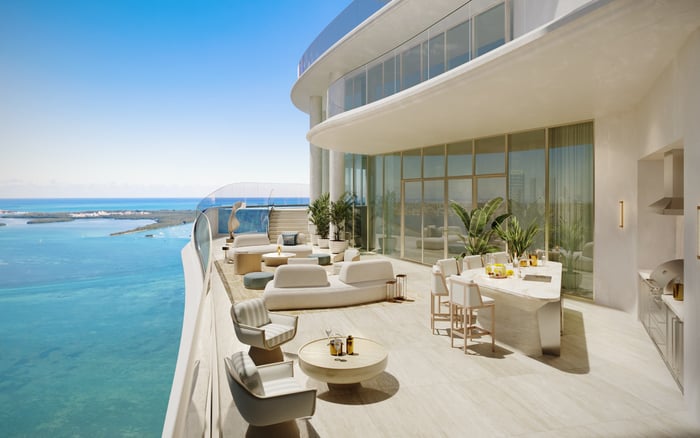
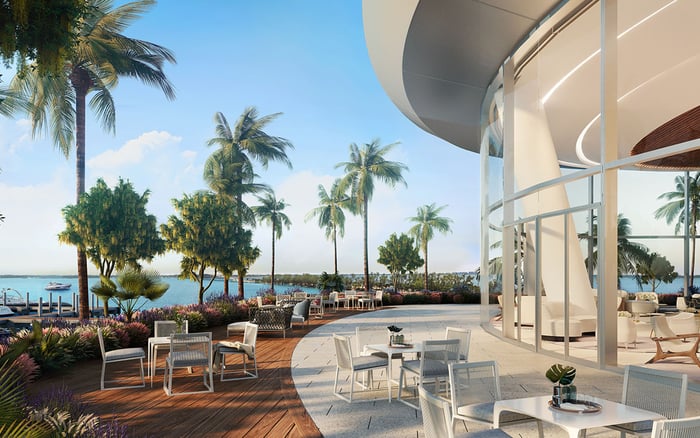
A buyer-focused editorial on how households considering Cipriani Residences Brickell should evaluate beach-chair service, off-site beach access, and the real cost of convenience in Miami.
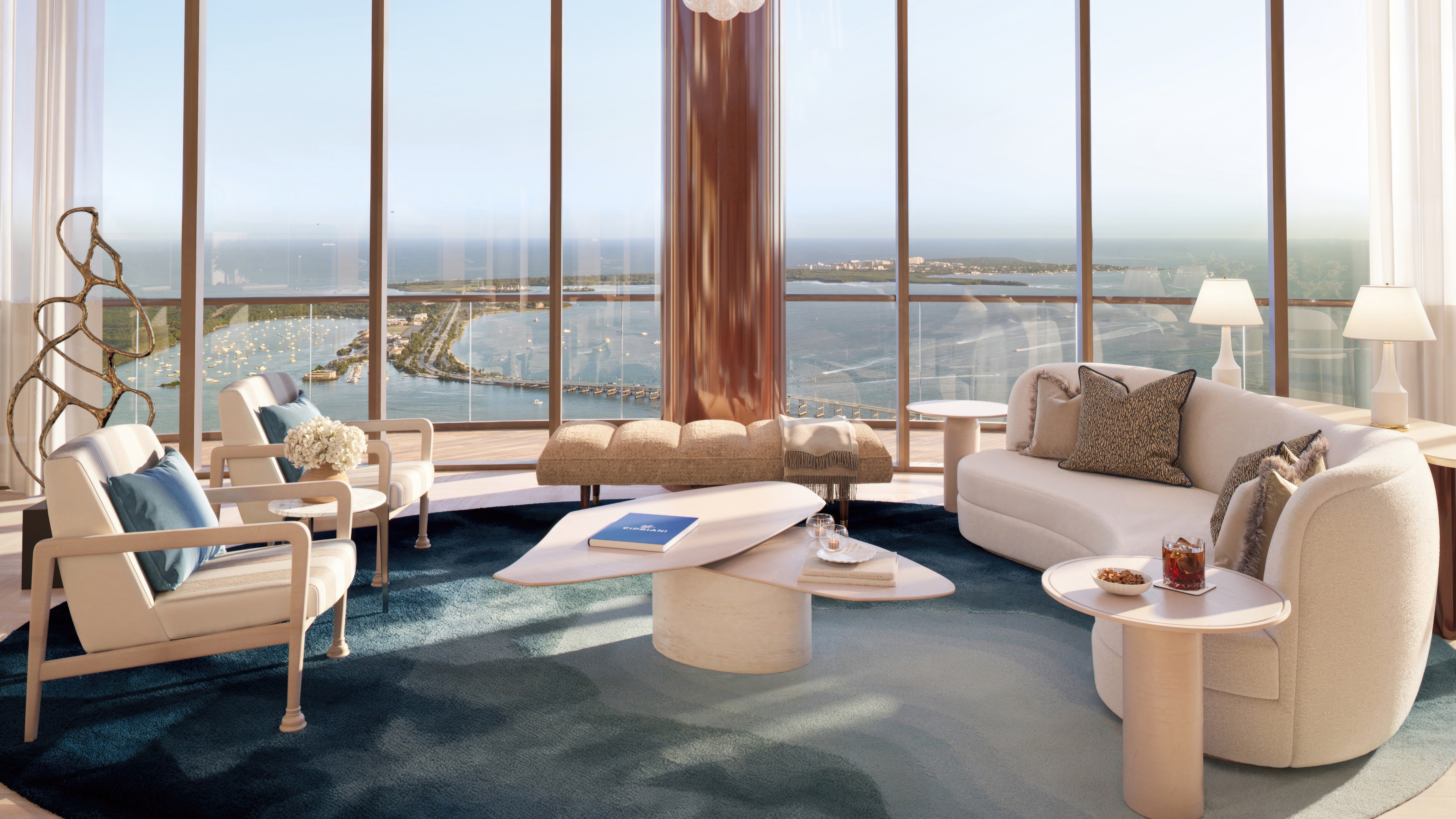
For households considering Cipriani Residences Brickell, beach-chair service is not a minor amenity footnote. It is a practical test of how a family, couple, or seasonal owner expects Miami to function day to day. A Brickell residence can deliver urban convenience, walkability, dining access, and a hospitality-driven rhythm, but it does not automatically create the sand-and-sea experience associated with Miami Beach.
That distinction matters. Many luxury buyers want both versions of Miami: a sophisticated city base and effortless beach days. The issue is not whether one is better than the other. It is whether the chosen residence makes the movement between them elegant enough for the household using it.
At Cipriani Residences Brickell, buyers should frame beach-chair service as part of a broader lifestyle audit. What is directly available within the residential environment? What requires an off-site arrangement? What depends on private clubs, hotel beach programs, outside operators, or personal planning? The answer determines whether beach access feels like a pleasure or a project.
Brickell is one of Miami’s defining urban luxury districts. Its appeal is rooted in vertical living, city energy, restaurants, financial-center convenience, and a polished residential experience. For many households, that is precisely the point. The neighborhood can support a highly efficient Miami life without requiring a car for every errand or evening plan.
But a Brickell address should not be confused with beachfront access. The beach is part of the Miami lifestyle, yet it is not physically attached to every Miami luxury product. Buyers who understand this distinction early tend to make cleaner decisions. They ask not, “Does this feel like Miami?” but “Which version of Miami do we want to live most often?”
Cipriani Residences Brickell belongs in the urban Miami luxury-residential conversation. It should be assessed as a Brickell product first, with beach days evaluated as a separate layer of service and logistics. That is especially important for households expecting a resort-style beach routine rather than occasional weekend visits.
The first question is simple: what does the residence provide directly, and what must be arranged elsewhere? Buyers should avoid assuming that a hospitality name, a luxury lobby, or a service culture automatically includes beach-chair privileges. Unless a specific beach program is clearly provided, the prudent position is to verify beach service separately.
That verification should be practical. Is there a defined beach-access solution? Are chairs, umbrellas, towels, reservations, or attendants included? If not, can the household arrange those services consistently through a private club, hotel beach program, or third-party operator? The point is not to chase every possible perk. The point is to know whether the desired experience is repeatable.
Repeatability is the luxury standard. A one-off beach day can be arranged almost anywhere in Miami. A frictionless routine is different. It requires reliable booking, predictable travel time, clarity on guests, and a service experience that does not feel improvised each time the family wants to be near the ocean.
Beach-chair service has an obvious financial component, but the hidden cost is time. Travel from Brickell to a beach destination, parking or drop-off coordination, reservation windows, membership rules, guest policies, towel service, lunch planning, and return logistics all shape the real experience.
For a household that visits the beach a few times a season, this may be entirely acceptable. In that case, a Brickell residence can deliver the preferred home base, while beach days are treated as curated outings. The household enjoys the city during the week and selects beach moments deliberately.
For a family seeking a routine, frictionless beach-club lifestyle, the standard is higher. The question becomes whether off-site service can be made as convenient as an on-site amenity. If every beach day requires calls, timing, transport, and contingency planning, the experience may not align with the buyer’s expectations, even if the residence itself is exceptional.
Within the wider Brickell conversation, buyers may also be weighing the appeal of St. Regis® Residences Brickell, Baccarat Residences Brickell, The Residences at 1428 Brickell, and Una Residences Brickell. These names sit inside the same broader buyer psychology: the desire for elevated service in an urban Miami setting.
The important comparison is not only architecture, branding, or views. It is operational fit. How does each residence support the way the household actually lives? For some, the priority is walkability, dining, and a polished city routine. For others, it is the ability to move from home to beach with almost no friction. Those are different definitions of luxury.
Cipriani Residences Brickell should therefore be evaluated with the same discipline buyers bring to floor plans and exposures. Beach access is not merely a lifestyle phrase. It is a set of steps, costs, and service expectations that either integrates smoothly with a Brickell life or requires a separate plan.
The most useful exercise is to divide buyers into two groups. The first group wants occasional beach access. They may enjoy Miami Beach on selected weekends, host guests a few times a year, or arrange beach outings around holidays and school breaks. For them, Brickell’s urban convenience may far outweigh the need for direct sand service.
The second group wants a regular beach-club rhythm. They imagine chairs waiting, towels ready, refreshments nearby, and children or guests handled with minimal coordination. For them, the absence of a directly included beach service can feel meaningful, because the desired lifestyle depends on consistency.
Neither profile is more luxurious. The difference is frequency. A household that rarely uses the beach should not overpay emotionally for an amenity it will seldom need. A household that considers beach service central to Miami life should not minimize the importance of logistics simply because the residence feels compelling.
Before committing, households should ask their advisor to clarify the service boundary. What is residential service? What is beach service? Where does the building’s responsibility end, and where does the owner’s personal arrangement begin?
They should also map a realistic beach day. Choose a likely destination, imagine a normal Saturday, and include travel, chair setup, lunch, guests, children, return timing, and weather changes. If the plan still feels graceful, the residence may fit beautifully. If the plan feels complicated before ownership even begins, that is useful information.
Pool access and other on-site leisure amenities can also influence the equation, but they do not replace the ocean for buyers who specifically want sand, surf, and full-service beach attendance. A strong urban amenity program may reduce the need for frequent beach trips, while a beach-focused household may still require an external solution.
For a second-home buyer, the question can be even sharper. Limited time in Miami makes convenience more valuable. If every visit is short, the household may prefer arrangements that are easy to activate and consistent enough for guests who expect a seamless stay.
Cipriani Residences Brickell should be viewed through the lens of urban hospitality-style living. Its Brickell context is central to the value proposition. The buyer should not expect it to function as a beachfront residence unless a verified beach-service program clearly supports that expectation.
Instead, the strongest approach is to pair enthusiasm with precision. Love the city life, but audit the beach life. Appreciate the brand environment, but confirm the practical access. Consider the residence as the center of a Miami routine, then decide how often that routine needs to extend to Miami Beach.
For the right household, the answer may be easy: Brickell first, beach by arrangement. For another, the lack of direct beachfront living may be decisive. Both conclusions are legitimate. Luxury real estate works best when the property matches not only the buyer’s taste, but the buyer’s habits.
Is Cipriani Residences Brickell a beachfront property? No. It should be understood as an urban Brickell residence, not a beachfront property.
Why does beach-chair service matter for a Brickell buyer? It reveals how much planning is required to turn a city residence into a full Miami beach lifestyle.
Should buyers assume beach chairs are included? No. Buyers should confirm exactly what is provided directly and what must be arranged off-site.
Can a Brickell household still enjoy Miami Beach easily? Yes, but the experience may require planning around travel, reservations, access, and service logistics.
Who should care most about this issue? Buyers who expect frequent, full-service beach days should evaluate the service plan carefully.
Is occasional beach access different from a beach-club lifestyle? Yes. Occasional access can be arranged as needed, while a beach-club routine demands consistency.
What off-site solutions might households consider? Private clubs, hotel beach programs, and third-party operators may help fill the service gap.
Does urban convenience compensate for no direct beach access? For some buyers, yes. Brickell’s walkability and city rhythm may be more important than beachfront living.
Should pool amenities be treated as a substitute for the beach? Not entirely. A pool may satisfy daily leisure needs, but it is not the same as full beach service.
What is the best buyer mindset for this decision? Treat beach-chair service as a lifestyle-fit question, not a minor amenity detail.
If you'd like a private walkthrough and a curated shortlist, connect with MILLION.
If branded residences are on your mind — as a home or as an allocation — we would be glad to share what we are seeing, privately.
Begin a quiet conversation