The Delmore’s public vision is unusually specific, but only its binding documents can establish what must be delivered and what the developer may substitute.
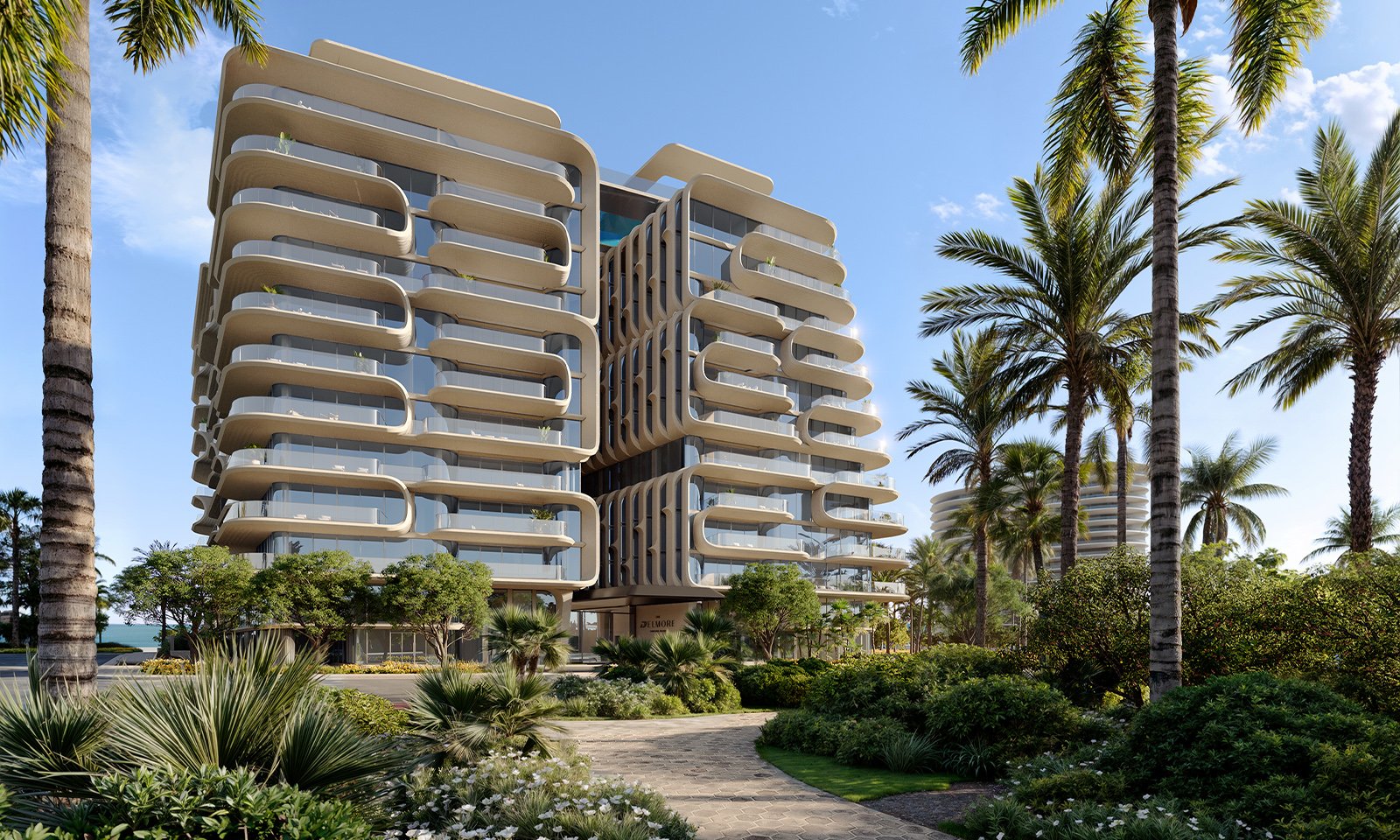
Planned for 8777 Collins Avenue, The Delmore Surfside is conceived as a 12-story oceanfront condominium with just 37 residences. DAMAC International is developing the project through East Oceanside Development, with design by Zaha Hadid Architects and ODP Architects as architect of record. Starting prices have been presented at approximately $15 million.
That combination of scarcity, architecture and location creates a compelling proposition. It does not, however, answer the question that matters most before a buyer signs: which details are firm commitments, and which may change before closing?
The materials available for The Delmore Surfside do not reproduce its purchase agreement or a line-by-line material-substitution provision. The developer’s precise rights therefore cannot be confirmed outside the buyer’s proposed contract, condominium documents and incorporated exhibits. Renderings and project sheets can frame expectations, but the controlling language determines the residence ultimately owed.
At this level, certainty is a luxury feature in its own right.
A substitution provision can address unavailable products, design development, code requirements, construction conditions or other practical changes. The critical issue is not simply whether substitutions are permitted, but how the agreement limits that discretion.
Counsel should identify who decides whether a replacement is “equivalent or better”; whether that standard concerns cost, quality, performance or appearance; and whether the buyer receives notice. A developer-controlled determination provides less certainty than an objective standard tied to a detailed specification exhibit. The agreement should also be examined for any buyer approval right, materiality threshold, termination right or other remedy.
This matters across appliances, stone, flooring, cabinetry, plumbing fixtures, glazing and smart-home systems. A brand named in marketing may not be contractually guaranteed. The same applies to a pictured finish, custom millwork profile or fixture model. The practical rule is straightforward: if a feature materially influenced the purchase decision, ask for it to be identified in the binding schedule.
Published descriptions of the homes are not uniform. The residences have been identified as four- and five-bedroom homes spanning 5,088 to 8,724 square feet, while other launch descriptions have placed them at approximately 7,000 to 10,000 square feet. Those ranges may reflect different inventory, measurement approaches or evolving plans, but buyers should not infer the explanation.
The purchase agreement and floor-plan exhibit should define minimum interior and terrace areas, the measurement method, permissible tolerances and the remedy for a reduction. The review should also distinguish a modest field adjustment from a change that alters room dimensions, circulation, ceiling conditions, structural columns or the relationship between indoor and outdoor space.
This discipline is familiar in Surfside, where buyers may also consider completed or established residences such as Arte Surfside and Fendi Château Residences Surfside. Those alternatives do not determine The Delmore’s obligations, but they can help a buyer articulate which proportions and details carry real value.
The Delmore residences have been identified as unfurnished. Buyers should therefore avoid assuming that furniture, decorative lighting, artwork or accessories shown in a rendering will be included. The specification schedule should distinguish included construction items from staging and illustrative décor.
For finishes, “equivalent” can be too elastic unless the documents define it. A negotiated exhibit can identify the manufacturer, model, material, color range, dimensions and performance characteristics while allowing a narrowly framed replacement if the selected item becomes unavailable. Reasonable variation may be expected in natural materials such as stone, but the contractual standard can still address type, grade, thickness and intended location.
The objective is not to eliminate every construction adjustment. It is to preserve the elements that support the residence’s character, utility and value while allowing the project to proceed when a specified item genuinely cannot be supplied.
The Delmore is presented with unobstructed Atlantic Ocean views. Yet a view representation carries contractual certainty only if it appears in the binding transaction documents with sufficiently clear language. Orientation, glazing and terrace configuration may be documented, but a broad marketing statement should not be treated as a permanent guarantee without contractual support.
The same review applies to parking, storage, private pools, roof decks and amenity access. Buyers should establish whether each item is appurtenant to the unit, assigned under the condominium documents, licensed for use or retained within developer or association control. Those distinctions affect durability and transferability.
Nearby The Surf Club Four Seasons Surfside illustrates the broader ultra-premium context in which service, privacy and amenity access help shape ownership expectations. At any property, however, lifestyle imagery is no substitute for defined legal rights.
The Delmore has been marketed for completion in 2029, while another preconstruction estimate points to delivery around 2030. The agreement should identify the operative delivery framework, permitted extensions, notice mechanics and the buyer’s rights if the outside date is exceeded. A projected completion year is not necessarily a contractual deadline.
An estimated maintenance figure of approximately $2.25 per square foot has also been presented. Buyers should distinguish that estimate from the final association budget and examine what the assessment includes, how reserves are treated and whether the initial budget may change before or after turnover.
Construction progress remains relevant but should not be confused with delivery certainty. Surfside approved a foundation permit in August 2025. Deep-soil mixing, intended to stabilize the site and create a watertight perimeter around the basement, was completed in November 2025, clearing a path toward the master building permit and vertical construction. Given the site’s history as the former Champlain Towers South property, foundation, waterproofing and structural engineering appropriately remain prominent considerations.
Before signing, sophisticated preconstruction buyers should align five core documents: the purchase agreement, declaration, offering statement, floor-plan exhibit and specification schedule. The association budget should be reviewed alongside them, not treated as a secondary item.
The design and architecture promise should then be translated into specific questions. Which brands and models are fixed? Which materials may change? Who determines equivalency? Can layouts or dimensions be revised? What notice is required? Do significant reductions or substitutions create a remedy? Are parking, storage, private outdoor features and amenity rights attached to the residence or subject to later allocation?
Buyers should also request that any personally decisive representation be written into the transaction documents. Depending on the buyer’s priorities, that may involve minimum area, a particular appliance package, stone selection, glazing, cabinetry, terrace configuration, parking or storage. The objective is a clear hierarchy in which negotiated exhibits prevail over general disclaimers where the parties agree.
The Delmore’s boutique scale and architectural ambition warrant close attention. They also justify contractual precision proportionate to the investment. A carefully defined specification package does not diminish the vision; it gives the buyer a reliable standard against which delivery can be evaluated.
For discreet guidance on South Florida’s most exceptional residences, connect with MILLION.
If branded residences are on your mind — as a home or as an allocation — we would be glad to share what we are seeing, privately.
Begin a quiet conversationNo. The purchase agreement and condominium documents are required to determine the developer’s precise rights and limitations.
Not necessarily. The contract should define equivalency and identify who evaluates cost, quality, performance and appearance.
Only if the binding documents identify them and limit substitution. Marketing references alone may not create that commitment.
Public size descriptions differ, so the contract should establish measurements, tolerances and remedies for reductions.
Buyers should not assume so. A public listing describes the residences as unfurnished, and the specification schedule should control.
Only clear language in the binding transaction documents can provide contractual certainty for a represented view or orientation.
Public materials have referenced 2029, while another estimate points to around 2030. Buyers should rely on the agreement’s delivery provisions.
No. The approximately $2.25-per-square-foot figure is an estimate that should be distinguished from the final association budget.
Deep and trench soil mixing was reported complete in November 2025, following foundation permit approval in August 2025.
Review the purchase agreement, declaration, offering statement, floor-plan exhibit, specification schedule and association budget together.