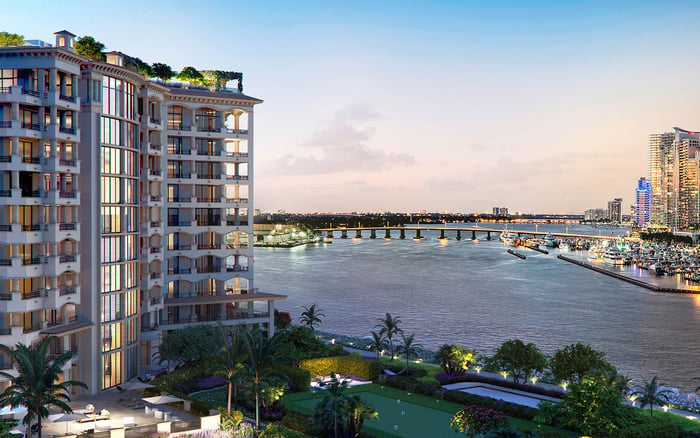
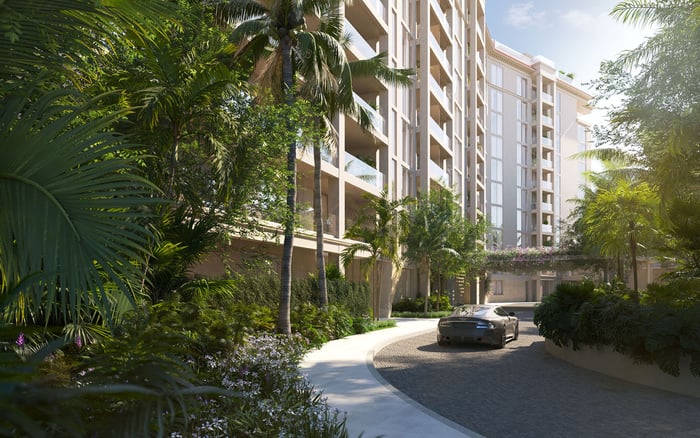
A disciplined Fisher Island purchase review separates leasing rights from marketing permissions, tenant privileges, access protocols, noise exposure, and the cost of maintaining tower and island infrastructure.

Fisher Island may present as a single, controlled residential environment, but it does not operate under one island-wide rental policy. Each condominium or homeowners’ association establishes its own leasing terms within the master community framework. Minimum stays, annual lease limits, approval procedures, marketing rights, and tenant privileges can vary even between neighboring buildings.
That distinction defines the buyer’s assignment. The question is not simply whether Fisher Island permits rentals, but whether the particular association, unit, owner profile, and intended rental pattern align under the documents in effect at closing. This is the essential starting point for evaluating an investment in a full-service setting.
Rental flexibility is only valuable when the documents, access system, and operating model agree.
Buyers comparing established residences such as Palazzo del Sol and Palazzo della Luna should conduct the same tower-specific review for each candidate. Proximity and prestige do not make association policies interchangeable.
An online description stating that Airbnb is allowed is no substitute for the current declaration, bylaws, rules, amendments, application forms, and board policies. Some Fisher Island communities may allow 30-day minimums while others permit daily rentals, but only the applicable association documents and written confirmation can establish the current position.
Ask counsel to determine, in precise terms, whether the tower permits independent Airbnb or VRBO marketing, requires a conventional lease, or limits participation to an approved rental program. Then verify the minimum term, number of leases permitted each year, waiting periods after purchase, application deadlines, fees, deposits, background procedures, occupancy limits, and renewal treatment.
Florida condominium law generally limits the retroactive reach of amendments that prohibit rentals, alter minimum duration, or restrict frequency, applying such changes to consenting owners and later purchasers. The practical result is nuanced. Counsel should determine whether any grandfathering protection attaches to the unit and owner rather than assume that a seller’s treatment transfers automatically or that today’s policy cannot change.
Pending amendments and recent meeting minutes also matter. They can reveal active efforts to tighten short-term rental, guest access, occupancy, or amenity rules before those changes become prominent in sales materials.
Permission to execute a lease does not necessarily give a tenant the same building amenities, club access, transportation privileges, or service experience available to an owner. Obtain a written schedule of tenant rights, charges, exclusions, credential procedures, and guest limits.
FICA rules require property managers to forward completed leases, tenant-registration materials, and association approval forms to Public Safety. Improper rentals may be referred for rules enforcement and can lead to fines, temporary loss of clearance privileges, or restrictions affecting preferred driving lanes and common areas. Certain violations may also be referred to the Miami-Dade County Police Department.
For a buyer also considering a newly delivered ownership experience such as The Residences at Six Fisher Island, rental analysis should remain separate from assumptions about service level. Request the actual tenant operating protocol rather than infer it from the quality of the residence.
Fisher Island is a gated community with controlled access. Residents use credentials, while guests generally require advance clearance before boarding the ferry. Security operates around the clock, and the island is reached principally by secure ferry, private boat or yacht, or helicopter. These features support privacy, but a full-service tower must also manage the daily flow of tenants, overnight guests, housekeepers, contractors, deliveries, movers, and renovation crews.
Map that sequence from arrival to the unit. Confirm who submits each clearance, how far in advance it is required, whether identification is checked again at the building, and whether different users take separate lanes, terminals, entrances, elevators, or service routes. Ask what happens when a guest arrives without clearance, a delivery is delayed, or a tenant attempts to register additional occupants.
The objective is not merely to establish that security exists. It is to understand whether procedures are consistently applied, how exceptions are documented, and whether rental turnover creates friction for owners or staff.
Controlled access does not guarantee acoustic calm. Test the unit’s orientation and vertical position against ferry approaches, loading zones, valet areas, service elevators, pool decks, restaurants, event spaces, housekeeping routes, and renovation activity.
Visit during ferry rushes, service hours, evenings, weekends, and scheduled events. Spend time in the principal bedroom, on terraces, in elevator vestibules, and near the unit entrance. Listen with doors and glazing both open and closed. A serene midday showing may not reveal rolling luggage in a corridor, early housekeeping activity, loading movements, or evening programming.
Request tower rules governing move-ins, deliveries, construction hours, events, pets, occupancy, and guest conduct. Recent complaint logs and board minutes can indicate whether written standards are enforced. Ask for the percentage of units rented, average turnover frequency, peak-season occupancy, and number of recent unauthorized-rental cases. These answers provide context for both noise and staffing demands.
A sophisticated wear analysis divides responsibility into two ledgers. The tower typically maintains assets such as elevators, the lobby, corridors, loading areas, fitness spaces, pools, and parking facilities. The community association maintains substantial shared infrastructure, including the transportation system, private roads, paving, sidewalks, beaches, seawalls, landscaping, drainage, lighting, pools, and recreational facilities.
The master covenants identify the transportation system as Common Area maintained, operated, and insured by the community association for owners’ benefit. Buyers should therefore distinguish wear generated inside the building from costs carried through the broader community structure.
Review tower and community budgets, reserve studies, insurance arrangements, maintenance contracts, and special-assessment history. Look for recurring elevator repairs, corridor refinishing, loading-area damage, pool maintenance, fitness-equipment replacement, and parking-structure work. Ask whether frequent occupancy changes require additional housekeeping, security, valet coverage, credential administration, or after-hours management, and identify which budget absorbs those costs.
When comparing a condominium with an estate format such as The Links Estates at Fisher Island, maintain separate operating-cost models. Focus the comparison on documented obligations, not broad assumptions that one ownership form is inherently quieter or less costly.
The decisive package should include governing documents and amendments, pending rule changes, leasing forms, written association confirmation, counsel’s opinion on grandfathering, tenant amenity terms, access protocols, complaint and enforcement records, budgets, reserves, insurance, maintenance agreements, and assessment history.
A full-service tower warrants a full-service level of diligence. On Fisher Island, rental flexibility, privacy, quiet, and pristine common areas are interconnected operating outcomes. Verify each one at the building level, test it under real conditions, and price any unresolved burden into the acquisition decision.
For discreet guidance on evaluating South Florida’s most distinguished residences, connect with MILLION.
If branded residences are on your mind — as a home or as an allocation — we would be glad to share what we are seeing, privately.
Begin a quiet conversationNo. Each condominium or homeowners’ association sets its own leasing terms within the master community framework.
Review the current declaration, bylaws, rules, amendments, application forms, and board policies, supported by written association confirmation.
Not necessarily. A tower may permit independent marketing, require conventional leases, or restrict owners to an approved rental program.
Florida law generally limits the retroactive effect of certain rental amendments. Condominium counsel should determine whether any grandfathering protection applies.
Not automatically. Tenant amenity, club, transportation, and building privileges should be confirmed separately from the right to lease.
Property managers must forward completed leases, tenant-registration documents, and association approval forms to Public Safety.
Improper rentals may trigger fines, temporary clearance consequences, or restrictions involving preferred lanes and common areas.
Visit during ferry rushes, service hours, evenings, weekends, and events, while testing bedrooms, terraces, corridors, and elevator areas.
Review budgets, reserve studies, insurance, maintenance contracts, assessment history, complaint logs, and board minutes.
The community association maintains, operates, and insures the transportation system as Common Area for owners’ benefit.