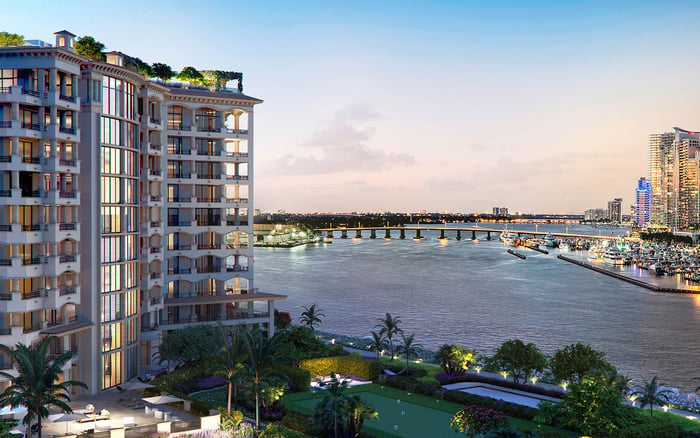
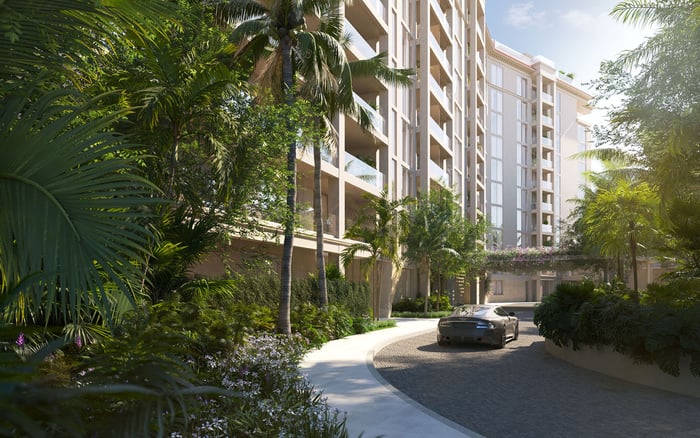
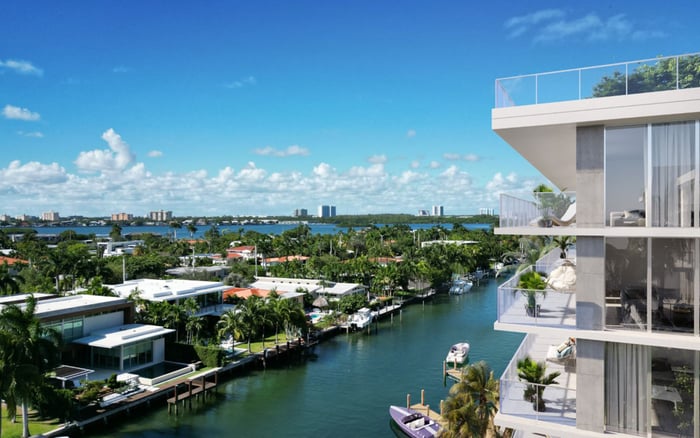
At Palazzo del Sol, storm-risk diligence extends beyond the residence itself. Buyers should test the association deductible, allocation formula, available reserves, and their own HO-6 protection before estimating potential exposure after a major claim.

At Palazzo del Sol, a luxury condominium development on Fisher Island, insurance diligence should extend well beyond confirming that the association carries a master policy. The more consequential questions are how the policy defines a storm, how its deductible is calculated, which property the association insures, and how any unfunded obligation would ultimately be allocated among owners.
Florida condominium master policies commonly carry hurricane deductibles equal to 2% to 5% of the building's insured value. Unlike a fixed household deductible, that percentage generally applies to the building's insured value rather than the value of an individual residence. As insured valuations rise, so can the association-level amount below the policy threshold.
This does not establish the current terms at Palazzo del Sol Fisher Island. The property's present insured value, deductible percentage, reserve balance, and unit-allocation formula must be confirmed through current documents. For a buyer, that distinction is essential: a familiar percentage cannot produce a reliable estimate until the underlying insured value and governing allocation are known.
The headline deductible is only the first layer of an owner's potential storm exposure.
The first calculation is straightforward. If a building is insured for X and carries a 5% named-storm deductible, the association-level deductible is 0.05X. The owner's preliminary share can then be modeled as:
Insured building value × deductible percentage × unit common-expense share
From that result, subtract only the HO-6 loss-assessment coverage that would actually respond under the policy's terms. This is an underwriting exercise, not a prediction of what Palazzo del Sol owners will owe after a claim.
A buyer should also determine whether the relevant deductible applies per occurrence, per building, or per insured location. Minimum and maximum dollar provisions can materially change the arithmetic. Insurance schedules may distinguish a named storm from an unnamed storm, while a separate windstorm deductible commonly differs from the standard property-policy deductible.
Language matters. Florida law defines a hurricane deductible as one that applies to loss caused by a hurricane, but a policy may use broader named-storm or windstorm wording. Those terms are not interchangeable. The declarations and endorsements should be read together to determine which event activates each deductible and whether more than one could apply to a complex loss.
After a covered major claim, the master policy generally pays for covered damage to condominium property above the applicable deductible. The association remains responsible for funding that deductible. If available cash and reserves are insufficient, the board may levy a special assessment, with each owner's share determined under the condominium documents.
Florida law generally treats insurance deductibles for damage to condominium property as common expenses shared by unit owners. An owner may therefore participate in the deductible even when physical damage is concentrated elsewhere in the building. The usual focus is whether condominium property was damaged, not whether a particular residence sustained a direct impact.
An exception can arise when damage results from the negligence or intentional conduct of an owner, tenant, or guest. In that circumstance, uninsured costs may potentially shift toward the responsible owner. The declaration, bylaws, statutory framework, facts of the loss, and applicable coverage all require coordinated review.
Reserves can soften the immediate liquidity demand, but they should not be treated as an automatic shield. Buyers need to know whether funds are available for this purpose, whether their use is restricted, and which other obligations compete for the same capital. Viewed without context, a large reserve balance does not by itself establish the association's ability to absorb a storm deductible.
The association master policy generally covers the building structure and common elements. An owner's HO-6 policy generally covers the residence's interior from the drywall inward, subject to the condominium documents and policy wording. Owners remain responsible for reconstructing property that those documents require them to insure.
This division can create several simultaneous costs after a storm: the owner's share of the master-policy deductible, the owner's HO-6 deductible, uncovered interior damage, and uninsured upgrades or betterments. A finely customized residence may therefore carry exposure not visible in the association's insurance summary alone.
HO-6 loss-assessment coverage is designed to address an owner's share of an association assessment arising from a covered loss to commonly owned property. It is not a blanket promise of reimbursement. Covered-peril requirements, exclusions, deductibles, sublimits, and assessment language determine whether-and how much-the policy pays. Florida unit-owner policies must include at least $2,000 of loss-assessment coverage, but that floor may be modest beside a percentage-based master deductible.
Wind and flood must also be examined independently. A wind claim does not establish flood coverage; the master flood policy, its deductible, and the owner's personal flood protection each require separate review.
A disciplined review begins with the current master-policy declarations, schedules, and endorsements. Confirm the insured values, carrier structure, deductible terminology, percentage, minimums, maximums, and application by occurrence, building, or location. Request clarification when summary certificates compress distinctions contained in the full policy.
Next, read the declaration and bylaws for the common-expense allocation, insurance responsibilities, reconstruction obligations, and any provisions addressing owner negligence. Then examine financial statements, budgets, reserve records, recent assessments, and board materials relevant to insurance funding. The goal is to understand both the legal obligation and the association's capacity to meet it.
Finally, place the buyer's proposed HO-6 policy beside the master policy. Confirm interior replacement limits, treatment of improvements and betterments, wind or hurricane deductibles, loss-assessment limits, covered-peril language, and exclusions. The policies should be evaluated as connected layers rather than as separate purchases.
The same discipline applies across Fisher Island. Buyers considering Palazzo della Luna, The Residences at Six Fisher Island, or The Links Estates at Fisher Island should obtain each property's current documents rather than transfer assumptions from one association to another.
For Investment analysis, deductible exposure is a potential capital call, not merely an insurance detail. For Resale planning, sophisticated buyers may scrutinize the same records, making clear documentation and adequate personal coverage integral to future marketability. A Second-home owner should also plan for claims administration and assessment timing while away from Miami.
Waterfront ownership rewards precision. At Palazzo del Sol, the prudent conclusion is not a speculative assessment figure but a verified range built from the insured value, activated deductible, governing allocation, accessible association funds, and responsive HO-6 coverage. That framework turns an abstract storm clause into a decision-ready ownership analysis.
For confidential guidance on Fisher Island ownership opportunities and property-level diligence, connect with MILLION.
If branded residences are on your mind — as a home or as an allocation — we would be glad to share what we are seeing, privately.
Begin a quiet conversationIt is a deductible calculated as a percentage of the building's insured value rather than an individual residence's value.
Hurricane deductibles commonly range from 2% to 5% of the building's insured value, although the current Palazzo del Sol terms require document review.
No. The current insured value, deductible percentage, reserve balance, and allocation formula must be confirmed from current property documents.
Yes. If available cash or reserves cannot fund the association's obligation, the board may levy a special assessment under the governing allocation.
Yes. Deductibles for damage to condominium property are generally treated as common expenses, even when damage is concentrated in one area.
It generally covers the building structure and common elements, subject to the policy and condominium documents.
It generally covers the unit interior from the drywall inward, while exact responsibilities depend on the policy and condominium documents.
No. Payment depends on covered-peril requirements, limits, exclusions, deductibles, sublimits, and the policy's assessment wording.
No. Wind and flood are separate perils, so the master flood policy and personal flood coverage require independent review.
Review the master-policy declarations and endorsements, declaration and bylaws, association financial and reserve records, and the proposed HO-6 policy.