Private dining can extend a residence into a gracious setting for celebrations, but its value depends on more than design. Buyers comparing Forté on Flagler and Maison D'Or should examine catering access, reservation rights, guest limits, fees, and operating rules in writing before assigning value to these amenities.
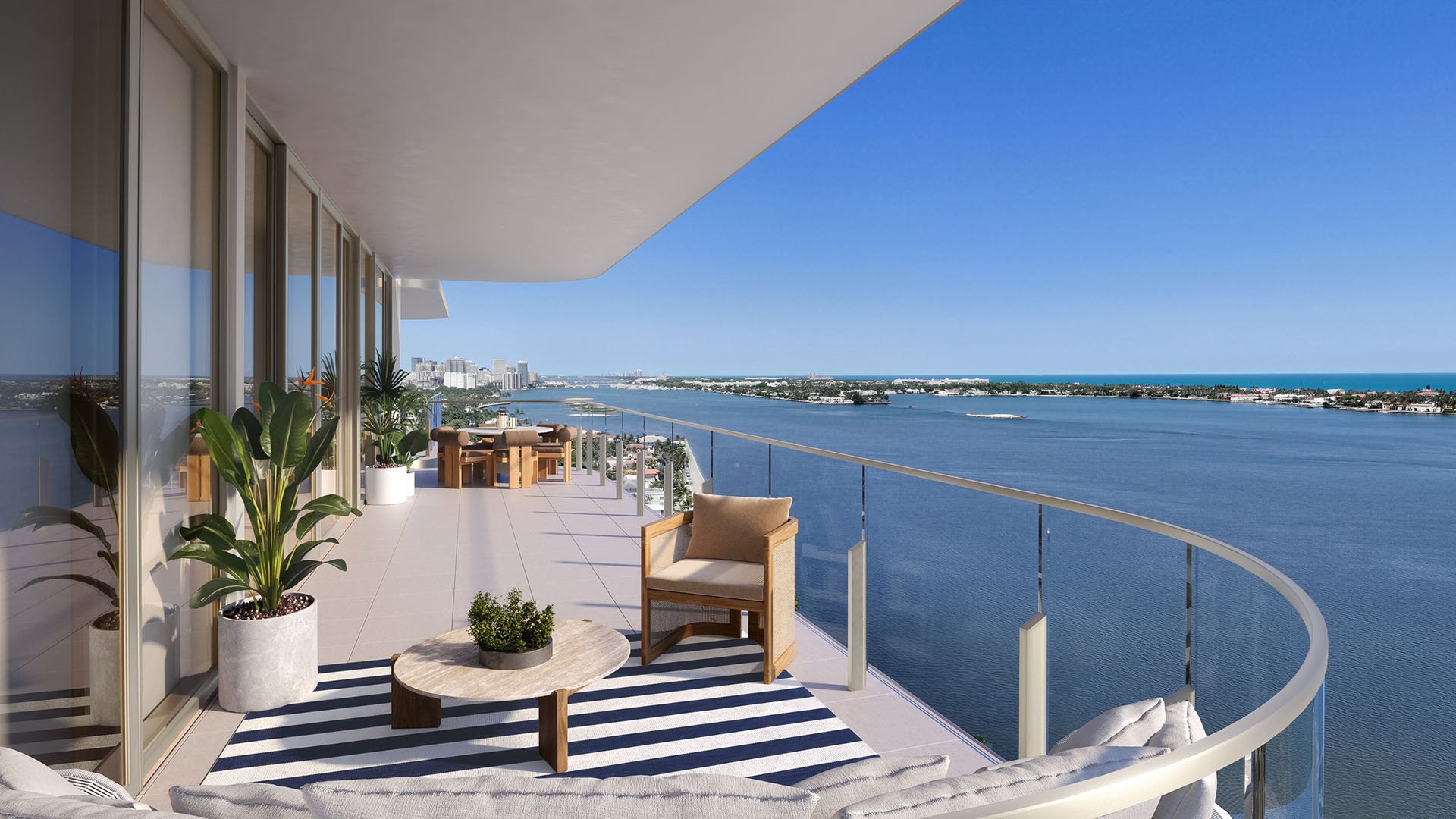
In an ultra-premium condominium, a private dining room can serve as an elegant extension of the residence. It may accommodate a milestone dinner, a family gathering, or an evening with a private chef without requiring the owner to open the home to a larger group. Yet the room’s practical value depends on the rules governing its use.
That distinction is particularly relevant for buyers comparing Forté on Flagler West Palm Beach with Maison D'Or South Flagler. Both offer compelling settings for entertaining, but their amenity descriptions do not answer every operational question. Reservation priority, catering access, guest limits, alcohol service, staffing, deposits, security, and cleanup can determine whether private dining functions as a genuine hosting asset or as a beautiful room available only under narrow conditions.
The value of private dining resides in the rights attached to the room.
For readers of MILLION Buyer’s Guides, the central lesson is simple: assess entertaining amenities with the same diligence applied to a residence’s floor plan, exposures, and carrying costs.
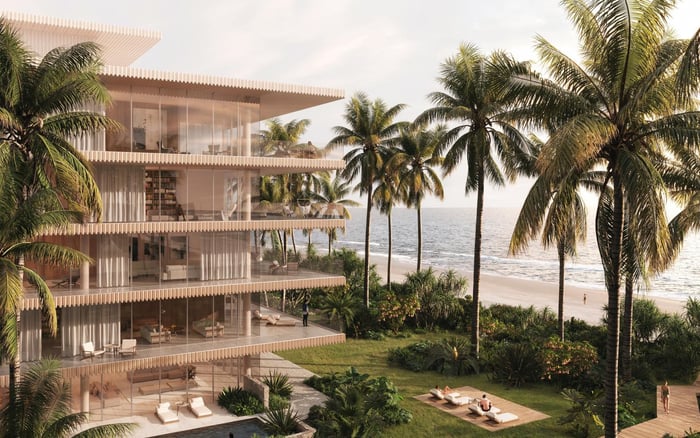
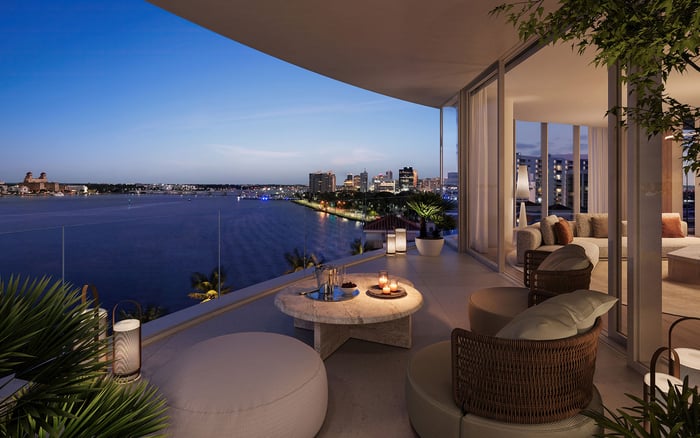
Forté’s amenity program includes a private dining room, great room, library, and evening lounge as distinct settings for resident gatherings. The private dining room accommodates up to 24 guests. The broader hospitality-oriented program also includes furnished guest suites, concierge services, a golf simulator, and a second-story pool deck with a 75-foot lap pool, heated spa, and outdoor dining and lounge area.
This collection gives an owner several ways to shape an occasion. A seated dinner could potentially be complemented by cocktails in another social room or time outdoors. The word “potentially” matters, however. Buyers should not assume that reserving the dining room also secures the great room, library, evening lounge, or outdoor space. Each may have separate availability, hours, fees, and guest policies.
The stated capacity of up to 24 guests also requires clarification. Does that figure refer to the number seated at the table, the room’s total occupancy, or a limit still subject to narrower building guest policies? A buyer who routinely hosts 20 people should ask whether service staff, a chef, musicians, or other vendors count toward occupancy. Exclusive use should likewise be confirmed rather than inferred from the term “private dining.”
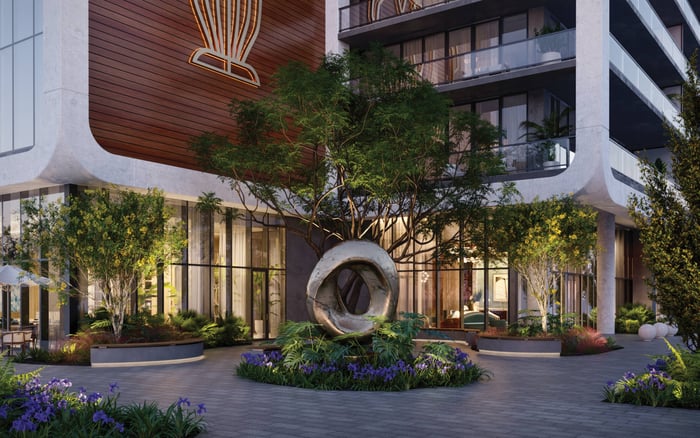
Maison D'Or offers a formal private dining room for special events with full catering-kitchen support. Its lobby-level club room is planned with a bar, fireplace, formal dining area, large-screen televisions, and indoor bars serving the pool deck. The amenity program further includes a waterfront café, wine storage and tasting facilities, indoor-outdoor lounges, and in-residence dining and catering.
The composition suggests a polished social lifestyle, with bars, wine-oriented spaces, and dining functions distributed across the club level. Its club-level social spaces are designated exclusively for residents. That exclusivity is meaningful, but it should not be interpreted as unrestricted event use. A resident-only amenity is distinct from a public restaurant or commercial venue, and association rules may appropriately limit frequency, attendance, vendors, or hours.
Buyers should also establish whether the formal dining room is available for casual resident use, reserved special events, or both. The emphasis on special-event hosting may indicate a reservation-led model, but the governing documents and current operating procedures should settle the issue.
A catering kitchen is not automatically a kitchen that residents or any outside chef may use. At Maison D'Or, “full catering-kitchen support” could encompass several service models: cooking onsite, finishing and plating food prepared elsewhere, warming delivered dishes, or use restricted to approved building staff and vendors. The amenity description alone does not establish which model applies.
Forté’s entertaining spaces raise a parallel question because the amenity description does not specify whether outside chefs and caterers are permitted. Buyers at either property should request the approved-vendor policy and determine whether a preferred or exclusive provider applies. They should also confirm insurance requirements, certificates of insurance, loading access, delivery windows, kitchen-equipment permissions, refrigeration, storage, waste handling, and responsibility for breakage.
For owners comparing the broader Flagler Drive market, the same inquiry belongs in the evaluation of South Flagler House West Palm Beach or The Ritz-Carlton Residences® West Palm Beach. These properties should not be presumed to share policies. Each comparison should instead distinguish between the presence of a dining amenity and permission to use it as the buyer intends.
Frequent hosts should request a written explanation of a complete event scenario. Who may reserve the room, and how far in advance? Are reservations allocated on a first-come, first-served basis, by lottery, or through limits on the number of events per residence? Are holidays or other dates unavailable? Can an owner sponsor an event while absent, or must the resident remain onsite?
The financial terms deserve equal attention. Reservation charges, refundable deposits, mandatory staffing, security, cleaning fees, damage assessments, and cancellation policies can materially alter the cost and convenience of entertaining. Buyers should also establish permitted event hours, setup and breakdown windows, alcohol rules, music restrictions, vendor access routes, parking or arrival protocols, and policies concerning minors and household staff.
Guest privacy and circulation are especially important in a waterfront building where amenity areas may connect to lounges, terraces, or pool facilities. If an adjoining space remains open to other residents, an event may be private only within the dining room. Conversely, exclusive control of several connected spaces could require multiple reservations or additional charges.
Marketing materials establish the intended amenity program, but enforceable rights generally reside in the condominium declaration, bylaws, house rules, reservation agreement, fee schedule, and vendor requirements. Buyers should obtain the latest available versions and confirm that the marketed spaces remain part of the final delivered program.
A focused written request should address eight points: eligible reserving parties, advance-booking windows, guest and occupancy limits, caterer and chef access, alcohol and music policies, staffing and insurance requirements, fees and deposits, and responsibility for cleanup or damage. Any answer central to the purchase decision should be preserved in a document suitable for review by the buyer’s legal adviser.
The better choice is not necessarily the property with the more elaborate amenity description. It is the one whose operating framework aligns with the owner’s actual pattern of use. A couple planning two formal dinners a year may value ceremony and service. A household entertaining monthly may prioritize predictable access, flexible catering, and transparent costs. In West Palm Beach, that distinction can be as consequential as the room itself.
For discreet guidance comparing these residences and their governing details, connect with MILLION.
If branded residences are on your mind — as a home or as an allocation — we would be glad to share what we are seeing, privately.
Begin a quiet conversationIt is described as accommodating up to 24 guests. Buyers should verify whether that figure is a seated capacity, total occupancy, or subject to other guest rules.
That is not specified in the amenity description. Buyers should confirm whether the great room, library, evening lounge, or outdoor areas require separate reservations.
The disclosed amenity description does not specify whether outside chefs or caterers may use the space. Written vendor and kitchen-access rules should be requested.
The phrase does not establish whether food may be cooked onsite, finished and plated, or only delivered by approved providers. Buyers should obtain the exact operating policy.
They are described as exclusively for residents. That does not necessarily eliminate reservation requirements, guest caps, fees, or event restrictions.
Its materials emphasize special events, but do not clarify whether casual daily use is also permitted. Buyers should confirm the intended reservation and access model.
Ask about reservation charges, deposits, mandatory staffing, security, cleaning, cancellations, and damage assessments. These costs can affect the amenity's practical value.
A building may require approved providers, insurance certificates, scheduled loading access, and compliance with kitchen or waste rules. The specific policies should be reviewed in writing.
They can limit the format, hours, and staffing of an event. Buyers planning catered dinners or celebrations should confirm both policies before purchase.
Request the latest declaration, bylaws, house rules, reservation agreement, fee schedule, and vendor requirements. Material answers should also be reviewed with the buyer's legal adviser.