A discreet investor guide to comparing 1428 Brickell and SLS LUX Brickell Residences through liquidity, contract structure, rental posture, ownership experience, and exit discipline.
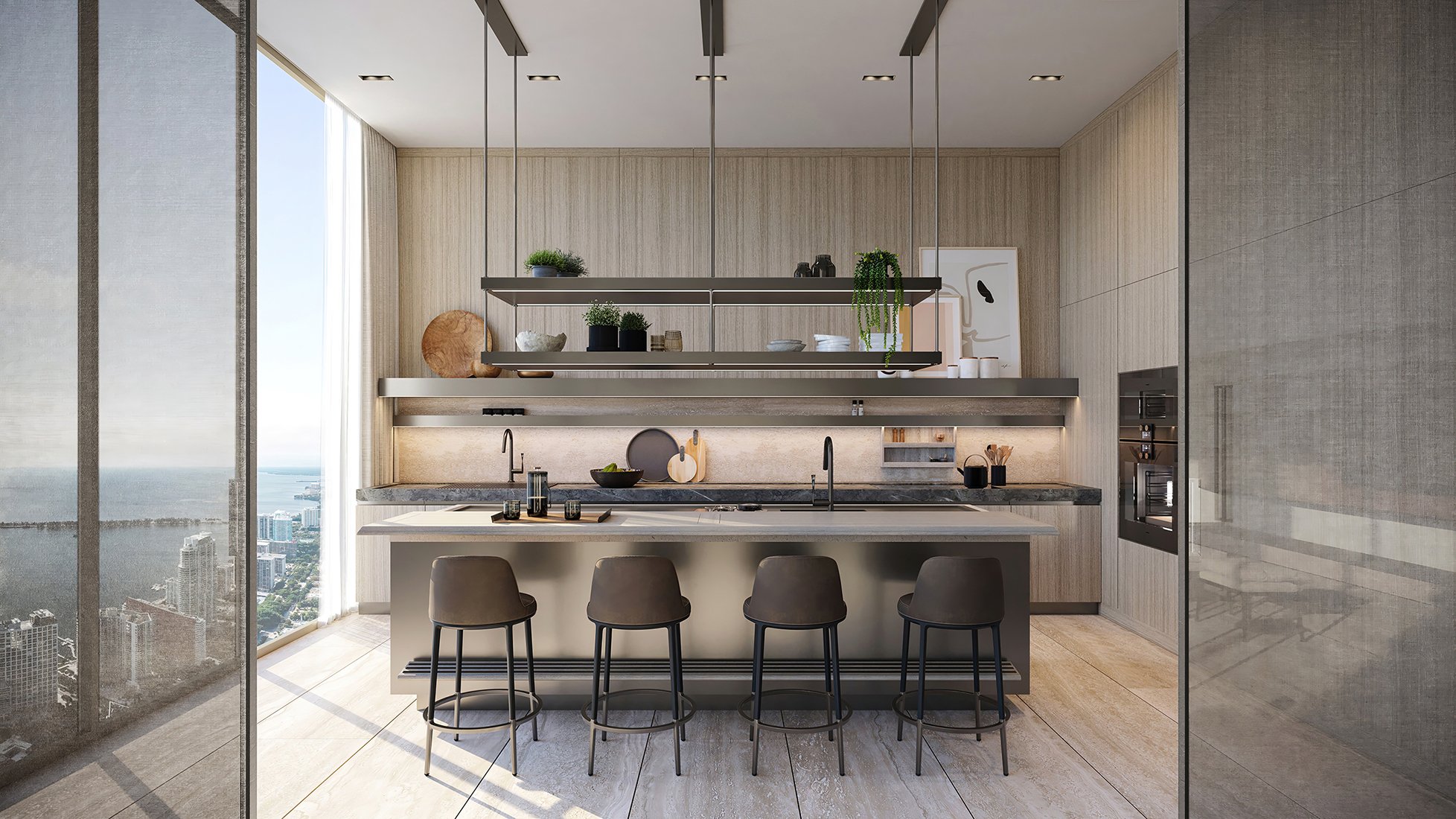
For a 2026 South Florida luxury buyer, the comparison between 1428 Brickell and SLS LUX Brickell Residences should not begin with a lobby, a view corridor, or a marketing deck. It should begin with the investor’s mandate. Is the purchase intended to preserve capital, create rental flexibility, secure a future personal pied-à-terre, or position for a carefully timed resale?
That distinction matters in Brickell because the neighborhood attracts multiple buyer profiles at once: finance professionals, international families, corporate relocations, second-home owners, and investors seeking exposure to Miami’s urban core. The strongest Downtown purchase is rarely the one that feels most dramatic on a tour. It is the one whose ownership structure, carrying costs, rental permissions, buyer pool, and exit narrative remain coherent after closing.
This is why 1428 Brickell and SLS LUX Brickell Residences merit a disciplined comparison. Both belong in the broader conversation around Brickell luxury, but the right choice depends on how an investor intends to use time. A shorter hold demands sharper attention to immediate liquidity and resale comparables. A longer hold may allow more patience around delivery, association maturity, or the evolution of surrounding demand.
The first filter is whether a buyer is evaluating a new-construction opportunity, a pre-completion structure, or a resale purchase. These categories behave differently before design even enters the discussion.
A new-construction or pre-completion purchase may appeal to investors who want a fresh asset, contemporary layouts, current design language, and the possibility of securing a preferred residence before the building’s full ownership story is visible. The tradeoff is that the buyer must be comfortable underwriting future conditions. That means studying deposit exposure, closing timing, financing assumptions, completion risk, association formation, and the depth of end-user demand at delivery.
A resale purchase, by contrast, offers more immediate evidence. An investor can walk the actual unit, evaluate the light at different times of day, review building operations, compare recent activity, and understand the existing owner profile with greater precision. The tradeoff is that the best inventory may already be seasoned, and a buyer must decide whether the available residence has enough scarcity to remain competitive against newer product.
For 1428 Brickell, many investors will naturally focus on the forward-looking thesis around The Residences at 1428 Brickell. For SLS LUX Brickell Residences, the evaluation often centers on the operating reality of an already recognized Brickell condominium environment. In either case, the smartest buyer avoids a simplistic “new versus established” answer and studies which structure best matches the intended hold.
Luxury investors often talk about appreciation, but liquidity is the quieter measure of quality. A residence can be beautiful and still have a narrow resale audience if its floor plan, view, monthly obligations, rental limitations, or price band do not align with the next buyer’s expectations.
In Brickell, liquidity is shaped by practical details. Elevation matters, but so does the usability of the plan. Outdoor space matters, but so does privacy. Branding and amenities can support demand, but they do not replace rational underwriting. The stronger asset is the one a future buyer can understand quickly: why this line, why this exposure, why this building, why this price.
Investors comparing 1428 Brickell and SLS LUX Brickell Residences should ask which option will be easiest to explain in one sentence when it is time to sell. If that explanation depends only on market momentum, the thesis may be too thin. If it rests on a rare unit characteristic, a clean ownership story, and a durable Brickell location, the position is stronger.
For an investment buyer, rental potential is not simply a question of whether demand exists in Brickell. Demand is only one side of the equation. The more important questions involve use restrictions, minimum lease terms, association rules, furnishing expectations, insurance considerations, tenant profile, and the relationship between rent and carrying cost.
A furnished executive rental may require a different residence than a longer-term tenant strategy. A personal-use hybrid requires even more discipline because the investor is balancing emotion and yield. A unit that is ideal for occasional personal stays may not be the most efficient income asset, while the most efficient rental may not feel special enough as a future second home.
This is where the comparison becomes personal. 1428 Brickell may appeal to a buyer willing to think in terms of future positioning and long-term asset quality. SLS LUX Brickell Residences may appeal to a buyer who values an immediately legible building environment and the ability to assess existing operations. Neither approach is inherently superior. The correct choice is the one that makes the rental thesis easier to execute without distorting the purchase price.
The topic is Downtown investors, but Brickell deserves its own lens. Downtown Miami and Brickell are often discussed together because they share the energy of the urban core, yet they do not always behave identically for buyers. Brickell is more closely associated with financial district living, office-adjacent convenience, dining, waterfront proximity, and high-rise condominium density. Downtown can carry a broader civic, cultural, and entertainment orientation depending on the specific location.
For a luxury investor, that distinction matters less as a map exercise and more as a tenant and resale exercise. Who will want this residence next? Will the next buyer be local, domestic, international, corporate, or lifestyle-driven? Will they care more about walkability, views, services, immediate occupancy, or the newest residential language?
A strong Brickell acquisition must stand up inside its own competitive set. It is not enough to say that Miami is desirable or that Downtown is active. The buyer should know how the specific residence competes within Brickell, how it compares with nearby alternatives, and whether its price is supported by scarcity rather than enthusiasm.
A disciplined comparison can be built around five questions.
First, what is the true all-in basis? The purchase price is only the visible figure. Investors should consider closing costs, potential financing terms, association obligations, furnishings, taxes, insurance, reserves, and any improvements required to make the residence rental-ready or resale-ready.
Second, what is the most probable hold period? A three-year investor and a ten-year investor should rarely buy the same way. Shorter holds require more caution around entry price and exit liquidity. Longer holds can justify a more patient thesis if the residence has enduring quality.
Third, what is the buyer pool at exit? A trophy-oriented buyer, an income investor, and a corporate-relocation purchaser all evaluate value differently. The best unit is not always the largest or highest. It is the one with the broadest qualified audience at the intended price point.
Fourth, how much execution risk is acceptable? New construction, delivery timing, financing assumptions, and association maturity require a different risk tolerance than an existing resale. The investor should be honest about whether they want optionality or certainty.
Fifth, does the residence have a clear identity? In luxury real estate, vague product is punished. A residence should have a definable reason to exist in a portfolio: view, floor plan, privacy, finish, convenience, income profile, or long-term personal use.
For a patient investor seeking future-facing product, a carefully vetted 1428 Brickell opportunity may be compelling if the basis, timeline, and exit assumptions are conservative. The buyer should focus less on the promise of novelty and more on whether the specific residence will remain differentiated once more inventory competes for attention.
For an investor who values present-tense visibility, SLS LUX Brickell Residences may warrant attention if the available unit shows strong practical fundamentals. Existing condition, proven building operations, and a clearer picture of real carrying costs can make the decision more tangible. The buyer should still avoid overpaying for recognition alone.
The central lesson is simple: do not buy the building name. Buy the most defensible version of the investment. In Brickell, where taste, capital, and international demand meet in a compressed skyline, discipline is the real amenity.
Is 1428 Brickell automatically the better investment because it may feel newer? No. Newness can support a thesis, but price, timing, contract terms, and future liquidity matter more.
Is SLS LUX Brickell Residences automatically safer because it is easier to evaluate today? Not automatically. Existing product offers more visibility, but the specific unit still has to justify its price and carrying cost.
What should Downtown investors compare first? Compare contract structure, all-in basis, rental rules, and exit audience before focusing on amenities or finishes.
Does Brickell remain a strong area tag for luxury investors? Brickell remains central to the urban luxury conversation, especially for buyers who value convenience and high-rise living.
How should an investment buyer think about rental income? Rental income should be tested against real carrying costs, lease rules, furnishing needs, and realistic tenant demand.
Is new construction better for a long-term hold? It can be, provided the buyer is comfortable with timing, deposits, completion variables, and future competition.
Is resale better for a shorter hold? Often it is easier to underwrite, but the entry price and unit quality must still leave room for a disciplined exit.
Should a buyer prioritize Downtown or Brickell? The answer depends on the tenant or resale audience the buyer wants to attract, not simply on neighborhood prestige.
How important is The Residences at 1428 Brickell in this comparison? It is central to the 1428 Brickell side of the discussion, but the individual residence and terms remain decisive.
What is the most important takeaway for 2026 buyers? Select the option with the clearest ownership thesis, strongest liquidity story, and most defensible all-in basis.
If you'd like a private walkthrough and a curated shortlist, connect with MILLION.
If branded residences are on your mind — as a home or as an allocation — we would be glad to share what we are seeing, privately.
Begin a quiet conversation