A discreet buyer’s guide to Bal Harbour residences where wellness is expressed through privacy, restraint, ocean air, strong proportions, and a calm daily rhythm rather than resort-style spectacle.
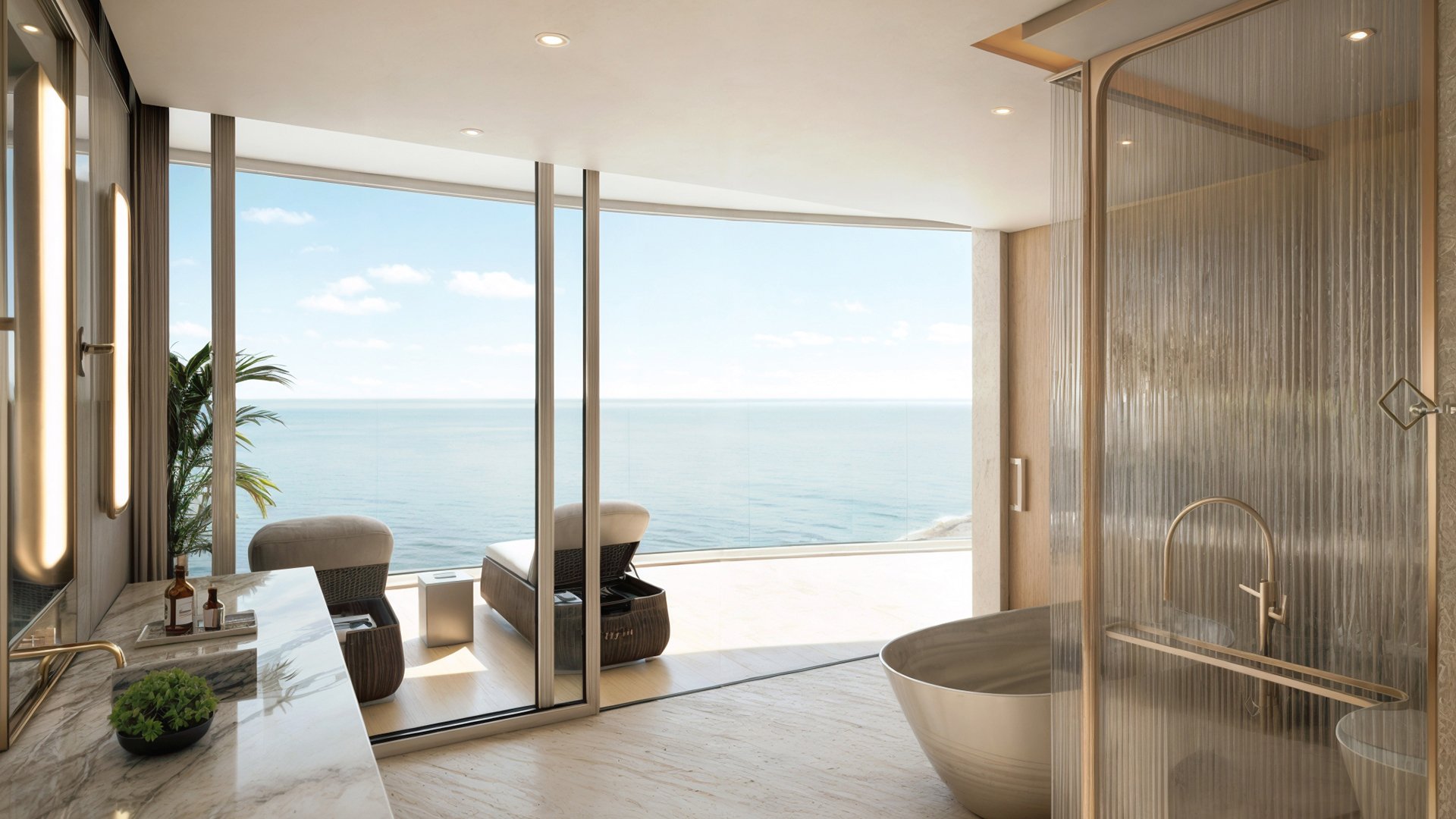
For the Bal Harbour buyer who wants wellness without resort theatrics, the most compelling residence is not necessarily the one with the loudest amenity deck. It is the home that lowers the temperature of daily life. It creates privacy before spectacle, establishes calm before programming, and lets the owner move from bedroom to terrace to beach with as little friction as possible.
That is a different definition of luxury from the branded-resort model. The priority is not a calendar of activities or a lobby that feels like a stage. It is the restorative effect of natural light, generous proportions, quiet circulation, thoughtful service, and a building culture that respects discretion. In this context, wellness is not an add-on. It is the atmosphere of the residence itself.
Bal Harbour is particularly suited to this buyer because the conversation tends to be more edited. The strongest residences here are measured by how well they preserve serenity, not by how aggressively they announce themselves. The best fit is often a home that feels private on arrival, calm in daily use, and elegant enough to host without turning every evening into a performance.
At the ultra-premium level, wellness should begin before the spa. A residence either supports a better rhythm or it does not. Buyers should consider morning light, cross-breezes, elevator privacy, terrace depth, acoustic comfort, and how easily the plan separates entertaining space from restorative space. A gym or treatment room may matter, but the essential question is whether the home makes ordinary routines feel less compressed.
The most persuasive Bal Harbour residences also understand restraint. Materials should feel tactile rather than theatrical. Arrival sequences should be composed rather than overdesigned. Service should be present without becoming social pressure. For many buyers, the ideal building offers the comforts associated with a resort while preserving the emotional privacy of a private home.
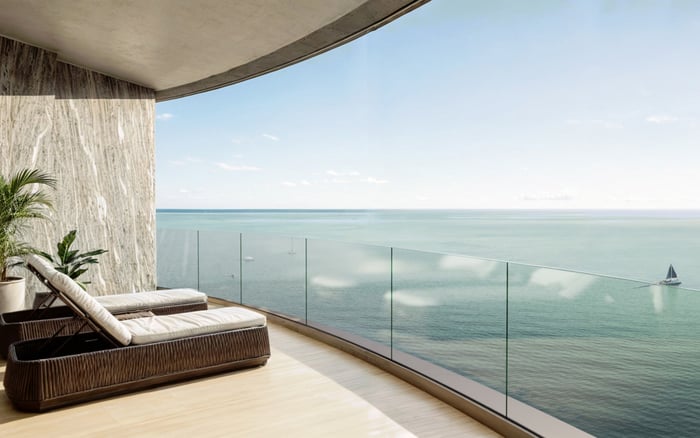
Oceanfront is an important part of that equation, but it is not the only one. A direct relationship to the water can be restorative, yet the wrong plan can still feel exposed or busy. A stronger residence frames the view, protects the interior from glare, and allows outdoor space to function as a true extension of the living room. Wellness, in this sense, is architectural.
Among buyers studying the area, Oceana Bal Harbour often enters the conversation because it represents the type of residential environment that feels polished without needing to shout. Its appeal for the wellness-minded buyer is less about any single amenity and more about the larger impression: a composed oceanfront address where the experience of living can remain private, measured, and coastal.
That distinction matters. Some buyers arrive in Bal Harbour expecting a resort experience, then realize they actually want the opposite. They want to swim, train, dine, work, and entertain with ease, but they do not want to feel as if their building is constantly producing a lifestyle around them. A residence that supports quiet repetition can be more valuable than one that offers endless novelty.
For those comparing newer luxury options in the village, Rivage Bal Harbour is a natural point of reference. The name itself sits within the current Bal Harbour discussion, and for buyers focused on wellness, the relevant lens is not whether a project sounds opulent. It is whether its scale, privacy, and residential language align with a quieter way of living.
The amenity sheet is useful, but it can distract from the questions that define long-term satisfaction. How many moments of transition does the owner experience each day? Does arrival feel calm or performative? Can the terrace be used privately at breakfast, or does it feel exposed? Does the building encourage lingering, or does it require constant navigation?
Boutique discretion can be more meaningful than breadth. A smaller-feeling residential experience may allow staff to know preferences without making the owner feel observed. A restrained lobby may be preferable to a dramatic one if the goal is a smooth return home after travel. The most sophisticated buyers increasingly evaluate this emotional texture with the same seriousness they apply to finishes and views.
This is where Bal Harbour comparisons become nuanced. A buyer may begin with a checklist, then discover that the most restorative property is the one with the fewest interruptions. Privacy, ceiling height, intuitive planning, and the quality of the primary suite can matter more than an amenity that is impressive on a tour but rarely used.
A wellness-minded Bal Harbour search often benefits from a controlled look just beyond the village. Surfside, in the broader luxury conversation, can appeal to buyers who want a similar coastal rhythm with a slightly different residential tone. The Surf Club Four Seasons Surfside is frequently part of that mental map for buyers weighing privacy, service, beach access, and a more composed version of hospitality.
Another nearby point of comparison is The Delmore Surfside, especially for buyers who want to understand how new ultra-luxury coastal living is being framed north of Miami Beach. The value of comparing Surfside is not to dilute a Bal Harbour search, but to sharpen it. If the buyer returns to Bal Harbour after seeing the neighboring alternatives, the preference is usually clearer.
Bay Harbor Islands offers a different kind of wellness conversation. It is less about the immediate beachfront experience and more about quiet residential living near the water and close to Bal Harbour’s orbit. The Well Bay Harbor Islands naturally attracts attention from buyers who want wellness to be part of the residential identity, but still need to decide whether they prefer the village, the beach, or a more tucked-away setting.
Bal Harbour is most compelling for buyers who see wellness as a private condition rather than a social amenity. They may already have favorite trainers, doctors, chefs, clubs, and routines. They are not looking for a building to curate every hour. They want a residence that protects the quality of those hours.
These buyers often value proximity without congestion, elegance without constant programming, and water without the feeling of living in a hotel. They may host beautifully, but they also want the home to recover quickly after guests leave. The best residence should be impressive in the evening and deeply quiet the next morning.
For second-home owners, the calculation is especially personal. A South Florida residence may be a winter base, a family gathering point, or a place to reset between cities. In each case, the home should be easy to re-enter. The less effort required to restore the owner’s rhythm, the stronger the property’s wellness value becomes.
The right Bal Harbour residence should pass three quiet tests. First, it should feel calm within minutes of arrival. Second, the plan should support daily rituals without requiring constant staff choreography. Third, the building should offer enough service to simplify life without creating a resort atmosphere the owner must participate in.
Buyers should tour at different times of day, stand on the terrace in silence, and consider how the home feels when nothing is happening. The absence of friction is often the luxury. If the residence feels restorative before anyone mentions amenities, it is likely aligned with the buyer who wants wellness without theatrics.
What defines a wellness-focused Bal Harbour residence? It is a residence that supports privacy, calm, natural light, and restorative routines before relying on amenity language.
Is oceanfront living essential for this type of buyer? Not always, but oceanfront living can strengthen the wellness experience when the plan preserves privacy and comfort.
Why do buyers compare Oceana Bal Harbour? Oceana Bal Harbour is part of the local luxury conversation for buyers seeking a polished residential atmosphere in the village.
Why is Rivage Bal Harbour relevant to this search? Rivage Bal Harbour gives buyers another way to evaluate the newer side of Bal Harbour luxury through a wellness lens.
Should Surfside be considered in a Bal Harbour search? Yes, Surfside can help buyers compare coastal privacy, service, and residential tone just outside the village.
Is The Well Bay Harbor Islands a Bal Harbour alternative? The Well Bay Harbor Islands may appeal to wellness-focused buyers who are open to a nearby, more tucked-away setting.
Are resort-style amenities a disadvantage? Not automatically. The issue is whether the amenities support daily life quietly or make the building feel performative.
What should buyers notice during a private tour? Buyers should notice arrival, acoustics, terrace privacy, elevator experience, light, and how the residence feels when still.
Is boutique living better for wellness buyers? Boutique living can be attractive when it offers discretion, intuitive service, and a calmer residential scale.
How should a buyer make the final decision? Choose the residence that feels restorative before the sales narrative begins, then verify that its service model fits your routine.
For a discreet conversation and a curated building-by-building shortlist, connect with MILLION.
If branded residences are on your mind — as a home or as an allocation — we would be glad to share what we are seeing, privately.
Begin a quiet conversation