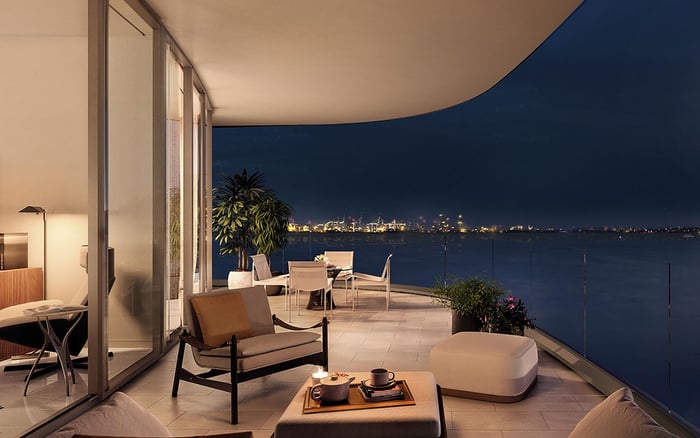
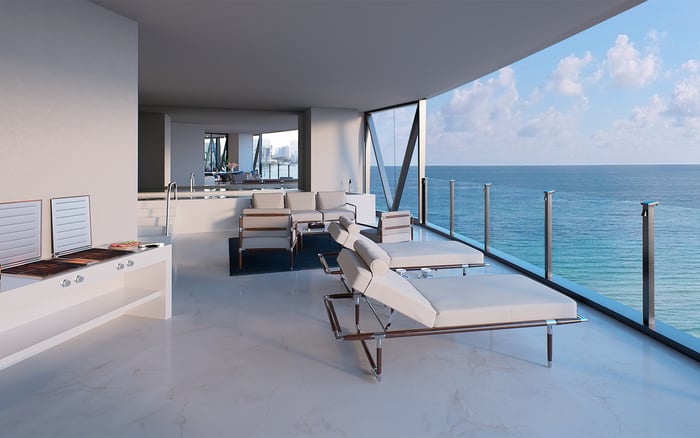
A discreet buyer’s guide to privacy expectations, access control, security technology, and guest screening when comparing a hotel-residence question set with The Ritz-Carlton Residences® Sunny Isles.
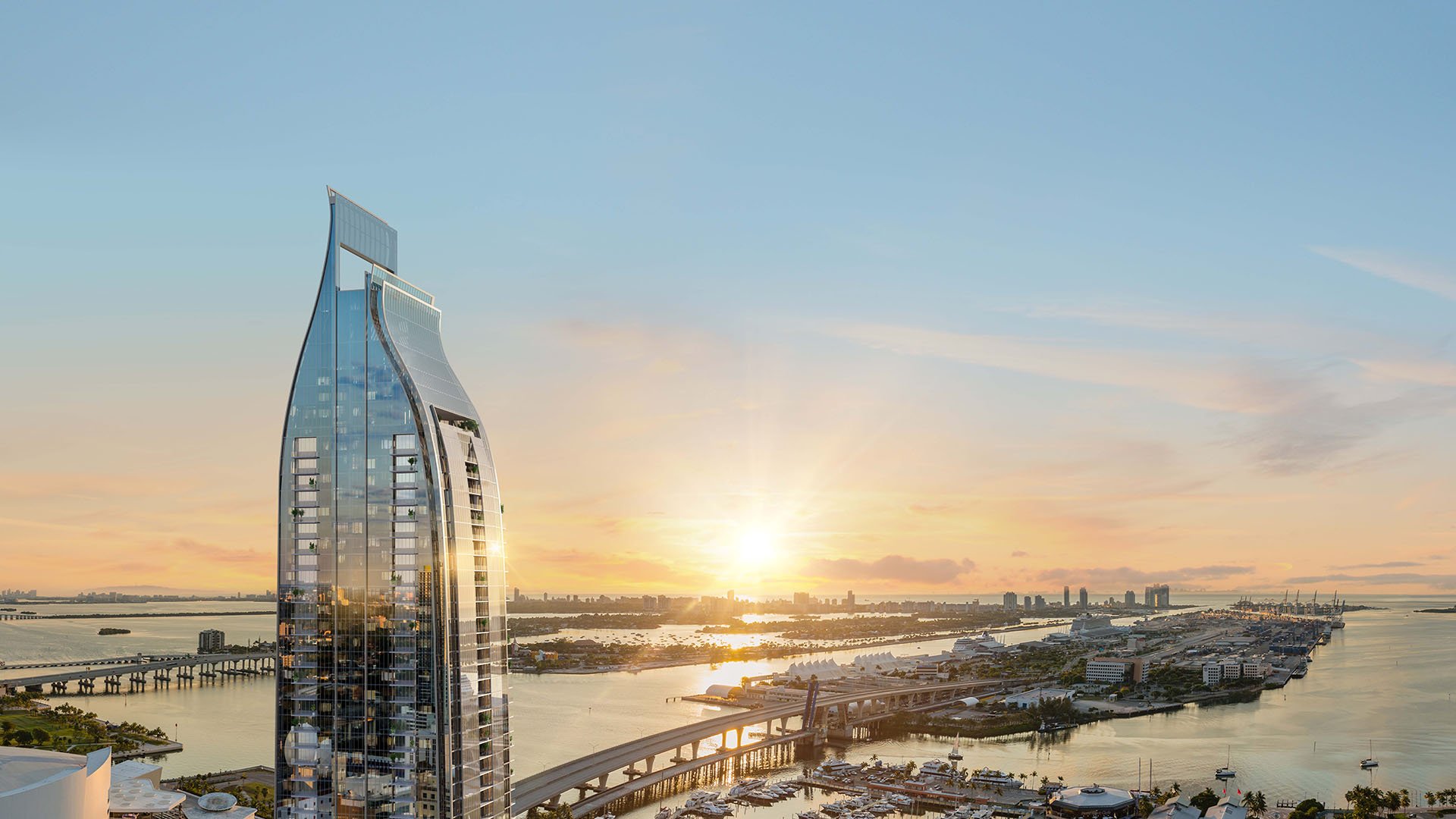
For a South Florida luxury buyer, privacy is rarely a single amenity. It is an operating condition. It lives in the elevator bank, the valet court, the resident app, the front desk protocol, the guest list, the rental rules, and the discretion of staff who know when not to ask too much.
That is why the comparison between Delano Residences & Hotel Miami and The Ritz-Carlton Residences® Sunny Isles should not begin as a beauty contest between brands. It should begin with a practical question: does the buyer want the texture of a hotel-residence environment, or the predictability of a branded residential tower?
The Ritz-Carlton Residences® Sunny Isles is the better-supported residential-control side of this discussion. It is positioned as a Sunny Isles Beach residential project and framed as a branded residential tower rather than a hotel-residence hybrid. That distinction matters. A purely residential environment can support a more stable population of owners, residents, staff, approved guests, and service providers. A hotel-residence model, by contrast, may introduce a different rhythm of arrivals, visitor turnover, hospitality activation, and publicly oriented spaces, depending on its governing structure.
The strongest buyer question is not which building has “better security.” It is which ownership model best matches the buyer’s tolerance for resident-only space versus publicly activated space.
Luxury buyers often use privacy as shorthand, but the term should be separated into three categories: physical privacy, informational privacy, and social privacy.
Physical privacy is the most visible. It includes how one enters the property, whether the residential lobby feels protected, whether elevator access is controlled, and whether residents can move from car to residence without unnecessary exposure. For a Sunny Isles buyer who values anonymity, the choreography of arrival may matter as much as the residence itself.
Informational privacy is less glamorous but often more important. Who can see guest names? How are service providers registered? How long are access records retained? Who can view package logs, elevator permissions, visitor approvals, and owner contact details? In ultra-premium buildings, a weak information protocol can undo an otherwise elegant security design.
Social privacy is the daily experience of not being observed, approached, recognized, or casually discussed. A building may be physically secure yet socially porous if too many non-residents move through lobbies, restaurants, bars, amenity decks, wellness spaces, or event areas. This is where the distinction between a branded residential tower and a hotel-residence concept becomes central.
The Ritz-Carlton Residences® Sunny Isles occupies a useful place in the buyer analysis because its branding suggests hospitality-level service applied to a residential setting. That combination can appeal to owners who want polished staffing without the broader access profile often associated with a hotel environment.
A branded residence can offer a compelling balance: refined service, recognizable standards, and a resident population that is generally more predictable than a property with hotel guests moving through parts of the address. For privacy-sensitive owners, that predictability is not a minor detail. It can influence comfort with family use, principal protection, high-profile guests, art deliveries, household staff schedules, and extended absences.
This does not mean a residential tower automatically satisfies every security need. Buyers should still examine condominium rules, guest access procedures, elevator controls, staff protocols, and rental restrictions before assuming the building’s operating culture matches their expectations. The brand may set a service tone, but the documents and daily procedures define the lived reality.
Related branded residence contexts, such as The Ritz-Carlton Residences® Miami Beach, can also help buyers separate hospitality-level service from hotel-style public activation when evaluating South Florida privacy expectations.
In practical terms, The Ritz-Carlton Residences® Sunny Isles is the cleaner benchmark for a buyer who wants hospitality service without treating the residence as part of a broader hotel ecosystem.
Delano Residences & Hotel Miami raises a different buyer question because the title itself places the discussion in the hotel-residence arena. That does not justify assumptions about its specific access points, technology, screening standards, rental policies, or staff procedures. Those details should be verified directly through offering materials, condominium documents, building rules, and sales disclosures.
The correct diligence posture is model-based. If a buyer is considering a hotel-residence structure, the analysis should focus on which spaces are resident-only, which spaces are shared, which areas are open to hotel guests or outside patrons, and how residential circulation is separated from public or hospitality circulation.
The key questions are simple but consequential. Is there a dedicated residential lobby? Are elevators credentialed by floor or user type? Are amenity levels divided between residents and hotel guests? Can visitors access dining, wellness, lounge, pool, or event spaces without entering residential zones? How are guest approvals handled when owners are away? What happens during peak social periods, holidays, major events, or high-season weekends?
A buyer may welcome the energy of a hotel-residence environment. For some owners, that is precisely the point: service, atmosphere, dining, wellness, and a more animated arrival experience. But privacy-sensitive purchasers should distinguish vibrancy from control. The two can coexist only when the building’s design and rules make that coexistence explicit.
In luxury real estate, technology can create confidence, but it can also create a false sense of certainty. Cameras, credentialing systems, visitor management platforms, license plate recognition, smart elevators, and digital access tools all sound reassuring. The practical question is how they are governed.
Who has administrative access? Can staff override permissions? Are contractors issued temporary credentials? Are recurring guests treated differently from one-time visitors? Are household employees registered under owner authority? Are access records auditable? Are vendors limited to service elevators and service corridors? Are deliveries screened, logged, and routed away from private residential areas?
These questions apply to both residential towers and hotel-residence models, but the stakes differ when there are more categories of users moving through the property. In a quieter residential tower, the access-control system may be easier to monitor because the user base is more stable. In a hospitality environment, the system must account for residents, guests, hotel patrons, staff, vendors, event attendees, restaurant visitors, wellness clients, and invited guests.
For an investment buyer, this can affect resale positioning. For a second-home owner, it can affect comfort during long absences. For buyers concerned with condo-hotel structures, short-term rentals, or guest turnover, the rules are not incidental. They are part of the asset’s privacy profile.
A discreet buyer should ask for the documents that translate elegance into enforceable practice. Marketing language may describe exclusivity, but condominium declarations, association rules, rental restrictions, guest policies, and management protocols determine how exclusivity actually functions.
For The Ritz-Carlton Residences® Sunny Isles, the diligence file should include rules governing guests, elevators, staff, vendors, deliveries, rentals, and owner access. The buyer should also understand whether any service standards are brand-driven, association-controlled, management-controlled, or subject to later modification.
For a hotel-residence model, the file should go further. Buyers should identify which entities control hotel areas, residential areas, shared amenities, back-of-house operations, security staffing, valet procedures, and event programming. They should also ask whether public-facing components can change in intensity over time. A quiet opening year can become a very different experience if dining, wellness, nightlife, or event programming grows more active.
This is not a reason to avoid a hotel-residence purchase. It is a reason to buy with precision.
The Ritz-Carlton Residences® Sunny Isles is naturally aligned with the buyer who values service but wants a more residential rhythm. That buyer may prioritize fewer non-resident traffic flows, a calmer amenity culture, and the expectation that most people in the building have a direct residential reason to be there.
A hotel-residence model may appeal to the buyer who wants a more social, serviced, and activated lifestyle. This buyer may place higher value on energy, hospitality, dining, wellness, and the convenience of on-property services, while accepting that access control requires closer examination.
Neither preference is inherently superior. The more private choice is the one whose operating structure matches the owner’s actual life. A principal who arrives discreetly with family and security staff may think differently from a seasonal owner who wants hospitality at the doorstep. A collector, public figure, founder, or family office buyer may evaluate guest screening with more rigor than an owner focused primarily on lifestyle convenience.
The practical luxury is not merely being protected. It is not having to negotiate your own privacy every time you arrive home.
Is The Ritz-Carlton Residences® Sunny Isles a hotel-residence hybrid? It is framed here as a branded residential tower rather than a hotel-residence hybrid, making it the clearer residential-control benchmark.
Can buyers assume Delano Residences & Hotel Miami has hotel-style guest traffic? Buyers should not assume specific traffic, access, or screening procedures without reviewing official project and governing documents.
What is the most important privacy distinction in this comparison? The central distinction is resident-only predictability versus the broader activation that may come with a hotel-residence model.
Does branding guarantee better security? No. Branding may suggest a service standard, but access control depends on documents, staffing, technology, and enforcement.
What should a privacy-sensitive buyer review first? Start with condominium rules, guest procedures, elevator controls, staff protocols, vendor access, and rental restrictions.
Why does social privacy matter in luxury buildings? Social privacy protects the owner from unnecessary visibility, casual recognition, and repeated exposure to non-resident traffic.
Are security technologies enough by themselves? No. Cameras and credentials matter only when supported by clear governance, trained staff, and consistent enforcement.
Can a hotel-residence still be private? Yes, if residential circulation, amenities, guest access, and staff procedures are clearly separated and well managed.
Who is best suited to The Ritz-Carlton Residences® Sunny Isles? It suits buyers who want a branded service environment with a more residential and predictable access profile.
What is the final buyer test? Ask whether the building’s daily operating model will protect your privacy without requiring constant personal intervention.
When you're ready to tour or underwrite the options, connect with MILLION.
If branded residences are on your mind — as a home or as an allocation — we would be glad to share what we are seeing, privately.
Begin a quiet conversation