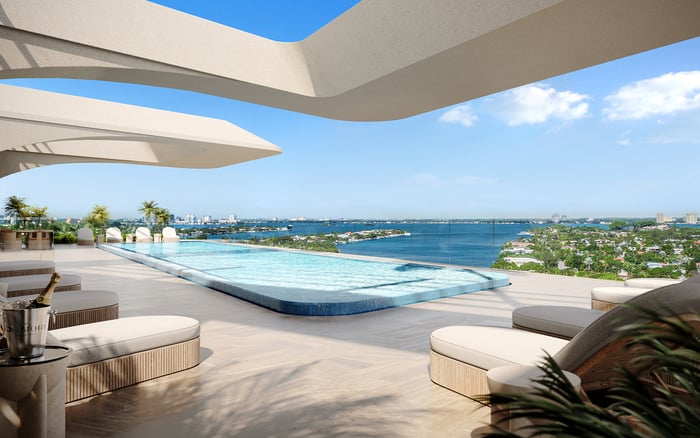
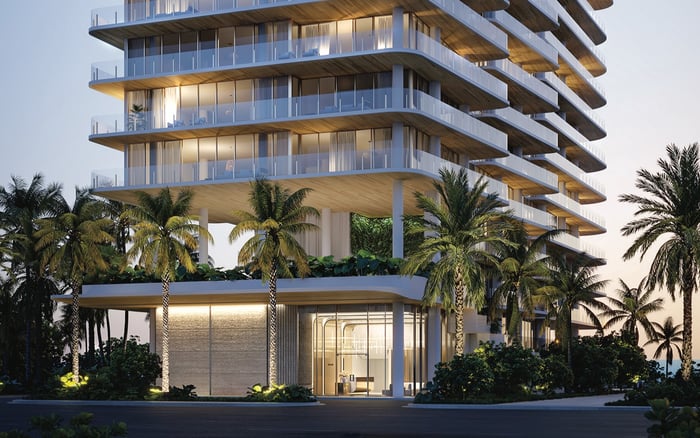
A buyer-focused framework for evaluating Ocean House Surfside beyond its oceanfront presentation, with document requests covering façade sealants, balcony waterproofing, testing, maintenance obligations, and wind-driven-rain claims.
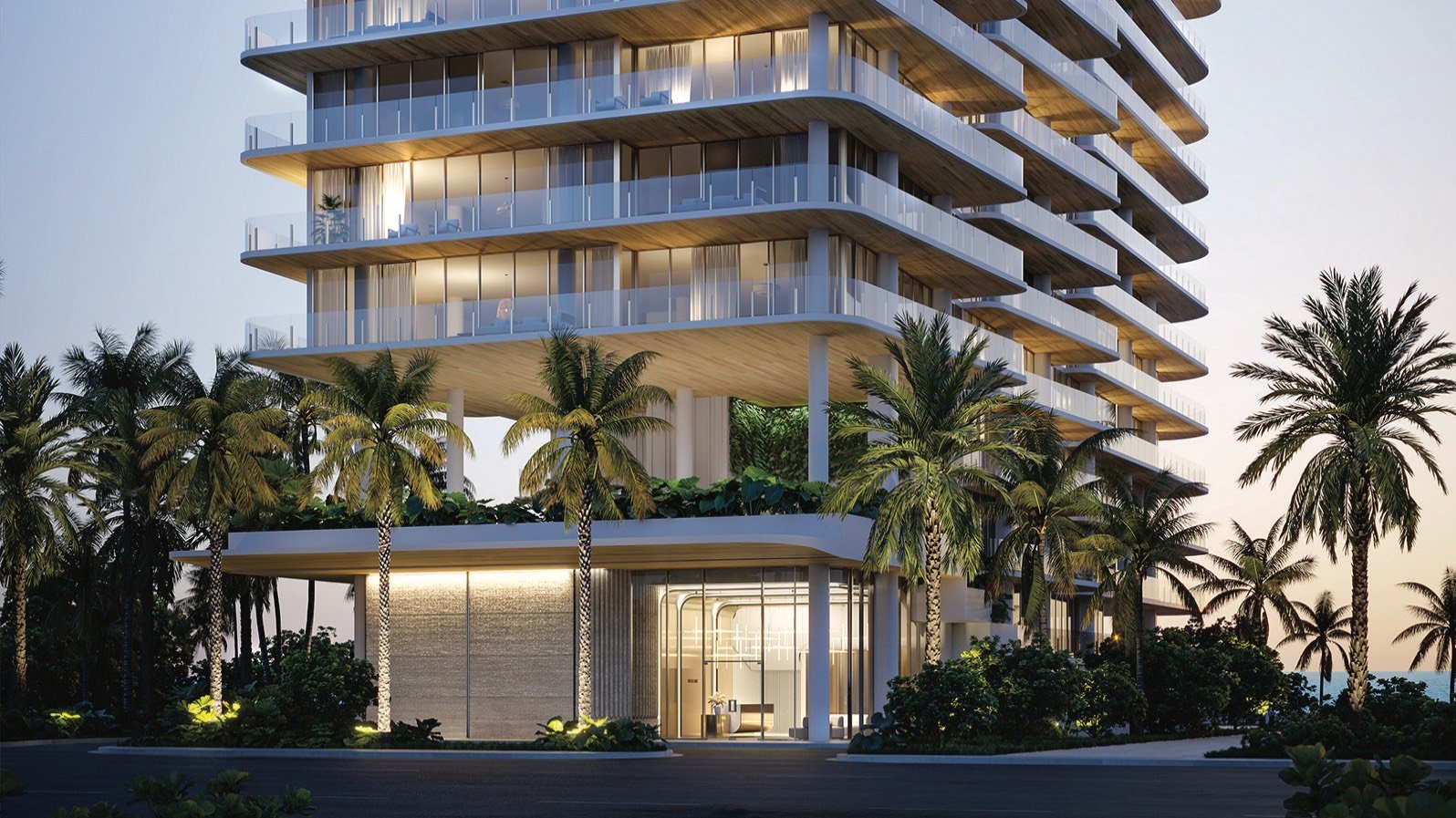
At Ocean House Surfside, the purchase conversation begins with an appealing proposition: a new-construction oceanfront condominium at 9317 Collins Avenue. The architectural presentation emphasizes a transparent façade, balconies up to 12 feet deep, wood-like ceiling accents, and wraparound balconies on ocean-facing residences. For a buyer seeking an expansive connection to the Atlantic, those features deserve attention.
They also warrant a separate technical conversation. Transparency is an architectural description, not evidence of tested water resistance. Balcony depth is a lifestyle attribute, not a waterproofing specification. Decision-grade diligence connects the visible design to documents establishing what is specified, what has been tested, who must maintain it, and how future work is expected to be funded.
The objective is not to presume a defect. It is to avoid substituting an attractive presentation for an accountable ownership plan.
The stated delivery target is 2027, not a confirmed completion date. Buyers should organize requests around the construction stage rather than assume every final record already exists.
Ask which specifications are approved, which tests are scheduled, which have been completed, and which documents are expected at handover. Have counsel identify what the purchase agreement provides for access, inspections, document delivery, and unresolved work. Every promised future record should have an identified responsible party and delivery milestone.
Buyers also considering The Delmore Surfside should apply the same document framework without assuming the projects share construction systems, warranties, or maintenance obligations. The useful comparison is the specificity of each response, not the similarity of the oceanfront imagery.
An Ocean House-specific sealant replacement interval remains unconfirmed. Assigning a generic cycle would create false precision. Instead, request the specified products, joint details, manufacturer maintenance instructions, warranty terms, and proposed inspection and renewal program.
The key distinction is between inspecting a joint, repairing a localized condition, and renewing a broader installation. Ask the project team how its maintenance plan distinguishes those tasks and what findings would trigger each response. A calendar alone is not enough.
For the buyer’s technical adviser, a focused request should cover:
The façade sealant schedule and details identifying where each product is intended to be used.
Available compatibility, adhesion, and installation-quality documentation for the specified assemblies.
Inspection frequency, repair criteria, renewal assumptions, and the professional responsible for recommendations.
Access arrangements, anticipated work scope, and maintenance obligations relevant to warranties.
Ask for the assumptions behind any projected façade-maintenance allowance, including access and professional oversight. If no allowance is provided, record that as an unresolved budgeting question-not as evidence that maintenance will be inexpensive or imminent.
Terrace finishes and ceiling accents are visible; the proposed waterproofing system requires a different review. Ocean House’s presented balcony dimensions and wraparound layouts give buyers reason to request residence-specific details rather than rely solely on a typical balcony drawing.
Ask for waterproofing specifications and drawings addressing door thresholds, membrane terminations, drainage, perimeter conditions, and railing attachments. Have an independent, qualified professional assess whether the documents describe the interfaces relevant to the selected residence. Do not infer a membrane type, drainage arrangement, or completed test from the architectural presentation.
Request installation inspection records, any applicable water-testing procedures and results, and documentation showing how identified issues were closed. Where work has not reached that stage, ask when the records should become available and who will review them.
Ownership responsibilities deserve equal attention. Have counsel examine the governing documents to establish responsibility for finishes, waterproofing, drainage, and associated repairs. Ask how owner alterations would be approved and whether they could affect maintenance duties or warranties. The practical question is who must act when intervention becomes necessary, under what authority, and with what funding.
A broad assurance that a façade is weather-resistant is less useful than a test record with a clear scope. Ask for the applicable water-resistance criteria, the assemblies and locations examined, the test conditions, the results, and any corrective work or retesting.
Have the reviewing professional distinguish design documentation from evidence concerning installed work. Ask whether the available testing addresses the selected residence’s relevant façade and balcony interfaces or whether further clarification is warranted. A successful result should be understood within its stated scope, not treated as an unlimited assurance.
Buyers comparing Ocean House with Arte Surfside can apply the same discipline while keeping each property’s records separate. Neither architecture nor proximity establishes equivalent performance. The comparison should remain specific to the documents available for each purchase.
No Ocean House-specific façade leak claim or adverse insurance determination is established here. That does not establish the absence of claims or defects. Nor would a claim, by itself, settle the technical cause of water entry. Both questions require project-specific records.
Ask for available water-intrusion complaints, warranty notices, claim histories, investigation findings, repair documentation, and closure correspondence relevant to the property and transaction. Distinguish an initial complaint from a diagnosed condition, and a completed repair from an unresolved matter. Where records cannot yet be supplied, keep the request open.
For insurance, request the applicable policy wording, endorsements, exclusions, deductibles, and any relevant coverage correspondence for review by an appropriately qualified adviser. Ask that adviser to address wind-driven rain using the actual documents. Do not assume a particular loss would be covered or denied, or treat a construction warranty as interchangeable with insurance.
Surfside’s permitting records offer another avenue for inquiry. Ask for the relevant permit identifiers, approved revisions, inspection status, and closeout documents. Keep that review distinct from contractual warranties, maintenance planning, and insurance analysis; each addresses a different buyer question.
Before a material contractual deadline, assemble a concise decision sheet with counsel and the technical adviser. For each issue, identify the supporting document, the remaining question, the responsible party, and the action needed. Separate acceptable answers from matters requiring clarification or a negotiated contractual response.
The most persuasive ownership proposition is not a promise of maintenance-free living. It is a documented understanding of what is being purchased, how it should be cared for, and where responsibility sits. At this level of the market, that clarity belongs beside the view.
For a considered perspective on South Florida’s exceptional residences, explore MILLION.
If branded residences are on your mind — as a home or as an allocation — we would be glad to share what we are seeing, privately.
Begin a quiet conversationOcean House Surfside is marketed as a new-construction oceanfront condominium at 9317 Collins Avenue in Surfside, Florida.
2027 is a stated delivery target, not a confirmed completion date. Buyers should clarify construction milestones and contractual delivery provisions.
No. The description concerns architectural presentation; water-resistance evaluation requires relevant specifications and testing documentation.
Marketing describes balconies up to 12 feet deep with wood-like ceiling accents, along with wraparound balconies on ocean-facing residences.
An Ocean House-specific replacement interval remains unconfirmed. Request manufacturer instructions, inspection criteria, warranty terms, and the proposed maintenance program.
Request specifications, residence-relevant details, installation inspection records, applicable testing results, and documentation closing any identified issues.
Responsibility should be established through the applicable governing documents rather than assumed. Have counsel distinguish duties for finishes, waterproofing, drainage, and repairs.
No project-specific façade leak claim or adverse insurance determination is established in this article. That is not proof that claims or defects do not exist.
Have a qualified adviser review the actual policy, endorsements, exclusions, deductibles, and relevant coverage correspondence. Avoid assuming that a hypothetical loss would be covered or denied.
Create a decision sheet identifying the documents reviewed, unresolved questions, responsible parties, and required actions. Review it with counsel and a technical adviser before material contractual deadlines.