A discreet buyer’s guide to evaluating privacy, security technology, and guest screening expectations in Coral Gables and Palm Beach luxury homes.
Privacy in South Florida is no longer a single feature. It is a complete residential operating system, shaped by architecture, approach roads, staff routines, smart technology, visitor rules, and the social culture around a home. For buyers comparing Coral Gables and Palm Beach, the question is not simply which address is more private. The sharper question is which privacy model fits the way the household actually lives.
Coral Gables often appeals to buyers who want privacy integrated into daily family life. The rhythm is residential, landscaped, and civic, with an emphasis on calm arrivals, controlled access, and homes that feel protected without announcing themselves. Palm Beach, by contrast, tends to reward buyers who want a more formal privacy culture, where household protocol, guest expectations, and social discretion are part of the address itself.
These choices often travel under search shorthand such as Coral-gables, Palm-beach, Gated-community, single-family-homes, New-construction, and Second-home, but the real decision is more personal. It is about how visible the household wishes to be, how often guests arrive, how staff and vendors move through the property, and how technology can protect without intruding.
Coral Gables privacy is usually built in layers. A buyer may begin with the street, then study the lot, driveway geometry, sightlines, perimeter landscaping, window exposure, and the relationship between public rooms and outdoor areas. The best homes do not rely on one dramatic gesture. They combine setbacks, mature planting, controlled entry points, and floor plans that separate arrival, entertaining, service, and private family zones.
For families, this layered approach can be highly livable. Children, relatives, tutors, wellness providers, chefs, and drivers may all be part of the weekly pattern. The right home allows these movements to occur naturally, without turning the residence into a fortress. Guest access can remain warm while still being managed. Service access can be discreet without becoming operationally confusing.
Security technology in Coral Gables should be evaluated for daily usability. Cameras, gate controls, license plate recognition, smart locks, alarm zones, lighting schedules, and remote monitoring are only valuable if the household understands who controls them and how alerts are handled. Buyers should ask whether systems are unified or fragmented, whether older components are due for replacement, and whether the home can support upgrades without visible disruption.
Palm Beach privacy is often less about invisibility and more about controlled presence. Many buyers want to entertain, host, attend, and be known within a refined social framework, while still protecting the household’s private life. That creates a different buying brief. The home must support elegant arrival, staff coordination, guest separation, and a high level of discretion around who is expected, who is cleared, and where people are permitted to move.
In Palm Beach, guest screening should be considered part of the home’s culture. This does not mean making visitors feel unwelcome. It means the residence should have a clear protocol for scheduled guests, unscheduled visitors, event staff, contractors, deliveries, and houseguests. A beautifully run home can make screening feel invisible because expectations are established before anyone reaches the door.
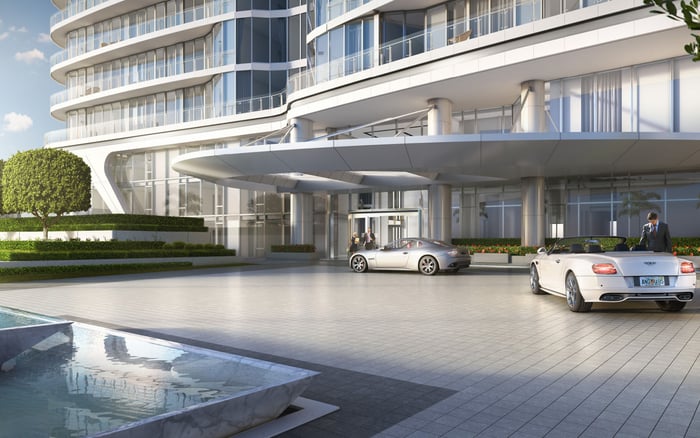
Buyers should pay close attention to the front approach and the first five minutes of arrival. Is there a natural pause point before the main house? Can a driver wait without blocking circulation? Is there a way to receive deliveries without exposing private interiors? Can event staff enter and exit without passing through family spaces? These questions are practical, but in Palm Beach they also shape the tone of ownership.
Luxury buyers sometimes over-focus on visible hardware. The more important question is whether the system is intelligent, redundant, and governed by clear rules. A sophisticated home may include cameras, access control, alarms, lighting automation, safe areas, network segmentation, generator support, and monitoring. Yet none of that matters if passwords are shared carelessly, vendor access is not tracked, or household staff are unsure how to respond to an alert.
The ideal system is quiet. It does not make residents feel watched inside their own home, and it does not make guests feel processed. It records what should be recorded, excludes what should remain private, and creates a reliable audit trail for entrances, gates, garages, and service areas. Buyers should also consider digital privacy, including Wi-Fi networks, smart home permissions, cloud storage, device ownership, and the transfer of system credentials at closing.
New-construction buyers should be especially disciplined. A newly completed home may offer the cleanest path to integrated technology, but the specification still needs careful review. Pre-wiring, server space, camera placement, access panels, and future upgrade capacity can determine whether the home remains current as security expectations evolve.
Guest screening is not only about risk. It is about preserving the household’s preferred rhythm. A buyer who hosts intimate dinners needs a different system from a buyer who holds philanthropic events, welcomes extended family for long stays, or uses the property seasonally. The wrong protocol can feel either too casual or too severe.
Before closing, buyers should map the household’s real guest categories. Immediate family, close friends, overnight guests, domestic staff, wellness providers, contractors, drivers, caterers, and event teams should each have a clear access expectation. Who approves them? How are they identified? Which entrance do they use? Are they permitted beyond certain areas? How long does access remain active after a visit or project?
Second-home ownership adds another layer. When owners are away, the residence still functions. Landscapers, pool technicians, house managers, housekeepers, and delivery teams may continue to enter the property. In both Coral Gables and Palm Beach, buyers should ensure the home can be managed remotely without creating a long chain of informal permissions.
A Coral Gables buyer should ask whether the property can deliver privacy while preserving ease. The strongest fit is often a home where the family can move casually, staff can work efficiently, and visitors can be received without constant intervention. The privacy expectation is real, but it is woven into daily life.
A Palm Beach buyer should ask whether the property can deliver privacy while preserving formality. The strongest fit is often a home where arrival, entertaining, staffing, and guest management feel highly choreographed. The privacy expectation is not necessarily more intense, but it is often more ceremonial.
Neither model is inherently superior. Coral Gables may suit buyers who value neighborhood depth, family routine, and understated protection. Palm Beach may suit buyers who value estate protocol, social discretion, and a more formal boundary between public and private life. In both cases, the best purchase is the one where privacy feels natural rather than imposed.
Before making an offer, buyers should review the property’s security history, technology age, vendor relationships, access points, camera coverage, alarm zones, lighting plan, backup power, and gate operation. They should also understand any community or municipal requirements affecting gates, landscaping, exterior lighting, deliveries, construction access, or event logistics.
A private residence is only as strong as its weakest routine. If a side gate is regularly left open, if vendors use shared codes, or if guests are waved through without verification, even a sophisticated estate can feel porous. Conversely, a modest system can perform well when roles are clear and the household follows consistent rules.
The most successful buyers treat privacy as part of the design brief from the beginning. They do not wait until after closing to discover that service circulation is awkward, cameras face the wrong areas, or the guest arrival sequence conflicts with how they entertain. In Coral Gables and Palm Beach, discretion is an asset. It should be purchased, designed, and operated with intention.
Is Coral Gables or Palm Beach more private? Each offers a different privacy model. Coral Gables often emphasizes layered residential ease, while Palm Beach often emphasizes protocol and discretion.
Should buyers prioritize gates or technology first? Buyers should prioritize the full access sequence. Gates matter, but cameras, lighting, staffing routines, and credential control matter just as much.
What is guest screening in a luxury home? It is the process for identifying, approving, directing, and limiting guest access. Done well, it feels courteous rather than restrictive.
Does New-construction make security easier? It can, because systems may be integrated from the start. Buyers still need to review specifications, permissions, and future upgrade capacity.
Why does staff circulation matter? Staff circulation affects privacy, efficiency, and guest comfort. A strong plan separates service movement from family and entertaining areas.
Are cameras enough for estate security? Cameras are only one layer. Access control, lighting, alarms, network security, and household procedures complete the system.
What should Second-home buyers consider? They should focus on remote management, vendor permissions, backup power, and clear rules for access when the owners are away.
How should buyers evaluate a Gated-community? They should understand entry procedures, guest policies, vendor access, and how community controls interact with the home’s own systems.
Do single-family-homes require different planning than condos? Yes. They often place more responsibility on the owner for perimeter security, vendor access, and private guest protocols.
When should privacy planning begin? It should begin before an offer is made. The best decisions are made when privacy, design, technology, and lifestyle are reviewed together.
To compare the best-fit options with clarity, connect with MILLION.
If branded residences are on your mind — as a home or as an allocation — we would be glad to share what we are seeing, privately.
Begin a quiet conversation