A buyer-focused comparison of 888 Brickell by Dolce & Gabbana and Banyan Tree Residences West Palm Beach, emphasizing scarcity, carrying costs, liquidity, and long-term buyer depth over brand magnetism alone.
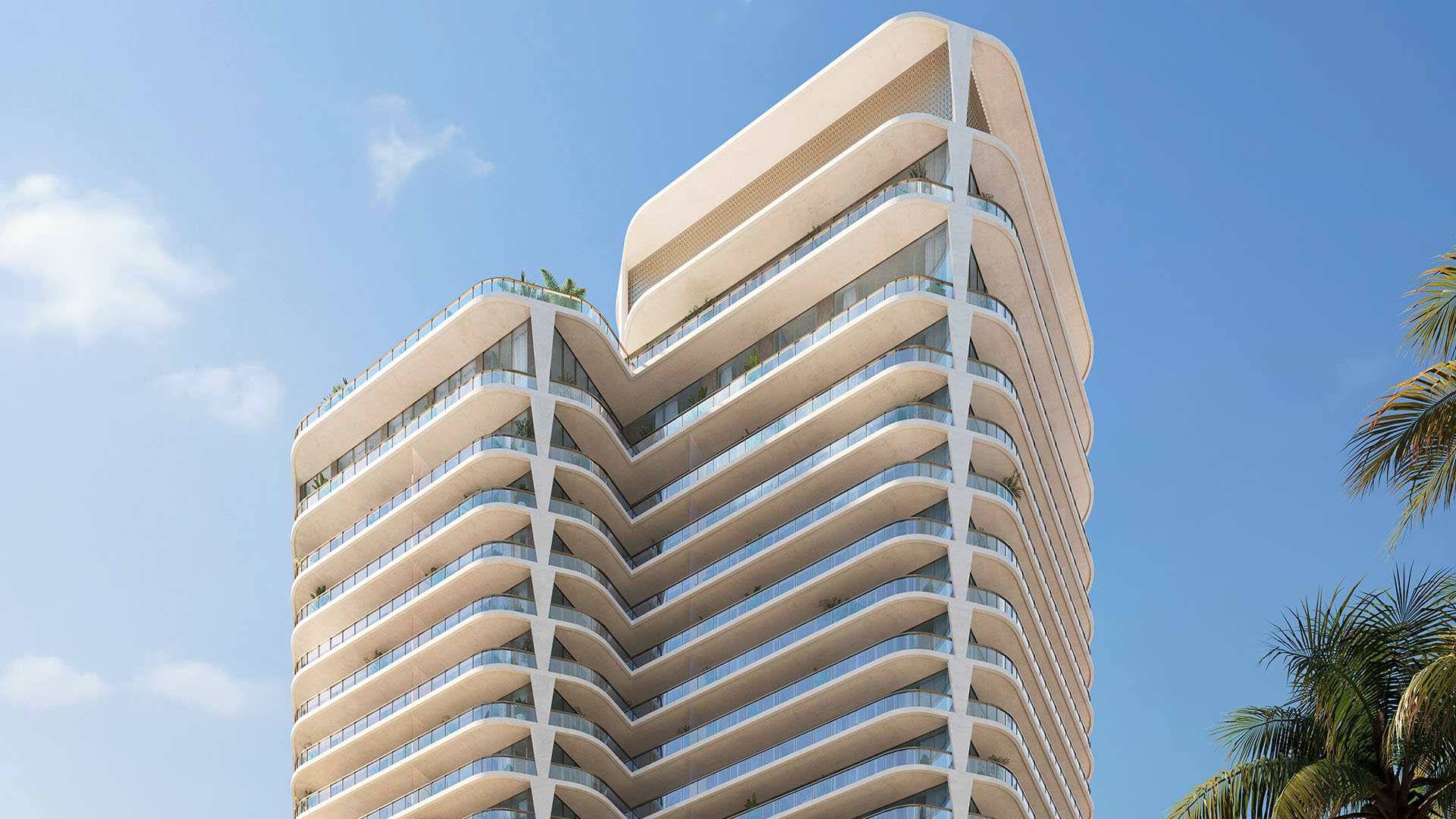
The comparison between 888 Brickell by Dolce & Gabbana and Banyan Tree Residences West Palm Beach can be too easily reduced to a contest of names. That is the least useful way to evaluate either purchase. At the upper tier of South Florida real estate, branding may open the conversation, but it rarely completes the investment case.
The more disciplined question is how each residence performs as a possession. Does it offer genuine scarcity? Can its service model remain financially acceptable over time? Will a deep enough pool of future buyers want the exact building, location, size, and lifestyle when it is time to resell?
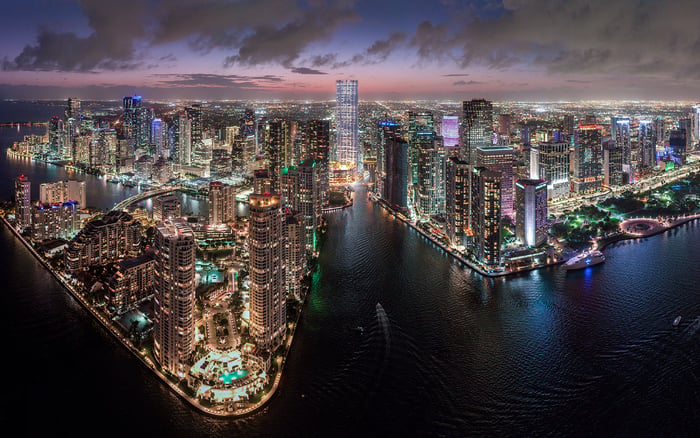
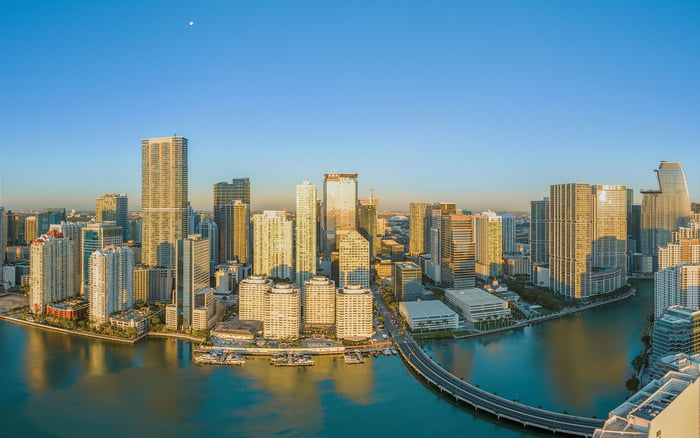
That is where the comparison becomes more revealing. 888 Brickell by Dolce & Gabbana sits in Miami’s Brickell district and is framed as the more vertical, urban, globally marketed option. Banyan Tree Residences West Palm Beach is positioned as a lower-scale waterfront alternative. One is tied to dense financial-district energy and trophy verticality. The other offers a different rhythm of waterfront living and a more restrained urban scale.
The investment thesis for 888 Brickell by Dolce & Gabbana begins with physical and locational singularity. In Brickell, trophy value is not simply a matter of finishes or a recognizable name. It is the intersection of height, skyline presence, service intensity, brand narrative, and the depth of Miami’s luxury buyer pool.
That combination can be powerful. Brickell has become shorthand for high-rise wealth, private capital, global mobility, and a lifestyle in which office towers, dining, hotels, and residential addresses coexist in a dense vertical neighborhood. For buyers who want to be seen inside Miami’s most urban luxury corridor, 888 Brickell by Dolce & Gabbana makes a sharper statement than a conventional condominium.
But trophy scarcity must be separated from decorative scarcity. A globally marketed brand can amplify demand, yet the durable premium depends on whether future buyers believe the asset is difficult to replicate. Height, prominence, location, and service can support that conviction. Branding alone cannot sustain it indefinitely.
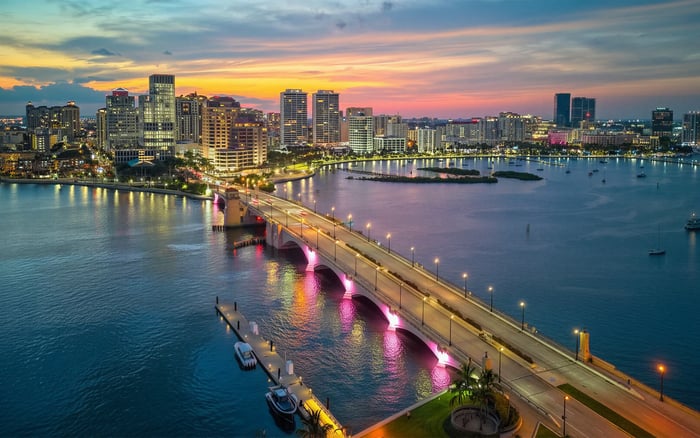
Banyan Tree Residences West Palm Beach enters the conversation from a different angle. Its lower-scale waterfront positioning contrasts with Brickell’s dense financial-district environment. That distinction matters because the buyer is not only choosing a building. The buyer is choosing a daily operating system.
West Palm Beach has a different emotional tempo than Brickell. A lower-scale waterfront residence may feel more residential, less vertical, and less attached to the perpetual motion of Miami’s urban core. For a buyer seeking privacy, water orientation, and a softer relationship with the city, that profile may feel more useful than a highly visible tower address.
This does not automatically make it safer or less risky. It simply shifts the risk. Instead of asking whether global demand for a Brickell trophy tower will remain deep, the West Palm Beach buyer should ask how many future purchasers will want that exact blend of waterfront setting, scale, service, and ownership cost. Buyer depth remains the question, only in a different market register.
At the ultra-premium level, service is both a differentiator and a financial commitment. Service-heavy branded residences can feel materially different from ordinary condominiums. They may offer a more orchestrated form of living, with hospitality cues, curated common spaces, and a sense of arrival that helps justify a premium.
Those same characteristics can raise ongoing ownership costs. The issue is not whether affluent buyers can afford them. The issue is whether the costs remain rational relative to use, enjoyment, and future resale. A buyer using the residence as a second home may experience operating costs differently from a full-time owner who consumes the services daily.
For 888 Brickell by Dolce & Gabbana, the central question is whether urban trophy scarcity and global brand appeal justify potentially elevated carrying costs. For Banyan Tree Residences West Palm Beach, the parallel question is whether the waterfront lifestyle and lower-scale positioning create enough utility to support the ownership burden over time.
This is where investment thinking becomes more refined. The best luxury purchase is not always the one with the strongest first impression. It is often the one whose annual costs still feel defensible five, seven, or ten years later.
Resale strength is not simply about achieving a high price. It is about the number of qualified buyers who want precisely what is being sold. In branded luxury residences, that precision can be narrow. A future buyer must want the location, architecture, floor plan, service model, brand atmosphere, and monthly cost structure all at once.
Brickell’s advantage is depth. Miami’s financial core has a broad luxury audience that includes domestic buyers, international buyers, executives, investors, and lifestyle purchasers who specifically want an urban address. If 888 Brickell by Dolce & Gabbana is perceived as a true trophy within that ecosystem, the future buyer pool may be meaningfully supported by both local and global demand.
The West Palm Beach case is more intimate. Banyan Tree Residences West Palm Beach may appeal to buyers who prefer waterfront composure to high-rise intensity. Its future liquidity will depend on whether enough affluent buyers continue to prize that exact profile. In a quieter market, the buyer pool can be more selective. That can be an advantage when the product is rare, and a constraint when pricing outruns demand.
A practical buyer should begin with use. If the residence is primarily a Miami base for business, dining, visibility, and international connectivity, Brickell has a natural claim. If the residence is meant to deliver calmer waterfront living and a different daily cadence, West Palm Beach may be the more coherent fit.
Next, evaluate cost tolerance. A branded, service-rich building should be assessed not only by purchase price, but by how the ownership structure feels in ordinary years. Luxury fatigue is real when owners feel they are paying for services they rarely use.
Finally, consider the exit. Resale is where branding meets reality. A famous name may bring attention, but buyer depth determines whether that attention converts into serious offers. The most resilient purchase is the one where the building, location, service level, and total cost remain aligned with a large enough group of future buyers.
For buyers comparing Brickell with West Palm Beach, the label matters less than the lived and financial durability behind it. The decision should be grounded in how the residence will be used, how the costs will feel over time, and how many future buyers are likely to value the same combination.
This is not a simple preference between Miami glamour and Palm Beach County calm. It is a risk-adjusted utility decision. 888 Brickell by Dolce & Gabbana offers the stronger argument for urban trophy scarcity, global recognition, and participation in the depth of Miami’s luxury buyer pool. Banyan Tree Residences West Palm Beach offers a counterargument rooted in waterfront positioning, lower scale, and a potentially more residential daily experience.
The better choice depends on what kind of scarcity the buyer values. Some buyers want skyline singularity and the social electricity of Brickell. Others want a quieter form of distinction, where the water, scale, and rhythm of West Palm Beach define the luxury.
Branding should be treated as an accelerant, not the foundation. The foundation is location, physical uniqueness, service sustainability, and liquidity. When those elements align, a branded residence can become more than a beautiful purchase. It can become a durable asset in a highly selective market.
Is 888 Brickell by Dolce & Gabbana more of a trophy asset? It is positioned as the more vertical, urban, globally marketed option, with trophy value tied to physical singularity, height, service, and brand narrative.
Is Banyan Tree Residences West Palm Beach the quieter choice? It is positioned as a lower-scale waterfront alternative, which may appeal to buyers seeking a calmer residential rhythm than Brickell.
Should branding drive the purchase decision? No. Branding can amplify demand, but fundamentals such as location, scarcity, cost structure, and resale depth should carry more weight.
Why do operating costs matter so much in branded residences? Service-heavy buildings can differentiate the ownership experience, but elevated services may also increase ongoing costs over time.
Which option may have deeper resale demand? 888 Brickell benefits from the depth of Miami and Brickell’s luxury buyer pool, while Banyan Tree depends on demand for its specific waterfront profile.
Is the highest-profile building always the best investment? Not necessarily. A high-profile address still needs sustainable costs and enough future buyers who want that exact ownership model.
How should a second-home buyer evaluate the choice? A second-home buyer should weigh how often the residence will be used against the service model and carrying costs.
What is the biggest resale risk? The key risk is not only price, but whether enough qualified buyers want the exact building, location, size, and service structure.
Which buyer fits Brickell better? Brickell generally suits buyers who want urban energy, global visibility, and proximity to Miami’s financial-district lifestyle.
What is the best way to shortlist comparable options for touring? Start with location fit, delivery status, and daily lifestyle priorities, then compare stacks and elevations to validate views and privacy.
For a tailored shortlist and next-step guidance, connect with MILLION.
If branded residences are on your mind — as a home or as an allocation — we would be glad to share what we are seeing, privately.
Begin a quiet conversation