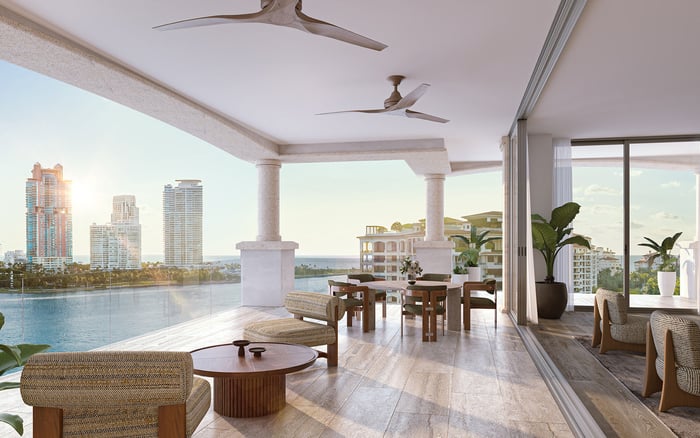
Two residences within one development can bring generations closer without compromising independence. Here is how to evaluate Continuum on South Beach and Oceana Key Biscayne as distinct alternatives, from daily routines and privacy to access, ownership costs, and purchase timing.

For families considering separate homes for two generations, the objective is more than proximity. It is the freedom to share dinner, a beach afternoon, or an everyday errand without making either household feel permanently on call. The strongest arrangement preserves two front doors, two private routines, and a shared setting that both households genuinely enjoy.
Continuum on South Beach and Oceana Key Biscayne offer distinct settings for that arrangement. They are alternative communities, not parts of a single development. To fulfill the one-community premise, a family would seek two residences within the chosen development. Buying one home in each is a different strategy, with separate journeys, services, and ownership considerations.
The right question is not which address suits a particular generation. It is which community can accommodate both households without asking either to surrender the way it wants to live.
At 40 South Pointe Drive, Continuum on South Beach occupies an oceanfront setting in South of Fifth, at Miami Beach’s southern tip. Its residential identity emphasizes service, privacy, wellness, and resort-style amenities. Those priorities offer a useful starting point for a family seeking shared surroundings and independent domestic lives.
Begin with the residences rather than the amenity presentation. Each household should identify its essential bedroom arrangement, workspace, storage, and preferred separation between living and sleeping areas. A compelling home for one household does not automatically make a second available residence the right companion purchase.
Then test the connection between the two. Walk the actual route from one front door to the other, including elevators and common areas. Consider whether the journey feels comfortable for a spontaneous visit while allowing sufficient separation when privacy matters. Two residences within the same development do not necessarily offer the same practical access or experience.
Oceana Key Biscayne has a contact address at 350 Ocean Drive in Key Biscayne. Its offering includes more than 500 feet of beachfront, resort-style pools, and landscaped grounds. For two households, these shared spaces raise a practical question: which activities would become part of ordinary life, and which would remain occasional attractions?
Services include 24-hour concierge and valet. Amenities also include a beachfront fitness center and spa, an oceanfront restaurant, a tennis court, a putting green, and a media room or cinema. Beach volleyball adds another recreational option. Confirm current availability, operating arrangements, and access rules with the association before treating any feature as essential to the purchase.
Golf-cart parking is also part of the offering, but its usefulness depends on the arrangements available to each residence and household. Verify allocation, permissions, and relevant restrictions. Neither golf-cart parking nor concierge and valet service establishes that a home or community is accessible.
Avoid assigning preferences by generation. One household may value quiet mornings and frequent entertaining; the other may prioritize fitness, private work, or extended travel. Discuss those differences directly rather than inferring them from age.
Ask each household to describe an ordinary week independently. Identify the spaces it would use, the visitors it expects, and the times it most values privacy. Then compare the answers. A community works best when shared interests create opportunities to meet, not obligations to participate.
If the search expands to Apogee South Beach, apply the same two-residence discipline: establish each household’s requirements and verify whether a suitable pair can be secured. An additional address should broaden the comparison, not dilute the requirement that both homes work independently.
Decide what “close” should mean before selecting residences. The preference might be an especially short internal journey or a little more separation within the development. Neither is inherently better. The choice should reflect how often the households expect to meet and how much spontaneous contact each welcomes.
Discuss visiting conventions as carefully as floor plans. Will family members call before coming over? Who may hold a key? How will overnight guests, visiting relatives, or household staff be accommodated? Confirm the association’s requirements rather than assuming that family ownership creates unrestricted access between homes or to amenities.
Accessibility deserves its own inspection. Review entrances, thresholds, door clearances, bathrooms, elevator routes, and the journey to parking and shared facilities. Where modifications may be needed, establish feasibility and approval requirements before purchase. Service can support daily convenience, but it cannot substitute for a suitable physical layout.
Underwrite each residence on its own merits, then assess the combined commitment. Review maintenance charges, reserves, insurance, assessments, and anticipated renovation needs for both homes. Understand not only the total carrying cost, but also which expenses belong to which household.
Obtain and review the applicable condominium documents and current financial information with qualified advisers. Confirm parking allocations, pet rules, rental restrictions, guest policies, and renovation procedures for each proposed residence. Do not assume that arrangements discussed during a viewing are transferable rights or that every home carries identical permissions.
Agree on ownership and payment responsibilities early. If family members will contribute differently, legal and tax advisers should help document the arrangement. The purpose is clarity: shared proximity should not leave either household uncertain about expenses, decision-making, or a future sale.
A two-home plan depends on finding a suitable pair, not merely an exceptional first residence. Before committing, establish whether both households can secure acceptable homes within their budget and preferred timetable. Distinguish essential layout requirements from preferences that can reasonably flex.
Discuss coordinated timing and contractual protections with your advisers. Consider what happens if one transaction proceeds and the other does not, or if renovation delays make simultaneous occupancy impractical. Rental restrictions also matter if either household anticipates periods away or a temporary change in plans.
A final paired walkthrough should revisit the practical details: the route between residences, parking, visitor entry, amenity access, and each household’s private space. The decisive luxury is a setting where being together remains easy and being apart remains entirely comfortable.
For a considered approach to selecting two independent homes within one community, connect with MILLION.
If branded residences are on your mind — as a home or as an allocation — we would be glad to share what we are seeing, privately.
Begin a quiet conversationNo. They are distinct developments, so a one-community plan means buying two residences within either Continuum or Oceana, rather than one in each.
Continuum is located at 40 South Pointe Drive in South of Fifth, at Miami Beach’s southern tip.
Oceana Key Biscayne lists its contact address at 350 Ocean Drive, Key Biscayne, FL 33149.
Its advertised services include 24-hour concierge and valet. Confirm current service arrangements and applicable access rules with the association.
Advertised amenities include pools, an oceanfront restaurant, a tennis court, a putting green, and a media room or cinema. Availability and use rules should be confirmed before purchase.
No. Inspect each residence and its routes to elevators, parking, and shared facilities, and assess any required modifications separately.
Not necessarily. The appropriate distance depends on each household’s preferred privacy, visiting habits, and comfort with the route between residences.
Review maintenance charges, reserves, insurance, assessments, and renovation needs for each residence, then evaluate the combined financial commitment.
Confirm guest access, parking, pets, rental restrictions, amenity use, and renovation policies for both proposed homes. Family ownership should not be assumed to override those rules.
The second household may not find a suitable residence within its budget or timetable. Establish acceptable alternatives and discuss coordinated timing and contractual protections with advisers.